
Pocket Watches · Pocket watch
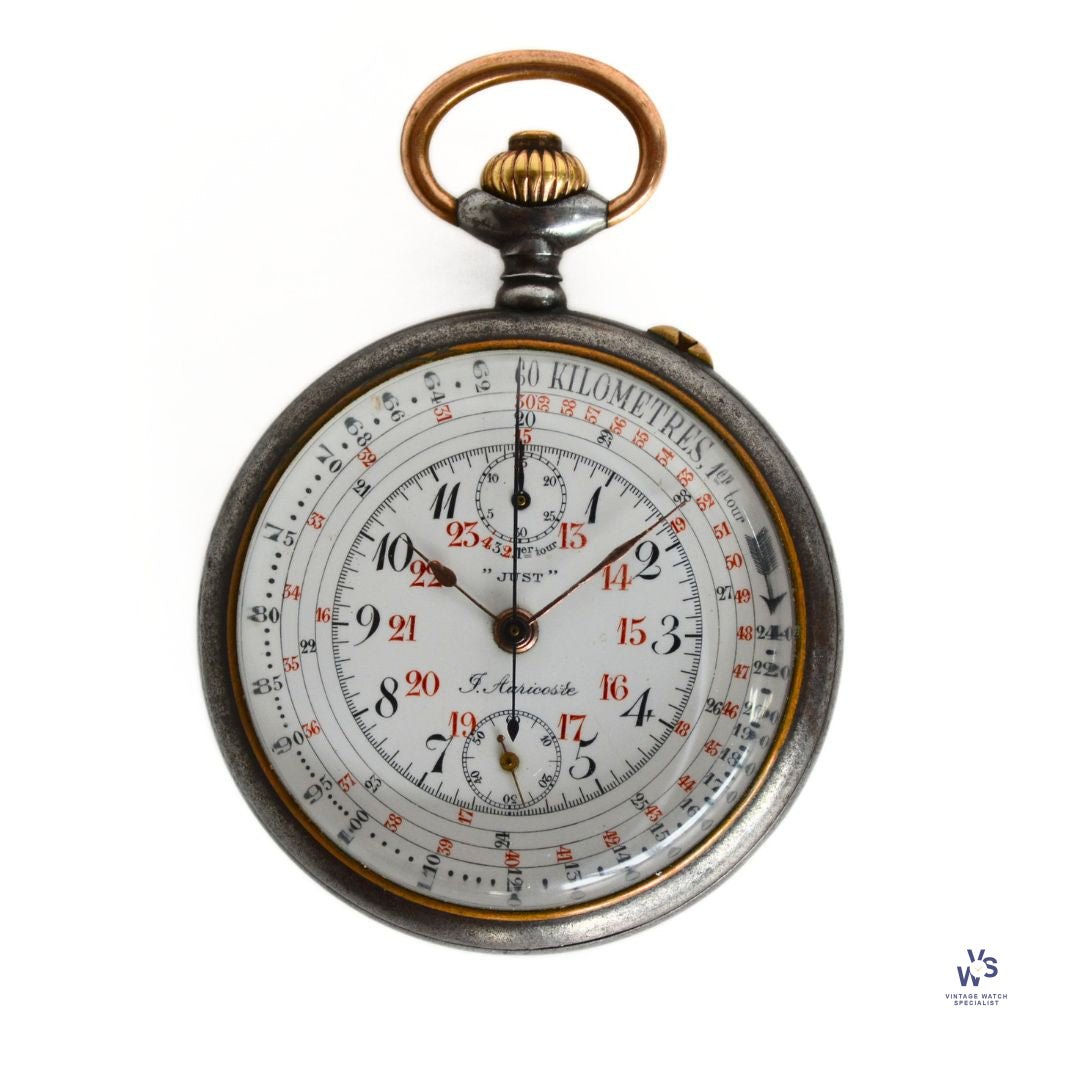
J Auricoste, "Just", Chronograph Marine Pocket Watch, Lemania Movement, circa 1918
- Maker / attribution
- Lemania (maker)
- Date
- c. 1918
- Historical period
- Golden Age of Mechanical Watchmaking (1900 – 1945)
- Country of origin
- Switzerland
- Object type
- Pocket watch
- Stock no.
- vws1636
- Credit line
- Dealer listing, Vintage Watch Specialist (vws1636)
- Catalogue title (original)
- J Auricoste - "Just" - Chronograph Marine Pocket Watch - Lemania Movement - c.1918 (English)
View the source record (dealer listing) ↗ (opens another website in a new tab)Suggest a correction
Record summary
Catalogued by Vintage Watch Specialist (dealer), United Kingdom (stock number vws1636), this is a pocket watch by Lemania, made in Switzerland, dated c. 1918. The Atlas places it in the Golden Age of Mechanical Watchmaking period (1900 – 1945) of its Pocket Watches collection. The record is illustrated with 6 photographs.
Assembled from the source record's structured fields. Dates and attributions are given as the source states them; where a field is missing the Atlas leaves it blank rather than estimating.
Catalogue description
Dealer description — Vintage Watch Specialist
A very well Preserved J Auricoste Marine Chronograph Pocket Watch with a Lemania Movement circa 1918 Since its founding in 1854, Auricoste has been intrinsically linked to French naval aviation, serving as the official watchmaker for the French Navy, the Bureau des Longitudes, the Army's Geographic Service, and the National Conservatory of Arts and Crafts. This prestigious history grants Auricoste a unique status in the world of watchmaking, where the beauty and precision of its mechanisms are paramount. What's on Offer A very beautiful-looking piece of history here. Most likely issued to the French military this type of chronograph pocket watch was utilised by pilots and aviators during their service for multiple purposes and was a very handy tool at the time. This one even contains a very well-made Lemania movement making it even more special. As you can see the white enamel dial is imprinted with multiple numbers and subdials all of which have amazingly stayed intact and are fully readable. These numbers and text all have some form of purpose when it comes to timing. The watch is encased in steel which has become tarnished with time and there is some gold accents seen in the bezel ring and crown area. In order to set the time on this watch you must press down on the small button on the case and carefully turn the crown at the same time differentiating it from the traditional way of setting. The watch is fully running and keeping excellent time as it should, an overall beautiful piece of horological history.
Historical context
Golden Age of Mechanical Watchmaking (1900 – 1945)
The wristwatch displaces the pocket watch; waterproof cases, self-winding and grand complications.
The pocket watch reached technical maturity and then began to give way to the wristwatch after the First World War. Complicated watches for collectors such as Henry Graves Jr. and James Ward Packard, railroad watches, and slim Art Deco dress watches are characteristic.
Read the period in the timelineMore pocket watches from this periodEarlier: Industrial Revolution
Atlas type guide
Chronographs and split-seconds watches
A chronograph is a watch with an additional seconds hand that can be started, stopped and returned to zero independently of the timekeeping. Louis Moinet built an early example in 1816 and Nicolas Rieussec a recording 'chronographe' in 1821; Adolphe Nicole's heart-shaped reset cam (patented 1862) made the modern return-to-zero possible. Split-seconds (rattrapante) chronographs add a second hand that can be stopped for intermediate times; flyback chronographs restart instantly.
Chronographs were essential tools for doctors (pulsometer scales), artillery (telemeter), engineers and sport. In wristwatches, Valjoux, Venus, Lemania and later the automatic chronographs of 1969 (Zenith El Primero, the Chronomatic Calibre 11 group and Seiko 6139) are milestones.
What to look for
- Push-pieces on the case band or a single button in the crown (monopusher).
- Subsidiary registers for minutes and hours; tachymeter, telemeter or pulsometer scales.
- Column wheel versus cam control visible in the movement.
- Calibre markings of specialist makers (Valjoux, Lemania, Venus, Landeron).
Dating clues
- Pocket chronographs with heart cam reset: after 1862.
- Wrist chronographs: from c. 1910; two-button designs from the 1930s.
- Automatic chronographs: from 1969.
General guidance written by the Atlas editors about this kind of object. It is not a statement about this particular piece; for that, rely on the source record above and on physical examination.
Read next:Flyback chronographChronograph
Related records
Instruments · 1950–1970
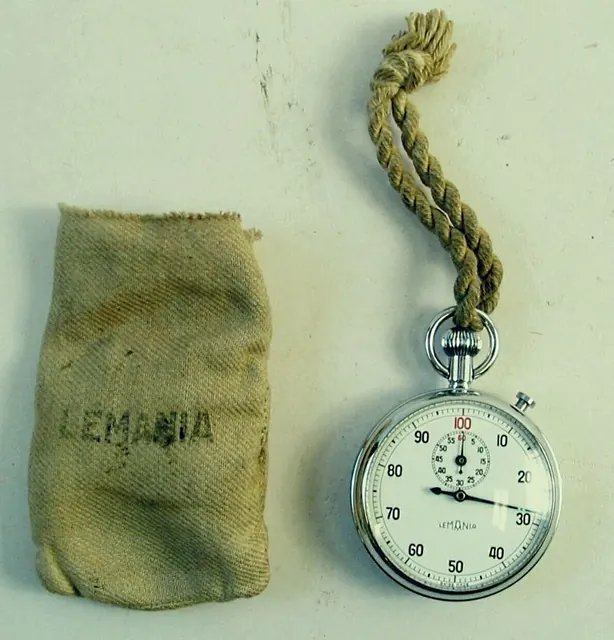
Stopwatch by Lemania, Switzerland, 1950–1970
Museokeskus Vapriikki
Wristwatches · c. 1970s
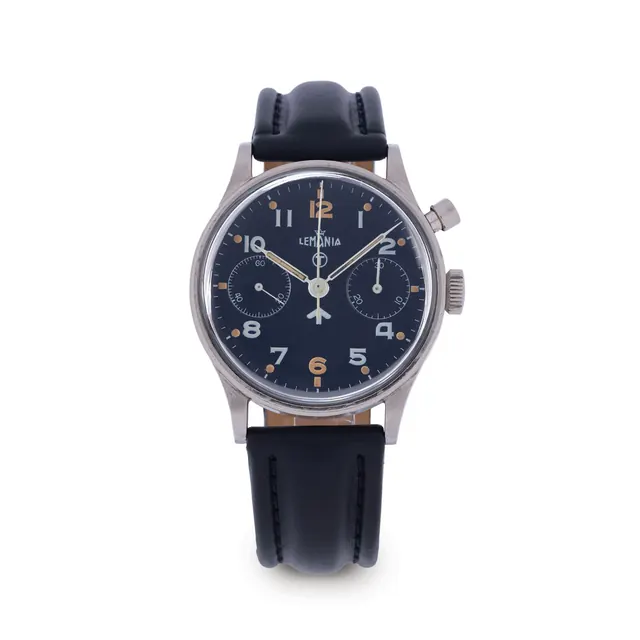
Lemania wristwatch, Series 2 Monopusher Chronograph, circa 1970s
Antiquorum auction archive, Geneva
Wristwatches · c. 1960s-1980s
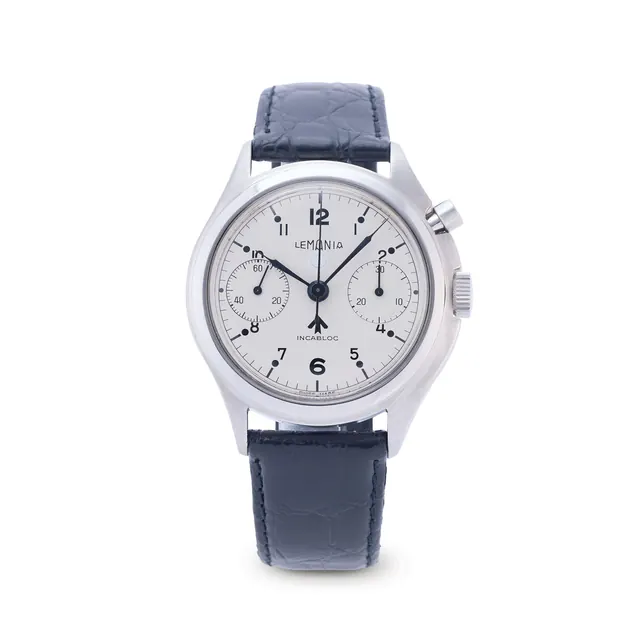
Lemania wristwatch, ref. 35-64, Series 3 Monopusher Chronograph, circa 1960s-1980s
Antiquorum auction archive, Geneva
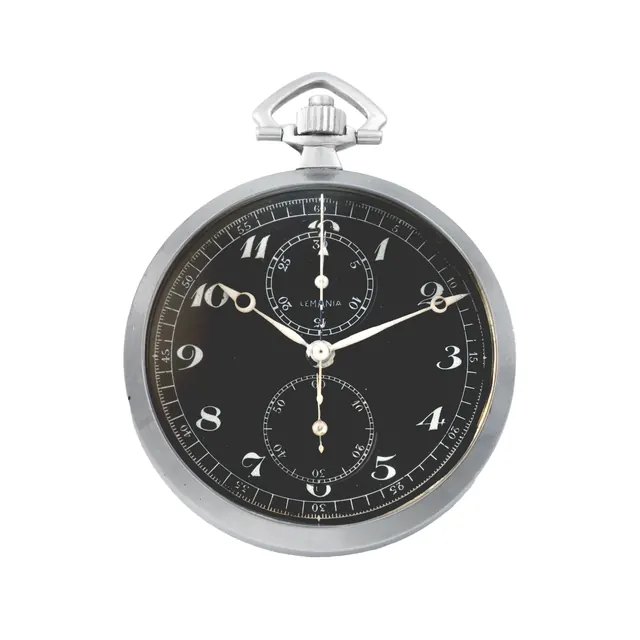
Pocket Watches · c. 1940
Lemania pocket watch, Single Button Chronograph, circa 1940
Antiquorum auction archive, Geneva
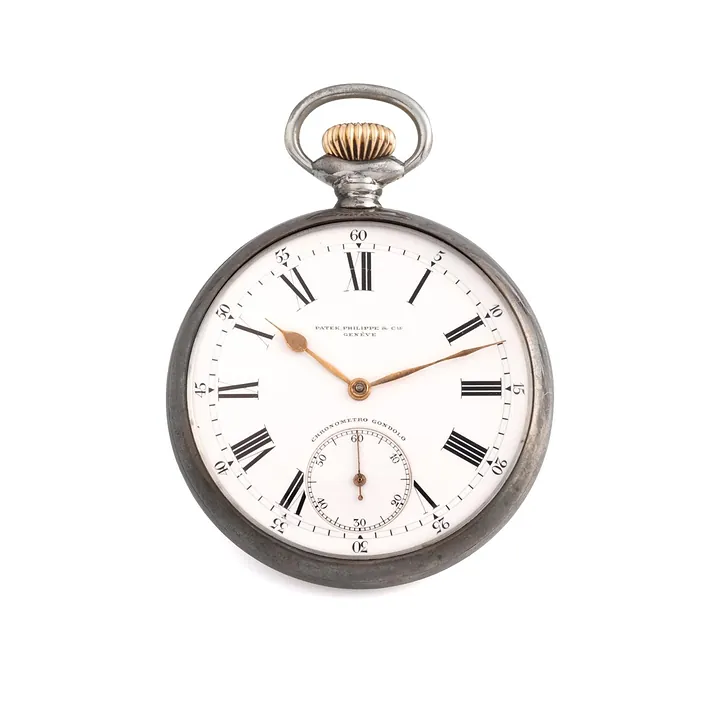
Pocket Watches · c. 1900
Patek Philippe Chronometro Gondolo, c. 1900
Antiquorum auction archive, Geneva
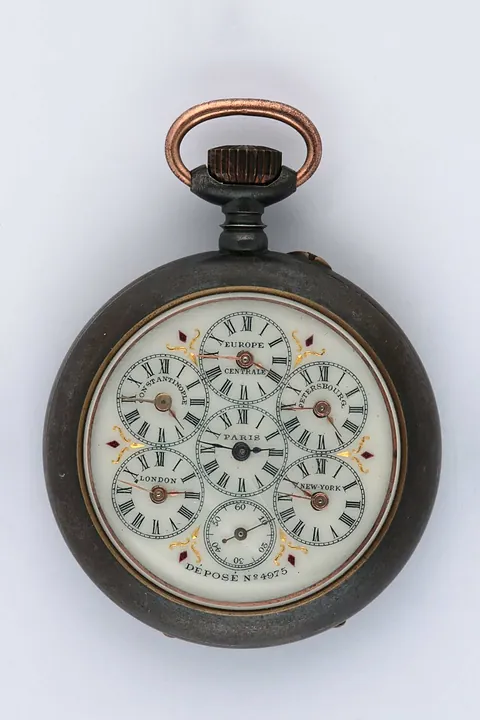
Pocket Watches · c. 1900
Pocket watch by A. Sandoz-Boucherin, Switzerland, c. 1900
German Clock Museum
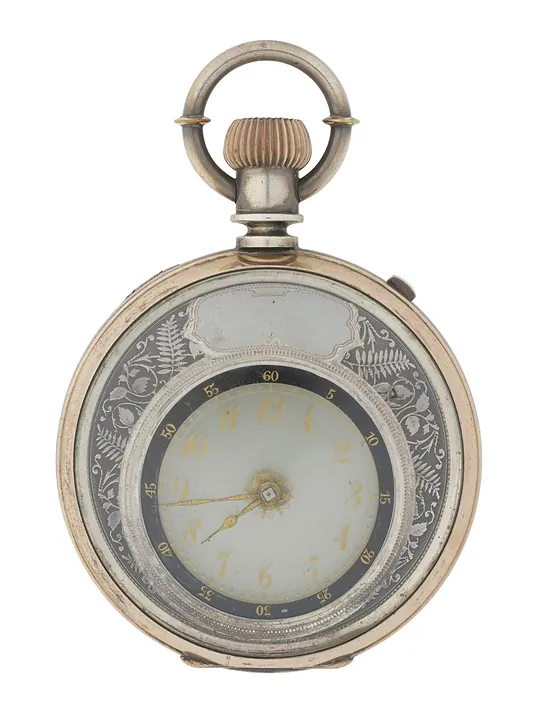
Pocket Watches · 1900
Pocket watch by Armand Schwob & Frère, Switzerland, 1900
Science Museum Group, London
Pocket Watches · c. 1900
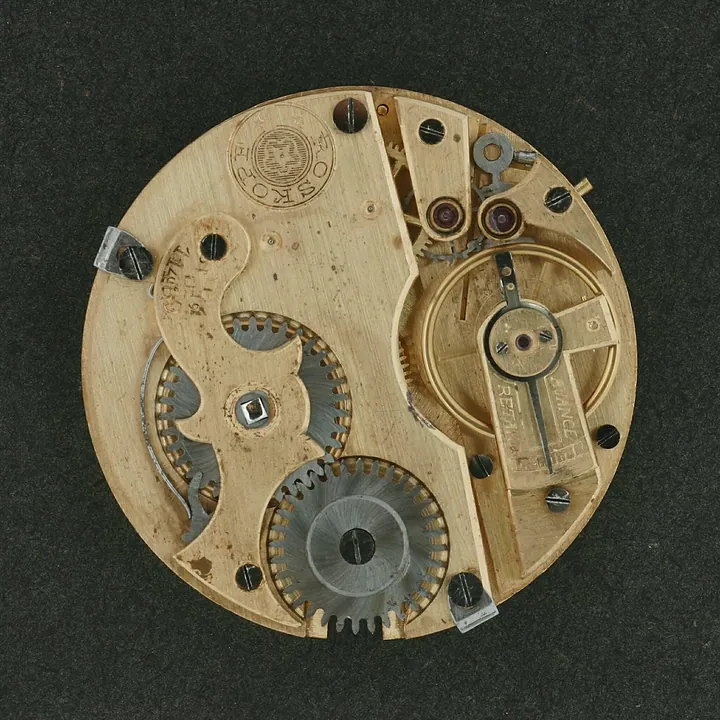
Pocket watch by Vve. Chs. Léon Schmid und Cie, Switzerland, c. 1900
German Clock Museum