
Wristwatches · Wristwatch
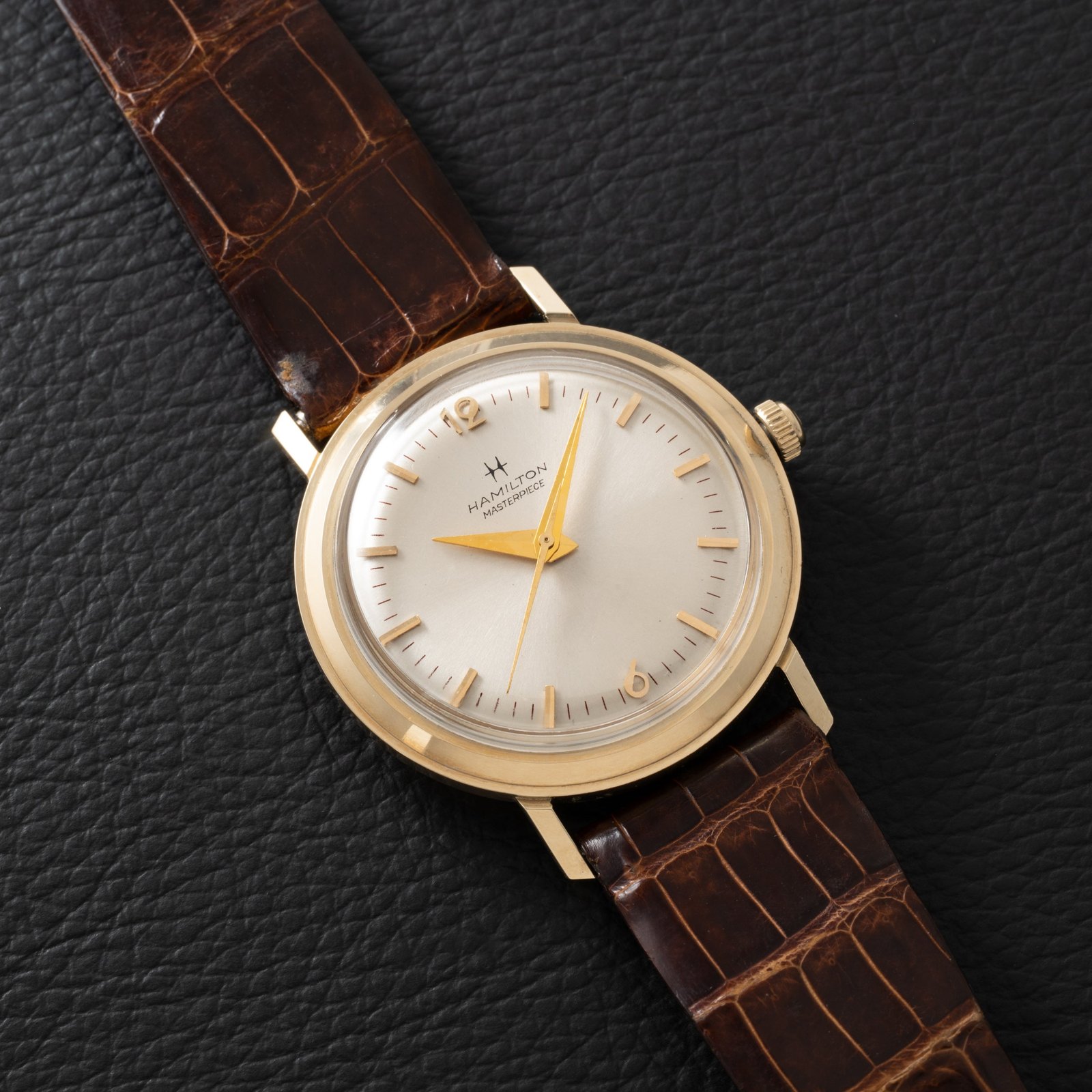
Hamilton Masterpiece, 1960s
- Maker / attribution
- Hamilton (maker)
- Date
- 1960s
- Historical period
- Modern Mechanical Horology (1945 – 1969)
- Country of origin
- Switzerland
- Object type
- Wristwatch
- Dimensions
- Case 33 mm
- Stock no.
- 40993482
- Credit line
- Dealer listing, Analog/Shift (40993482)
- Catalogue title (original)
- Hamilton Masterpiece (English)
View the source record (dealer listing) ↗ (opens another website in a new tab)Suggest a correction
Record summary
Catalogued by Analog/Shift (dealer), New York (stock number 40993482), this is a wristwatch by Hamilton, made in Switzerland, dated 1960s. The Atlas places it in the Modern Mechanical Horology period (1945 – 1969) of its Wristwatches collection. Recorded dimensions: Case 33 mm. The record is illustrated with 6 photographs.
Assembled from the source record's structured fields. Dates and attributions are given as the source states them; where a field is missing the Atlas leaves it blank rather than estimating.
Catalogue description
Dealer description — Analog/Shift
A great, vintage gold dress watch is equal parts handsome and versatile. Versatility, however, often plays second fiddle to looks. Sure, a dressy piece looks the business at the end of a well tailored suit cuff, but looks even better when paired with a great t-shirt and jeans! Hamilton is perhaps best known to modern collectors for their historically significant tool watches. But during the golden age of American watchmaking, the brand was master of myriad watch forms, from railroad timers to dress watches fit for kings. Their catalogs from the 1950s and 1960s were filled with elegant, timeless, and innovative watches whose names have all but faded to obscurity. The Hamilton 'Masterpiece', we offer today is one of the greatest values in the world of precious metal vintage dress watches. Dating to the 1960s, this brilliant piece is in simply fantastic condition with its factory goodies, a true rarity for pieces from this time frame. This particular iteration features a tidy, 33mm 14K yellow gold case, a domed acrylic crystal, and a signed crown. Super svelte on the wrist, this pretty piece will melt right into the wrist. It has a truly lovely stepped case graduating straight into the lugs and making for a sophisticated execution. The dial, a lovely silver affair, is incredibly simple with applique numerals throughout and stylized 12 and 6 adding some personality to what would otherwise be a very restrained execution. A gold dress watch like this Hamilton, worn at the office, the cocktail bar, or while cutting the grass on the weekend, was a common sight in the 1950s and 60s. Versatile and fashionable, it deserves a second lease on life!
Historical context
Modern Mechanical Horology (1945 – 1969)
Tool watches for divers, pilots and astronauts; electric watches anticipate the electronic age.
The classic era of the mechanical wristwatch: dive watches, chronographs for motor racing and space flight, GMT watches for jet travel, slim dress watches, automatic calendars, and the rise of Japanese manufacturers alongside Swiss, American, German and Soviet industries.
Read the period in the timelineMore wristwatches from this periodEarlier: Golden Age of Mechanical Watchmaking
Atlas type guide
Wristwatches
Bracelet watches were worn by women from the early nineteenth century — Breguet made one for Caroline Murat, Queen of Naples, in 1810–12 — but the wristwatch only became a man's instrument with military use and aviation in the early twentieth century. Between the World Wars it overtook the pocket watch; the 1920s and 1930s brought rectangular Art Deco cases, water-resistant cases and the first automatic winding systems.
After 1945 the wristwatch became a carrier of identity — dress watches, sports and dive watches, chronographs, calendars — produced by Swiss, American, Japanese, German, Soviet and Chinese industries. The quartz revolution after 1969 and the mechanical renaissance since the 1990s, including the rise of independent watchmakers, complete the story.
What to look for
- The reference number (between the lugs or inside the case back) and serial number, the starting point for dating.
- The calibre: its maker and number are often stamped under the dial or on the bridge.
- Originality of dial, hands and crown — refinished ('redial') dials are common.
- Case material marks: 18K/750, 14K/585, stainless steel, gold-filled, plated.
Dating clues
- Wire-lug cases: before c. 1925.
- Water-resistant screw-down cases: from 1926.
- Quartz movements: from 1969; sapphire crystals widespread after c. 1980.
General guidance written by the Atlas editors about this kind of object. It is not a statement about this particular piece; for that, rely on the source record above and on physical examination.
Related records
Pocket Watches · c. 1943
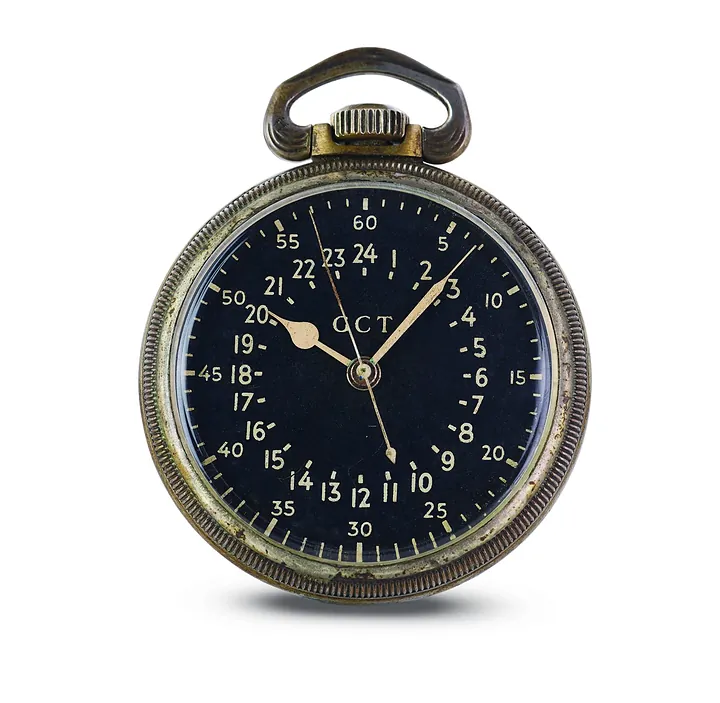
Hamilton 4992B, GCT Navigation U.S Air Force, c. 1943
Antiquorum auction archive, Geneva
Wristwatches · c. 1940s
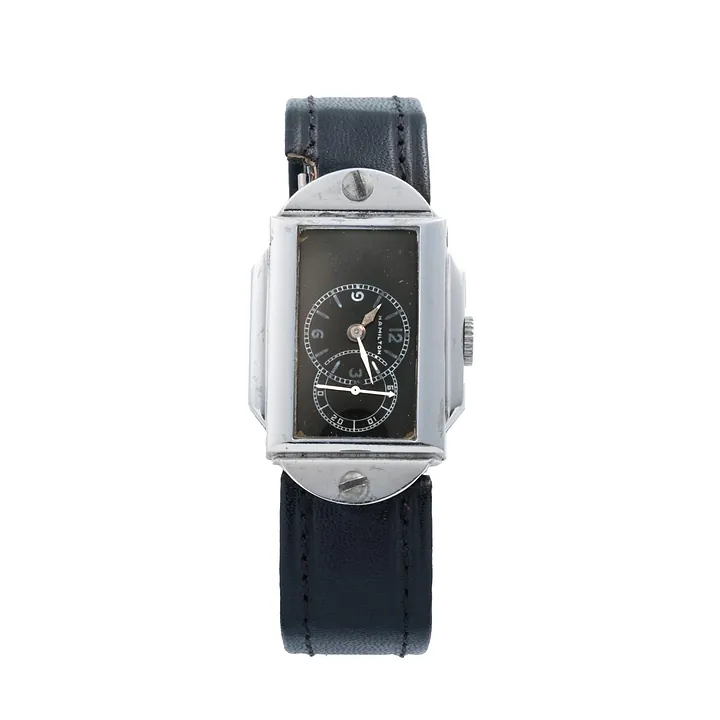
Hamilton Bomb Timer, c. 1940s
Antiquorum auction archive, Geneva
Wristwatches · originally sold in February 2025 (per the lot record)
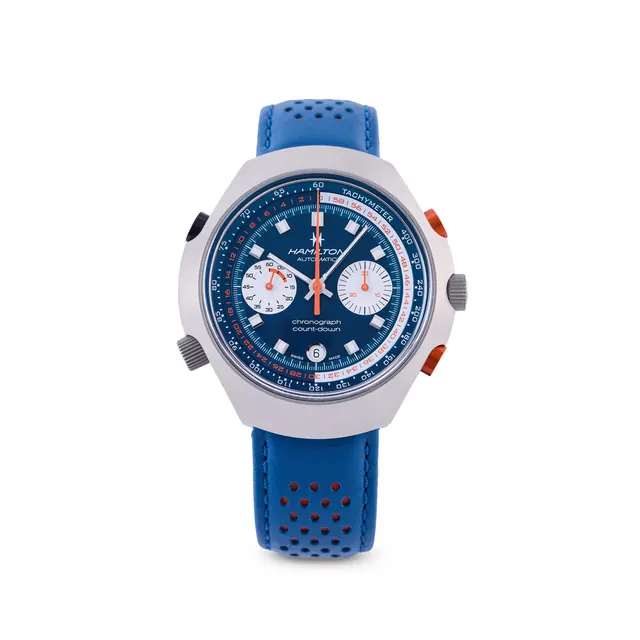
Hamilton wristwatch, ref. H51606640, American Classic Chrono-Matic 50 Limited Edition, originally sold in February 2025 (per the lot record)
Antiquorum auction archive, Geneva
Wristwatches · c. 1940s
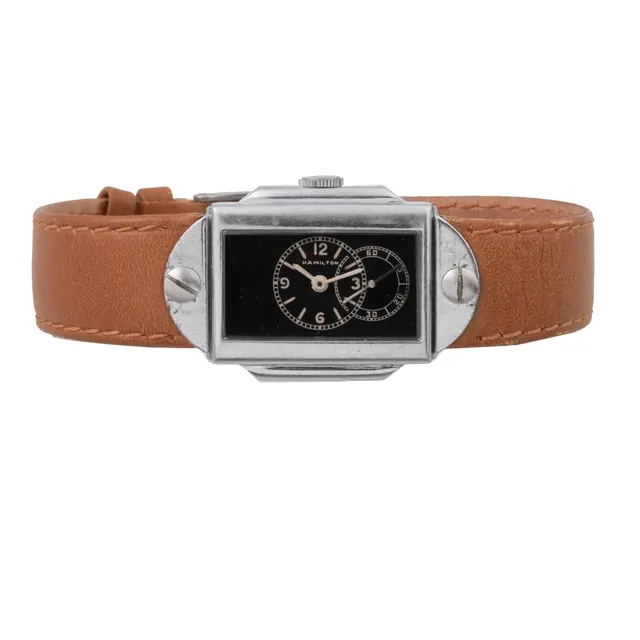
Hamilton wristwatch, Bomb Timer Watch, circa 1940's
Antiquorum auction archive, Geneva

Wristwatches · 1945
Wristwatch by Eterna, 1945
Museum Rotterdam

Wristwatches · c. 1945
Breitling Premier, ref. 790, c. 1945
Antiquorum auction archive, Geneva

Wristwatches · c. 1945
Universal Genève Uni-Compax, ref. 22492, c. 1945
Antiquorum auction archive, Geneva

Wristwatches · c. 1950s
Baume & Mercier wristwatch, c. 1950s
Antiquorum auction archive, Geneva