
Pocket Watches · Key-winding pocket watch
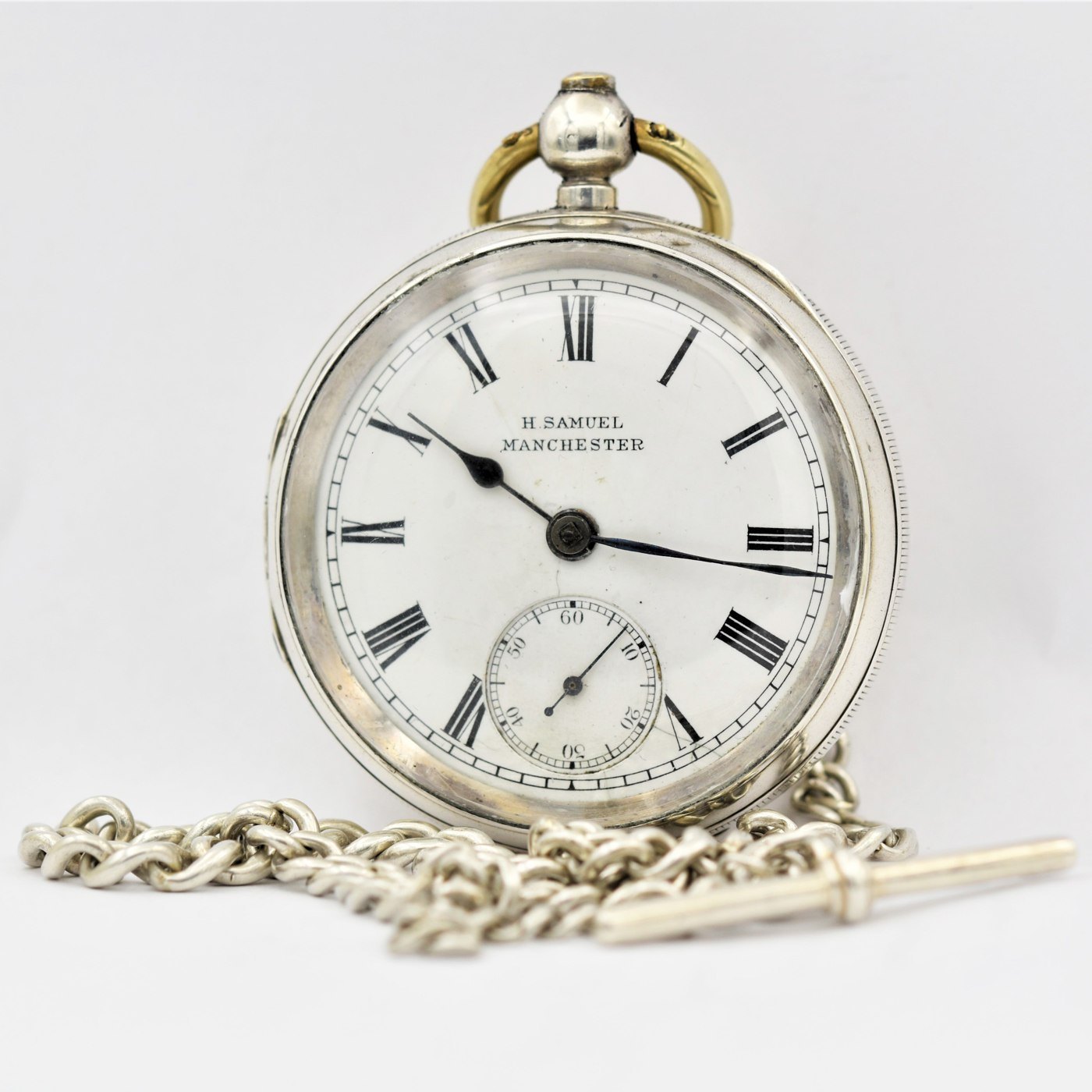
H. Samuel Sterling Silver Key-Wind Pocket Watch
- Maker / attribution
- H. Samuel (source attribution)
- Date
- 1894
- Historical period
- Industrial Revolution (1850 – 1900)
- Country of origin
- England
- Object type
- Key-winding pocket watch
- Materials / technique
- Sterling silver
- Holding institution
- Ashton-Blakey Vintage Watches
- Accession / object no.
- h-samuel-sterling-silver-key-wind-pocket-watch-98459fb4a7
- Credit line
- Ashton-Blakey Vintage Watches
- Catalogue title (original)
- ساعت جیبی نقره استرلینگ کوک با کلید H. Samuel Manchester با زنجیر (English)
View the source record ↗ (opens another website in a new tab)Suggest a correction
Record summary
Held and catalogued by Ashton-Blakey Vintage Watches (object number h-samuel-sterling-silver-key-wind-pocket-watch-98459fb4a7), this is a key-winding pocket watch attributed to H. Samuel, made in England, dated 1894. The Atlas places it in the Industrial Revolution period (1850 – 1900) of its Pocket Watches collection. Materials and techniques recorded by the source: Sterling silver. The record is illustrated with 1 photograph.
Assembled from the source record's structured fields. Dates and attributions are given as the source states them; where a field is missing the Atlas leaves it blank rather than estimating.
Catalogue description
Original object description
Measuring 53 mm across, this key-wound and key-set timepiece features a double-hinged case of sterling silver signed on both the white enamel dial and movement by H. Samuel of Manchester. Hallmarks struck inside the case indicate that the silver was assayed at Chester in 1894, presenting a discrepancy with an estimated date of circa 1915 noted in the general auction listing. Light handling wear is visible across the exterior, with the rear cover displaying an unengraved shield for monograms. Faint hairline fractures appear on the white dial, which is laid out with Roman numerals alongside a subsidiary seconds register. Inscribed on the functional movement plate are the maker and city details as well as the phrase "Patent Action". The pocket watch is accompanied by a velvet pouch, a winding key, and a 12-inch silver chain bearing hallmarks.
Inscriptions & marks
42139
Historical context
Industrial Revolution (1850 – 1900)
American interchangeable-parts manufacture; railroad time standards; Swiss and German factory systems.
Machine production with interchangeable parts, pioneered by Waltham (1850s) and adopted by Elgin, Longines, Omega and others, made reliable lever watches widely affordable. Keyless winding became standard, railroad watch standards were introduced (1890s), and Swiss and American industries competed globally.
Read the period in the timelineMore pocket watches from this periodEarlier: Precision & Scientific Horology
Atlas type guide
Pocket watches
The pocket watch was the dominant personal timekeeper from the late seventeenth century until the First World War. Its development tracks the history of the escapement: verge watches with fusees until the late eighteenth century; Thomas Mudge's lever escapement (c. 1755) and the cylinder escapement popularised by George Graham and later by Swiss makers; and the Swiss and English lever watches of the nineteenth century. Lépine's bar-bridge calibre and keyless winding made watches thinner and easier to use.
Industrialisation transformed the trade: American factories such as Waltham (from 1850) and Elgin produced interchangeable parts by machine, and Swiss makers responded with their own mechanisation after the 1876 Philadelphia Exhibition. By 1900 a reliable watch was affordable to millions; the finest makers continued to produce complications and precision watches.
What to look for
- The escapement: verge (crown wheel), cylinder, duplex, English or Swiss lever.
- Key winding (a square arbor in dial or back) or keyless crown winding.
- Signatures and serial numbers on the movement, dial and inside case back.
- Hallmarks, case maker's marks and gold or silver standards stamped in the case.
- Dial material: enamel, silver, gold, later printed metal.
Dating clues
- Verge watches dominate before c. 1800; cylinder watches c. 1770–1900; lever watches after c. 1820.
- Keyless winding: increasingly common after c. 1860.
- Manufacturer serial number lists exist for Waltham, Elgin, Longines, Omega, Patek Philippe and others.
General guidance written by the Atlas editors about this kind of object. It is not a statement about this particular piece; for that, rely on the source record above and on physical examination.
Read next:Verge escapementDetached lever escapementFuseeIdentification Centre
Related records
Pocket Watches · 1889 (hallmarked Birmingham)
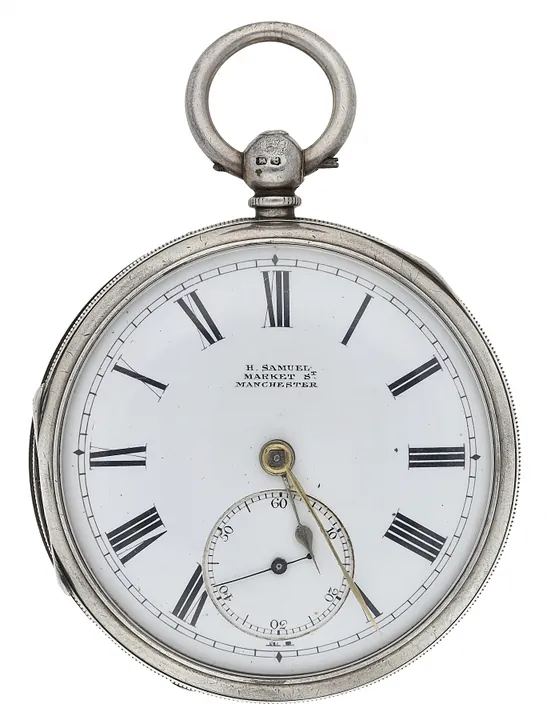
Victorian silver lever pocket watch by H. Samuel, Manchester, hallmarked Birmingham 1889
Gardiner Houlgate (auction house), Corsham
Pocket Watches · 1835–1875
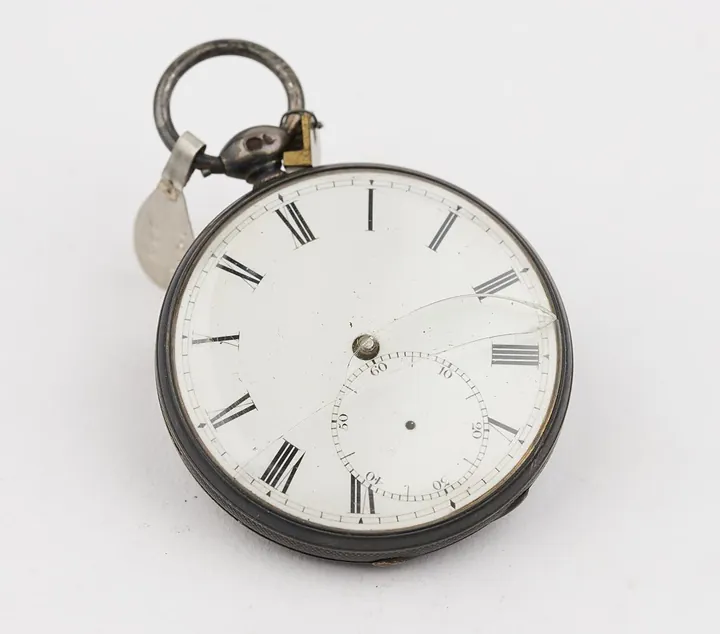
Pocket watch by Cornelius Brooks Holliday, England, 1835–1875
Science Museum Group, London
Pocket Watches · c. 1849–50
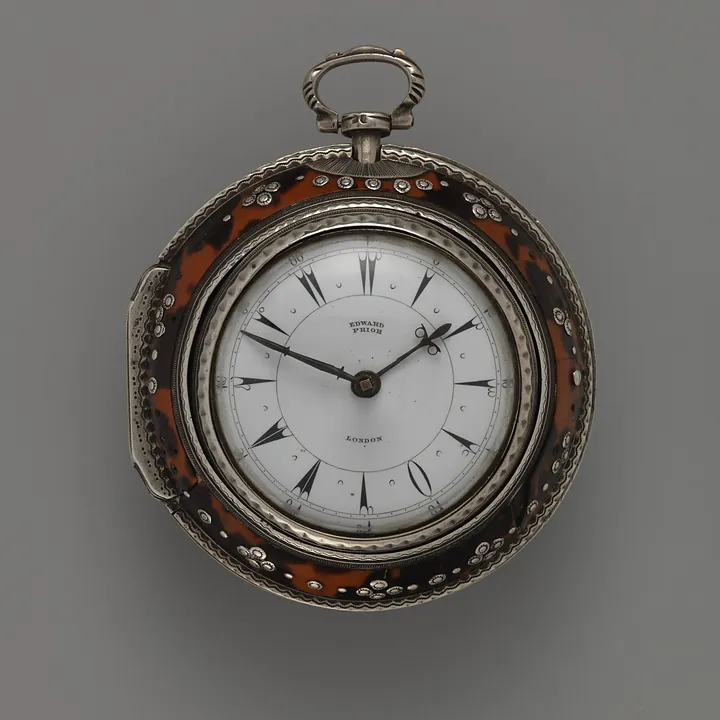
Watch by Edward Prior, England, c. 1849–50
The Metropolitan Museum of Art, New York
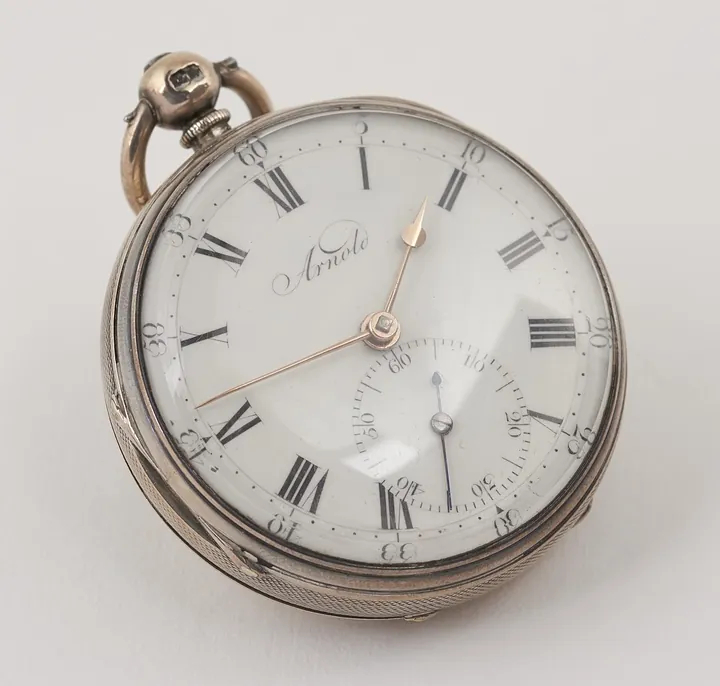
Pocket Watches · 1850-1862; hallmarked 1862
Cylinder watch in silver case by Jno. R. Arnold, London, no.3636, compensated curb, hall marked 1862
Science Museum Group, London
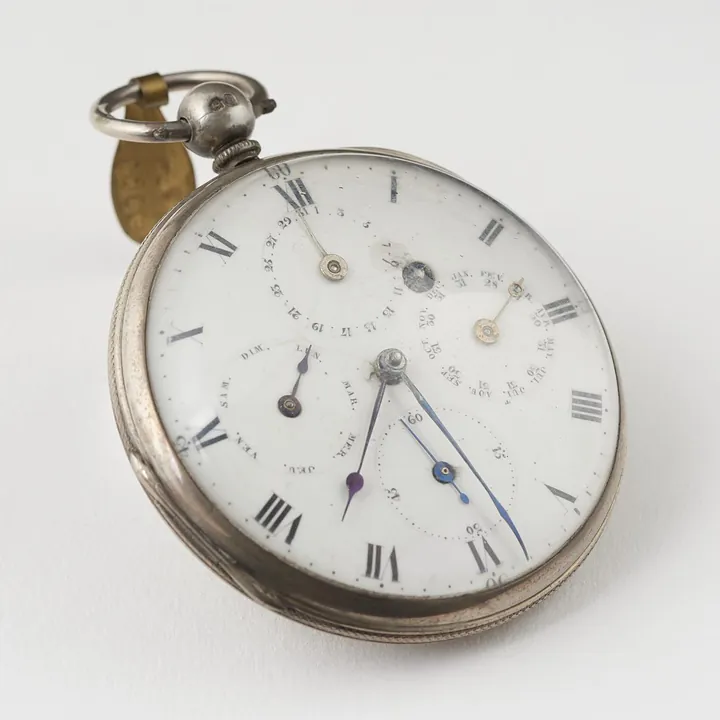
Pocket Watches · hallmarked 1860; 1850-1890
Cylinder watch in silver case, calendar, balance under dial, R.Q., in case. Hall marked 1860
Science Museum Group, London
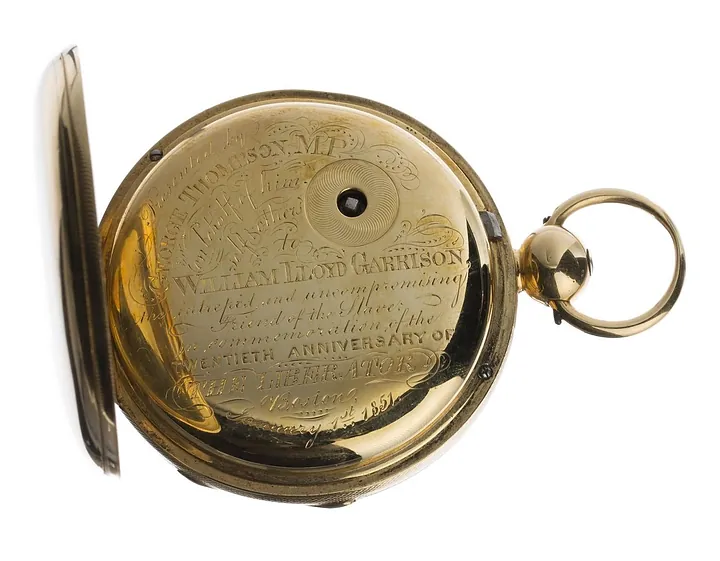
Pocket Watches · 1850
Gold half-hunter pocket watch presented to William Lloyd Garrison, England, 1850
National Museum of African American History and Culture, Smithsonian Institution, Washington DC
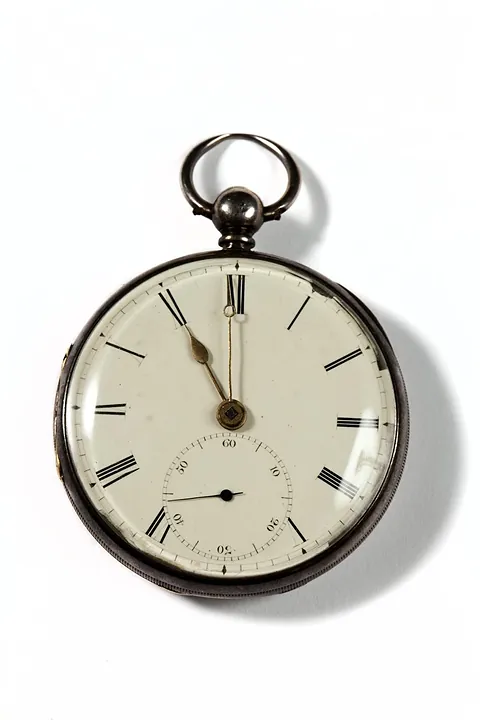
Pocket Watches · 1850–1860
Sterling silver lever pocket watch in original case, made by Thomas & John Ollivant, Manchester, around 1851.
Science Museum Group, London
Pocket Watches · 1850
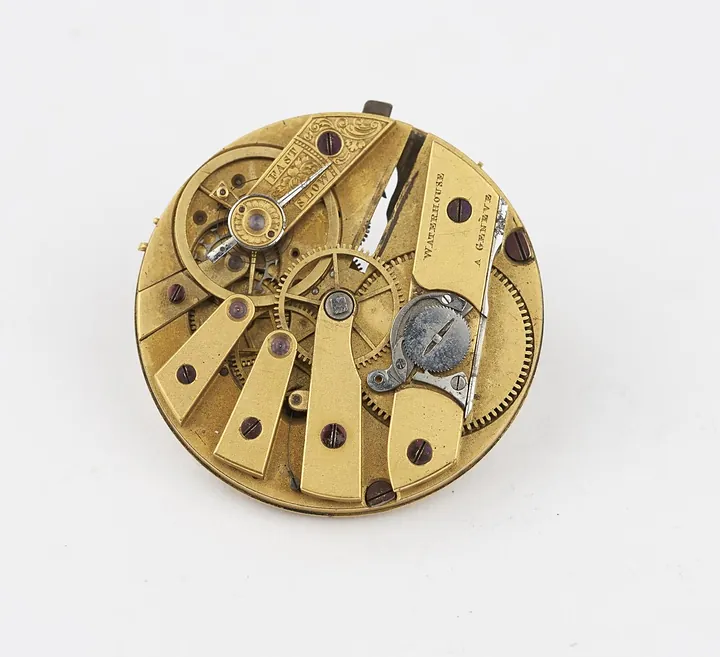
Watch movement with pumping keyless winding mechanism, by G. Waterhouse, London, England, 1845-1851.
Science Museum Group, London