
Wristwatches · Wristwatch
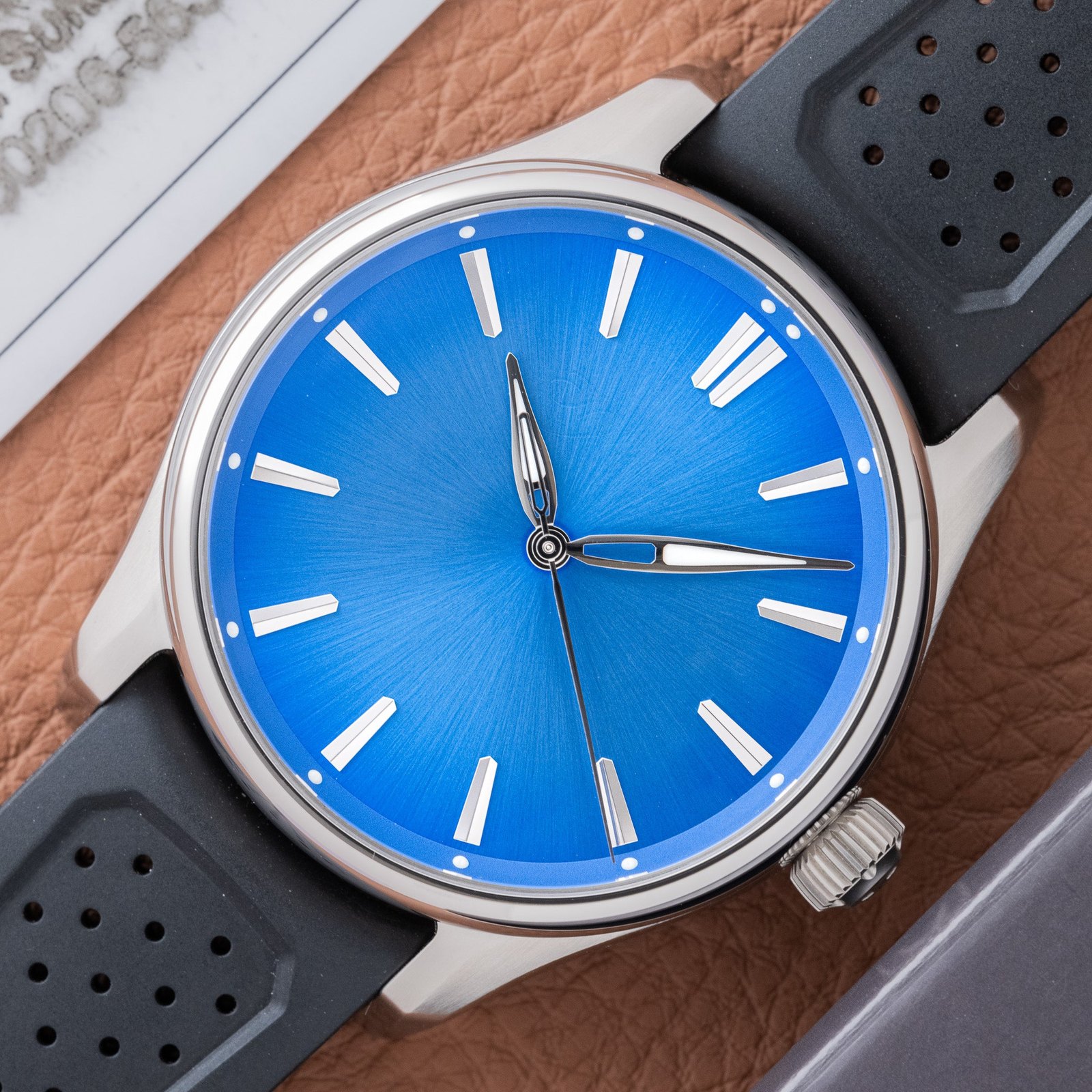
H. Moser & Cie. Pioneer Centre Seconds (Ref. 3200-1217), 2026
- Maker / attribution
- H. Moser & Cie. (maker)
- Date
- 2026
- Historical period
- Contemporary Horology (2010 – Present)
- Country of origin
- Switzerland
- Object type
- Wristwatch
- Dimensions
- Case 40 mm
- Stock no.
- Product 8525597049015
- Credit line
- Dealer listing, Huntington Company (product 8525597049015)
- Catalogue title (original)
- 2026 H. Moser & Cie. Pioneer Centre Seconds - Box and Papers (Ref. 3200-1217) (English)
View the source record (dealer listing) ↗ (opens another website in a new tab)Suggest a correction
Record summary
Catalogued by Huntington Company (dealer) (stock number Product 8525597049015), this is a wristwatch by H. Moser & Cie., made in Switzerland, dated 2026. The Atlas places it in the Contemporary Horology period (2010 – Present) of its Wristwatches collection. Recorded dimensions: Case 40 mm. The record is illustrated with 6 photographs.
Assembled from the source record's structured fields. Dates and attributions are given as the source states them; where a field is missing the Atlas leaves it blank rather than estimating.
Catalogue description
Dealer description — Huntington Company
History and Significance H. Moser & Cie. has built its modern identity around restraint. While much of the industry leans into branding, complications, and visual noise, Moser has gone in the opposite direction. The result is a collection of watches that rely almost entirely on proportion, finishing, and dial work to stand out. The Pioneer line is where that philosophy meets everyday usability. The Pioneer Centre Seconds takes Moser’s typically dress-focused design language and adapts it into something more versatile. You still get the signature fumé dial, minimalist indices, and clean layout, but now in a case that is built to handle daily wear. The slightly sportier construction, paired with solid water resistance and a more robust case profile, makes it one of the more wearable pieces in the brand’s lineup. What separates this reference is the dial. Moser’s blue fumé dials have a depth that changes constantly depending on lighting. In direct light, it has a vibrant, almost electric quality. In softer conditions, it darkens toward the edges and becomes much more subdued. It’s a simple watch at first glance, but it reveals more the longer you spend with it, which is exactly what Moser tends to do best. Writer’s Thoughts This is one of those watches that doesn’t need anything extra. No complications, no distractions, just a really well executed dial and case. The blue on this one is especially strong. It shifts a lot in person and doesn’t feel flat at all. It’s also surprisingly versatile. You can wear it casually on rubber like this or dress it up quickly with a leather strap. Our Promise Every watch is thoroughly vetted, carefully described with complete transparency, and guaranteed authentic. Each piece is offered in honest condition, ensuring collectors receive a timepiece that reflects both originality and integrity. Specifications Brand: H. Moser & Cie. Model: Pioneer Centre Seconds (Ref. 3200-1217) Year: 2026 Case Material: Stainless steel Case Size: 40mm Dial: Blue fumé dial Movement: Automatic HMC 200 Strap/Bracelet: Rubber strap with additional long strap Buckle/Clasp: Moser buckle Contents: Complete set with box, papers, and extra strap Condition Case: The case is in near-mint condition and presents as new, with virtually no visible wear. Dial: Dial is flawless with no marks or imperfections. Hands: Hands are clean with no wear visible. Crystal: Sapphire crystal is clean with no scratches. Strap/Bracelet: The rubber strap is in excellent condition, with minimal to no wear; an additional long strap is included.
Historical context
Contemporary Horology (2010 – Present)
Silicon components, connected watches, optical-lattice research clocks and a thriving independent scene.
Smartwatches became the world's best-selling watches, while mechanical watchmaking focuses on craft, innovation (silicon components, new escapements) and independent makers.
Read the period in the timelineMore wristwatches from this periodEarlier: Mechanical Renaissance
Atlas type guide
Wristwatches
Bracelet watches were worn by women from the early nineteenth century — Breguet made one for Caroline Murat, Queen of Naples, in 1810–12 — but the wristwatch only became a man's instrument with military use and aviation in the early twentieth century. Between the World Wars it overtook the pocket watch; the 1920s and 1930s brought rectangular Art Deco cases, water-resistant cases and the first automatic winding systems.
After 1945 the wristwatch became a carrier of identity — dress watches, sports and dive watches, chronographs, calendars — produced by Swiss, American, Japanese, German, Soviet and Chinese industries. The quartz revolution after 1969 and the mechanical renaissance since the 1990s, including the rise of independent watchmakers, complete the story.
What to look for
- The reference number (between the lugs or inside the case back) and serial number, the starting point for dating.
- The calibre: its maker and number are often stamped under the dial or on the bridge.
- Originality of dial, hands and crown — refinished ('redial') dials are common.
- Case material marks: 18K/750, 14K/585, stainless steel, gold-filled, plated.
Dating clues
- Wire-lug cases: before c. 1925.
- Water-resistant screw-down cases: from 1926.
- Quartz movements: from 1969; sapphire crystals widespread after c. 1980.
General guidance written by the Atlas editors about this kind of object. It is not a statement about this particular piece; for that, rely on the source record above and on physical examination.
Related records

Wristwatches · c. 2010s
Breguet Type XXI, ref. 3810, c. 2010s (Antiquorum Lot 381-24)
Antiquorum auction archive, Geneva

Wristwatches · c. 2010s
Breguet Type XXI, ref. 3810, c. 2010s (Antiquorum Lot 386-229)
Antiquorum auction archive, Geneva

Wristwatches · Sold in September 2010
Breitling Cosmonaute, ref. A 22322, Sold in September 2010
Antiquorum auction archive, Geneva

Wristwatches · c. 2010
Corum Bubble Chrono, ref. 396.150.20, c. 2010
Antiquorum auction archive, Geneva
Wristwatches · c. 2010-2020
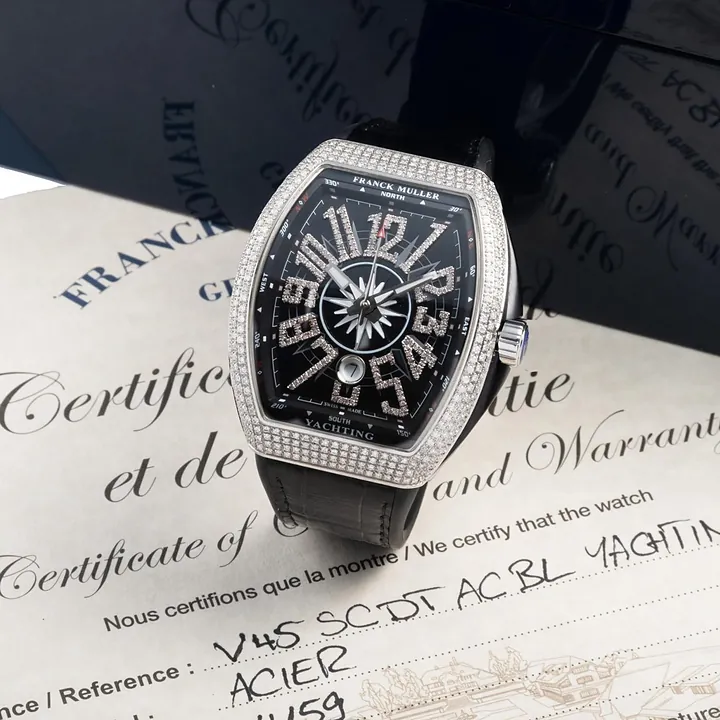
Franck Muller Vanguard Yachting, ref. V45SCDT, c. 2010-2020
Antiquorum auction archive, Geneva
Wristwatches · c. 2010s
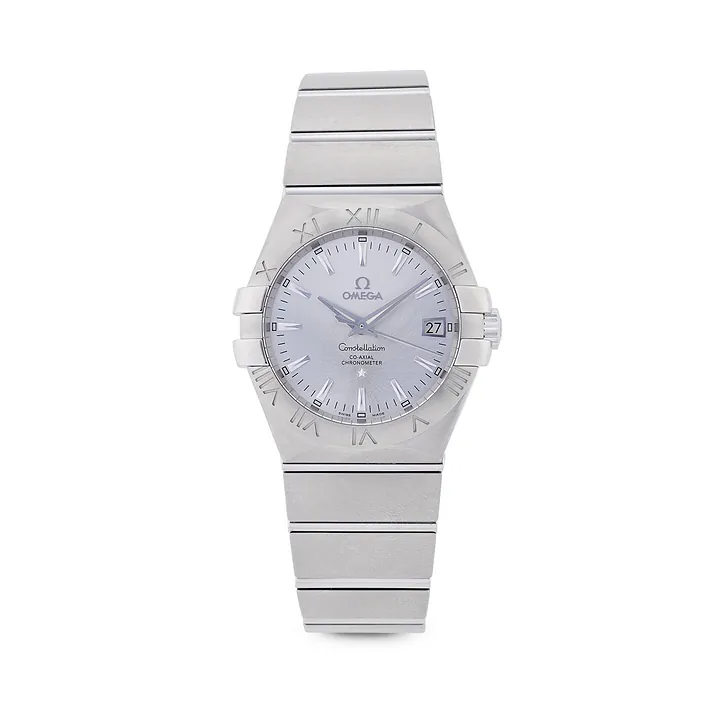
Omega Constellation, ref. 123.10.35.20.02.001, c. 2010s
Antiquorum auction archive, Geneva
Wristwatches · c. 2010s
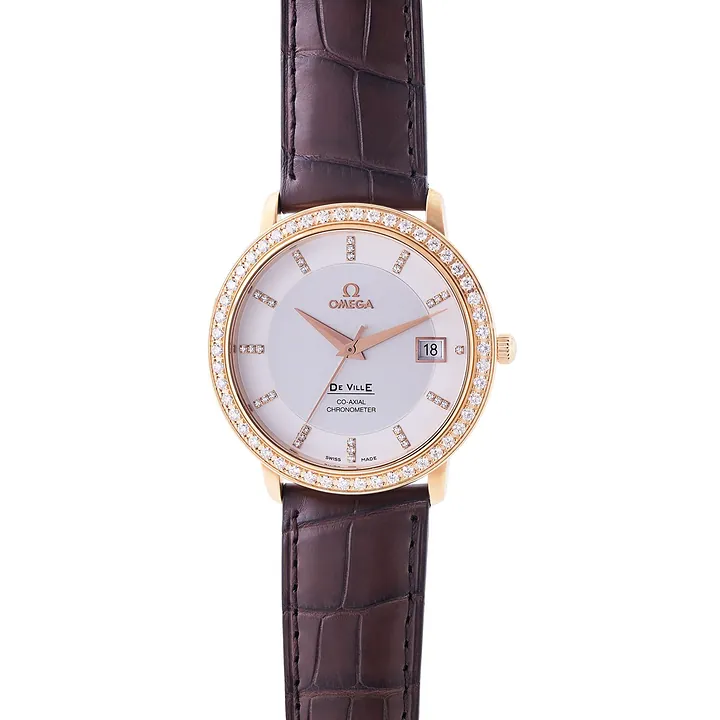
Omega De Ville, ref. 413.58.37.20.52.001, c. 2010s
Antiquorum auction archive, Geneva
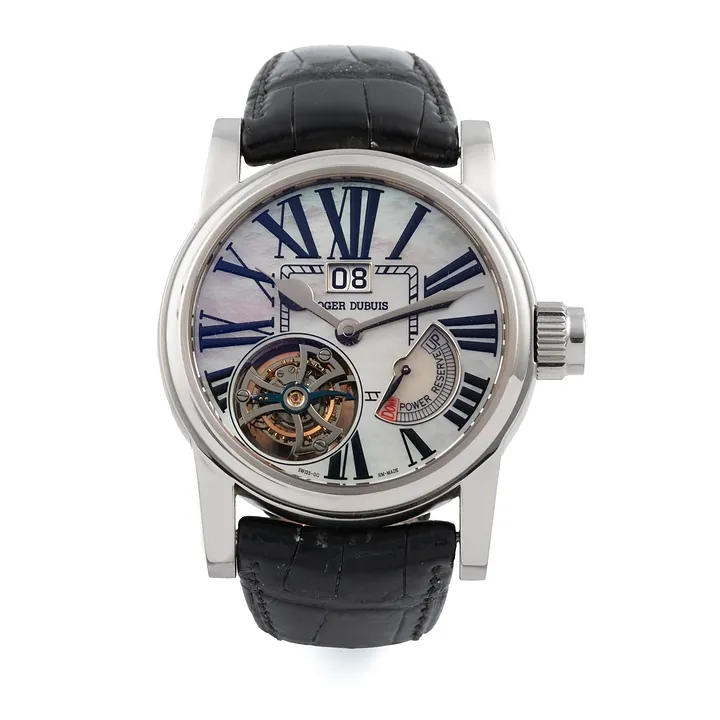
Wristwatches · c. 2010
Roger Dubuis Hommage Tourbillon Marine, ref. H043 03 0 N1C.7A, c. 2010
Antiquorum auction archive, Geneva