
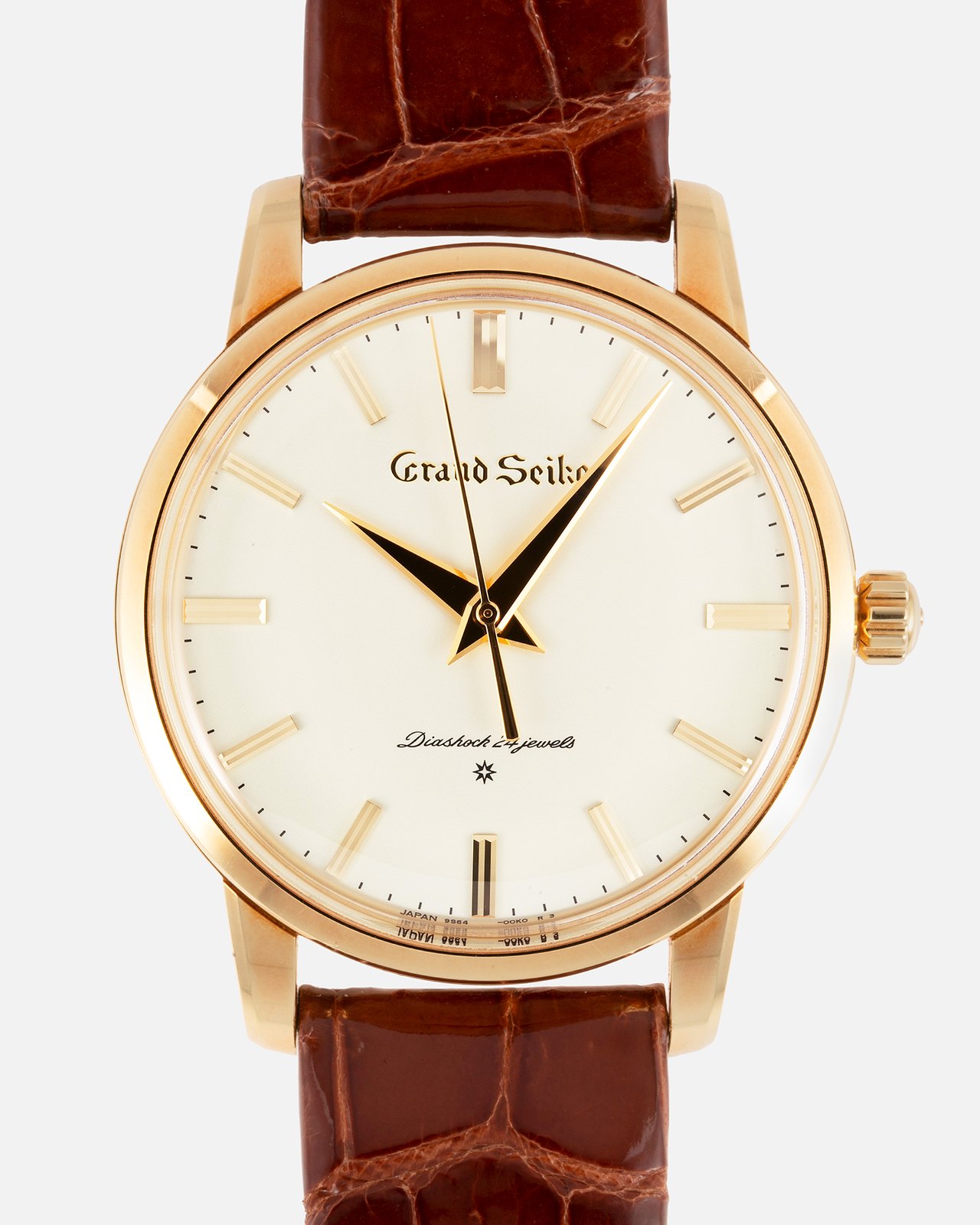
Wristwatches · Wristwatch
Grand Seiko SBGW 252 Yellow Gold, 2017
- Maker / attribution
- Grand Seiko (maker)
- Date
- 2017
- Historical period
- Contemporary Horology (2010 – Present)
- Country of origin
- Japan
- Object type
- Wristwatch
- Materials / technique
- yellow gold
- Dimensions
- Case 38 mm
- Stock no.
- Product 6751440994391
- Credit line
- Dealer listing, S.Song Watches (product 6751440994391)
- Catalogue title (original)
- Grand Seiko SBGW 252 Yellow Gold (English)
View the source record (dealer listing) ↗ (opens another website in a new tab)Suggest a correction
Record summary
Catalogued by S.Song Watches (dealer), Seattle (stock number Product 6751440994391), this is a wristwatch by Grand Seiko, made in Japan, dated 2017. The Atlas places it in the Contemporary Horology period (2010 – Present) of its Wristwatches collection. Materials and techniques recorded by the source: yellow gold. Recorded dimensions: Case 38 mm. The record is illustrated with 6 photographs.
Assembled from the source record's structured fields. Dates and attributions are given as the source states them; where a field is missing the Atlas leaves it blank rather than estimating.
Catalogue description
Dealer description — S.Song Watches
Grand Seiko is slowly but surely becoming a force to reckon with in the horological world. Partly due to stereotypes and prejudice, Seiko as a brand has often been shunned as inferior to Swiss watchmaking when they were actually making watches that were just as good if not better. The SBGW 252, released in 2017 as a celebration of the Grand Seiko name, is a testament to this. Made in a limited edition of only 353 pieces, the SBGW253 is a reissue of the original Grand Seiko that was released in 1960. Though they have reissued this model before in 2011, the newer version features a larger 38mm case. What Grand Seiko does better than any of its competitors is its attention to detail and respect for its heritage. While we often see reissues these days from many brands, they always fall short on the details, with wrong proportions and corner-cutting. With the SBGW252, I don’t think I can fault anything about it. The 38mm yellow gold case is perfectly proportionate and faithful to the original, despite the upsize. From its beveled lugs to the 11.2mm profile of the case, all of the details are spot on. Even the engraved gold Grand Seiko lion on the case back and the vintage-styled buckle are executed perfectly. The polar white dial is no different, adopting the old-school style Grand Seiko logo font. The finishing as expected from Grand Seiko is perfectly done with their Zaratsu style of finishing on the case and hands. Derived from sword-making tradition, Zaratsu polishing is used by Grand Seiko to produce their signature distortion-free mirror finishing. With the SBGW252, it is all about simplicity executed with perfection. This is truly a faultless dress watch and I don’t think I can say that about too many pieces.
Historical context
Contemporary Horology (2010 – Present)
Silicon components, connected watches, optical-lattice research clocks and a thriving independent scene.
Smartwatches became the world's best-selling watches, while mechanical watchmaking focuses on craft, innovation (silicon components, new escapements) and independent makers.
Read the period in the timelineMore wristwatches from this periodEarlier: Mechanical Renaissance
Atlas type guide
Wristwatches
Bracelet watches were worn by women from the early nineteenth century — Breguet made one for Caroline Murat, Queen of Naples, in 1810–12 — but the wristwatch only became a man's instrument with military use and aviation in the early twentieth century. Between the World Wars it overtook the pocket watch; the 1920s and 1930s brought rectangular Art Deco cases, water-resistant cases and the first automatic winding systems.
After 1945 the wristwatch became a carrier of identity — dress watches, sports and dive watches, chronographs, calendars — produced by Swiss, American, Japanese, German, Soviet and Chinese industries. The quartz revolution after 1969 and the mechanical renaissance since the 1990s, including the rise of independent watchmakers, complete the story.
What to look for
- The reference number (between the lugs or inside the case back) and serial number, the starting point for dating.
- The calibre: its maker and number are often stamped under the dial or on the bridge.
- Originality of dial, hands and crown — refinished ('redial') dials are common.
- Case material marks: 18K/750, 14K/585, stainless steel, gold-filled, plated.
Dating clues
- Wire-lug cases: before c. 1925.
- Water-resistant screw-down cases: from 1926.
- Quartz movements: from 1969; sapphire crystals widespread after c. 1980.
General guidance written by the Atlas editors about this kind of object. It is not a statement about this particular piece; for that, rely on the source record above and on physical examination.
Related records
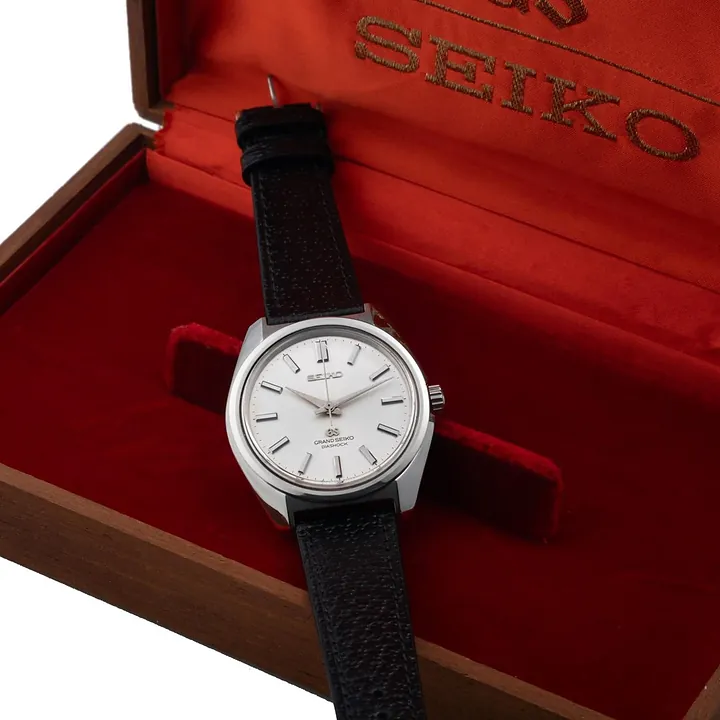
Wristwatches · 1967
Grand Seiko 44 GS, ref. 4420-9000, 1967
Antiquorum auction archive, Geneva
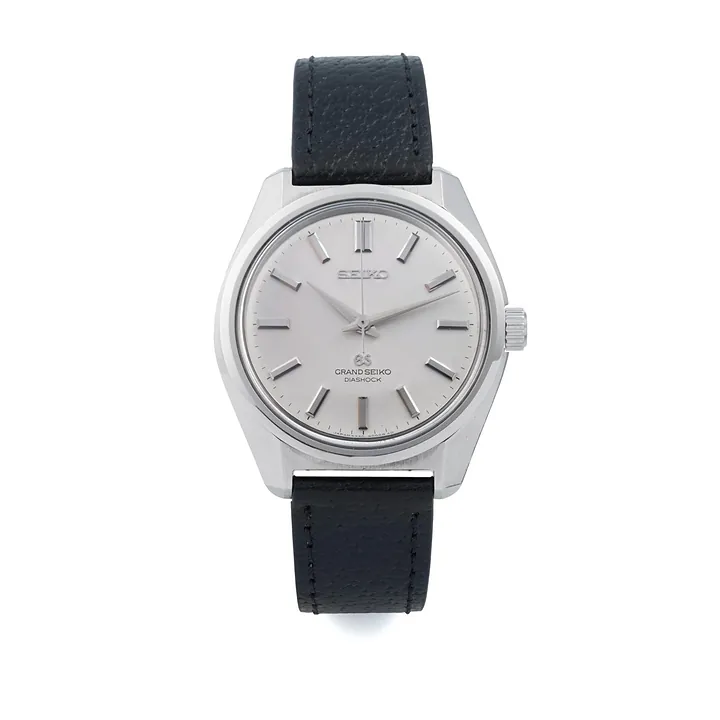
Wristwatches · c. 1967
Grand Seiko 44 GS, ref. 4420-9000, c. 1967
Antiquorum auction archive, Geneva
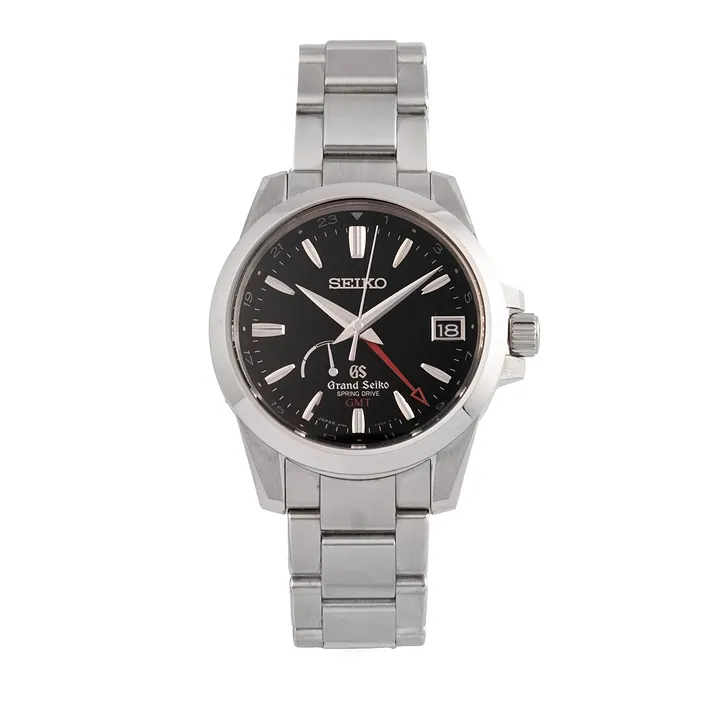
Wristwatches · c. 2020s
Grand Seiko Spring Drive GMT, ref. 9R66-0AE0, c. 2020s
Antiquorum auction archive, Geneva
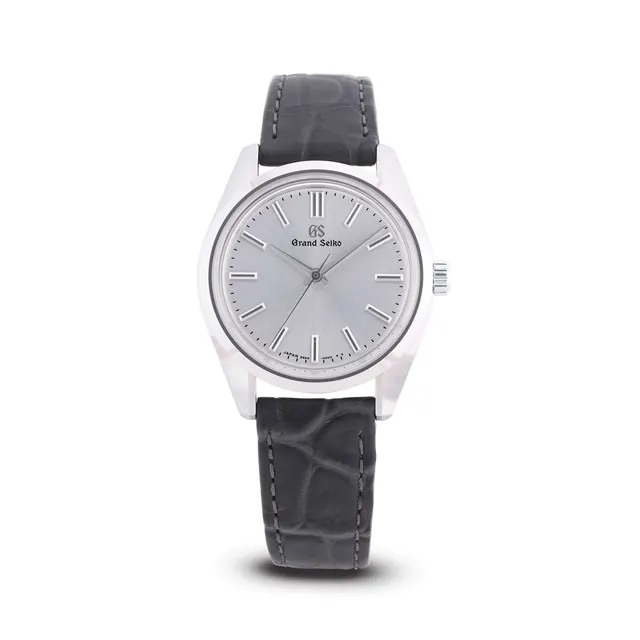
Wristwatches · originally sold in September 2022 (per the lot record)
Grand Seiko wristwatch, ref. SBGW291, Heritage Collection, originally sold in September 2022
Antiquorum auction archive, Geneva
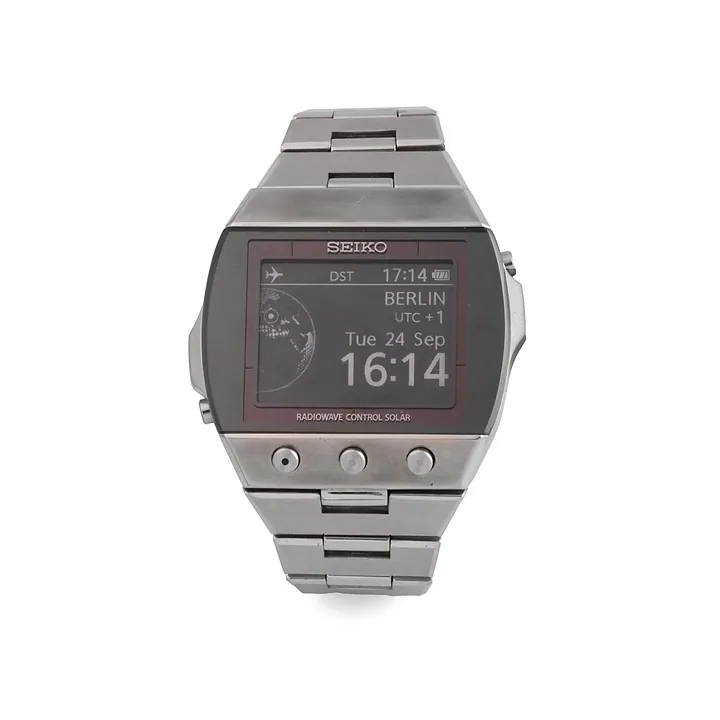
Wristwatches · Sold in 2011
Seiko Brights Spirit, ref. S770, Sold in 2011
Antiquorum auction archive, Geneva
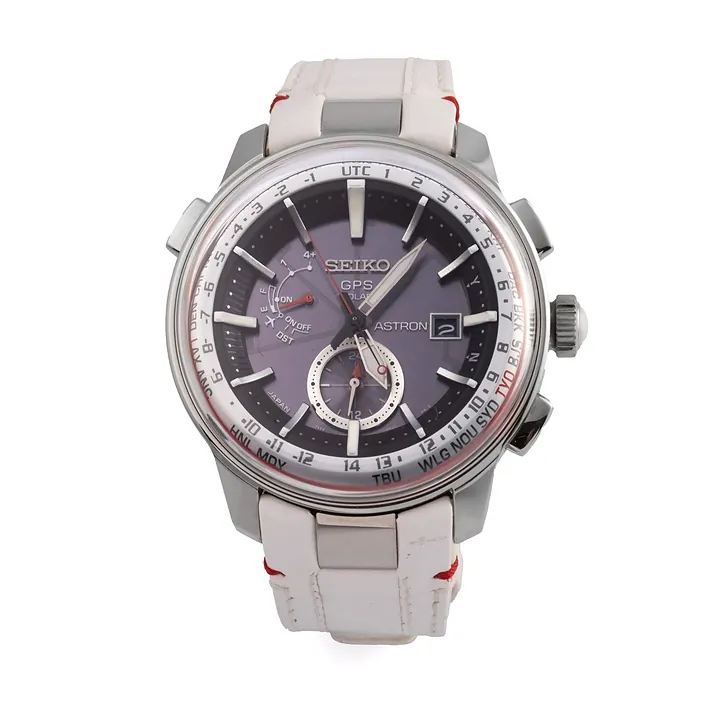
Wristwatches · originally sold in 2014 (per the lot record)
Seiko Astron GPS Solar, ref. SBXA045, originally sold in 2014
Antiquorum auction archive, Geneva
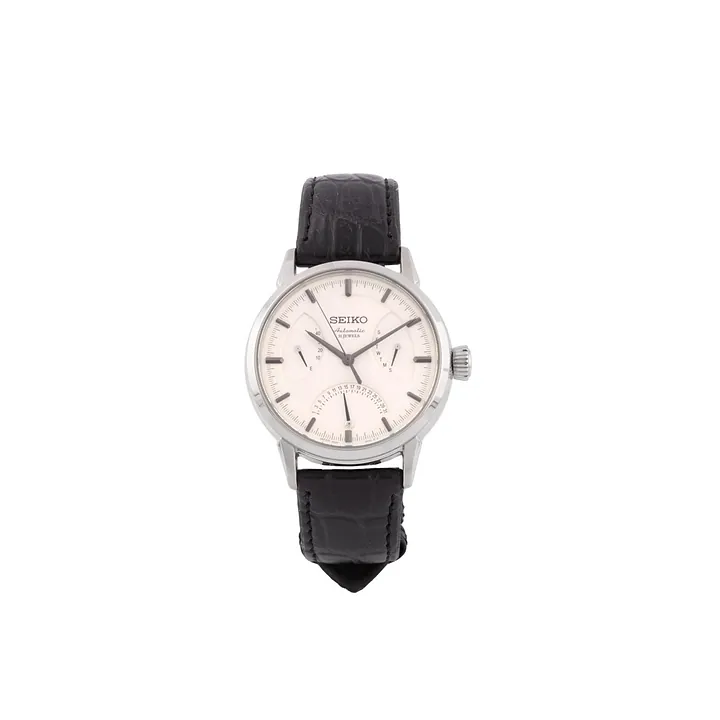
Wristwatches · c. 2015
Seiko Presage, c. 2015
Antiquorum auction archive, Geneva
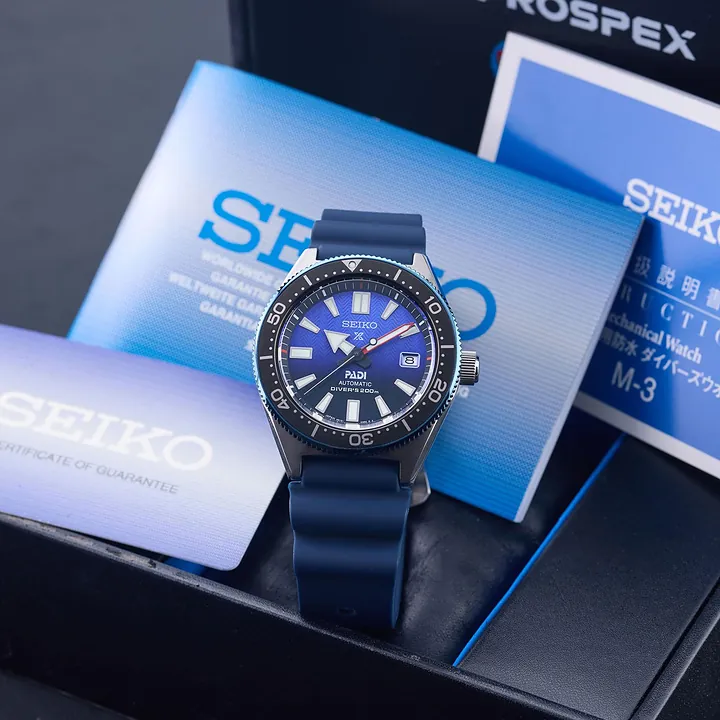
Wristwatches · originally sold in 2018 (per the lot record)
Seiko Prospex Padi Special Edition, ref. SBDC055, originally sold in 2018
Antiquorum auction archive, Geneva