
Wristwatches · Wristwatch
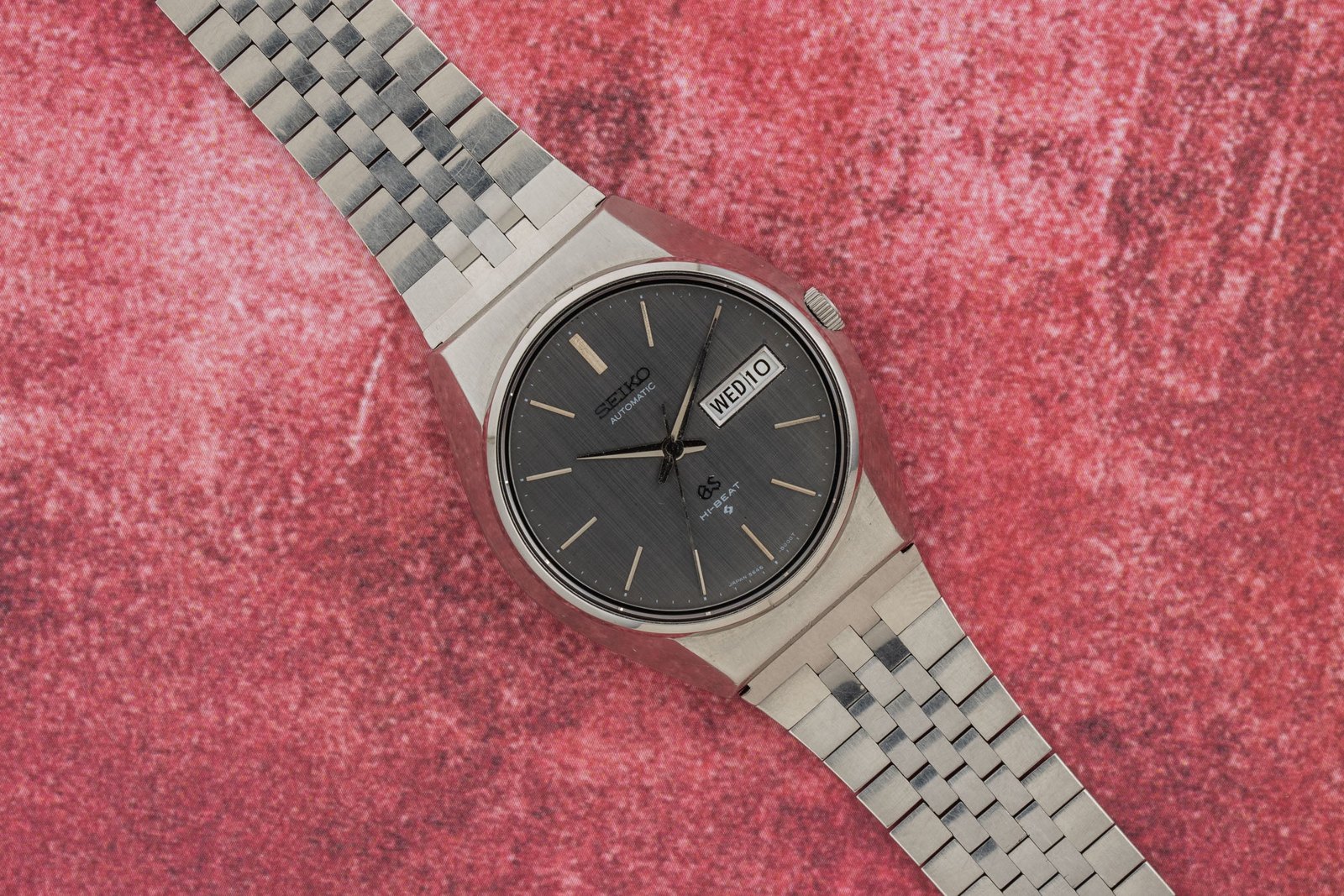
Grand Seiko 56GS Hi-Beat, early 1970s
- Maker / attribution
- Grand Seiko (maker)
- Date
- early 1970s
- Historical period
- Quartz Revolution (1969 – 1990)
- Country of origin
- Japan
- Object type
- Wristwatch
- Stock no.
- 40990128
- Credit line
- Dealer listing, Analog/Shift (40990128)
- Catalogue title (original)
- Grand Seiko 56GS Hi-Beat (English)
View the source record (dealer listing) ↗ (opens another website in a new tab)Suggest a correction
Record summary
Catalogued by Analog/Shift (dealer), New York (stock number 40990128), this is a wristwatch by Grand Seiko, made in Japan, dated early 1970s. The Atlas places it in the Quartz Revolution period (1969 – 1990) of its Wristwatches collection. The record is illustrated with 6 photographs.
Assembled from the source record's structured fields. Dates and attributions are given as the source states them; where a field is missing the Atlas leaves it blank rather than estimating.
Catalogue description
Dealer description — Analog/Shift
Grand Seiko is the darling of contemporary watch collectors today, and taking even a cursory glance at the design specs -- or better yet -- an example in the metal, its easy to see why. What many collectors are learning is that Grand Seiko dates back to right around 1960, and some of their earliest models featured what went on to become the hallmark design staples that are clear and present in their popular collections today. This particular example, a Reference 5646-8000, dates to the early 1970s and features a distinctive faceted-cushion case, grey linen dial, 'GS' signed crown, and caseback medallion that are all parts of Grand Seiko's design language today. Coupled with its correct and matching brink-link bracelet with a signed clasp (which we prefer to any of their contemporary bracelets, we might add), we are left with a truly special and elusive package. This piece demonstrates perfectly what's so great about Japanese craftsmanship; attention to detail and refinement. Really spectacular!
Historical context
Quartz Revolution (1969 – 1990)
Seiko's Astron begins mass quartz timekeeping; traditional industries contract sharply.
Quartz and digital watches transformed the market after 1969. Swiss employment collapsed, Japanese and Hong Kong production soared, and the Swatch (1983) helped the Swiss industry recover; mechanical watches survived as luxury goods.
Read the period in the timelineMore wristwatches from this periodEarlier: Modern Mechanical Horology
Atlas type guide
Wristwatches
Bracelet watches were worn by women from the early nineteenth century — Breguet made one for Caroline Murat, Queen of Naples, in 1810–12 — but the wristwatch only became a man's instrument with military use and aviation in the early twentieth century. Between the World Wars it overtook the pocket watch; the 1920s and 1930s brought rectangular Art Deco cases, water-resistant cases and the first automatic winding systems.
After 1945 the wristwatch became a carrier of identity — dress watches, sports and dive watches, chronographs, calendars — produced by Swiss, American, Japanese, German, Soviet and Chinese industries. The quartz revolution after 1969 and the mechanical renaissance since the 1990s, including the rise of independent watchmakers, complete the story.
What to look for
- The reference number (between the lugs or inside the case back) and serial number, the starting point for dating.
- The calibre: its maker and number are often stamped under the dial or on the bridge.
- Originality of dial, hands and crown — refinished ('redial') dials are common.
- Case material marks: 18K/750, 14K/585, stainless steel, gold-filled, plated.
Dating clues
- Wire-lug cases: before c. 1925.
- Water-resistant screw-down cases: from 1926.
- Quartz movements: from 1969; sapphire crystals widespread after c. 1980.
General guidance written by the Atlas editors about this kind of object. It is not a statement about this particular piece; for that, rely on the source record above and on physical examination.
Related records
Wristwatches · 1967
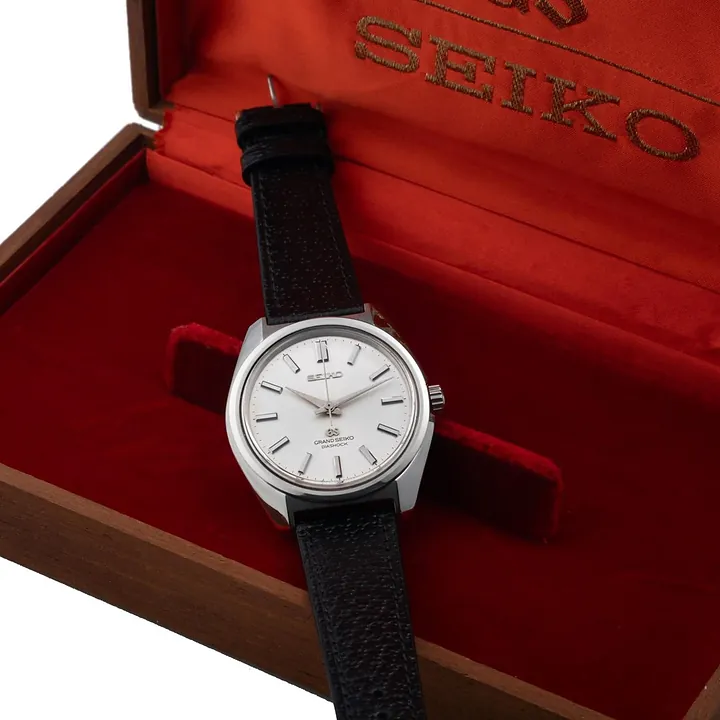
Grand Seiko 44 GS, ref. 4420-9000, 1967
Antiquorum auction archive, Geneva
Wristwatches · c. 1967
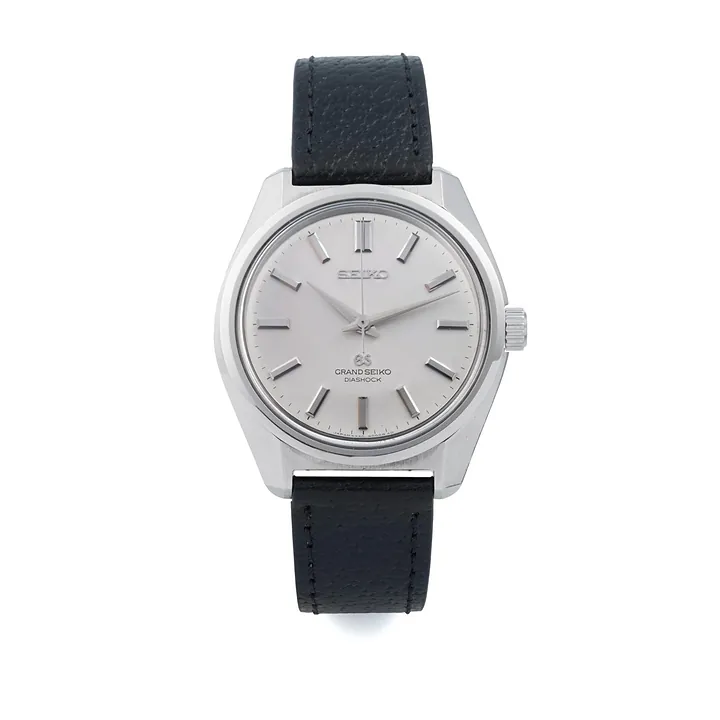
Grand Seiko 44 GS, ref. 4420-9000, c. 1967
Antiquorum auction archive, Geneva
Wristwatches · c. 2020s
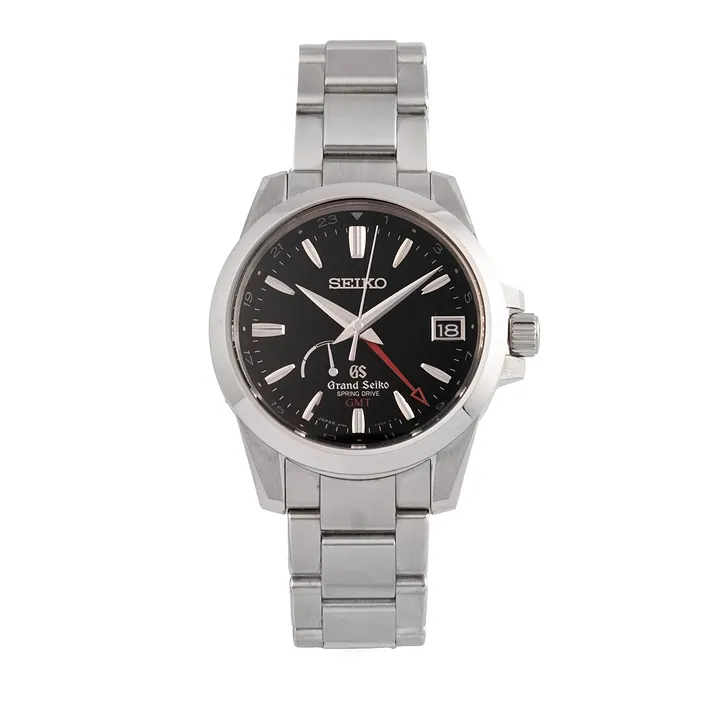
Grand Seiko Spring Drive GMT, ref. 9R66-0AE0, c. 2020s
Antiquorum auction archive, Geneva
Wristwatches · originally sold in September 2022 (per the lot record)
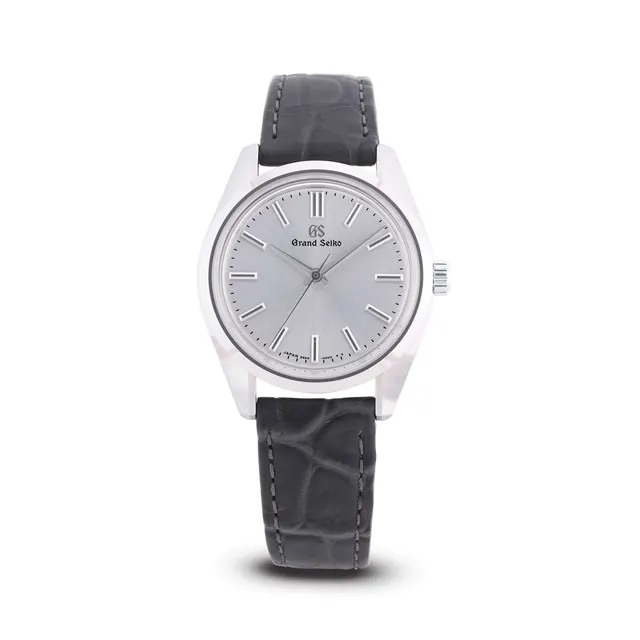
Grand Seiko wristwatch, ref. SBGW291, Heritage Collection, originally sold in September 2022
Antiquorum auction archive, Geneva
Wristwatches · 1978
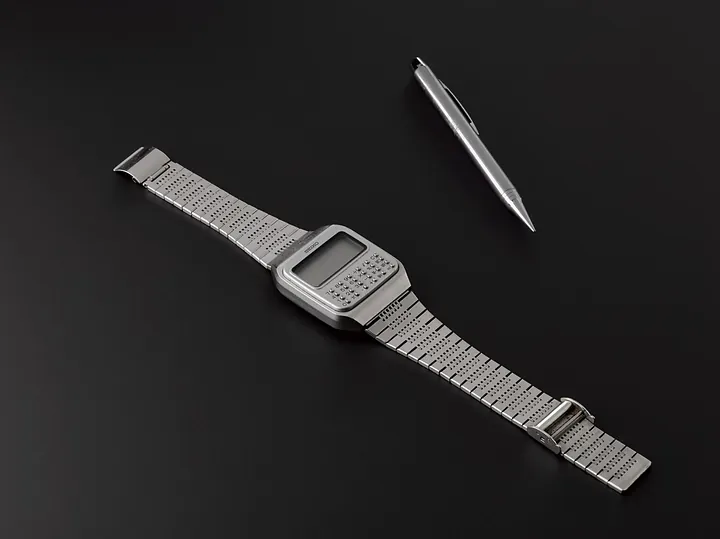
Calculator wristwatch by Suwa Seikosha Co. Limited, Japan, 1978
Science Museum Group, London
Wristwatches · 1980–1982
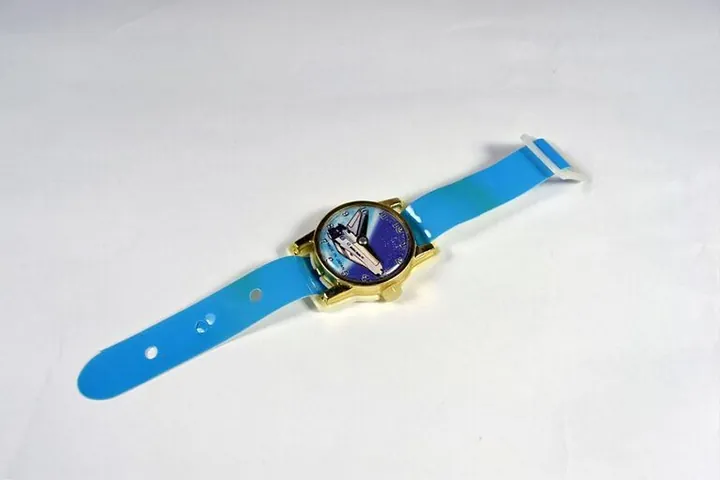
Wristwatch, Space Shuttle; plastic, Japan, 1970-1979?
Victoria and Albert Museum, London
Wristwatches · 1969
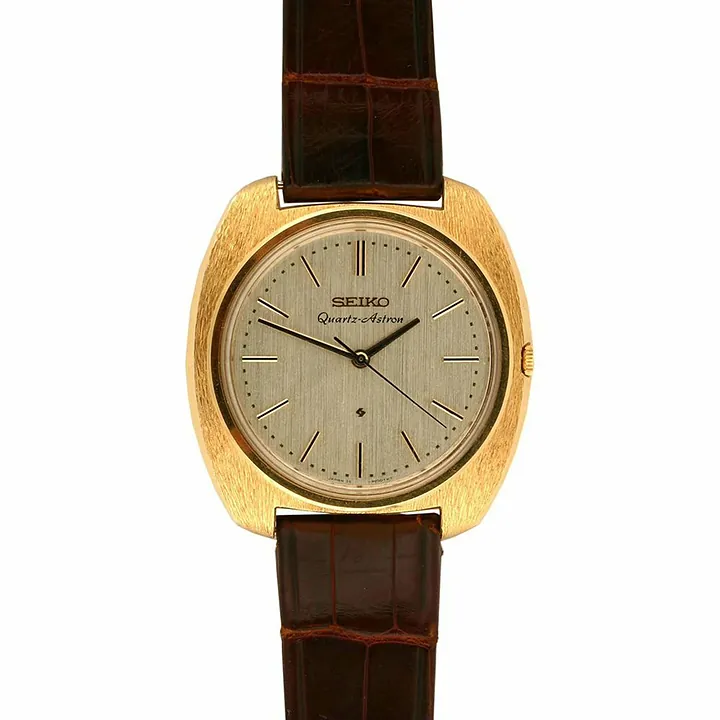
Wristwatch, Japan, 1969 (no. 29912)
German Clock Museum
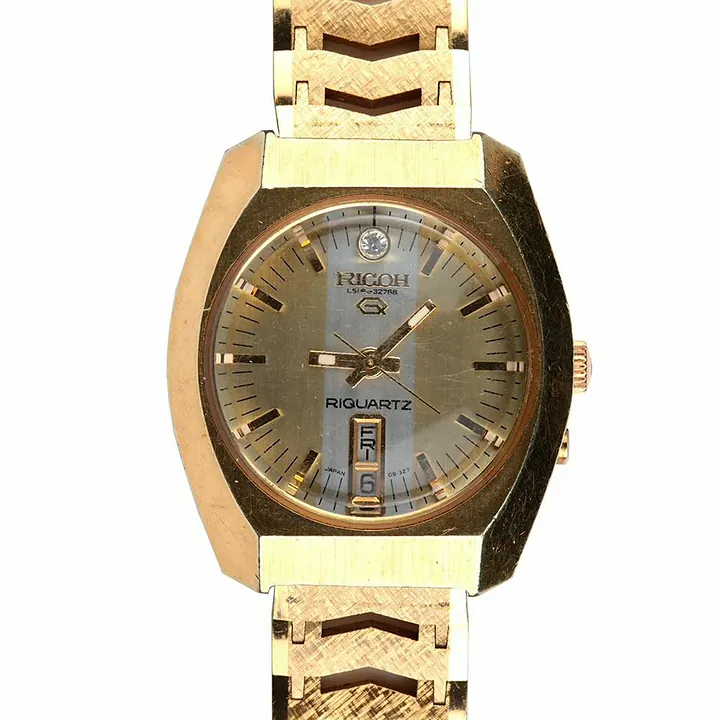
Wristwatches · c. 1972
Wristwatch, Japan, c. 1972
German Clock Museum