Movements & Components · Watch dial
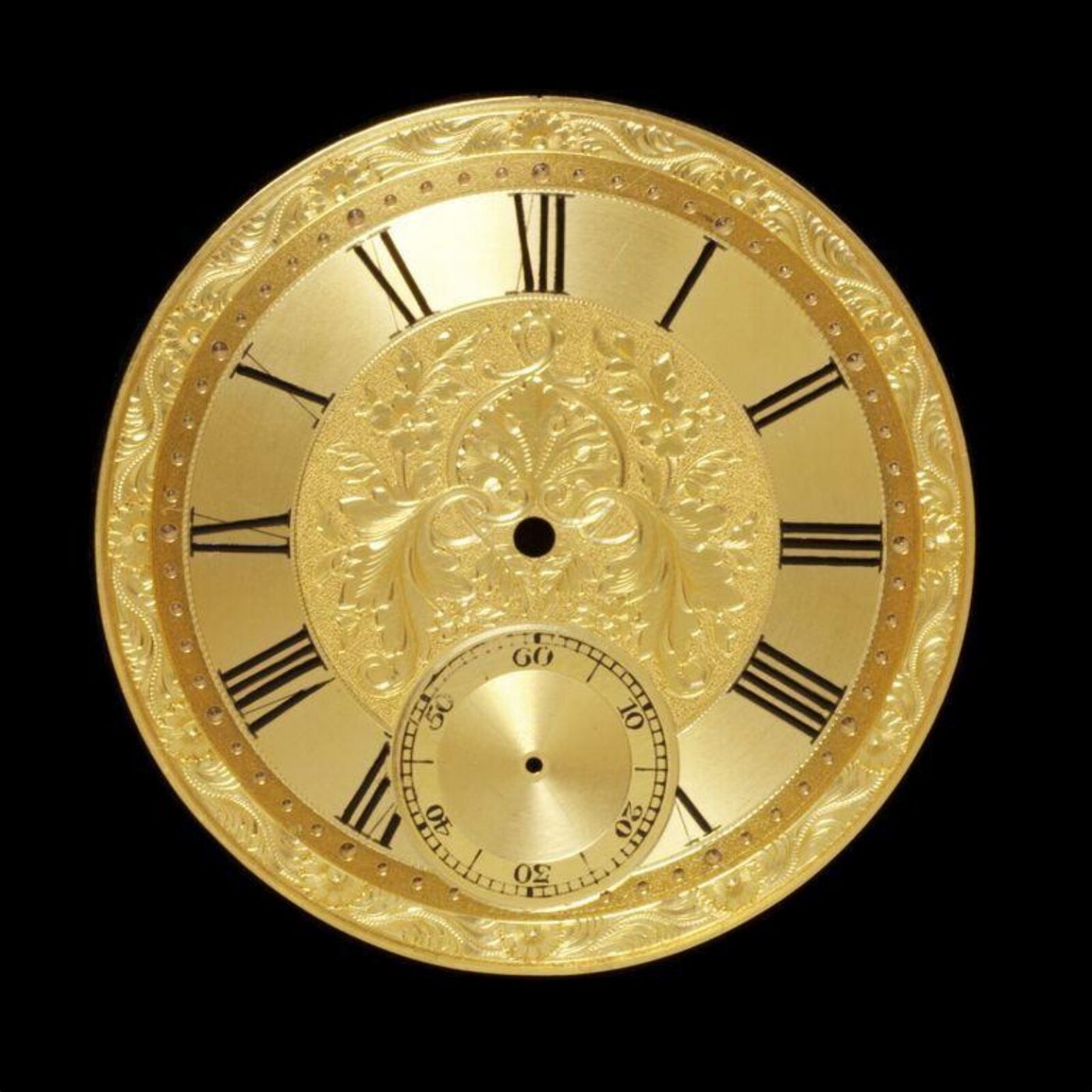
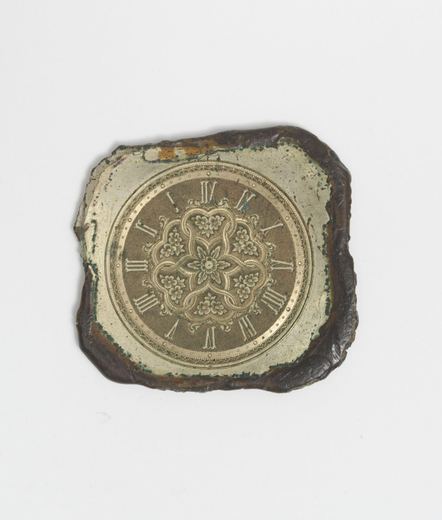
Gold and silver, engraved, matted and engine-turned, England, Coventry, about 1880; made by Thomas Batting (V&A M.22-1932)
- Maker / attribution
- Thomas Batting (maker)
- Date
- ca.1880
- Historical period
- Industrial Revolution (1850 – 1900)
- Country of origin
- England
- Place
- Coventry
- Object type
- Watch dial
- Materials / technique
- Gold and silver, engraved, matted and engine-turned
- Dimensions
- Diameter: 4.2 cm
- Holding institution
- Victoria and Albert Museum, London
- Accession / object no.
- M.22-1932
Record summary
Held and catalogued by Victoria and Albert Museum, London (object number M.22-1932), this is a watch dial by Thomas Batting, made in Coventry, England, dated ca.1880. The Atlas places it in the Industrial Revolution period (1850 – 1900) of its Movements & Components collection. Materials and techniques recorded by the source: Gold and silver, engraved, matted and engine-turned. Recorded dimensions: Diameter: 4.2 cm. The record is illustrated with 2 photographs.
Assembled from the source record's structured fields. Dates and attributions are given as the source states them; where a field is missing the Atlas leaves it blank rather than estimating.
Catalogue description
V&A — Physical description
Gold and silver, engraved, matted and engine-turned
Inscriptions & marks
Engraved Ts Batting on reverse
Historical context
Industrial Revolution (1850 – 1900)
American interchangeable-parts manufacture; railroad time standards; Swiss and German factory systems.
Standardised calibres, interchangeable parts and machine tools allowed movements to be mass-produced in American and Swiss factories.
Read the period in the timelineMore movements & components from this periodEarlier: Precision & Scientific Horology
Atlas type guide
Dials and hands
Dials record both fashion and technology. Early watches had engraved metal dials; champlevé dials with raised numerals dominated around 1680–1730, followed by white vitreous enamel, guilloché gold and silver dials, and printed metal dials in the twentieth century. Luminous paints — radium from c. 1910, tritium from c. 1960 and non-radioactive pigments from the late 1990s — answered the need for legibility in the dark.
Because dials are visible and easily damaged, they were often restored or replaced. Distinguishing original dials from 'redials', and original hands from later replacements, is one of the main tasks of identification and authentication.
What to look for
- Enamel hairlines, chips and the quality of painted numerals.
- Signatures and Swiss-made markings ('Swiss', 'Swiss Made', 'T Swiss T') at the bottom edge.
- Lume colour and condition, which should match between hands and dial.
- Dial feet and their positions on the reverse, which must match the movement.
Dating clues
- Champlevé metal dials: c. 1680–1730.
- 'Swiss Made' dial markings became usual after the 1950s; 'T Swiss T' indicates tritium (c. 1960–1998).
General guidance written by the Atlas editors about this kind of object. It is not a statement about this particular piece; for that, rely on the source record above and on physical examination.
Related records
Movements & Components · ca.1880
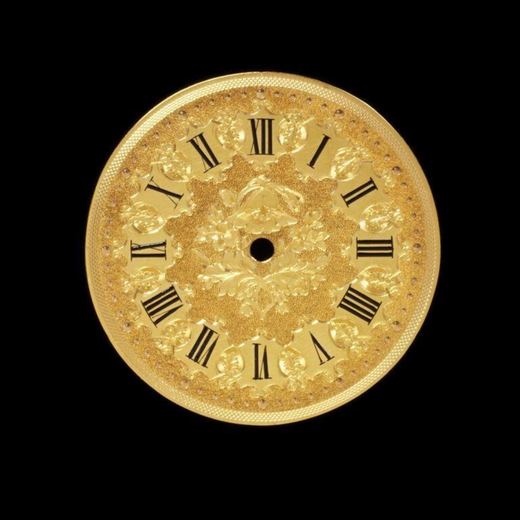
Gold and silver, engraved, matted and engine-turned, England, Coventry, about 1880; made by Thomas Batting (V&A M.23-1932)
Victoria and Albert Museum, London
Movements & Components · ca.1880
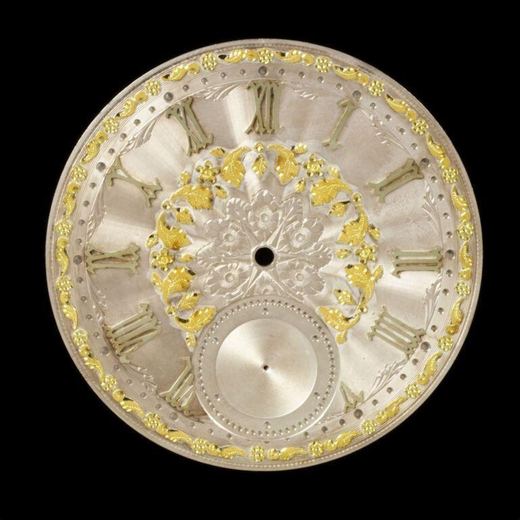
Gold and silver, engraved, matted and engine-turned, England, Coventry, about 1880; made by Thomas Batting (V&A M.26-1932)
Victoria and Albert Museum, London
Movements & Components · 1840-1900
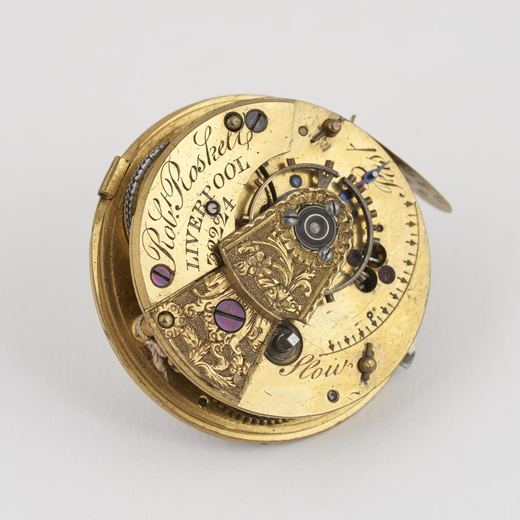
English lever, by Roskell, "banking" on escape wheel arbor, no.32224, 1840-1900
Science Museum Group, London
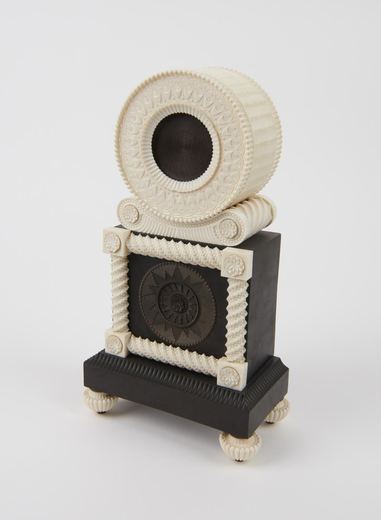
Movements & Components · 1843-1884
Ivory and blackwood clock case, by Holtzapffel and Company, London, England, 1843-1884
Science Museum Group, London
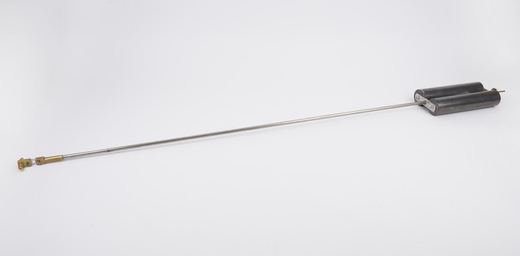
Movements & Components · 1844-1929
Pendulum from the electric master clock (no.663, seconds pendulum model), by Robert Mann Lowne, England, 1844-1929
Science Museum Group, London
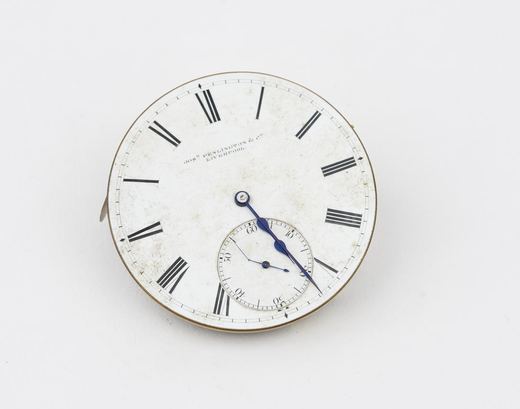
Movements & Components · 1848-1903
Watch movement by Josh Penlington, Liverpool, No.15231, with bi-metallic compensation balance and overcoil hairspring
Science Museum Group, London
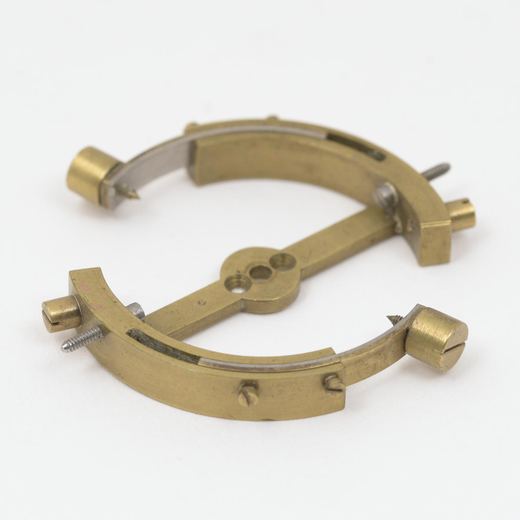
Movements & Components · 1850-1900
Compensation balance with sliding bi-metallic affixes
Science Museum Group, London
Movements & Components · 1850-1880
Gilt copper, electrotype, from original engraving by Jean Julien Faucherre, London, 1850-1880
Victoria and Albert Museum, London