
Clocks · Electric clock
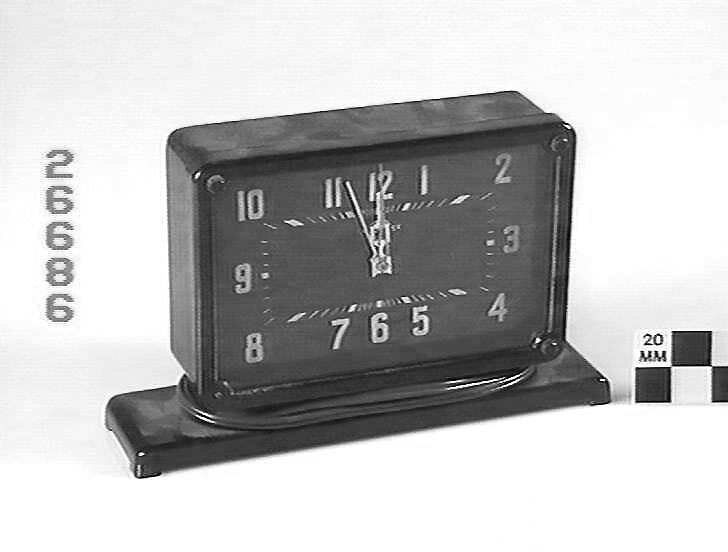
Electric Clock - Universe Manufacturing Co, Australia, 1950s
- Maker / attribution
- Unrecorded in source
- Date
- 1950s
- Historical period
- Modern Mechanical Horology (1945 – 1969)
- Country of origin
- Unrecorded in source
- Object type
- Electric clock
- Dimensions
- 25 cm (Length), 6.5 cm (Width), 16 cm (Height)
- Holding institution
- Museums Victoria, Melbourne
- Accession / object no.
- ST 26686
- Catalogue title (original)
- Electric Clock - Universe Manufacturing Co, Australia, 1950s (English)
View the source record ↗ (opens another website in a new tab)Suggest a correction
Record summary
Held and catalogued by Museums Victoria, Melbourne (object number ST 26686), this is an electric clock, dated 1950s. The Atlas places it in the Modern Mechanical Horology period (1945 – 1969) of its Clocks collection. Recorded dimensions: 25 cm (Length), 6.5 cm (Width), 16 cm (Height). The record is illustrated with 1 photograph.
Assembled from the source record's structured fields. Dates and attributions are given as the source states them; where a field is missing the Atlas leaves it blank rather than estimating.
Catalogue description
Summary — Museums Victoria
Electric mantel clock, Universe Manufacturing Co, Australia, 1950s.
Physical description — Museums Victoria
Mantel clock with a rectangular brown plastic case on a flat base. Dial is rectangular with pasted-on luminous figures and sweep second hand. Electric synchronous movement.
Inscriptions & marks
Back of the case is marked 'Universe' and 'Made in Australia'. A card under the base has an ink stamp marked 'Universe Mfg Co'. Seconds hand marked 'Universe'.
Provenance
Donation from L. W. Smith, Nov 1970
Historical context
Modern Mechanical Horology (1945 – 1969)
Tool watches for divers, pilots and astronauts; electric watches anticipate the electronic age.
Post-war clocks combined new materials and industrial design: plastic and metal cases, battery-powered transistor movements from the late 1950s, and design classics by George Nelson, Max Bill and others. The first caesium atomic clock (1955) moved the definition of time from astronomy to physics.
Read the period in the timelineMore clocks from this periodEarlier: Golden Age of Mechanical Watchmaking
Atlas type guide
Electric and synchronous clocks
Alexander Bain patented the electric clock in 1841, and through the later nineteenth century electricity was used both to drive pendulums and to distribute time. Master clocks sent impulses every half-minute or minute to subsidiary ('slave') dials across factories, schools, railway stations and post offices; Matthäus Hipp's toggle (1842) kept pendulums swinging with minimal interference. William Hamilton Shortt's free-pendulum clock (1921), with a slave pendulum doing the mechanical work, became the most accurate mechanical clock ever made in series.
In the 1920s and 1930s synchronous motor clocks, which count the alternating-current cycles of the mains supply (50 or 60 Hz), arrived in homes; Telechron in the United States and Smiths 'Sectric' and Ferranti in Britain made them in great numbers. Battery clocks such as the Bulle, Eureka and ATO used electromagnetic impulsing of balances or pendulums.
What to look for
- Electromagnets, contacts and coils in place of springs or weights.
- Cables, terminal blocks and labels for voltage or frequency.
- Master/subsidiary systems: a subsidiary dial has a stepping mechanism and no escapement.
- Brand names such as Synchronome, Gent, Magneta, Telechron, Smiths, Ferranti.
Dating clues
- Bain and Hipp clocks: from the 1840s.
- Synchronome master clocks: from 1895.
- Synchronous mains clocks: from the late 1920s (UK grid frequency standardised in the 1930s).
General guidance written by the Atlas editors about this kind of object. It is not a statement about this particular piece; for that, rely on the source record above and on physical examination.
Related records
Clocks · c. 1960
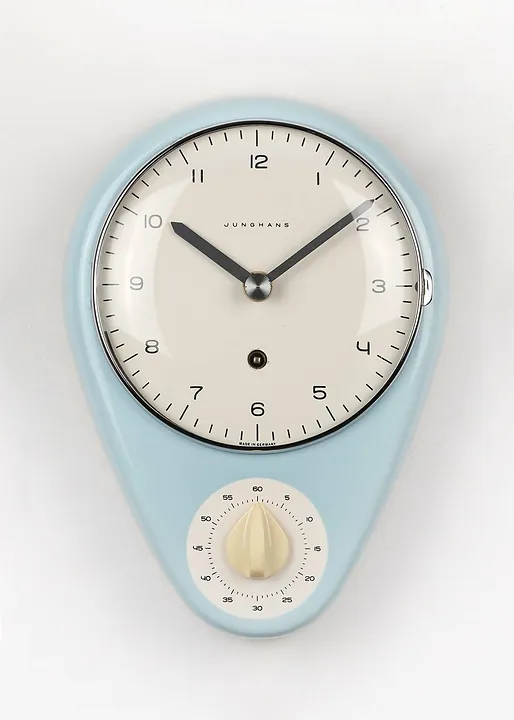
Clock, Germany, c. 1960 (no. 58196)
German Clock Museum
Clocks · 1930–1960
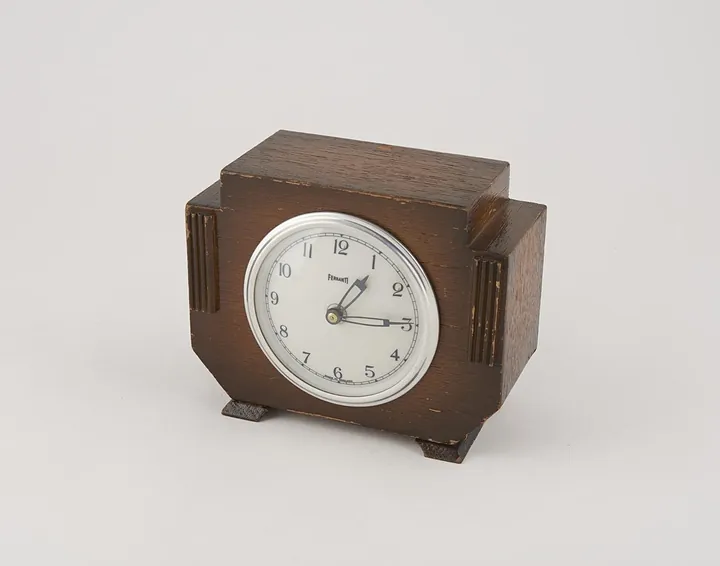
Ferranti electric mantel clock. (no. Y1996.10.820)
Science Museum Group, London
Clocks · 1931–1970
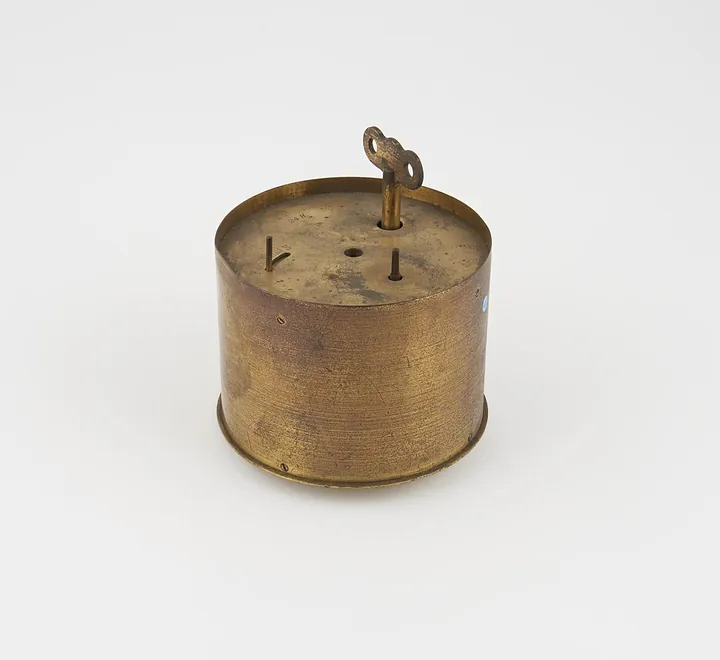
Clock and drum for recorder, 24 hours, English, 1931–1970.
Science Museum Group, London
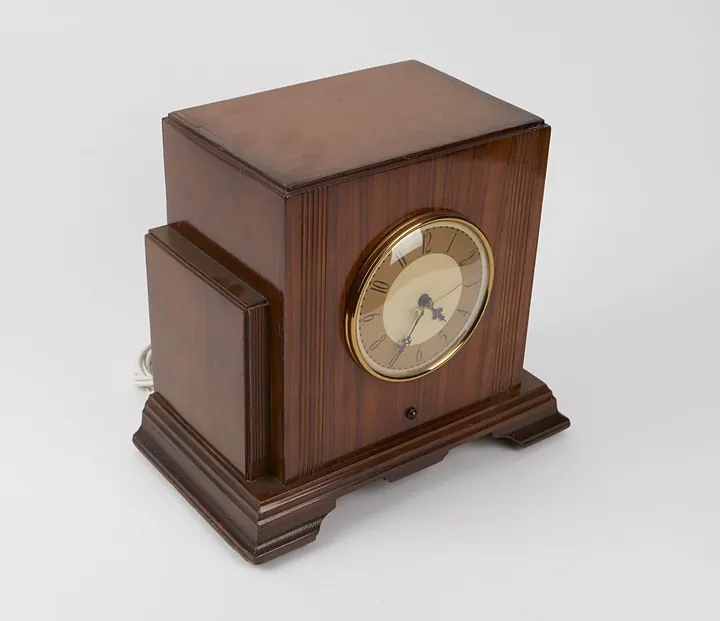
Clocks · 1937; 1980
Clock by Bestone and Hammond, United States, 1937; 1980
Science Museum Group, London
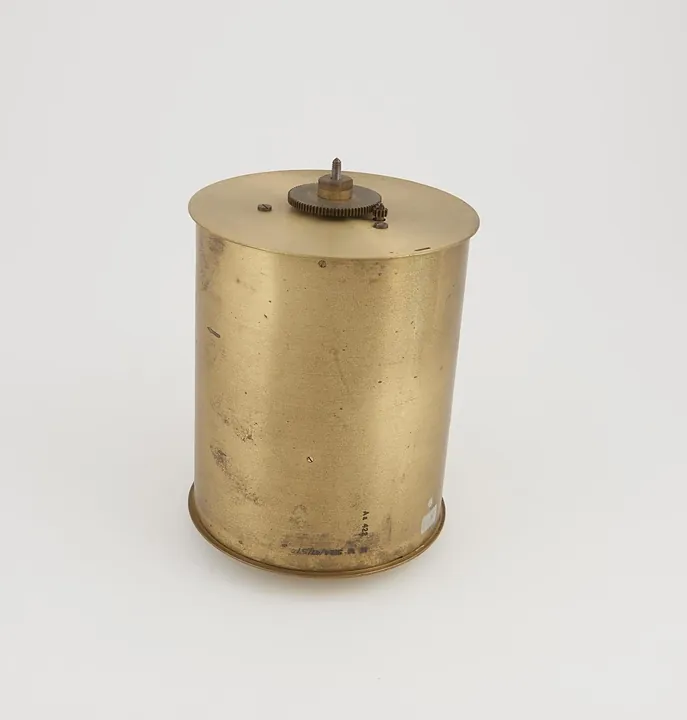
Clocks · 1940–1967
Drum and clock, English, 1940-1947, MO W 5124/ 47/ 57.
Science Museum Group, London
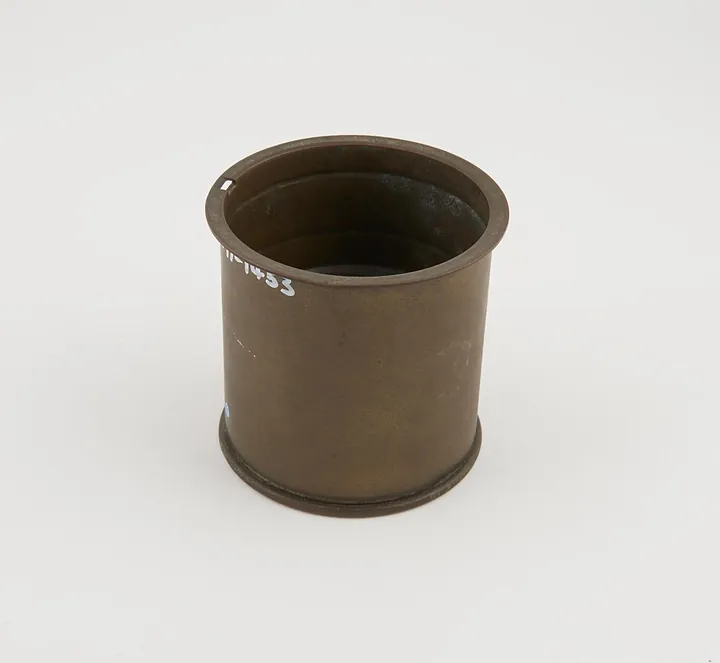
Clocks · 1940–1950
Drum and clock. by Smith's English Clocks Ltd., London, for Air Ministry.
Science Museum Group, London
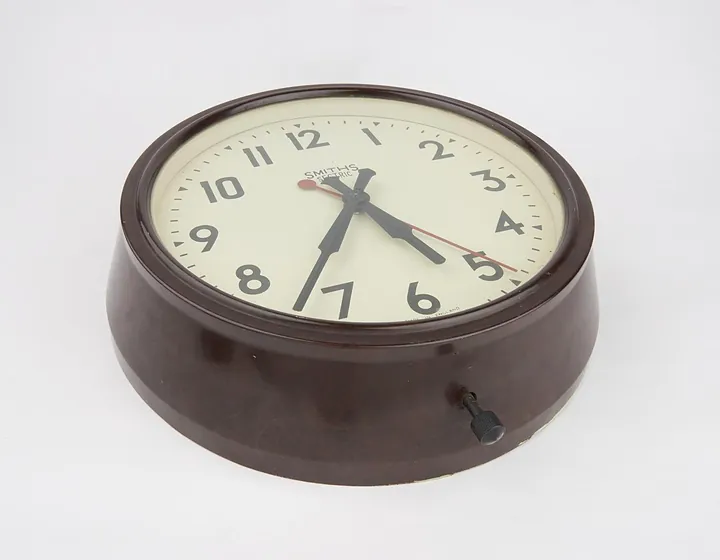
Clocks · c. 1946
Smiths Sectric synchronous motor electric wall clock with centre seconds hand, by Smiths English Clocks Ltd, England c. 1946
Science Museum Group, London
Clocks · c. 1947
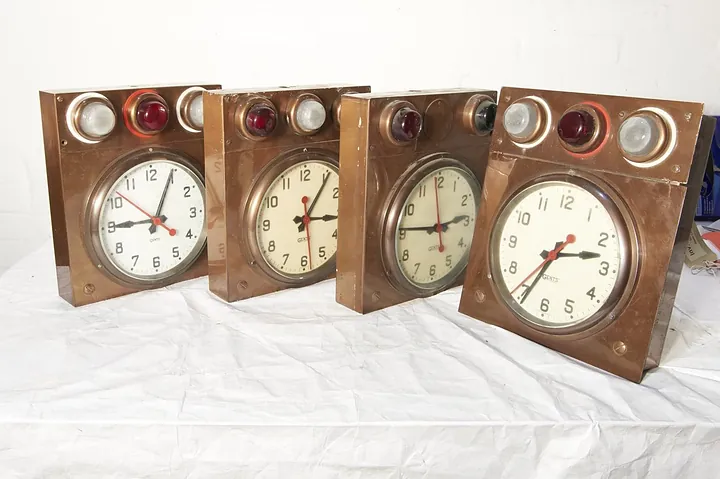
Four studio slave clocks installed at BBC Broadcasting House made by Gents of Leicester.
Science Museum Group, London