
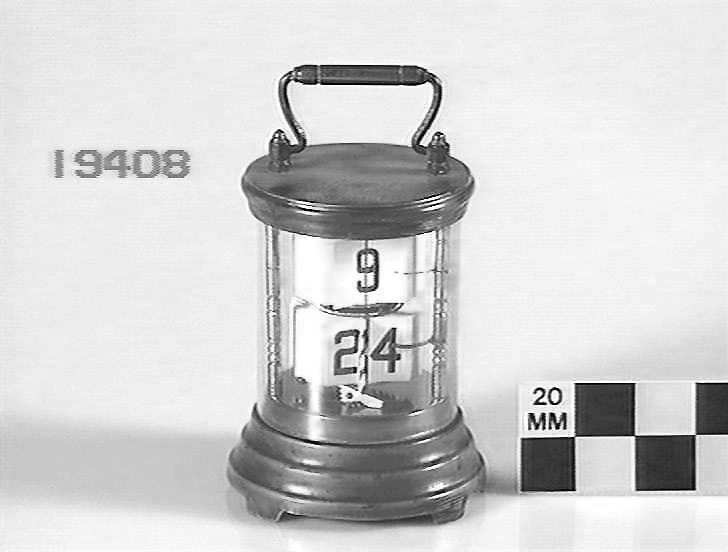
Clocks · Digital clock
Digital Clock - 'Plato Clock', England, c. 1910
- Maker / attribution
- Unrecorded in source
- Date
- c. 1910
- Historical period
- Golden Age of Mechanical Watchmaking (1900 – 1945)
- Country of origin
- England
- Object type
- Digital clock
- Dimensions
- 13 cm (Height), 9 cm (Outside Diameter)
- Holding institution
- Museums Victoria, Melbourne
- Accession / object no.
- ST 19408
- Catalogue title (original)
- Digital Clock - 'Plato Clock', England, circa 1910 (English)
View the source record ↗ (opens another website in a new tab)Suggest a correction
Record summary
Held and catalogued by Museums Victoria, Melbourne (object number ST 19408), this is a digital clock, made in England, dated c. 1910. The Atlas places it in the Golden Age of Mechanical Watchmaking period (1900 – 1945) of its Clocks collection. Recorded dimensions: 13 cm (Height), 9 cm (Outside Diameter). The record is illustrated with 4 photographs.
Assembled from the source record's structured fields. Dates and attributions are given as the source states them; where a field is missing the Atlas leaves it blank rather than estimating.
Catalogue description
Summary — Museums Victoria
Digital clock, 'Plato Clock', England, circa 1910. Cylindrical glass case with brass base and lid. Mechanism in base causes two sets of cards to flick over at the appropriate intervals: hours and minutes respectively. The Plato Clock was patented by Eugene L. Fitch in New York City in 1903, and production commenced in 1904. It was featured in the Ever Ready Exhibit at the 1904 St Louis World's Fair. Production was by the Ansonia Clock Co in the United States and Junghans in Europe.
Inscriptions & marks
Base is marked 'The Plato Clock patented Dec 16 1902 Apr 28 1903 Apr 7 1903 July 7 1903'. Top of clock marked 'Compliments of J.G. White & Co Ltd, London E.C.'
Provenance
Loan & Subsequent Bequest from Mr John Askew, Apr 1928
Historical context
Golden Age of Mechanical Watchmaking (1900 – 1945)
The wristwatch displaces the pocket watch; waterproof cases, self-winding and grand complications.
Between 1900 and 1945 clocks were electrified: master-clock systems ran factories and offices, synchronous mains clocks entered homes, and the Shortt free-pendulum clock set new standards of accuracy before the first quartz clocks (1927). Art Deco design reshaped mantel and table clocks.
Read the period in the timelineMore clocks from this periodEarlier: Industrial Revolution
Atlas type guide
Quartz, digital and designer clocks
Transistors, integrated circuits and quartz crystals brought precise timekeeping into every household after the 1960s. Quartz clocks divide the 32,768 Hz vibration of a tuning-fork crystal down to one pulse per second to drive a stepping motor or a digital display. Digital clocks with flip cards, nixie tubes, LEDs and LCDs, and clock radios became emblems of modern design.
Designers such as George Nelson, Max Bill, Dieter Rams and Richard Sapper treated the clock as a field for industrial design; manufacturers including Junghans, Kienzle, Braun, Seiko, Citizen and Sony produced landmark models now collected and held by design museums.
What to look for
- Battery compartments and quartz movement labels.
- Display technology: split-flap cards, LED, LCD, vacuum fluorescent.
- Designer names and model numbers on the base or back.
Dating clues
- Transistorised clocks: from the late 1950s.
- Consumer quartz clocks: from the early 1970s.
- Radio-controlled clocks: from the mid-1980s.
General guidance written by the Atlas editors about this kind of object. It is not a statement about this particular piece; for that, rely on the source record above and on physical examination.
Related records
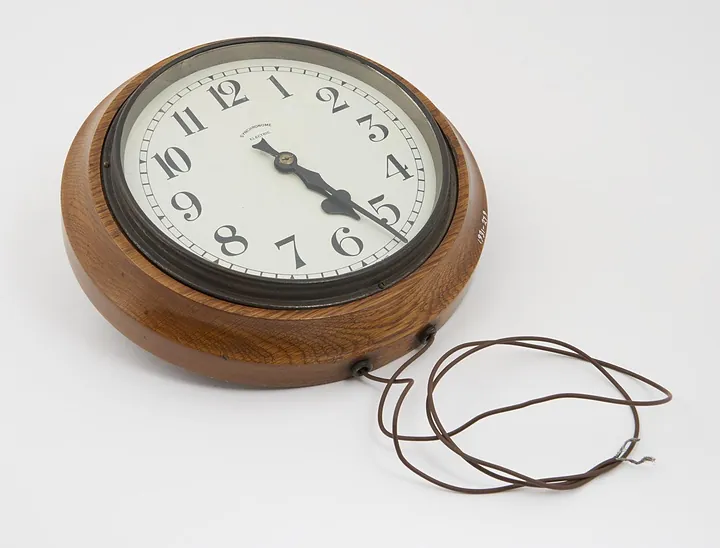
Clocks · 1890–1930
Clock with 8-inch impulse dial, by the Synchronome Company Limited, England, 1890–1930.
Science Museum Group, London
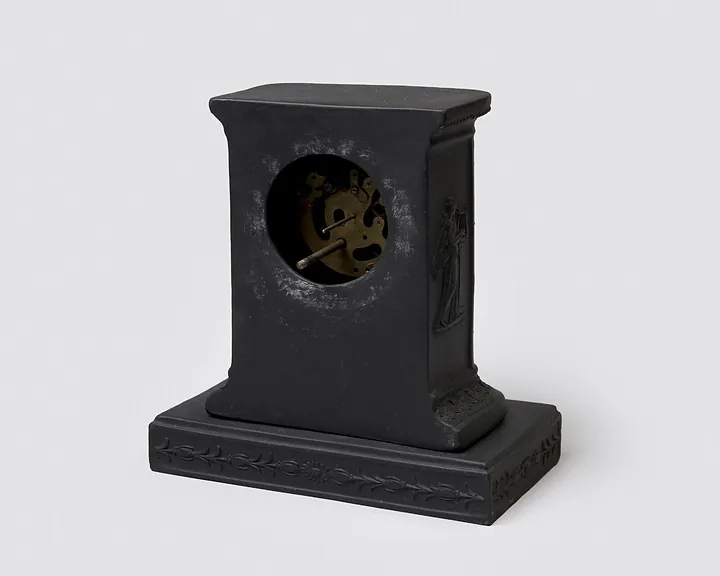
Clocks · c. 1900
Clock, black basalt, brass, Josiah Wedgwood and Sons, Etruria, c. 1900
Victoria and Albert Museum, London
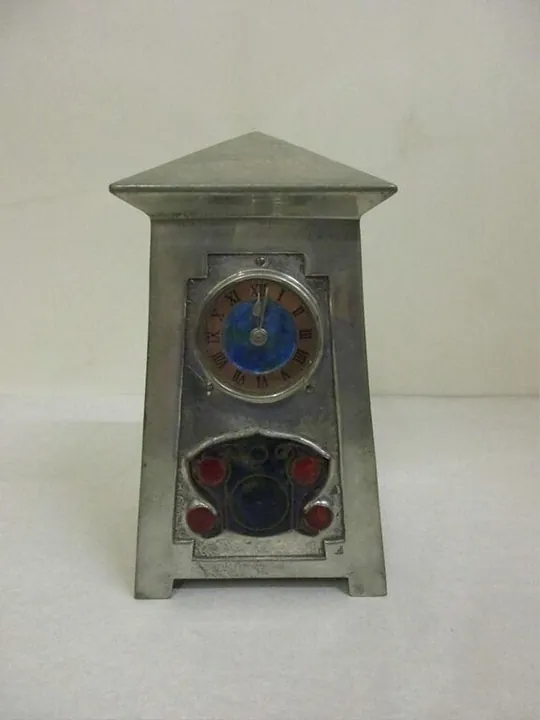
Clocks · c.1903-1904
Clock, pewter, made for Liberty& Co., England. 1903-4.
Victoria and Albert Museum, London
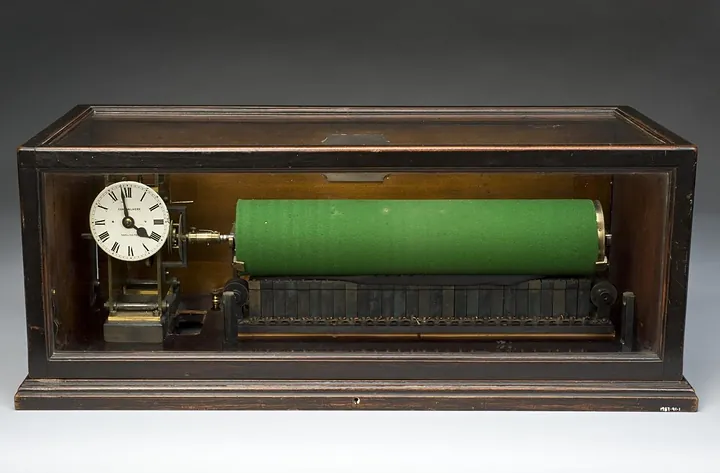
Clocks · 1900–1939
Clock by Cox-Walkers of Darlington, England, 1900–1939
Science Museum Group, London
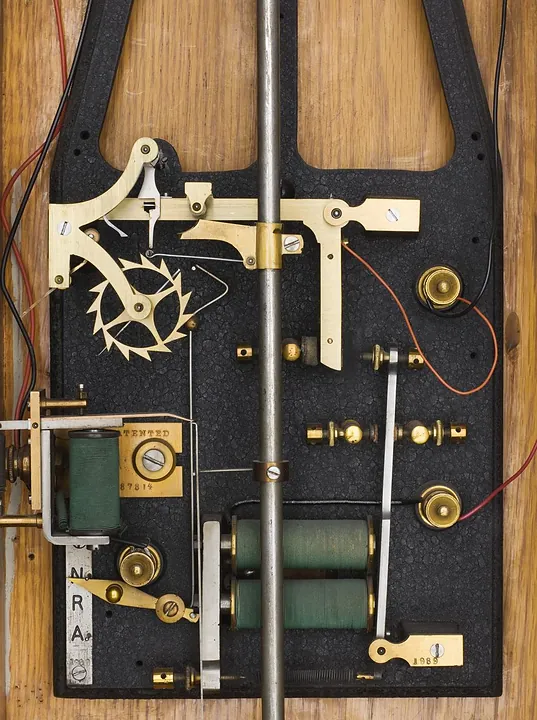
Clocks · 1900–1935
Clock by The Synchronome Company Limited, England, 1900–1935
Science Museum Group, London
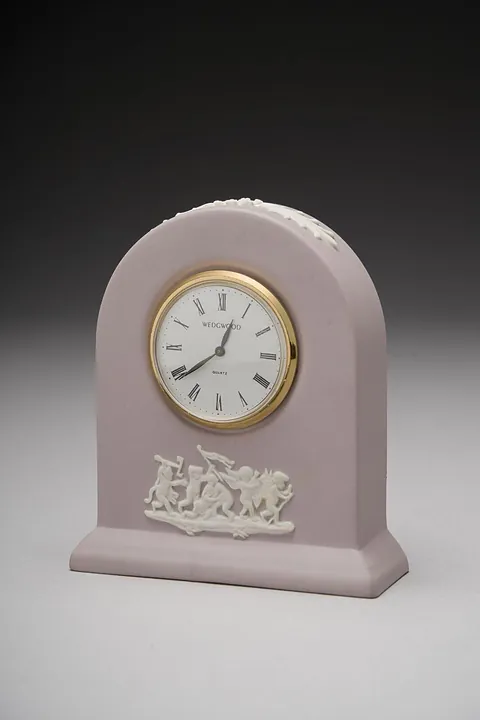
Clocks · 20th century
Clock, Jasperware with applied reliefs and metal and glass, Josiah Wedgwood and Sons, Stoke on Trent, 20th century (V&A WE.15628-2014)
Victoria and Albert Museum, London
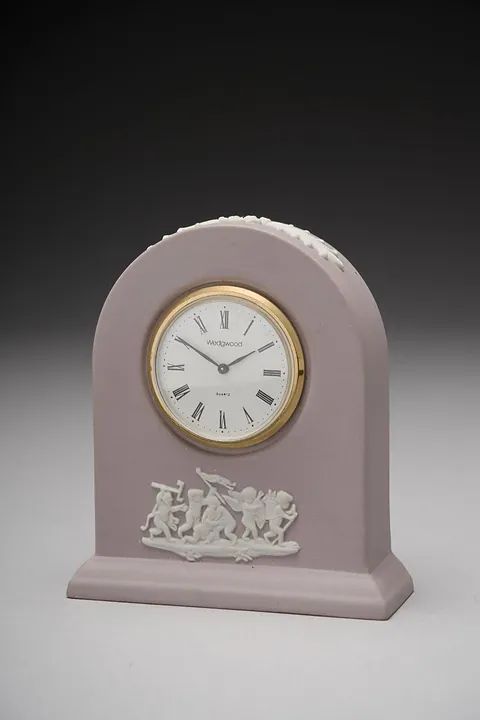
Clocks · 20th century
Clock, Jasperware with applied reliefs and metal and glass, Josiah Wedgwood and Sons, Stoke on Trent, 20th century (V&A WE.15629-2014)
Victoria and Albert Museum, London
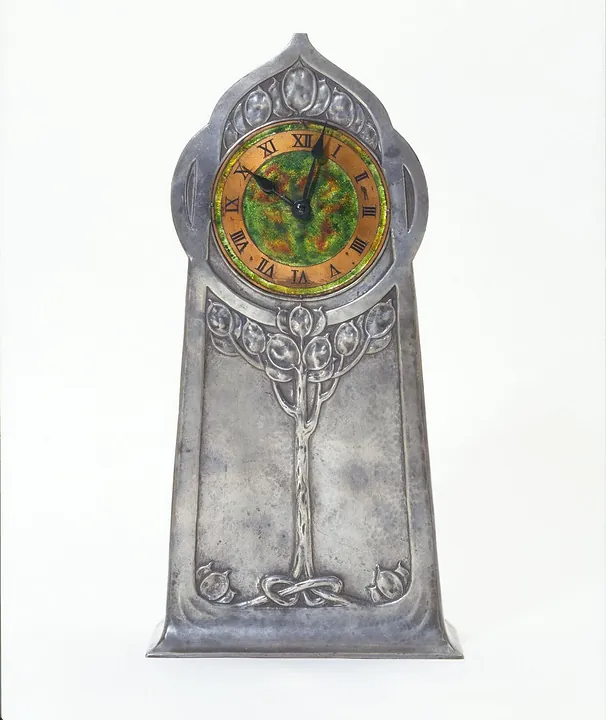
Clocks · c. 1905
Pewter and enamel, "Tudric range, Honesty design" Birmingham ca.1905, made by W.H. Haseler, designed by Archibald Knox.
Victoria and Albert Museum, London