
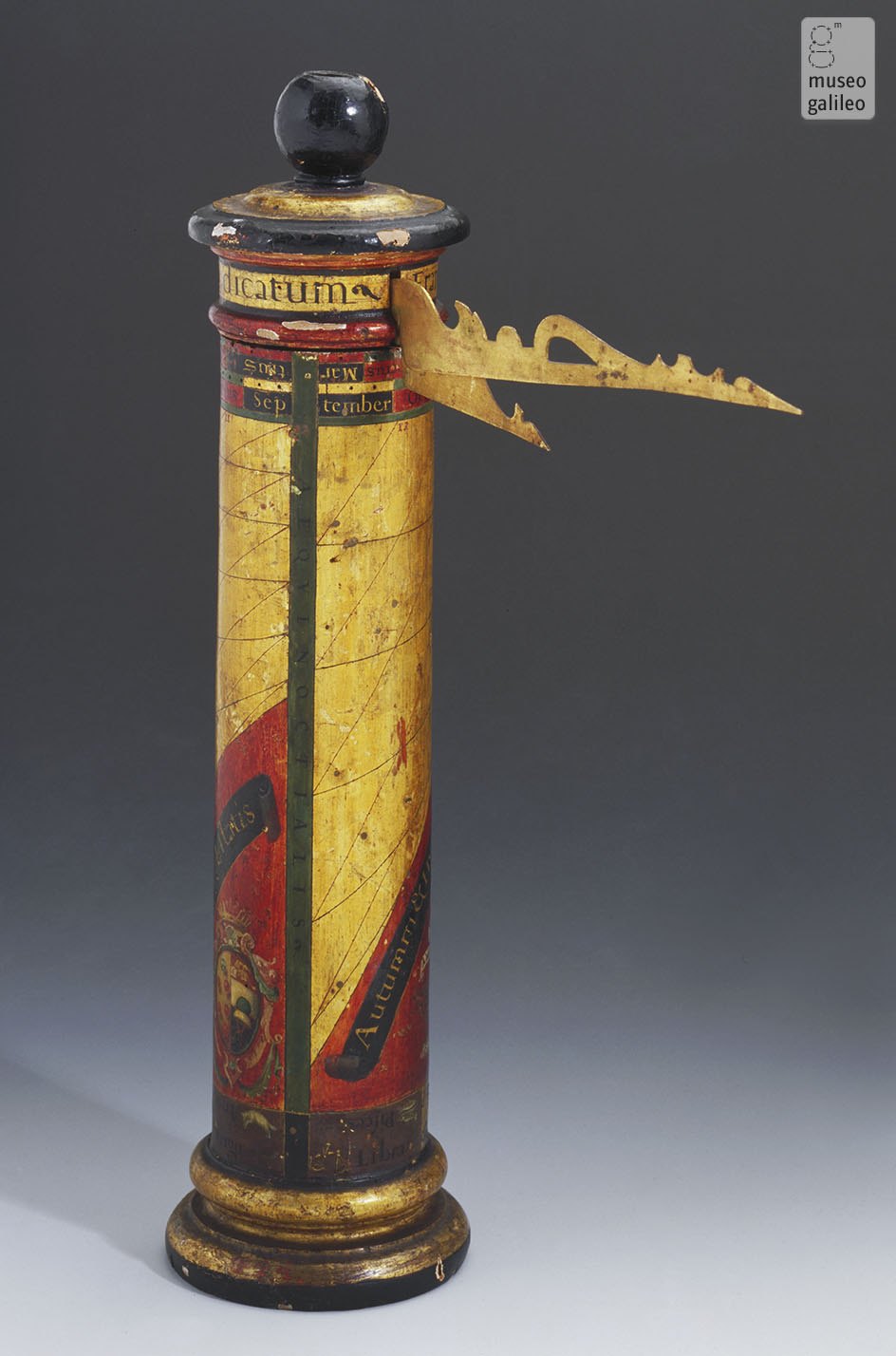
Instruments · Cylinder dial
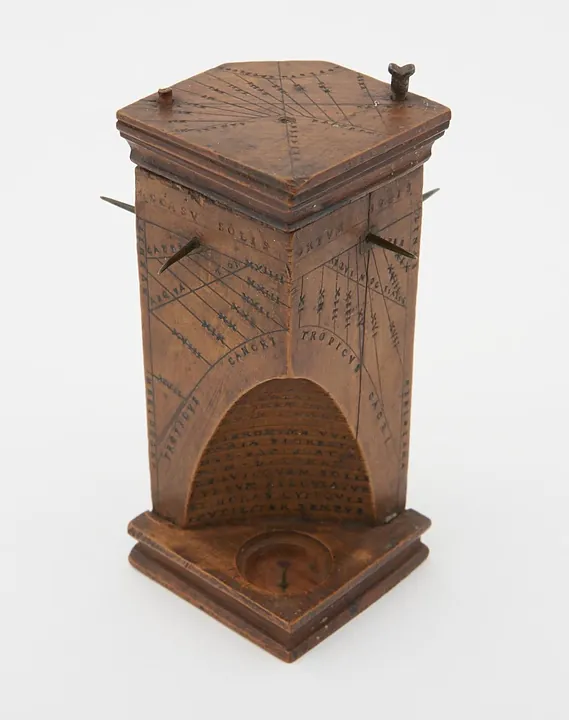
Cylinder dial, Italy, between 1574 and 1587
- Maker / attribution
- Unrecorded in source
- Date
- between 1574 and 1587
- Historical period
- Renaissance Horology (1400 – 1600)
- Country of origin
- Italy
- Place
- Italian
- Object type
- Cylinder dial
- Materials / technique
- gilt and painted wood
- Dimensions
- height 337 mm
- Holding institution
- Museo Galileo, Florence
- Accession / object no.
- Inv. 2457
- Credit line
- Museo Galileo, Florence
- Catalogue title (original)
- Cylinder dial (English)
View the source record ↗ (opens another website in a new tab)Suggest a correction
Record summary
Held and catalogued by Museo Galileo, Florence (object number Inv. 2457), this is a cylinder dial, made in Italian, Italy, dated between 1574 and 1587. The Atlas places it in the Renaissance Horology period (1400 – 1600) of its Instruments collection. Materials and techniques recorded by the source: gilt and painted wood. Recorded dimensions: height 337 mm. The record is illustrated with 2 photographs.
Assembled from the source record's structured fields. Dates and attributions are given as the source states them; where a field is missing the Atlas leaves it blank rather than estimating.
Catalogue description
Catalogue description — Museo Galileo
Finely decorated cylinder dial. On the surface of the column are drawn the hour lines, at the top of which are the names of the months and of the zodiac signs. The movable top section has two gnomons of different length, to be used according to the time of the year of the observation. The gnomons can be folded into the instrument. There is a painted dedication to Francesco I de' Medici, suggesting a date of manufacture between 1574 and 1587, the years when the eldest son of Cosimo I assumed the title of Grand Duke of Tuscany.
Historical context
Renaissance Horology (1400 – 1600)
Spring power makes clocks portable; Nuremberg and Augsburg produce the first watches; the Prague Orloj is built.
Instrument-making flourished in Nuremberg, Augsburg, Louvain and London: ivory diptych dials, astronomical compendia, astrolabes and nocturnals for wealthy patrons, navigators and scholars.
Read the period in the timelineMore instruments from this periodEarlier: Medieval Period
Atlas type guide
Scientific and navigational instruments
Timekeeping has always been tied to astronomy, navigation and measurement. Observatories used transit instruments to determine the exact moment a star crossed the meridian, and set their regulators by it; navigators combined sextant observations with chronometers to find longitude; surveyors, engineers and physicians used counters, pedometers and timers derived from watch and clock technology.
Instruments in this collection show how time measurement supported science and everyday technical life. Their makers were often the same workshops that produced clocks and watches, and their scales and dials document changing units and standards.
What to look for
- Engraved scales and verniers; the units used (degrees, hours, decimal divisions).
- Makers' signatures and town names, often on the main plate or limb.
- Accessories and fitted cases that indicate the intended use.
- Inventory or institutional marks from observatories, navies or schools.
Dating clues
- Vernier scales spread after the seventeenth century; dividing engines after Ramsden (1770s) made fine scales common.
- Mass-produced instruments with patent numbers belong mostly to the nineteenth and twentieth centuries.
General guidance written by the Atlas editors about this kind of object. It is not a statement about this particular piece; for that, rely on the source record above and on physical examination.
Related records
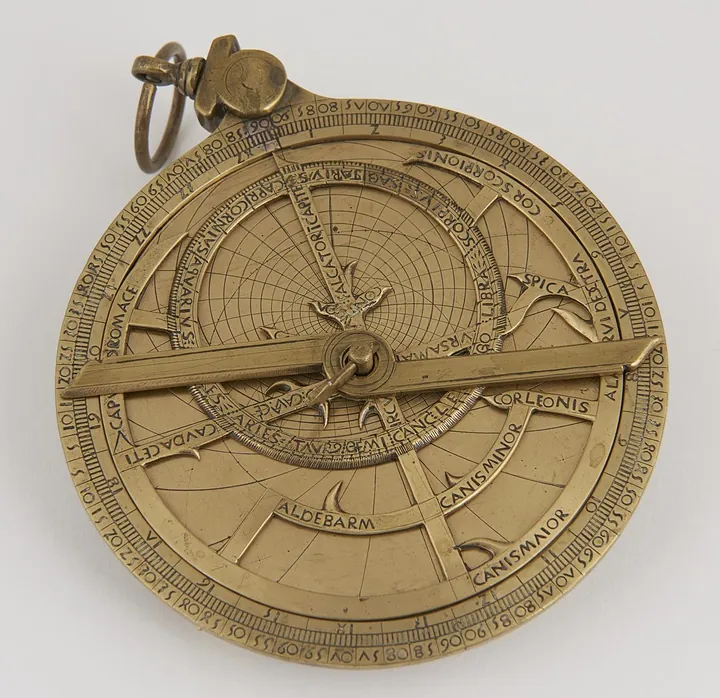
Instruments · 1495–1505
Astrolabe, Italy, 1495–1505
Science Museum Group, London
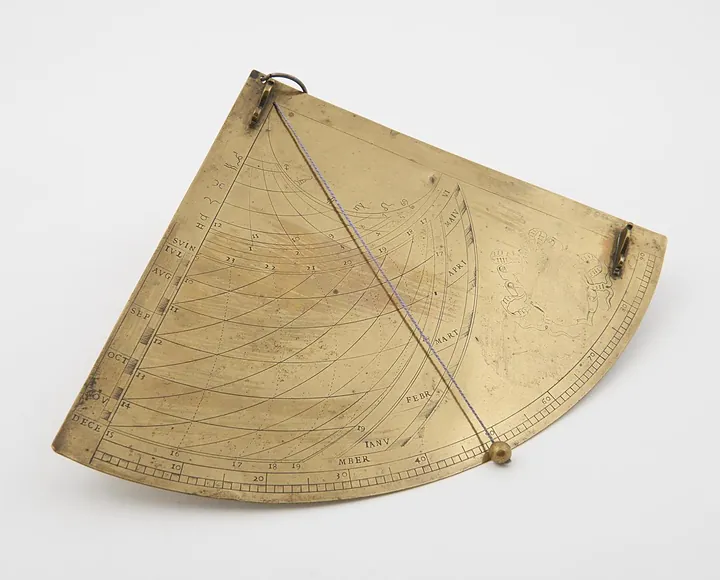
Instruments · 1501–1600
Brass quadrant sundial, 6½-inch radius, with Italian hours, Europe, 1501–1600 (see note).
Science Museum Group, London
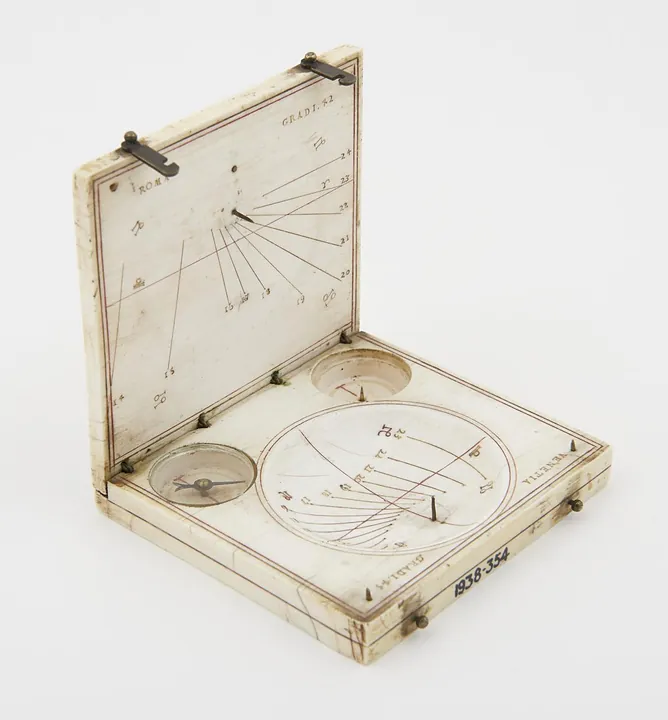
Instruments · 1530–1640
Sundial, Italy, 1530–1640
Science Museum Group, London
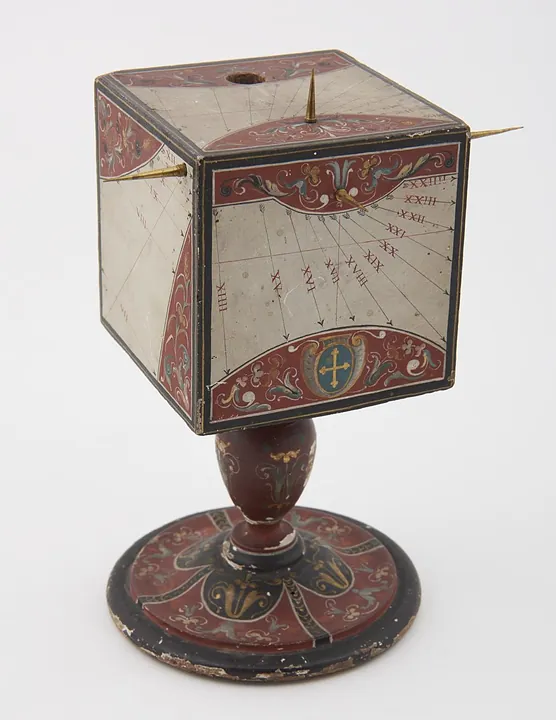
Instruments · 1550–1570
Cubical sun-dial (30-81 V. and A. M. Reg), in wood, painted in distemper, Italian, 1550–1570, 4 inch cube.
Science Museum Group, London
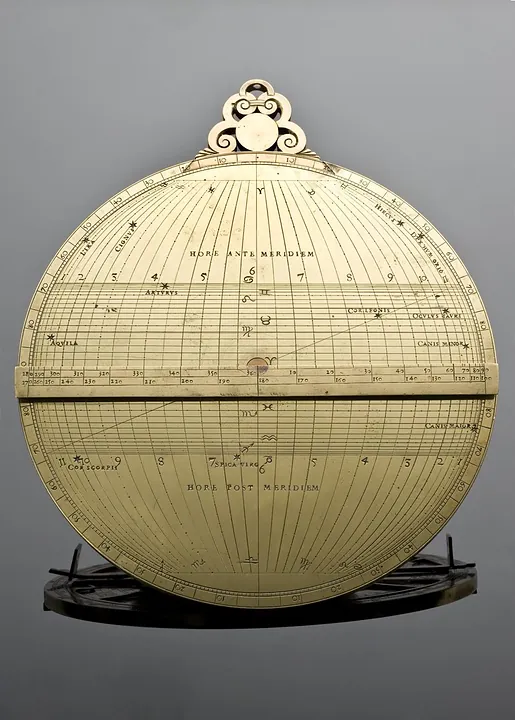
Instruments · 1572
Brass planispheric astrolabe, 22 stars on rete, Rojas projection on back, Italian, dated 1572
Science Museum Group, London
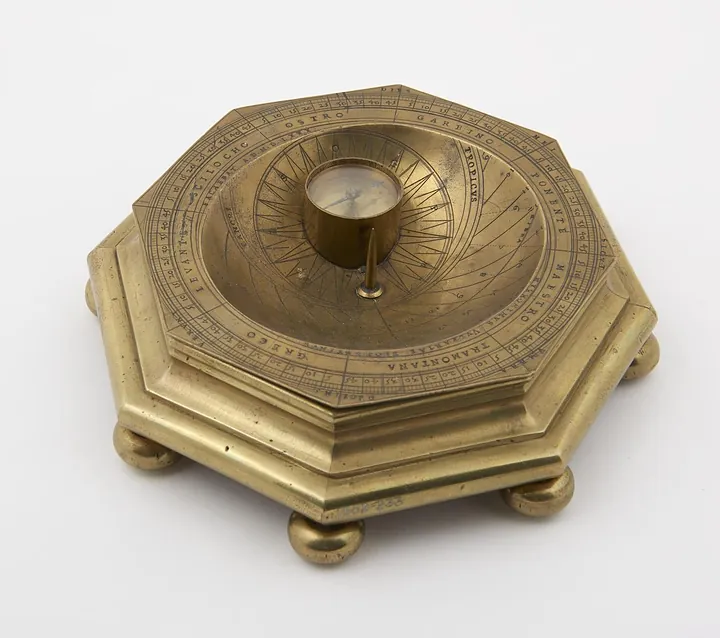
Instruments · 1580
Hemispherical sundial, brass. Inscribed: "Hyeronimus Vulpariae Florentinus Faciebat A.D. MDLXXX". On octagonal base, 7 inches wide
Science Museum Group, London
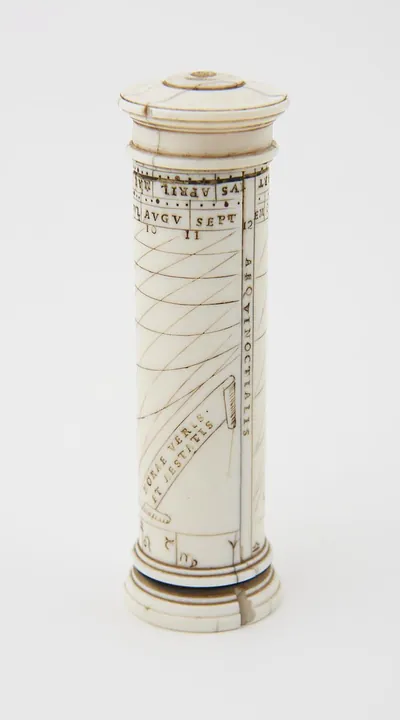
Instruments · 1587
Sundial by F. F. Stephanus, Italy, 1587
Science Museum Group, London
Instruments · 1592
Rectangular reclining sundial, boxwood, for Italian hours by Hieronymus Vulparia, Florence, Italy, 1592. For use at latitude 42° (Rome) (see note).
Science Museum Group, London