
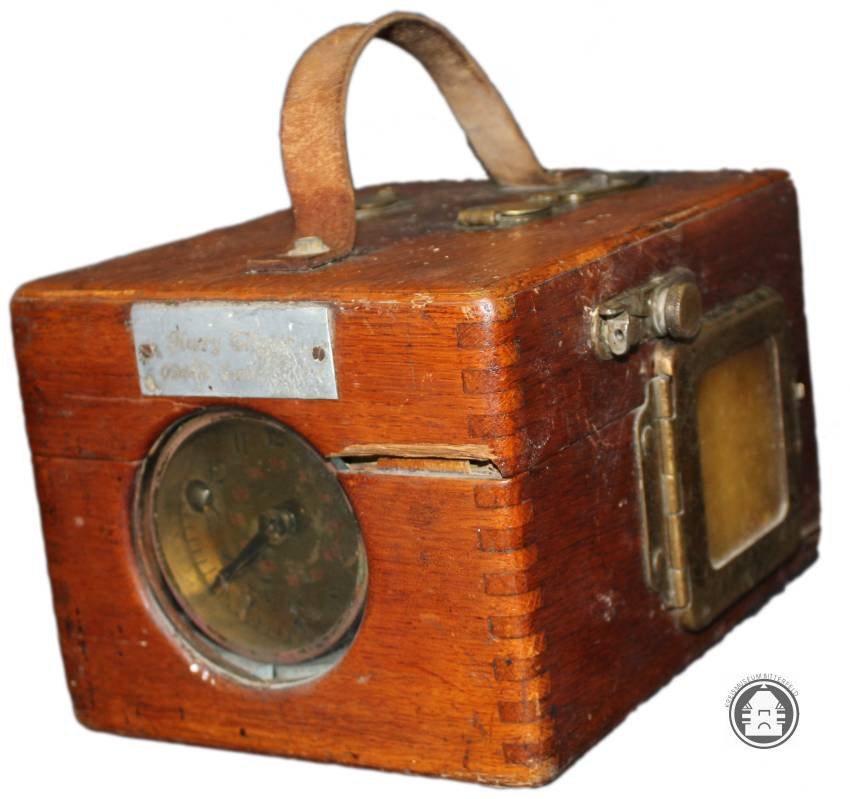
Movements & Components · Clock
Clock by Friedrich Ernst Benzing, 1910s
- Maker / attribution
- Friedrich Ernst Benzing (manufacturer)
- Date
- 1910s
- Historical period
- Golden Age of Mechanical Watchmaking (1900 – 1945)
- Country of origin
- Unrecorded in source
- Place
- Schwenningen
- Object type
- Clock
- Materials / technique
- Holz; Metall; Messing | geschraubt
- Dimensions
- Höhe: 14,0 cm, Breite: 16,5 cm, Tiefe: 22,0 cm
- Holding institution
- Kreismuseum Bitterfeld
- Accession / object no.
- VD 2105
- Credit line
- Kreismuseum Bitterfeld
- Catalogue title (original)
- Konstatieruhr (Taubenuhr) (German)
View the source record ↗ (opens another website in a new tab)Suggest a correction
Record summary
Held and catalogued by Kreismuseum Bitterfeld (object number VD 2105), this is a clock by Friedrich Ernst Benzing, made in Schwenningen, dated 1910s. The Atlas places it in the Golden Age of Mechanical Watchmaking period (1900 – 1945) of its Movements & Components collection. Materials and techniques recorded by the source: Holz; Metall; Messing | geschraubt. Recorded dimensions: Höhe: 14,0 cm, Breite: 16,5 cm, Tiefe: 22,0 cm. The record is illustrated with 3 photographs.
Assembled from the source record's structured fields. Dates and attributions are given as the source states them; where a field is missing the Atlas leaves it blank rather than estimating.
Catalogue description
Catalogue description from Kreismuseum Bitterfeld (German)
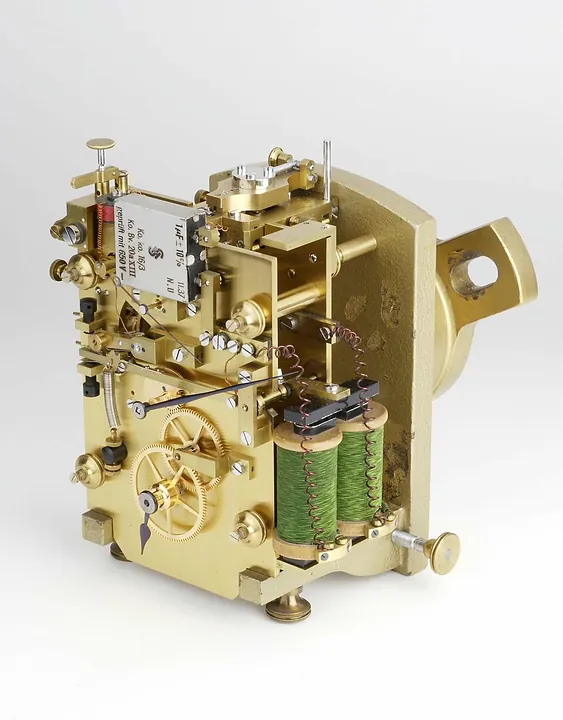
Holzkasten-Brieftaubenuhr bzw. Konstatierapparat für den Brieftaubensport zur Ermittlung der Ankunftszeiten der von einem Wettflug heimkehrenden Brieftauben. Holzkasten mit Boden und einem zur Seite öffnenden Deckel. Innenliegend ein mechanisches Messing-Uhrwerk, sowie ein „Schlagwerk“ zum Abstempeln der Ankunftszeiten auf einem Papierstreifen, und einer „Konstatiertrommel“ mit dreißig durchnummerierten Fächern zur Aufnahme der Gummiringe für die Tauben. Uhrwerk, Schlagwerk und Trommel sind auf einer Metallplatte montiert. Die Platte mit der geprägten Nr. "78996". Innen, links über dem Ziffernblatt des Uhrwerks, Herstellerangabe "Benzing Original Breveté"; senkrecht darunter die eingeprägte Nr. "19093". Auf der Innenseite des Holzdeckels ist ein rotes Papierhinweisetikett es Herstellers Fried. Ernst Benzing GmbH Schwenningen a. N. eingeklebt. Auf der Vorderseite des Holzkastens ist eine kreisrunde, mit einer Glasscheibe verschlossene, Öffnung mit Blick auf das Ziffernblatt; darüber, auf dem Holzdeckel, wurde nachträglich ein Aluminiumschild mit der zweizeiligen Gravur "Hans Tilgner | 09468 Sandersdorf" eingeschraubt. Rechts seitlich, auf dem Holzkasten, ein aufgeschraubtes Schaufenster mit Messingrahmen mit Blick auf die Rollen für die Papierstreifen. Hinter dem Fenster ein in die Holzkiste eingestecktes Metallelement mit der geprägten Nr. „79093“. Über dem Schaufenster, seitlich auf dem Deckel, ist ein Metallschließmechanismus mit Bügel, Handschraube und Löchern für die Verblombung einmontiert. Dieser Auf der Deckeloberseite befinden sich zwei Einwurflöcher, jeweils verschlossen durch einen Messingdeckel mit der Gravur "1-15" bzw. 16-30", und eine Öffnung für den „Konstatierschlüssel“ zum Öffnen und Schließen der Fächer in der Konstatiertrommel. Mittig auf dem Deckel wurde ein Lederriemen für den Transport des Apparates aufgeschraubt. Der Kasten mißt: Höhe: 14,0 cm, Breite: 16,5 cm, Tiefe: 22,0 cm
Shown in the original language of the source catalogue. An editor-reviewed English translation has not yet been published; we do not publish machine translations as authoritative text.
Historical context
Golden Age of Mechanical Watchmaking (1900 – 1945)
The wristwatch displaces the pocket watch; waterproof cases, self-winding and grand complications.
Precision lever movements, electric clock mechanisms and new alloys (invar, elinvar) characterised the period.
Read the period in the timelineMore movements & components from this periodEarlier: Industrial Revolution
Atlas type guide
Clock and watch movements
The movement is the mechanism of a clock or watch, without its case and dial. It consists of the power source (weight or mainspring in its barrel, sometimes with a fusee), the going train of wheels and pinions, the escapement and oscillator, the motion work that drives the hands, and in many cases additional trains for striking or complications.
From the eighteenth century watch movements were increasingly produced in stages: Swiss and French ébauche makers supplied rough movements that finishers, repasseurs and retailers completed and signed. Calibre numbers — first used systematically by American and Swiss factories in the nineteenth century — make it possible to identify movements, find spare parts and date watches.
What to look for
- Plate and bridge layout: full plate, three-quarter plate, Lépine bar calibre, bridges and cocks.
- Jewel count and whether jewels are set in chatons or rubbed in.
- Signatures, calibre and serial numbers on the plate or under the dial.
- Finishing: Geneva stripes (Côtes de Genève), perlage, bevelled edges, blued screws.
- Fusee and chain, going barrel, or electrical components.
Dating clues
- Full-plate English movements dominate before c. 1850; three-quarter plate and Lépine calibres after.
- Jewelled movements spread after Facio and Debaufre's patent of 1704, mainly in English work until c. 1800.
- Calibre numbers and factory serials allow close dating for industrial production after c. 1850.
General guidance written by the Atlas editors about this kind of object. It is not a statement about this particular piece; for that, rely on the source record above and on physical examination.
Related records
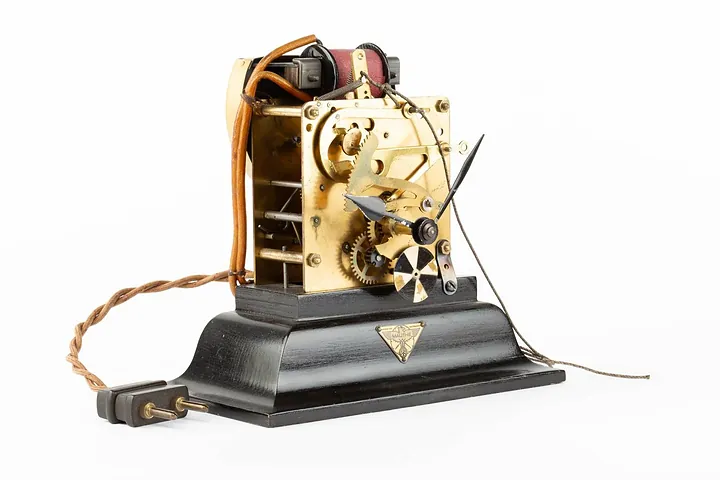
Movements & Components · 1900–1999
Clock movement by Friedrich Mauthe, Germany, 1900–1999 (no. 59468)
German Clock Museum
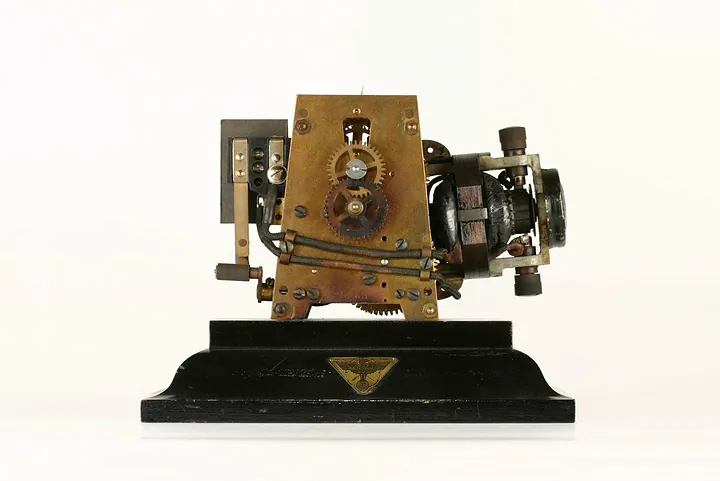
Movements & Components · 1900–1999
Clock movement by Friedrich Mauthe, Germany, 1900–1999 (no. 59469)
German Clock Museum
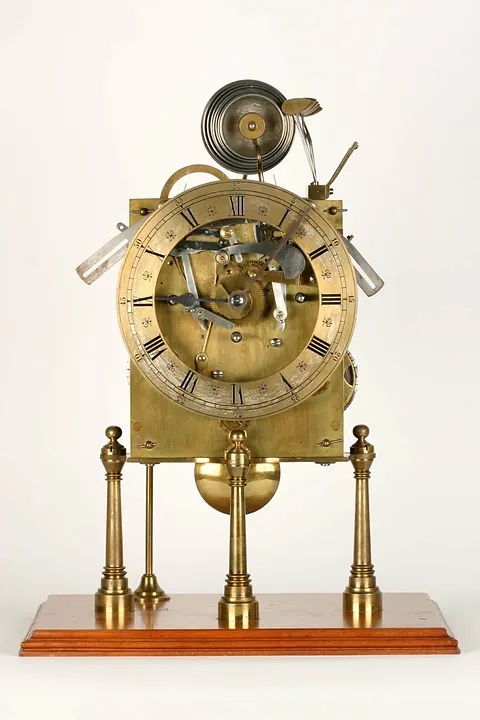
Movements & Components · c. 1900
Clock movement by Mathias Bäuerle, Germany, c. 1900
German Clock Museum
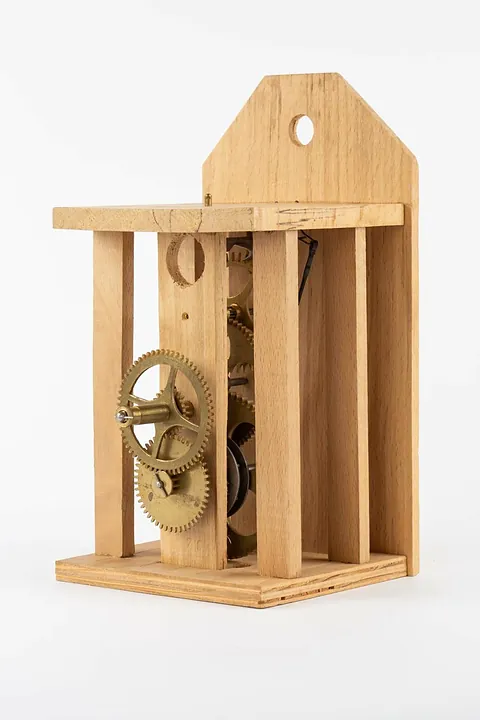
Movements & Components · 1900–1999
Clock movement, Germany, 1900–1999 (no. 59377)
German Clock Museum
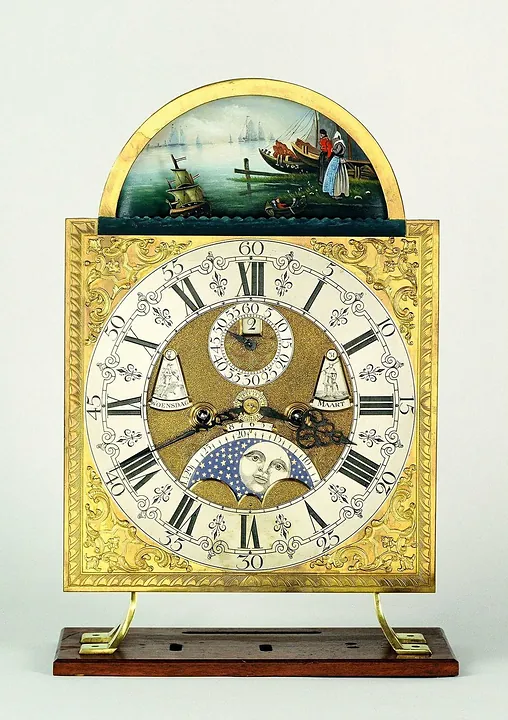
Movements & Components · 1905
Clock movement by Lorenz Furtwängler Söhne, Germany, 1905
German Clock Museum
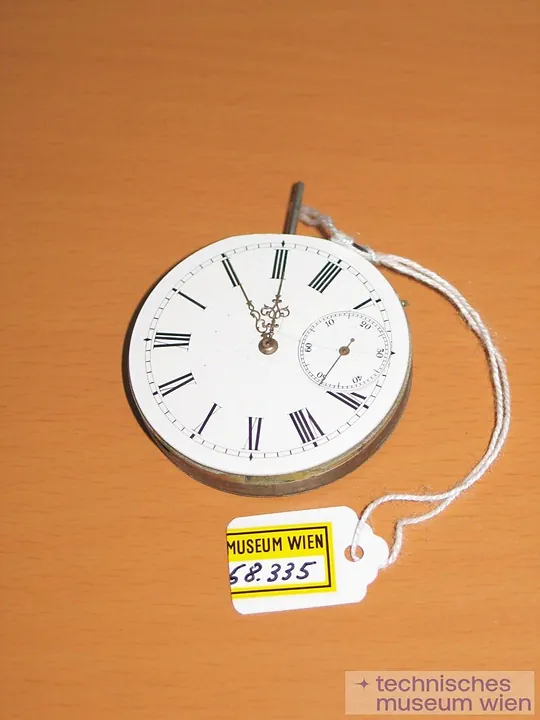
Movements & Components · 1907
Clock movement, Germany, 1907
Vienna Museum of Science and Technology
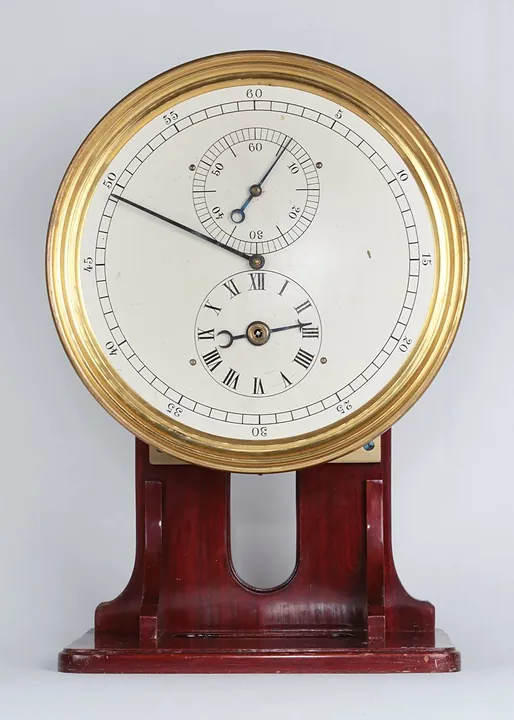
Movements & Components · 1909
Clock movement by A. G. für Uhrenfabrikation Lenzkirch, Germany, 1909
German Clock Museum
Movements & Components · 1935
Clock movement by Clemens Riefler, Germany, 1935
German Clock Museum