
Instruments · Stopwatch
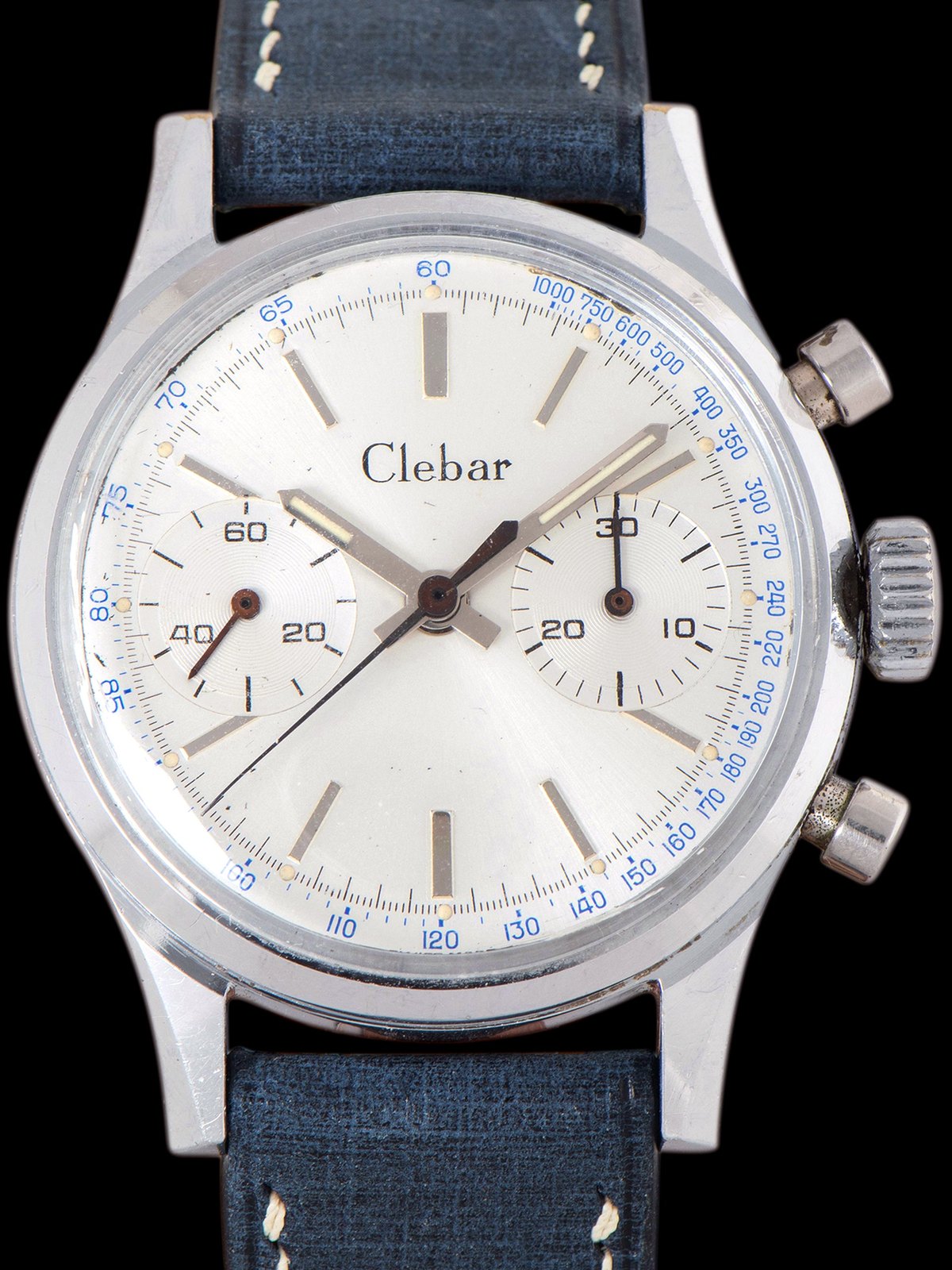
Clebar Chronograph 'Landeron Cal. 248', 1960s
- Maker / attribution
- Unrecorded in source
- Date
- 1960s
- Historical period
- Modern Mechanical Horology (1945 – 1969)
- Country of origin
- Unrecorded in source
- Object type
- Stopwatch
- Dimensions
- Case 36 mm
- Stock no.
- CLBCHRON248
- Credit line
- Dealer listing, Craft & Tailored (CLBCHRON248)
- Catalogue title (original)
- 1960s Clebar Chronograph 'Landeron Cal. 248' (English)
View the source record (dealer listing) ↗ (opens another website in a new tab)Suggest a correction
Record summary
Catalogued by Craft & Tailored (dealer), Los Angeles (stock number CLBCHRON248), this is a stopwatch, dated 1960s. The Atlas places it in the Modern Mechanical Horology period (1945 – 1969) of its Instruments collection. Recorded dimensions: Case 36 mm. The record is illustrated with 6 photographs.
Assembled from the source record's structured fields. Dates and attributions are given as the source states them; where a field is missing the Atlas leaves it blank rather than estimating.
Catalogue description
Dealer description — Craft & Tailored
In regards to the Clebar branding, the name itself dates back to 1925, when it was most frequently associated with stopwatches and rally timers. However, during the 1960s, Clebar and Zodiac became intertwined, and there were numerous watches with Zodiac-branded cases and movements that were fitted with Clebar-branded dials for distribution in various markets. This Clebar chronograph model, however, stands on its own with an aesthetic more similar to a Heuer Chronograph of the era. Featuring the workhorse Landeron cal 248 chronograph movement, twisted lugs, and a charming blue tachymeter scale. SPECS Stock # CLBCHRON248 Brand Clebar Style Chronograph Model N/A Serial N/A Size Men's Material Chrome Plated Brass W/ Stainless Steel Back Dial Silver W/ Blue Tachymeter Millimeters 36 Strap 2pc Handmade Leather Strap CASE & BRACELET The 36mm chrome plated case is in excellent condition, showing normal signs of previous use and some high touch areas where the plated has slightly faded. All case lines remain incredibly crisp. The pump pushers are original to the watch, as is the unsigned crown. The stainless steel case back retains all of the factory markings. Completing the watch is a black, two-piece handmade leather strap. DIAL & HANDS The silver sunburst dial features blue text for the tachymeter scale, reminiscent of the Heuer Carrera of the same era, and remains in well-preserved vintage condition, with some subtle marks and age present. The tritium lume plots have achieved a charming creamy eggshell patina and exhibit no degradation under UV light inspection. The original tritium hands match the dial perfectly and show no degradation when inspected under UV light. ACCESSORIES None. The watch is functioning and keeping time, previous service history is unknown. A movement service can be purchased upon request.
Historical context
Modern Mechanical Horology (1945 – 1969)
Tool watches for divers, pilots and astronauts; electric watches anticipate the electronic age.
Electronic instruments, quartz frequency standards and the first atomic clocks transformed precision timing in laboratories and broadcasting.
Read the period in the timelineMore instruments from this periodEarlier: Golden Age of Mechanical Watchmaking
Atlas type guide
Timers, stopwatches, chronoscopes and time recorders
Instruments for measuring short intervals or recording when something happened form a large and practical branch of horology. Sports stopwatches and split-seconds timers, laboratory chronoscopes (such as Hipp's, which measured thousandths of a second for psychology and ballistics experiments), metronomes for music, watchmen's clocks that recorded patrol rounds, and the time recorders that clocked factory workers in and out all derive from clock and watch technology.
These objects matter historically because they show timekeeping leaving the observatory and the drawing room and entering industry, science and sport. Many were mass-produced, and their dials, scales and patents chart the rise of electrification and industrial management.
What to look for
- Scales graduated in fifths, tenths or hundredths of a second, or decimal minutes for industrial use.
- Start, stop and reset push-pieces; a second hand that can be stopped independently (split seconds).
- Recording devices: paper discs or tapes, printing mechanisms, keys or punches.
- Patent numbers and dates on the dial or case, which give a terminus post quem.
Dating clues
- Hipp chronoscopes were made from the 1840s into the twentieth century.
- Employee time recorders spread from the 1890s (Bundy, IBM, International Time Recording Co.).
- Quartz and electronic timers replaced mechanical stopwatches in sport from the 1970s.
General guidance written by the Atlas editors about this kind of object. It is not a statement about this particular piece; for that, rely on the source record above and on physical examination.
Read next:Flyback chronograph
Related records
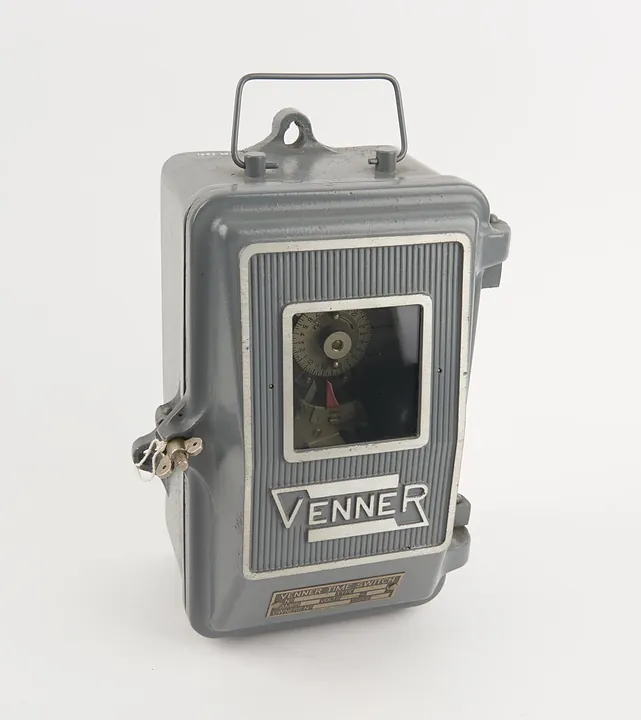
Instruments · 1930–1960
Electronically wound triple-pole changeover time-switch, type MWDGPS, by Venner Limited, New Malden, Kingston-upon-Thames, London, England, 1930–1960.
Science Museum Group, London
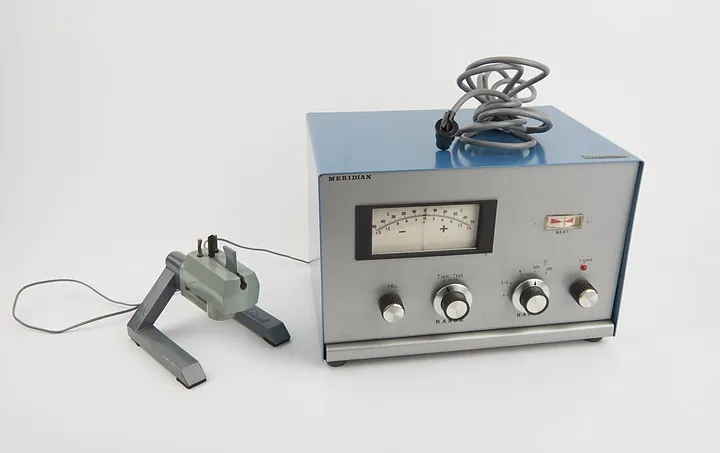
Instruments · 1940–1976
'Meridian' watch timer, by Walker Electronics, Newark-on-Trent, Nottinghamshire, England, 1940–1976.
Science Museum Group, London
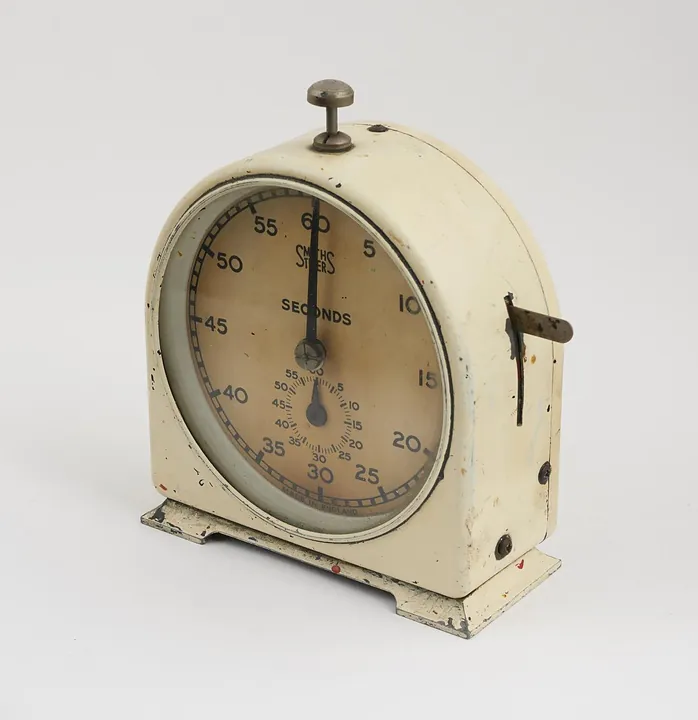
Instruments · 1940–1980
Clockwork timer used by renal dialysis patients to time blood clotting reaction when adding heparin to blood for dialysis
Science Museum Group, London
Instruments · 1940–1965
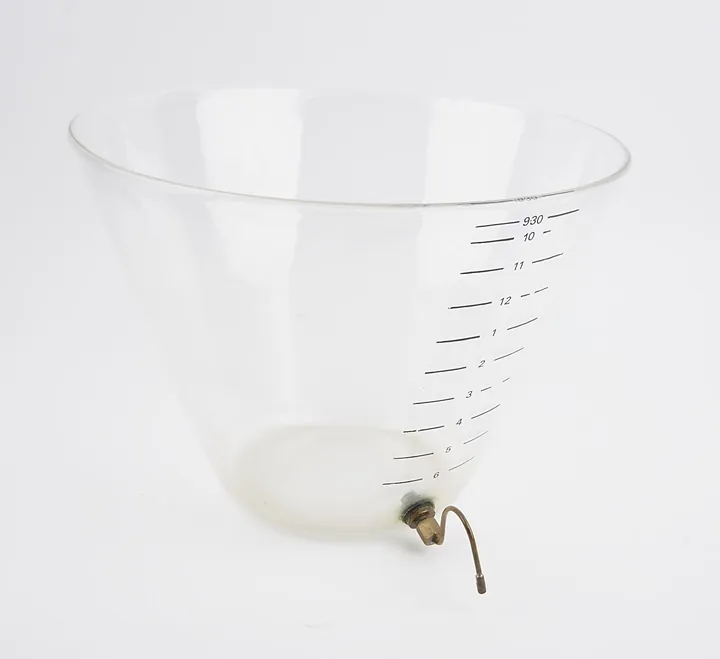
Glass bowl in the shape of an ancient Egyptian water-clock, 1940–1965
Science Museum Group, London
Instruments · 1940–1974
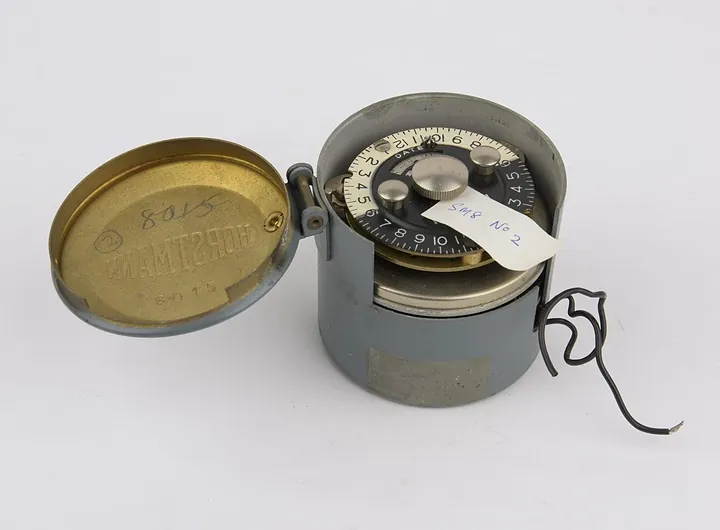
Stopwatch / timer by Horstmann Gear Co. Ltd., England, 1940–1974
Science Museum Group, London
Instruments · 1940–1974
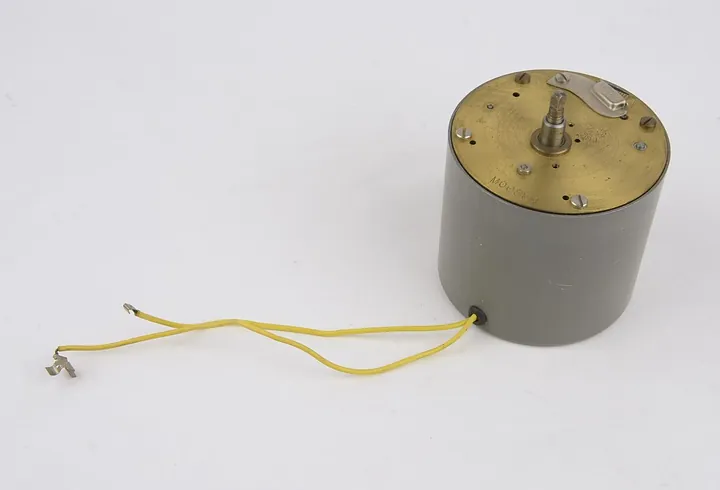
Stopwatch / timer by Horstmann Gear Co. Ltd., England, 1940–1974
Science Museum Group, London
Instruments · 1945
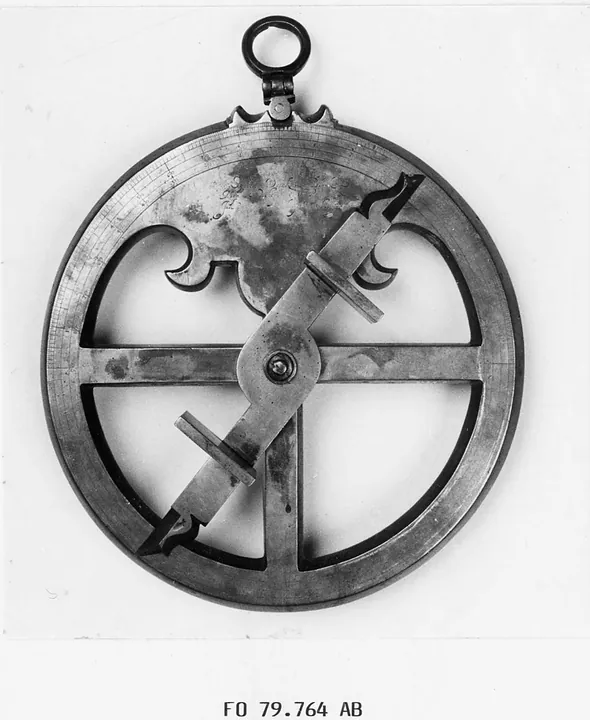
Astrolabe by Olsson, Gillis, SHM, Sweden, 1945
National Maritime Museum
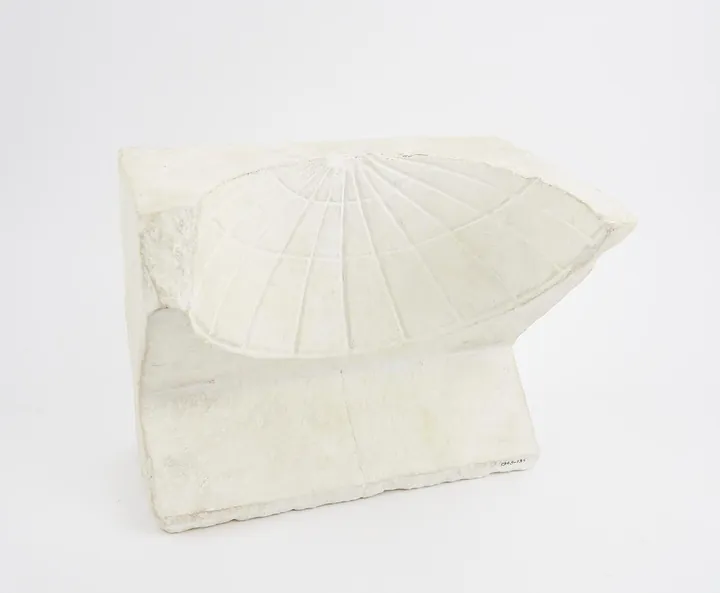
Instruments · 1945–1955 (reproduction of an original of 350–250 BCE)
Reproduction sundial by the British Museum, England, 1945–1955, after an original of 350–250 BCE
Science Museum Group, London