
Wristwatches · Wristwatch
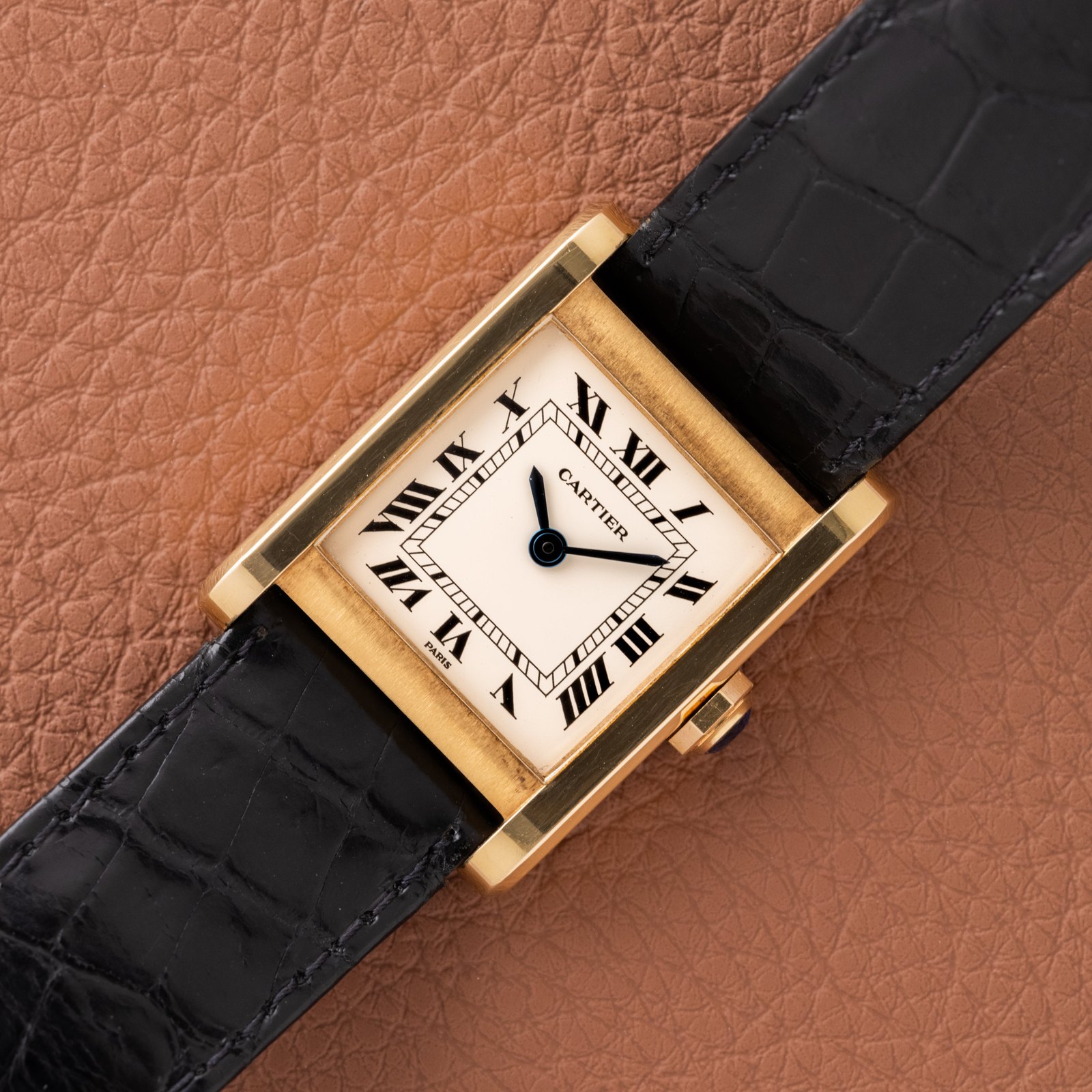
Cartier Tank Normale Mark 1 - Mint Early Example (Ref. 78092), 1970s
- Maker / attribution
- Cartier (maker)
- Date
- 1970s
- Historical period
- Quartz Revolution (1969 – 1990)
- Country of origin
- France
- Object type
- Wristwatch
- Dimensions
- Case 23 mm
- Stock no.
- Product 8744007729335
- Credit line
- Dealer listing, Huntington Company (product 8744007729335)
- Catalogue title (original)
- 1970s Cartier Tank Normale Mark 1 - Mint Early Example (Ref. 78092) (English)
View the source record (dealer listing) ↗ (opens another website in a new tab)Suggest a correction
Record summary
Catalogued by Huntington Company (dealer) (stock number Product 8744007729335), this is a wristwatch by Cartier, made in France, dated 1970s. The Atlas places it in the Quartz Revolution period (1969 – 1990) of its Wristwatches collection. Recorded dimensions: Case 23 mm. The record is illustrated with 6 photographs.
Assembled from the source record's structured fields. Dates and attributions are given as the source states them; where a field is missing the Atlas leaves it blank rather than estimating.
Catalogue description
Dealer description — Huntington Company
History and Significance The Tank Normale is the design that established the basic architecture of the Cartier Tank family. Its rectangular case, parallel brancards, Roman numeral dial, and cabochon-set crown created a vocabulary that Cartier would reinterpret repeatedly through the Tank Louis, Cintrée, Chinoise, and countless later variations. Early examples have a noticeably different presence from the more standardized watches produced after Cartier’s eventual consolidation. The proportions feel architectural and almost severe, which is precisely what gives an early Tank Normale so much character. This example is an especially early Mark 1 configuration, and the dial contains the kinds of small details that become important on a watch of this age. The Cartier signature uses the distinctive pointed “A,” while the Roman numerals surround a railroad minute track and a pair of blued hands. The dial remains remarkably well preserved with no cracks and has developed an attractive warm tone rather than the stark appearance of a restored or replaced dial. That combination of preservation and natural aging gives the watch much of its visual appeal. The solid gold case appears unpolished and remains remarkably sharp. Straight case lines and clearly defined edges are particularly important on the Tank Normale because the entire design depends on geometry rather than elaborate decoration. Polishing can quickly soften that architecture and fundamentally change the appearance of the watch. Preserving those original lines allows this example to retain the strong rectangular form that defines the earliest Tank designs. The original Cartier strap is paired with a solid gold Cartier deployant clasp, and the clasp itself provides another fascinating period detail. Its markings appear hand engraved rather than executed with the uniformity associated with later Cartier production. Similar inconsistencies can be encountered on early pre-consolidation Cartier pieces, reflecting a period when production practices and quality control were less standardized across the brand. Rather than detracting from the watch, details of this kind help place an early Cartier within the manufacturing environment from which it emerged. The appeal of an early Tank Normale ultimately comes from the accumulation of these details rather than any single feature. The pointed-A signature, warm and crack-free dial, sharp unpolished case, early deployant construction, and preserved Cartier fittings all contribute to the character of the watch. Modern Cartier has returned repeatedly to the Tank Normale for inspiration, but an early example carries proportions and manufacturing details that cannot be recreated simply by reproducing the shape. This is a particularly well-preserved expression of the design at the foundation of the Tank family. Writer's Thoughts Early Cartier becomes especially interesting when the imperfections and inconsistencies of production are still visible. The hand-engraved appearance of the solid gold deployant is a perfect example, reflecting a period before Cartier production became as standardized as it would be in later decades. The same appeal carries through to the dial, where the pointed “A,” warm aging, and exceptionally well-preserved surface give the watch an identity that would disappear with restoration. Combined with an unpolished case that remains remarkably sharp, the watch retains the details that make an early Tank Normale materially different from a later interpretation. The condition of the dial is particularly important because early Cartier dials can be difficult to find without cracking, heavy deterioration, or intervention. Here, the surface remains intact and has aged into a warm tone that complements the gold case beautifully. The rectangular architecture remains equally strong, with the sharp case preserving the proportions that make the Tank Normale so immediately recognizable. Taken together, the preservation, early construction details, and original Cartier fittings make this an unusually compelling early example. Our Promise Every watch is thoroughly vetted, carefully described with complete transparency, and guaranteed authentic. Each piece is offered in honest condition, ensuring collectors receive a timepiece that reflects both originality and integrity. Specifications Brand: Cartier Model: Tank Normale (Ref. 78092) Year: 1970s Case Material: Solid gold Case Size: 23mm Dial: Warm-tone Roman numeral dial with pointed-A Cartier signature Movement: Mechanical Strap/Bracelet: Cartier leather strap Buckle/Clasp: Solid gold Cartier deployant clasp Contents: Watch only Condition Case: The solid gold case appears unpolished and remains remarkably sharp, retaining strong edges and the architectural proportions characteristic of the Tank Normale. Light surface wear is present consistent with age. Dial: The dial is exceptionally well preserved with no cracks and has developed an attractive warm tone. The Roman numerals, railroad minute track, and early pointed-A Cartier signature remain clearly defined. Hands: The blued hands present beautifully and remain highly legible against the warm dial. Crystal: The crystal presents well overall with signs of wear consistent with the age of the watch. Strap/Bracelet: The Cartier leather strap presents well with signs of age and careful use. Buckle/Clasp: The solid gold Cartier deployant clasp presents well and retains its distinctive hand-engraved markings, an interesting characteristic associated with early pre-consolidation Cartier production.
Historical context
Quartz Revolution (1969 – 1990)
Seiko's Astron begins mass quartz timekeeping; traditional industries contract sharply.
Quartz and digital watches transformed the market after 1969. Swiss employment collapsed, Japanese and Hong Kong production soared, and the Swatch (1983) helped the Swiss industry recover; mechanical watches survived as luxury goods.
Read the period in the timelineMore wristwatches from this periodEarlier: Modern Mechanical Horology
Atlas type guide
Wristwatches
Bracelet watches were worn by women from the early nineteenth century — Breguet made one for Caroline Murat, Queen of Naples, in 1810–12 — but the wristwatch only became a man's instrument with military use and aviation in the early twentieth century. Between the World Wars it overtook the pocket watch; the 1920s and 1930s brought rectangular Art Deco cases, water-resistant cases and the first automatic winding systems.
After 1945 the wristwatch became a carrier of identity — dress watches, sports and dive watches, chronographs, calendars — produced by Swiss, American, Japanese, German, Soviet and Chinese industries. The quartz revolution after 1969 and the mechanical renaissance since the 1990s, including the rise of independent watchmakers, complete the story.
What to look for
- The reference number (between the lugs or inside the case back) and serial number, the starting point for dating.
- The calibre: its maker and number are often stamped under the dial or on the bridge.
- Originality of dial, hands and crown — refinished ('redial') dials are common.
- Case material marks: 18K/750, 14K/585, stainless steel, gold-filled, plated.
Dating clues
- Wire-lug cases: before c. 1925.
- Water-resistant screw-down cases: from 1926.
- Quartz movements: from 1969; sapphire crystals widespread after c. 1980.
General guidance written by the Atlas editors about this kind of object. It is not a statement about this particular piece; for that, rely on the source record above and on physical examination.
Related records
Clocks · 1863
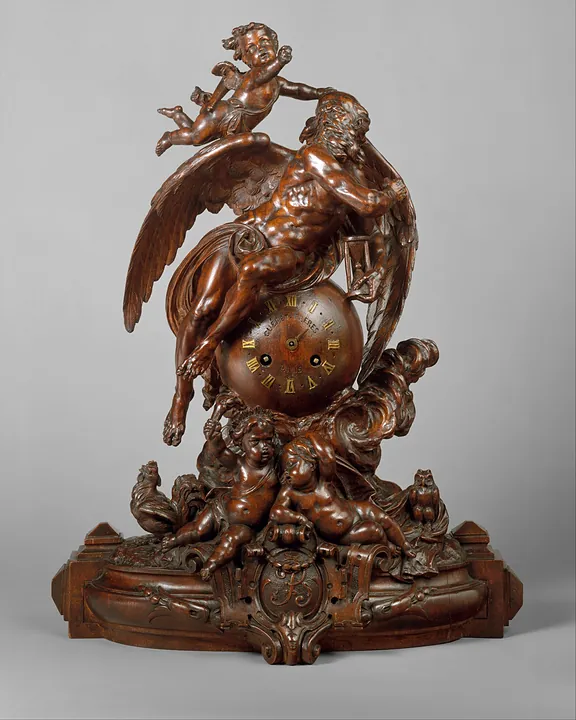
Clock by Albert-Ernest Carrier-Belleuse, France, 1863
The Metropolitan Museum of Art, New York
Clocks · c. 1980s
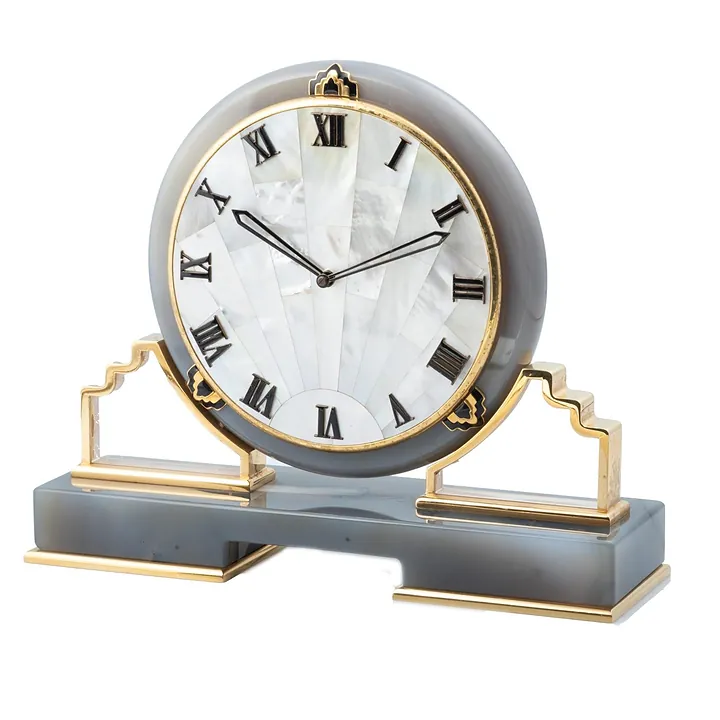
Cartier "art Deco", c. 1980s
Antiquorum auction archive, Geneva
Clocks · c. 2000s
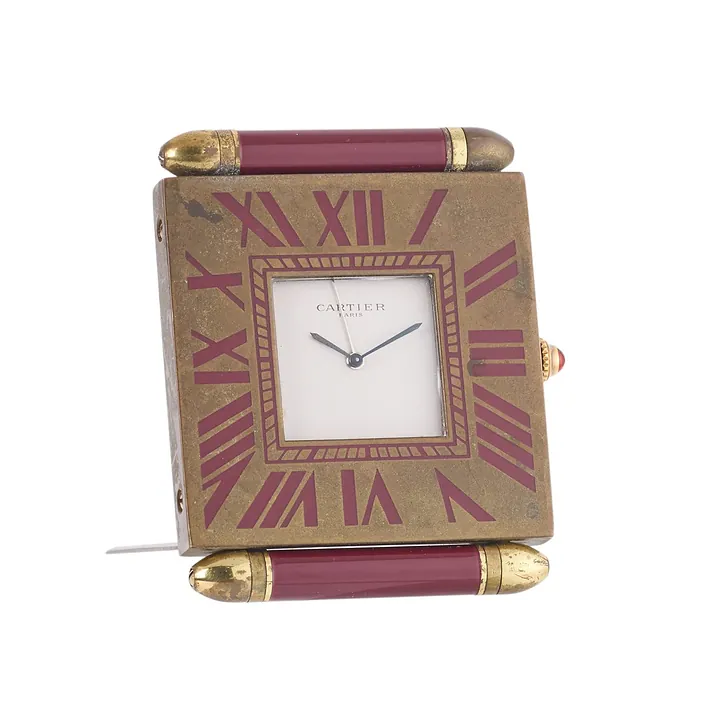
Cartier Desk Clock with Alarm, c. 2000s
Antiquorum auction archive, Geneva
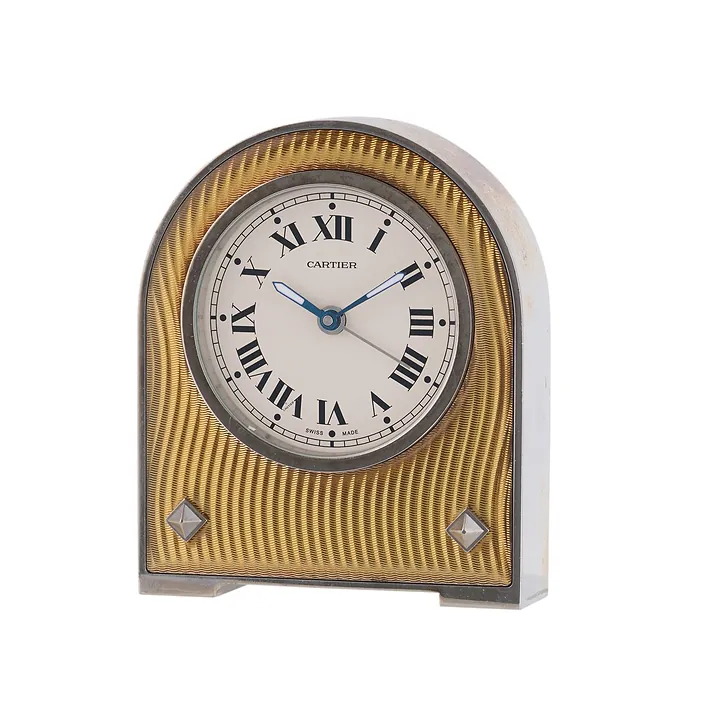
Clocks · c. 2000s
Cartier Lacquer Arched Desk Clock with Alarm, ref. W0100037, c. 2000s
Antiquorum auction archive, Geneva
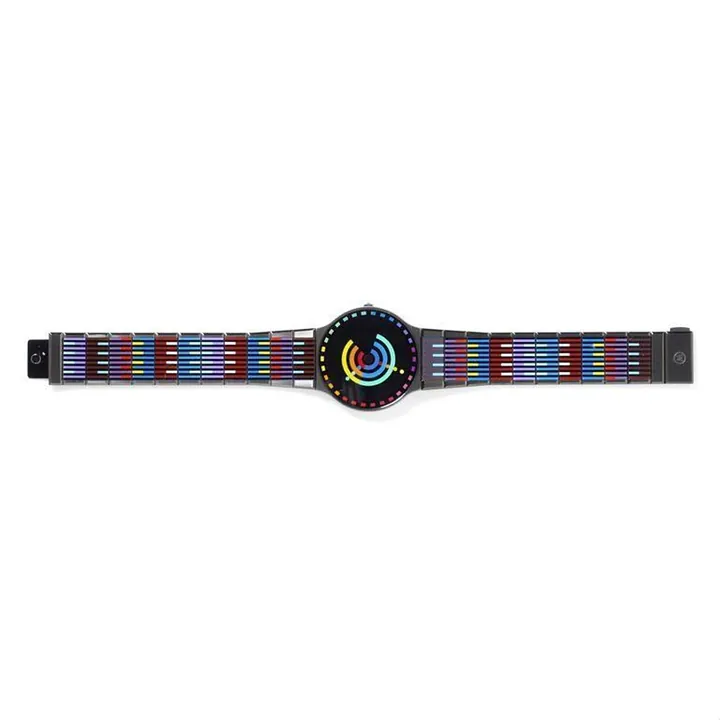
Wristwatches · c.1989
Steel, France and Switzerland, 1989; designed by Yaacov Agam (born 1928) for a limited edition by Movado
Victoria and Albert Museum, London

Wristwatches · c. 1972
Wristwatch, France, c. 1972
German Clock Museum

Wristwatches · 1986
Wristwatch, France, 1986
Työväenmuseo Werstas
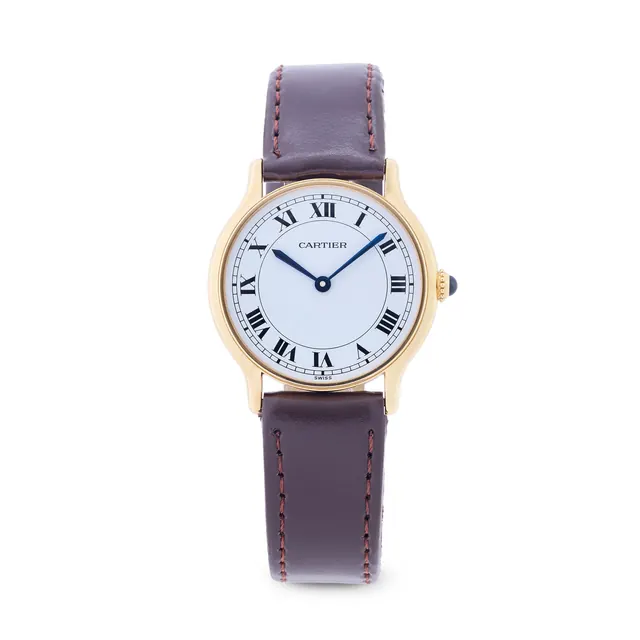
Wristwatches · c. 1970-1980s
Cartier wristwatch, ref. 10713, Riviera, circa 1970-1980s
Antiquorum auction archive, Geneva