
Wristwatches · Wristwatch
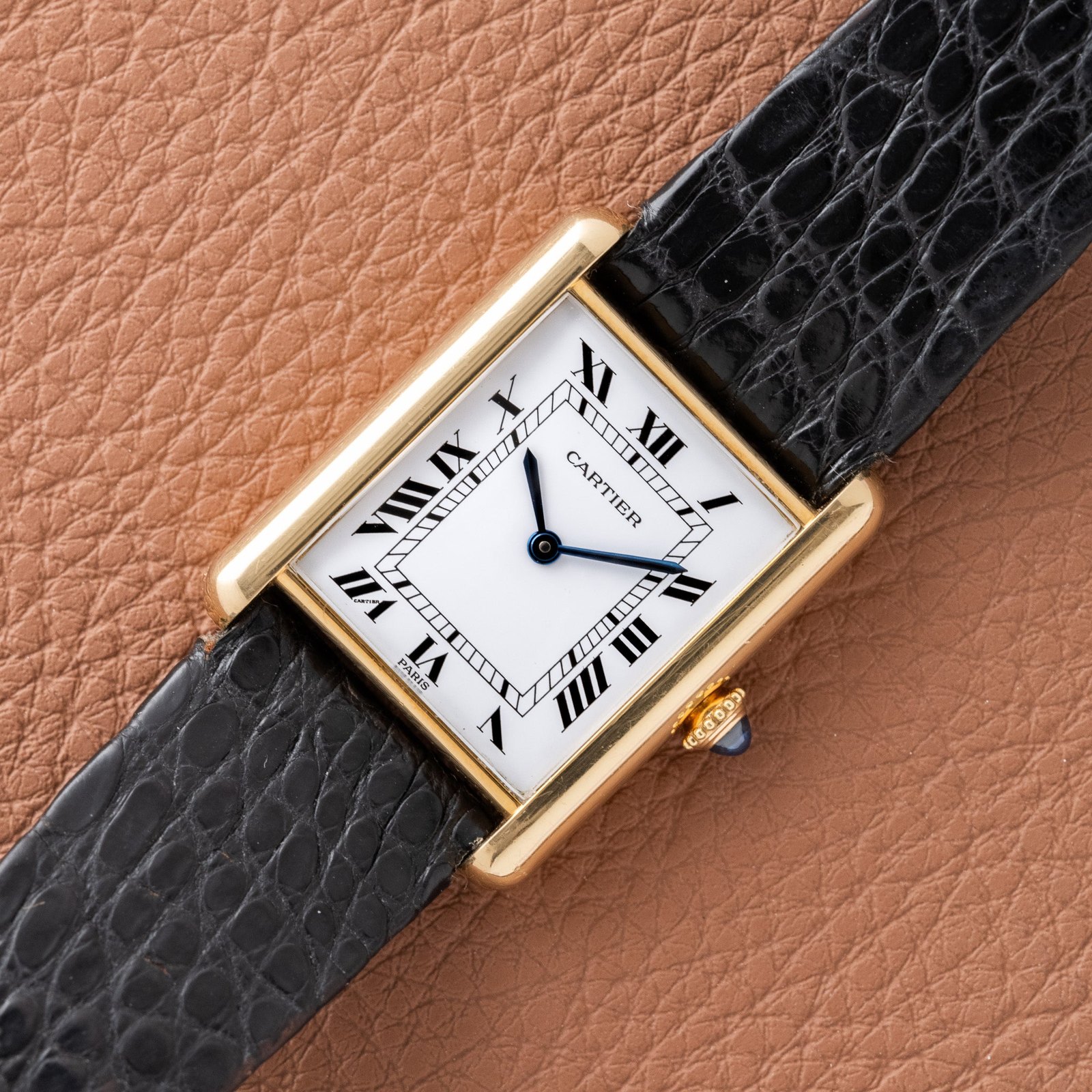
Cartier Tank Louis Paris Dial (Ref. 78086), 1970s
- Maker / attribution
- Cartier (maker)
- Date
- 1970s
- Historical period
- Quartz Revolution (1969 – 1990)
- Country of origin
- France
- Object type
- Wristwatch
- Dimensions
- Case 23 mm
- Stock no.
- Product 8403148800183
- Credit line
- Dealer listing, Huntington Company (product 8403148800183)
- Catalogue title (original)
- 1970s Cartier Tank Louis Paris Dial (Ref. 78086) (English)
View the source record (dealer listing) ↗ (opens another website in a new tab)Suggest a correction
Record summary
Catalogued by Huntington Company (dealer) (stock number Product 8403148800183), this is a wristwatch by Cartier, made in France, dated 1970s. The Atlas places it in the Quartz Revolution period (1969 – 1990) of its Wristwatches collection. Recorded dimensions: Case 23 mm. The record is illustrated with 6 photographs.
Assembled from the source record's structured fields. Dates and attributions are given as the source states them; where a field is missing the Atlas leaves it blank rather than estimating.
Catalogue description
Dealer description — Huntington Company
History & Significance The Cartier Tank is one of the most enduring designs in watchmaking, and the Paris-signed examples from the late 20th century remain especially compelling to collectors. Reference 78086 sits firmly in the lineage of classic mechanical Tanks, produced during a period when Cartier was still emphasizing restrained proportions, precious metal cases, and traditional finishing. The Paris dial signature places this watch within the era when Cartier maintained a strong connection to its historic workshops and design language, before later standardization across global production. What makes this example stand out is its condition and originality. The dial shows none of the crazing or degradation that often affects Paris dials from this period, preserving the crisp Roman numerals and balanced chemin de fer minute track exactly as intended. Combined with a solid gold case and the presence of the original strap and solid gold Cartier buckle, this is the kind of Tank that refle Writer’s Thoughts This is one of those Tanks that immediately feels right on the wrist. The proportions are spot on, and the dial has a calm, almost architectural clarity to it. The fact that the Paris dial is completely clean makes a huge difference; it keeps the watch feeling sharp rather than fragile. I also love seeing these with their original gold buckles still intact. It’s a small detail, but it adds a lot to the watch's overall integrity. This feels like a Tank that’s been worn thoughtfully rather than overworked, and that kind of honesty is hard to beat. Our Promise Every watch is thoroughly vetted, carefully described with complete transparency, and guaranteed authentic. Each piece is offered in honest condition, ensuring collectors receive a timepiece that reflects both originality and integrity. Specifications Brand: Cartier Model: Tank Louis ref. 78086 Year: Circa 1970s Case Material: 18k yellow gold Case Size: 23 mm by 30 mm Dial: Paris signed dial with original blued steel hands Crystal: Mineral Movement: Manual wind Strap: Original strap Buckle/Clasp: Cartier yellow gold buckle Contents: Watch only Condition Case: Solid gold case appears possibly unpolished with light surface wear consistent with age. Crystal: Clean with no visible chips or cracks. Dial: Mint condition Paris dial with no crazing or discoloration. Hands: Original blued hands in excellent condition. Strap/Bracelet: Original Cartier leather strap showing light, honest wear. Buckle/Clasp: Original solid gold Cartier buckle with light surface wear.
Historical context
Quartz Revolution (1969 – 1990)
Seiko's Astron begins mass quartz timekeeping; traditional industries contract sharply.
Quartz and digital watches transformed the market after 1969. Swiss employment collapsed, Japanese and Hong Kong production soared, and the Swatch (1983) helped the Swiss industry recover; mechanical watches survived as luxury goods.
Read the period in the timelineMore wristwatches from this periodEarlier: Modern Mechanical Horology
Atlas type guide
Wristwatches
Bracelet watches were worn by women from the early nineteenth century — Breguet made one for Caroline Murat, Queen of Naples, in 1810–12 — but the wristwatch only became a man's instrument with military use and aviation in the early twentieth century. Between the World Wars it overtook the pocket watch; the 1920s and 1930s brought rectangular Art Deco cases, water-resistant cases and the first automatic winding systems.
After 1945 the wristwatch became a carrier of identity — dress watches, sports and dive watches, chronographs, calendars — produced by Swiss, American, Japanese, German, Soviet and Chinese industries. The quartz revolution after 1969 and the mechanical renaissance since the 1990s, including the rise of independent watchmakers, complete the story.
What to look for
- The reference number (between the lugs or inside the case back) and serial number, the starting point for dating.
- The calibre: its maker and number are often stamped under the dial or on the bridge.
- Originality of dial, hands and crown — refinished ('redial') dials are common.
- Case material marks: 18K/750, 14K/585, stainless steel, gold-filled, plated.
Dating clues
- Wire-lug cases: before c. 1925.
- Water-resistant screw-down cases: from 1926.
- Quartz movements: from 1969; sapphire crystals widespread after c. 1980.
General guidance written by the Atlas editors about this kind of object. It is not a statement about this particular piece; for that, rely on the source record above and on physical examination.
Related records

Clocks · 1863
Clock by Albert-Ernest Carrier-Belleuse, France, 1863
The Metropolitan Museum of Art, New York

Clocks · c. 1980s
Cartier "art Deco", c. 1980s
Antiquorum auction archive, Geneva

Clocks · c. 2000s
Cartier Desk Clock with Alarm, c. 2000s
Antiquorum auction archive, Geneva

Clocks · c. 2000s
Cartier Lacquer Arched Desk Clock with Alarm, ref. W0100037, c. 2000s
Antiquorum auction archive, Geneva
Wristwatches · c.1989
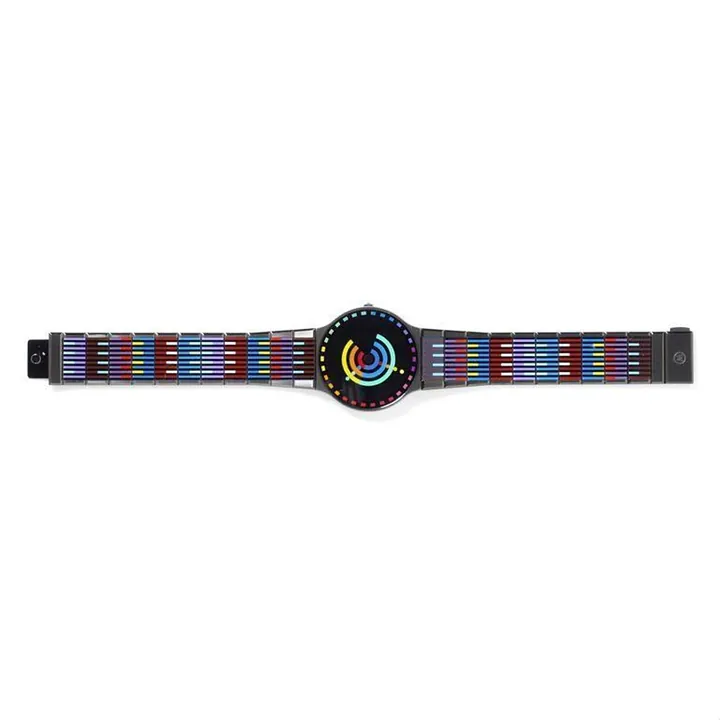
Steel, France and Switzerland, 1989; designed by Yaacov Agam (born 1928) for a limited edition by Movado
Victoria and Albert Museum, London
Wristwatches · c. 1972
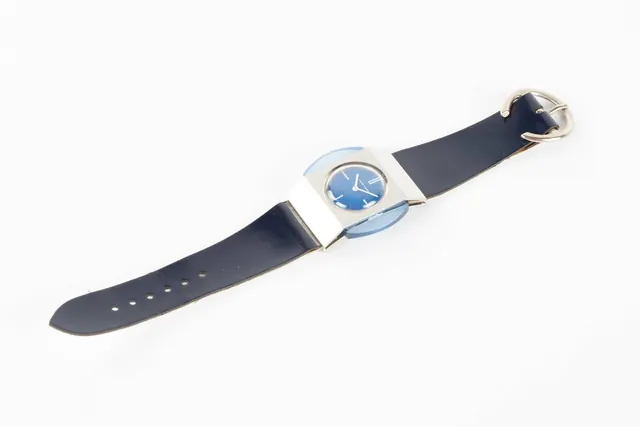
Wristwatch, France, c. 1972
German Clock Museum

Wristwatches · 1986
Wristwatch, France, 1986
Työväenmuseo Werstas
Wristwatches · c. 1970-1980s
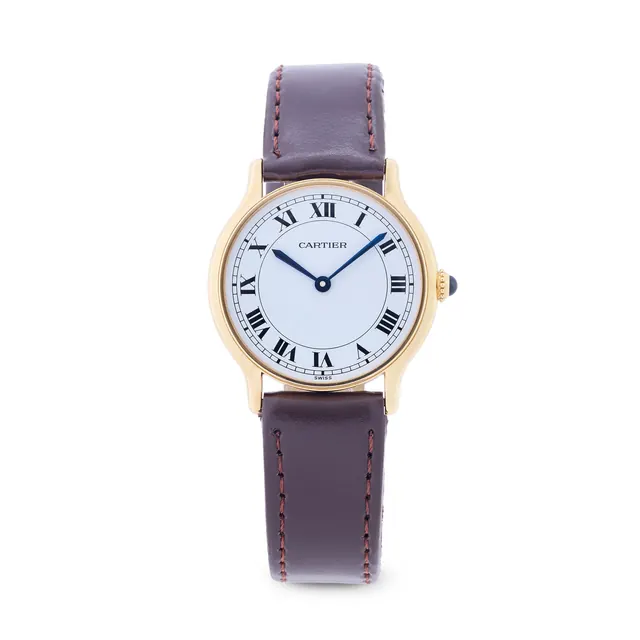
Cartier wristwatch, ref. 10713, Riviera, circa 1970-1980s
Antiquorum auction archive, Geneva