
Wristwatches · Wristwatch
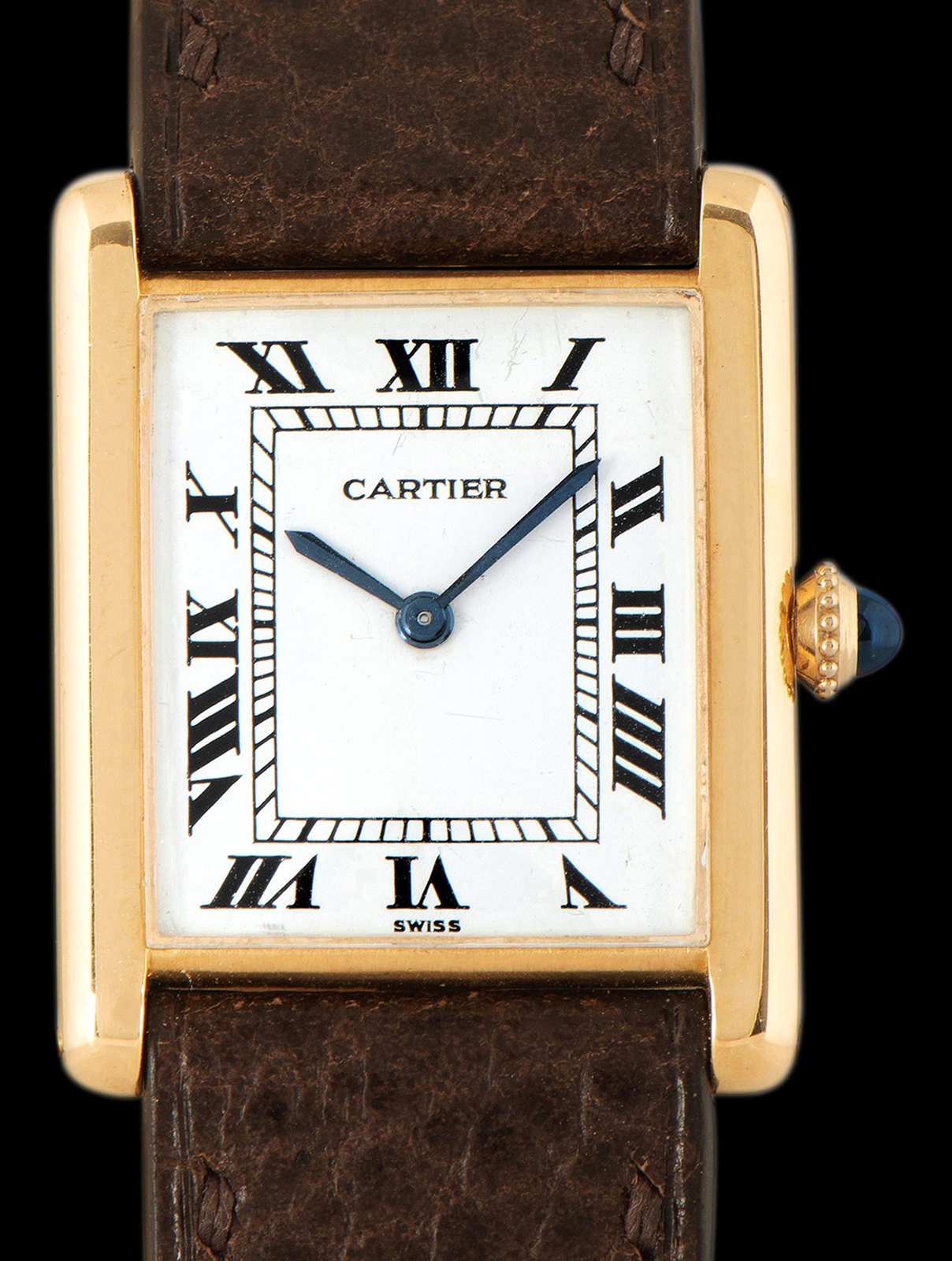
Cartier Tank LC 18K YG (Ref. 96019) "Extra Plate", 1980s
- Maker / attribution
- Cartier (maker)
- Date
- 1980s
- Historical period
- Quartz Revolution (1969 – 1990)
- Country of origin
- France
- Object type
- Wristwatch
- Stock no.
- CTRTLCPEP96019-2
- Credit line
- Dealer listing, Craft & Tailored (CTRTLCPEP96019-2)
- Catalogue title (original)
- 1980s Cartier Tank LC 18K YG (Ref. 96019) "Extra Plate" (English)
View the source record (dealer listing) ↗ (opens another website in a new tab)Suggest a correction
Record summary
Catalogued by Craft & Tailored (dealer), Los Angeles (stock number CTRTLCPEP96019-2), this is a wristwatch by Cartier, made in France, dated 1980s. The Atlas places it in the Quartz Revolution period (1969 – 1990) of its Wristwatches collection. The record is illustrated with 6 photographs.
Assembled from the source record's structured fields. Dates and attributions are given as the source states them; where a field is missing the Atlas leaves it blank rather than estimating.
Catalogue description
Dealer description — Craft & Tailored
The Cartier Tank has become one of the most iconic watch designs of all time, and other than some more eclectic references produced has remained relatively the same over its long run of production. The Cartier Tank was originally designed in 1917 and became commercially available in 1919, and its design was inspired by the Renault FT-17 tank used by the French Military in the First World War. Although the Cartier Tank appears to have remained the same for the course of its design life, there are some interesting anomalies that happened during its production run that resulted in very collectible and very rare timepieces. This Carter Tank Louis Cartier, or Tank LC, is best known amongst collectors as the "Extra Plate" or "Extra Thin" and is one of the thinnest Cartier watches ever produced and features a total thickness of 4.9mm including the crystal. This impressive feat is achieved through the utilization of the renowned Frederic Piguet Cal. 21 ultra-thin mechanical movement. Though this Cartier Tank LC Extra Plate is one of the thinnest watches Cartier ever made, it retains the standard height and width dimensions of the Tank LC in this era. This makes for a perfect dress timepiece, both beautiful and elegant with the added benefit of sliding under the shirt cuff with ease. SPECS Stock # CTRTLCPEP96019-2 Brand Cartier Style Tank LC "Extra Plate" Model 96019 Serial 35XX Size Men's Material 18K Yellow Gold Dial White Roman Millimeters 23x30 Strap 2pc Handmade Leather Strap W/ 18K YG Cartier Deployant Clasp CASE & BRACELET The extra thin or "Extra Plate" 18K yellow gold case is exceptionally well-preserved, retaining crisp hallmarks, factory finishing, and dimensions throughout. The case displays normal signs of gentle use with minimal evidence of being previously polished present. The original sloped-glass crysta shows subtle signs of use and is relatively unnoticeable while on wrist. The case retains its original blue sapphire cabochon crown. The uncommon back-screw case features some light wear with the factory finishing, original engravings, and hallmarks all present. The watch comes supplied on a 2pc handmade leather strap with the original Cartier 18K yellow gold deployant clasp. DIAL & HANDS The original white Roman numeral dial features a charming vintage aesthetic, showing no spider cracking in the top lacquer with some subtle wear and marks present throughout. The original blued hands are also in excellent condition with no age or wear present. ACCESSORIES None. Watch is functioning and keeping time, previous service history is unknown.
Historical context
Quartz Revolution (1969 – 1990)
Seiko's Astron begins mass quartz timekeeping; traditional industries contract sharply.
Quartz and digital watches transformed the market after 1969. Swiss employment collapsed, Japanese and Hong Kong production soared, and the Swatch (1983) helped the Swiss industry recover; mechanical watches survived as luxury goods.
Read the period in the timelineMore wristwatches from this periodEarlier: Modern Mechanical Horology
Atlas type guide
Wristwatches
Bracelet watches were worn by women from the early nineteenth century — Breguet made one for Caroline Murat, Queen of Naples, in 1810–12 — but the wristwatch only became a man's instrument with military use and aviation in the early twentieth century. Between the World Wars it overtook the pocket watch; the 1920s and 1930s brought rectangular Art Deco cases, water-resistant cases and the first automatic winding systems.
After 1945 the wristwatch became a carrier of identity — dress watches, sports and dive watches, chronographs, calendars — produced by Swiss, American, Japanese, German, Soviet and Chinese industries. The quartz revolution after 1969 and the mechanical renaissance since the 1990s, including the rise of independent watchmakers, complete the story.
What to look for
- The reference number (between the lugs or inside the case back) and serial number, the starting point for dating.
- The calibre: its maker and number are often stamped under the dial or on the bridge.
- Originality of dial, hands and crown — refinished ('redial') dials are common.
- Case material marks: 18K/750, 14K/585, stainless steel, gold-filled, plated.
Dating clues
- Wire-lug cases: before c. 1925.
- Water-resistant screw-down cases: from 1926.
- Quartz movements: from 1969; sapphire crystals widespread after c. 1980.
General guidance written by the Atlas editors about this kind of object. It is not a statement about this particular piece; for that, rely on the source record above and on physical examination.
Related records

Clocks · 1863
Clock by Albert-Ernest Carrier-Belleuse, France, 1863
The Metropolitan Museum of Art, New York

Clocks · c. 1980s
Cartier "art Deco", c. 1980s
Antiquorum auction archive, Geneva

Clocks · c. 2000s
Cartier Desk Clock with Alarm, c. 2000s
Antiquorum auction archive, Geneva

Clocks · c. 2000s
Cartier Lacquer Arched Desk Clock with Alarm, ref. W0100037, c. 2000s
Antiquorum auction archive, Geneva
Wristwatches · c.1989
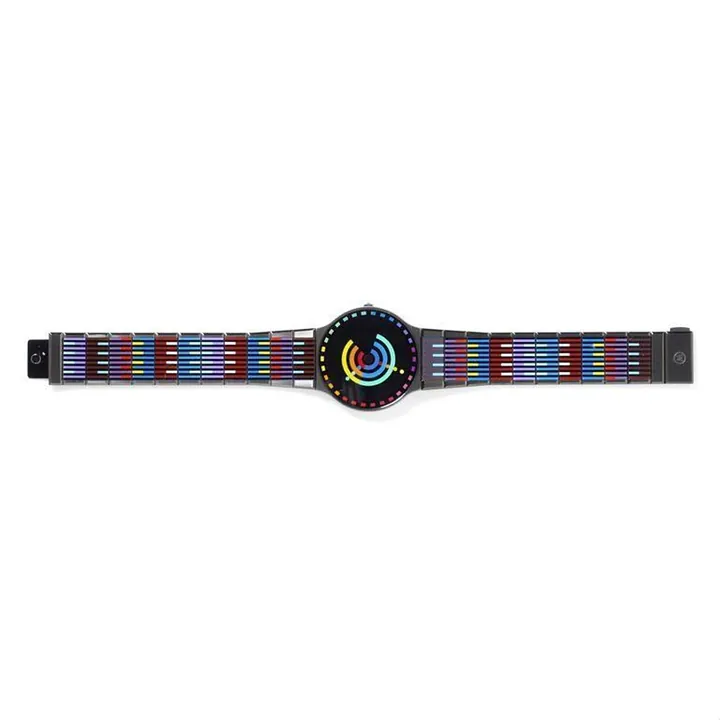
Steel, France and Switzerland, 1989; designed by Yaacov Agam (born 1928) for a limited edition by Movado
Victoria and Albert Museum, London
Wristwatches · c. 1972
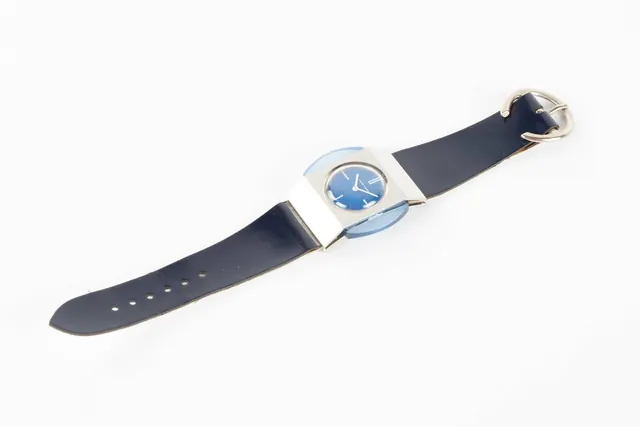
Wristwatch, France, c. 1972
German Clock Museum

Wristwatches · 1986
Wristwatch, France, 1986
Työväenmuseo Werstas
Wristwatches · c. 1970-1980s
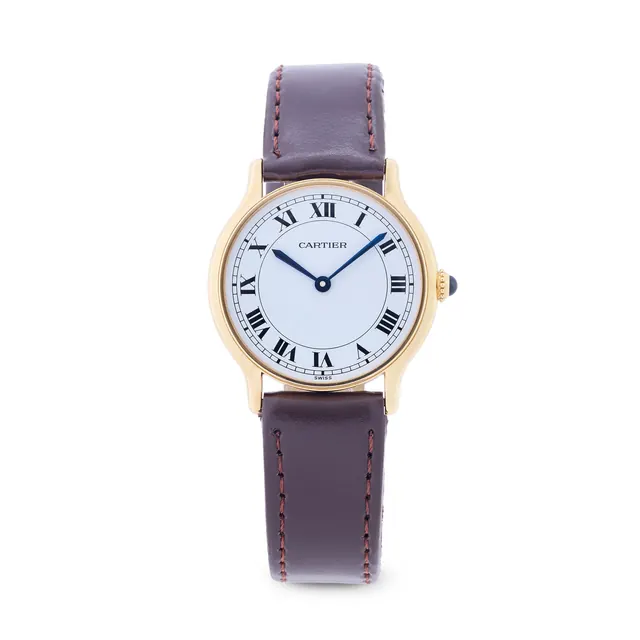
Cartier wristwatch, ref. 10713, Riviera, circa 1970-1980s
Antiquorum auction archive, Geneva