
Wristwatches · Wristwatch
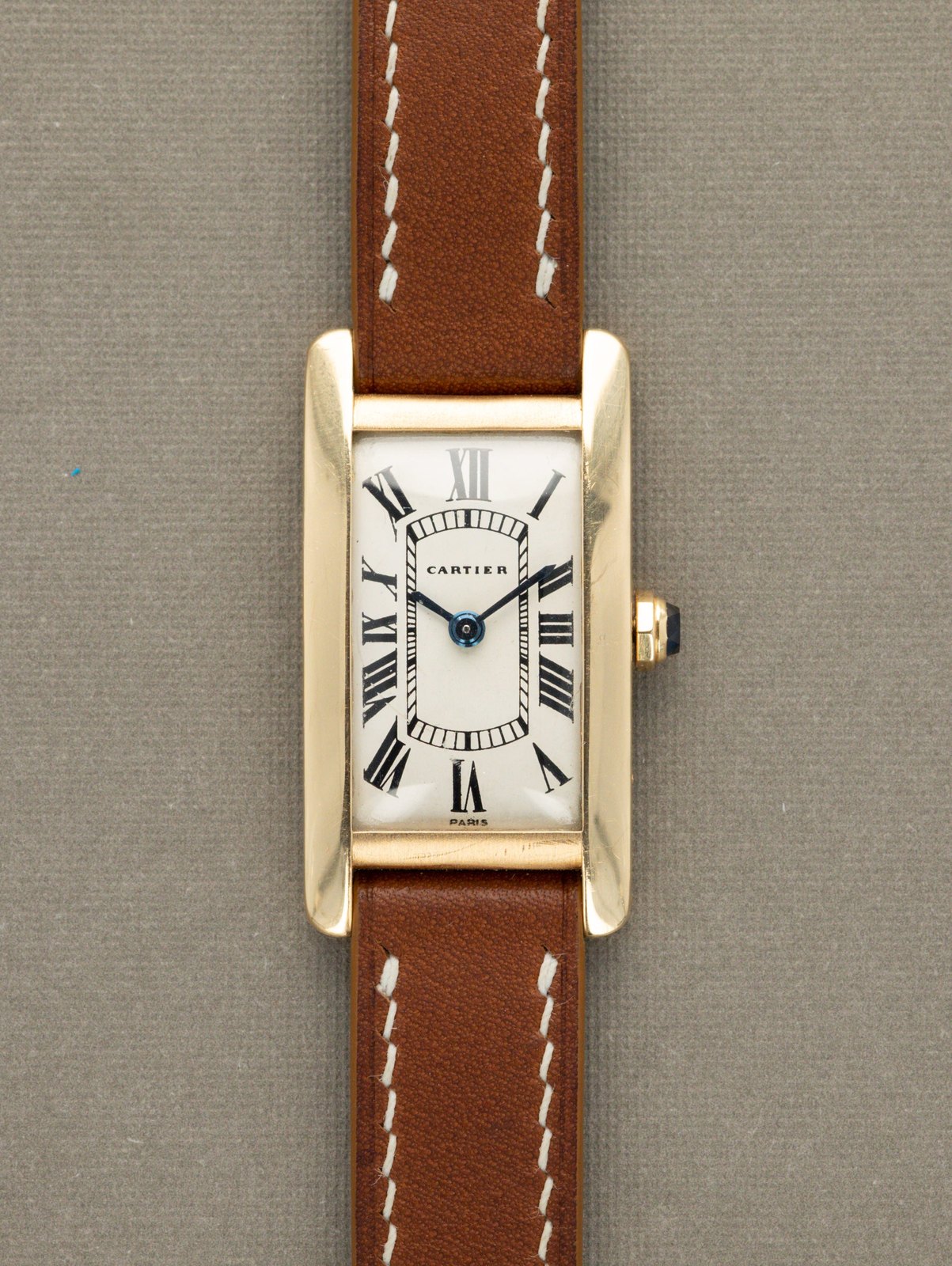
Cartier Tank Cintrée '7 Lignes', 'Paris' Dial
- Maker / attribution
- Cartier (maker)
- Date
- c. 1970
- Historical period
- Quartz Revolution (1969 – 1990)
- Country of origin
- France
- Object type
- Wristwatch
- Stock no.
- OC2287
- Credit line
- Dealer listing, Oliver & Clarke (OC2287)
- Catalogue title (original)
- Cartier Tank Cintrée '7 Lignes' - 'Paris' Dial (English)
View the source record (dealer listing) ↗ (opens another website in a new tab)Suggest a correction
Record summary
Catalogued by Oliver & Clarke (dealer), United Kingdom (stock number OC2287), this is a wristwatch by Cartier, made in France, dated c. 1970. The Atlas places it in the Quartz Revolution period (1969 – 1990) of its Wristwatches collection. The record is illustrated with 6 photographs.
Assembled from the source record's structured fields. Dates and attributions are given as the source states them; where a field is missing the Atlas leaves it blank rather than estimating.
Catalogue description
Dealer description — Oliver & Clarke
The Cartier Tank was one of the first wristwatches. Full stop! Inspired by the Renault Tanks used on the battlefield in WWI — yes, true story. Revolutionary at the time, Louis Cartier took inspiration from the profile of the treads on a period Renault tank, and based the case on them by way of the of brancards doubling as the lugs themselves. Over the course of the 20 th Century, the Tank became the watch to wear. Silent movie stars like Rudolph Valentino, artists like Andy Warhol, and even Jackie Kennedy were all fans of the signature timepiece from the King of Jewelers and the Jeweler of Kings. An icon indeed in the truest sense of the word. The model was first introduced in a few different case shapes which bore different names that intertwine with the inspiration behind them. The Tank 'Cintrée' was one of these early designs. In 1921, Cartier introduced the now legendary Cintrèe model, an elongated, curved take on the Tank 'Normale'. The word "cintrée" translates to ‘curved’ in French — another example of how literal Cartier can be. Like so many watches, the Cintrée underwent a number of minor changes over the years, with very early examples favoring 'Breguet'-style hands, while later exampled shifted to blue-steel 'sword' hands. Cintrées have never been officially discontinued, but are rarely stocked in Cartier boutiques worldwide, making them incredibly scarce and elusive to collectors. A recent example, for the 100th anniversary of the Cintrée in 2021, Cartier simply released and sold 1.1 re-issues of the first Cintrée to its top 150 clients without ever even issuing a press release or announcing the watch! Naturally, finding a vintage Cintrée has become difficult. The example that we have here, a small size called the '7 Lignes', dates to circa 1970 and remains in fantastic overall condition. It's white dial has changed to a lovely eggshell color and retains crisp printing throughout with a "Paris" signature at the 6 o'clock position. Upon closer inspection, there is some edge wear visible, namely in the top right corner of the dial, and well as what appears to be a light hand-drag mark on the left of the dial. The blued-steel 'sword' handset is complimented by the ubiquitous Cartier sapphire cabochon-set crown, which is beautifully faceted in this case. Don't let the size fool you, rectangular watches like this have a way of wearing larger than its dimensions would led you to believe, allowing for a surprisingly accommodating wearing experience.
Historical context
Quartz Revolution (1969 – 1990)
Seiko's Astron begins mass quartz timekeeping; traditional industries contract sharply.
Quartz and digital watches transformed the market after 1969. Swiss employment collapsed, Japanese and Hong Kong production soared, and the Swatch (1983) helped the Swiss industry recover; mechanical watches survived as luxury goods.
Read the period in the timelineMore wristwatches from this periodEarlier: Modern Mechanical Horology
Atlas type guide
Wristwatches
Bracelet watches were worn by women from the early nineteenth century — Breguet made one for Caroline Murat, Queen of Naples, in 1810–12 — but the wristwatch only became a man's instrument with military use and aviation in the early twentieth century. Between the World Wars it overtook the pocket watch; the 1920s and 1930s brought rectangular Art Deco cases, water-resistant cases and the first automatic winding systems.
After 1945 the wristwatch became a carrier of identity — dress watches, sports and dive watches, chronographs, calendars — produced by Swiss, American, Japanese, German, Soviet and Chinese industries. The quartz revolution after 1969 and the mechanical renaissance since the 1990s, including the rise of independent watchmakers, complete the story.
What to look for
- The reference number (between the lugs or inside the case back) and serial number, the starting point for dating.
- The calibre: its maker and number are often stamped under the dial or on the bridge.
- Originality of dial, hands and crown — refinished ('redial') dials are common.
- Case material marks: 18K/750, 14K/585, stainless steel, gold-filled, plated.
Dating clues
- Wire-lug cases: before c. 1925.
- Water-resistant screw-down cases: from 1926.
- Quartz movements: from 1969; sapphire crystals widespread after c. 1980.
General guidance written by the Atlas editors about this kind of object. It is not a statement about this particular piece; for that, rely on the source record above and on physical examination.
Related records

Clocks · 1863
Clock by Albert-Ernest Carrier-Belleuse, France, 1863
The Metropolitan Museum of Art, New York

Clocks · c. 1980s
Cartier "art Deco", c. 1980s
Antiquorum auction archive, Geneva

Clocks · c. 2000s
Cartier Desk Clock with Alarm, c. 2000s
Antiquorum auction archive, Geneva

Clocks · c. 2000s
Cartier Lacquer Arched Desk Clock with Alarm, ref. W0100037, c. 2000s
Antiquorum auction archive, Geneva
Wristwatches · c.1989
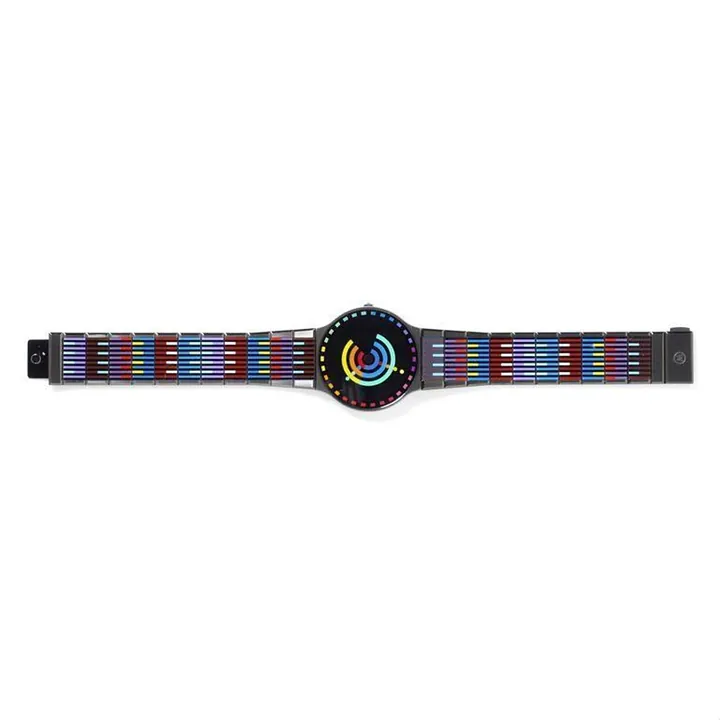
Steel, France and Switzerland, 1989; designed by Yaacov Agam (born 1928) for a limited edition by Movado
Victoria and Albert Museum, London
Wristwatches · c. 1972
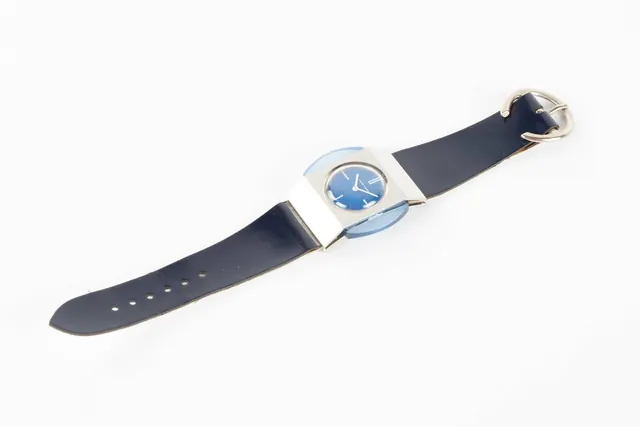
Wristwatch, France, c. 1972
German Clock Museum
Wristwatches · 1986
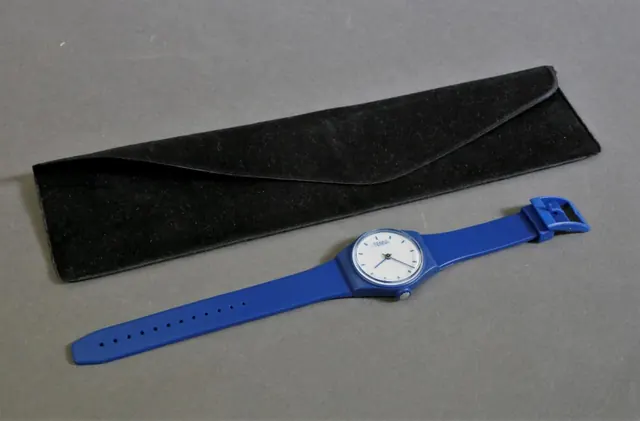
Wristwatch, France, 1986
Työväenmuseo Werstas
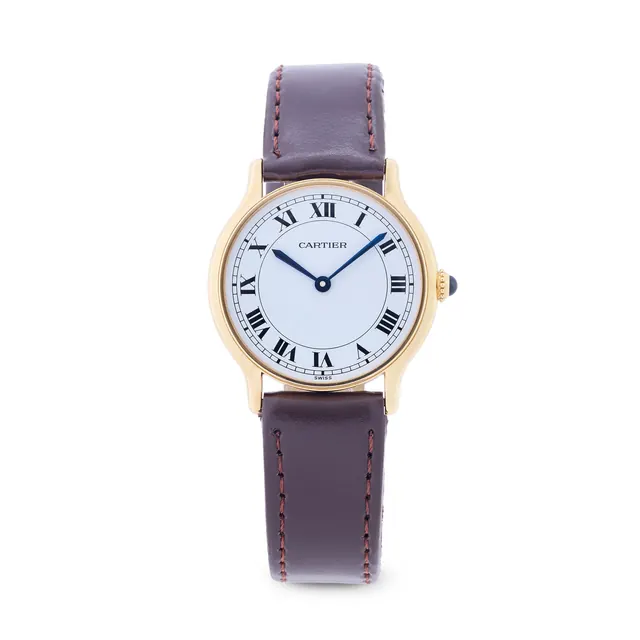
Wristwatches · c. 1970-1980s
Cartier wristwatch, ref. 10713, Riviera, circa 1970-1980s
Antiquorum auction archive, Geneva