
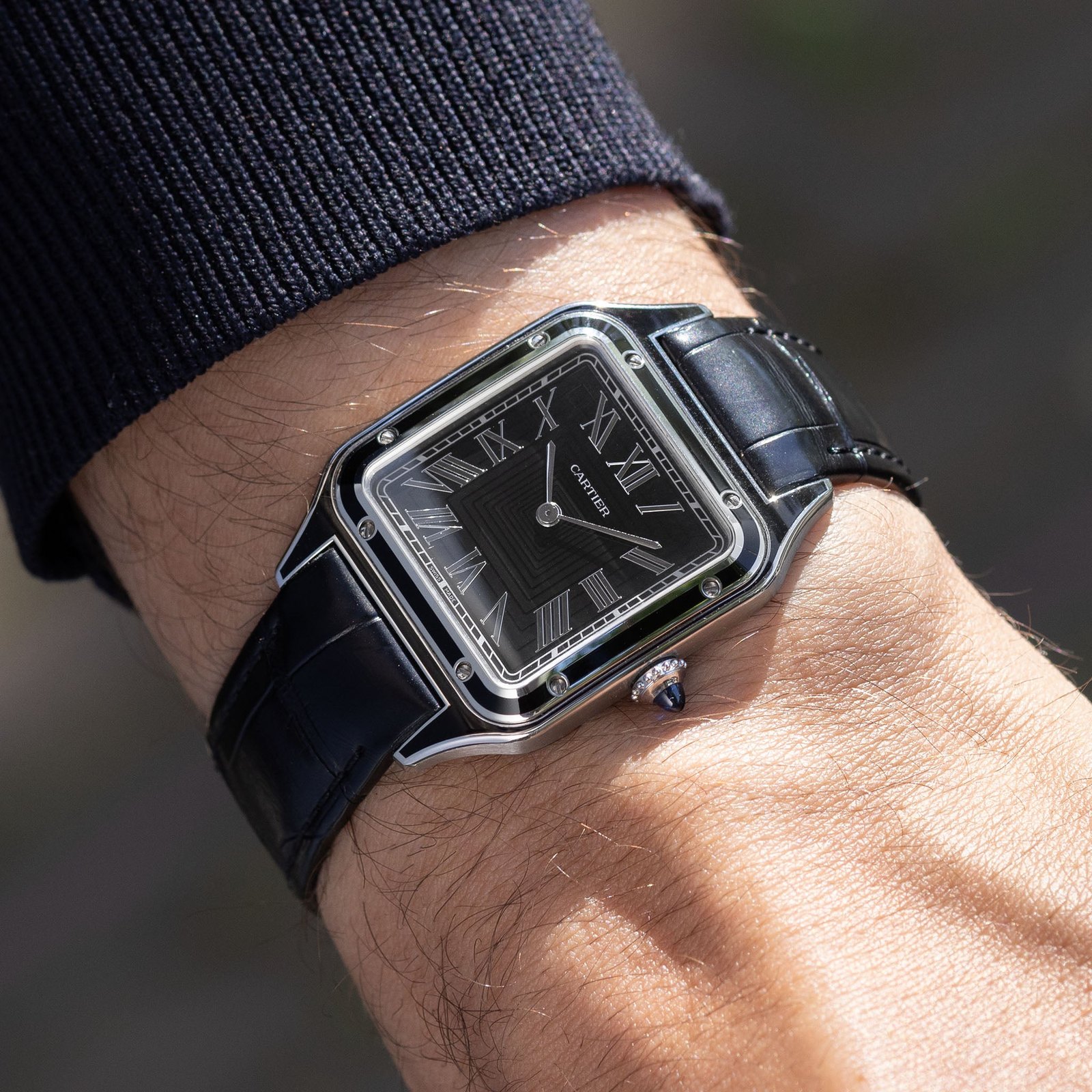
Wristwatches · Wristwatch
Cartier Santos Dumont Black Lacquered ref. WSSA0046 Box and Paper Set, 2023
- Maker / attribution
- Cartier (maker)
- Date
- 2023
- Historical period
- Contemporary Horology (2010 – Present)
- Country of origin
- France
- Object type
- Wristwatch
- Dimensions
- Case 31.5 mm
- Stock no.
- W-3823
- Credit line
- Dealer listing, Bulang & Sons (W-3823)
- Catalogue title (original)
- Cartier Santos Dumont Black Lacquered ref. WSSA0046 Box and Paper Set (English)
View the source record (dealer listing) ↗ (opens another website in a new tab)Suggest a correction
Record summary
Catalogued by Bulang & Sons (dealer), Copenhagen (stock number W-3823), this is a wristwatch by Cartier, made in France, dated 2023. The Atlas places it in the Contemporary Horology period (2010 – Present) of its Wristwatches collection. Recorded dimensions: Case 31.5 mm. The record is illustrated with 6 photographs.
Assembled from the source record's structured fields. Dates and attributions are given as the source states them; where a field is missing the Atlas leaves it blank rather than estimating.
Catalogue description
Dealer description — Bulang & Sons
The Cartier Santos holds a truly special place in watchmaking history. At the beginning of the 20th century, pioneering aviator Alberto Santos-Dumont complained to his close friend Louis Cartier that pocket watches were impractical to use while flying. In response, Louis Cartier designed a watch that could comfortably be worn on the wrist — creating what is widely considered one of the world’s very first purpose-built wristwatches for men. Equally revolutionary was its design. At a time when nearly all watches featured round cases, the Santos stood apart with its distinctive square shape, exposed screws, and clean geometric lines — elements that would later become defining signatures of Cartier watchmaking. Over the decades, the Santos evolved into one of Cartier’s most iconic collections, balancing elegance, innovation, and everyday wearability. Within the modern range, the Santos-Dumont represents the collection’s more refined and classical side, staying closest in spirit to the original early aviation watches through its slim profile, elegant proportions, and understated design language. The Cartier Santos-Dumont presented here features a fully stainless steel case measuring 31.5 mm wide, 43.5 mm lug-to-lug, with a cabochon topped crown . Cartier classifies this as a “Large” model, though by modern standards it remains wonderfully elegant and restrained in size — exactly as a Santos-Dumont should be. What makes this watch so appealing on the wrist is the way Cartier combines compact proportions with remarkable presence and refinement. The slim profile allows the watch to sit beautifully under a cuff, while the iconic square case architecture gives it far more visual impact than the measurements alone might suggest. A particularly striking detail is the layer of glossy black lacquer surrounding the bezel and upper case surfaces. This subtle contrast adds depth, sharpness, and a distinctly Art Deco character to the design, beautifully emphasizing the Santos-Dumont’s clean geometric lines and timeless elegance. The deep black lacquered dial immediately draws the eye through its beautifully sculpted surface, featuring an engraved geometric pattern that creates a subtle three-dimensional effect depending on the light. Applied Roman numerals rise elegantly from the dial, adding both depth and unmistakable Cartier character. Complementing the architecture of the dial are the signature sword-shaped hands, whose sharp lines perfectly echo the refined geometry of the numerals and case design. Encircling the dial is a finely printed railway minute track — a classic Cartier detail. The watch comes on its original Cartier alligator strap, with a steel Cartier esque pin buckle attached. Furthermore this watch comes with its original inner and outer boxes , the original invoice and the Cartier guarantee card stating sale in sept 2023. Powering the watch is the manually wound Cartier Calibre 430MC, a movement that offers a wonderfully smooth winding experience and elegant slim proportions. The calibre is based on an ultra-thin Piaget movement, long respected for its refinement, reliability, and suitability for sophisticated dress watches and has been fully checked by our watch maker. One of the most elegant modern interpretations of an early wristwatch icon , we highly recommend this specimen! Specifications: Cartier Santos Dumont Black Lacquered reference WSSA0046 Dating to 2023 43,5 x 31,5 mm Steel case , with black lacquer on top Black dial with engraved pattern Sword hands and sapphire cabochon crown Piaget /Cartier calibre 430 manual wind movement Leather Cartier strap Inner and outer Cartier boxes Original sales invoice Cartier guarantee card stating sale in sept 2023 Fully checked by our watchmaker
Historical context
Contemporary Horology (2010 – Present)
Silicon components, connected watches, optical-lattice research clocks and a thriving independent scene.
Smartwatches became the world's best-selling watches, while mechanical watchmaking focuses on craft, innovation (silicon components, new escapements) and independent makers.
Read the period in the timelineMore wristwatches from this periodEarlier: Mechanical Renaissance
Atlas type guide
Wristwatches
Bracelet watches were worn by women from the early nineteenth century — Breguet made one for Caroline Murat, Queen of Naples, in 1810–12 — but the wristwatch only became a man's instrument with military use and aviation in the early twentieth century. Between the World Wars it overtook the pocket watch; the 1920s and 1930s brought rectangular Art Deco cases, water-resistant cases and the first automatic winding systems.
After 1945 the wristwatch became a carrier of identity — dress watches, sports and dive watches, chronographs, calendars — produced by Swiss, American, Japanese, German, Soviet and Chinese industries. The quartz revolution after 1969 and the mechanical renaissance since the 1990s, including the rise of independent watchmakers, complete the story.
What to look for
- The reference number (between the lugs or inside the case back) and serial number, the starting point for dating.
- The calibre: its maker and number are often stamped under the dial or on the bridge.
- Originality of dial, hands and crown — refinished ('redial') dials are common.
- Case material marks: 18K/750, 14K/585, stainless steel, gold-filled, plated.
Dating clues
- Wire-lug cases: before c. 1925.
- Water-resistant screw-down cases: from 1926.
- Quartz movements: from 1969; sapphire crystals widespread after c. 1980.
General guidance written by the Atlas editors about this kind of object. It is not a statement about this particular piece; for that, rely on the source record above and on physical examination.
Related records
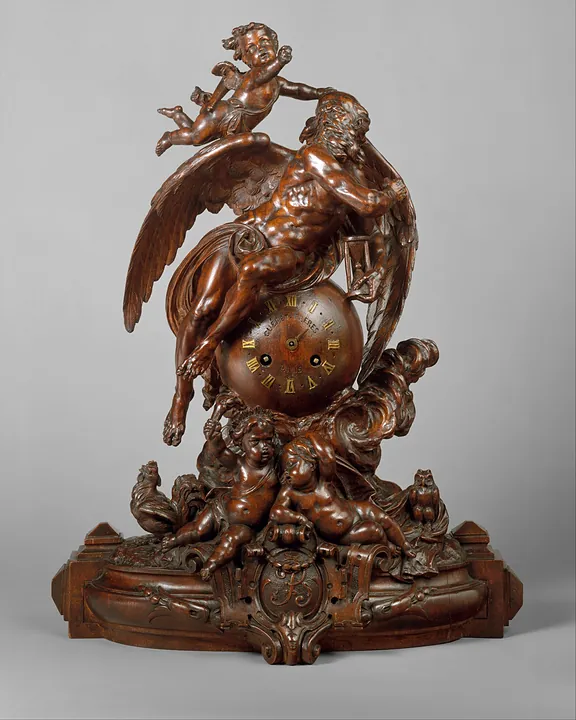
Clocks · 1863
Clock by Albert-Ernest Carrier-Belleuse, France, 1863
The Metropolitan Museum of Art, New York
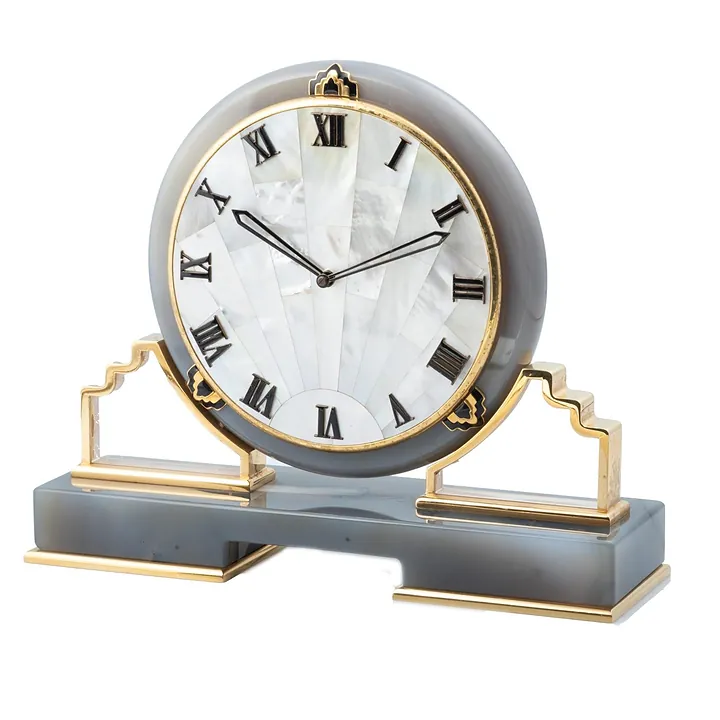
Clocks · c. 1980s
Cartier "art Deco", c. 1980s
Antiquorum auction archive, Geneva
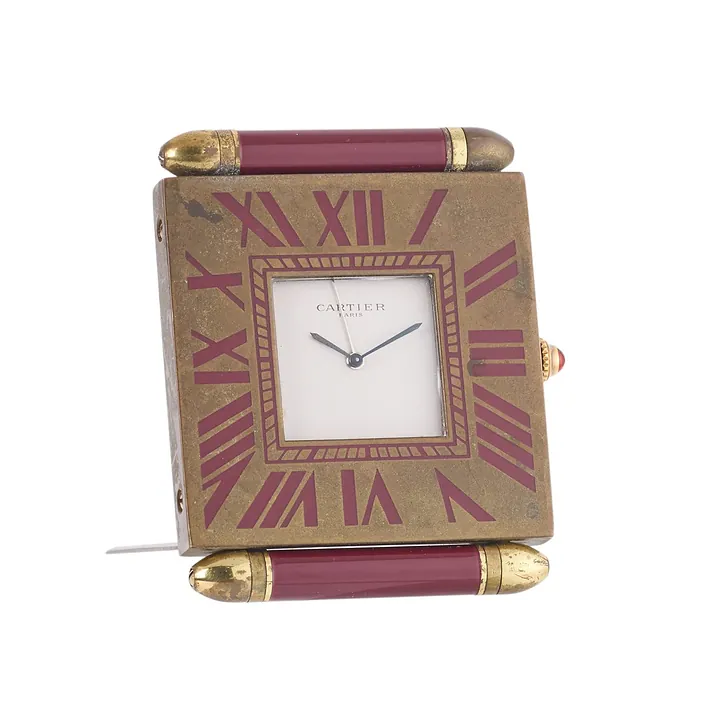
Clocks · c. 2000s
Cartier Desk Clock with Alarm, c. 2000s
Antiquorum auction archive, Geneva
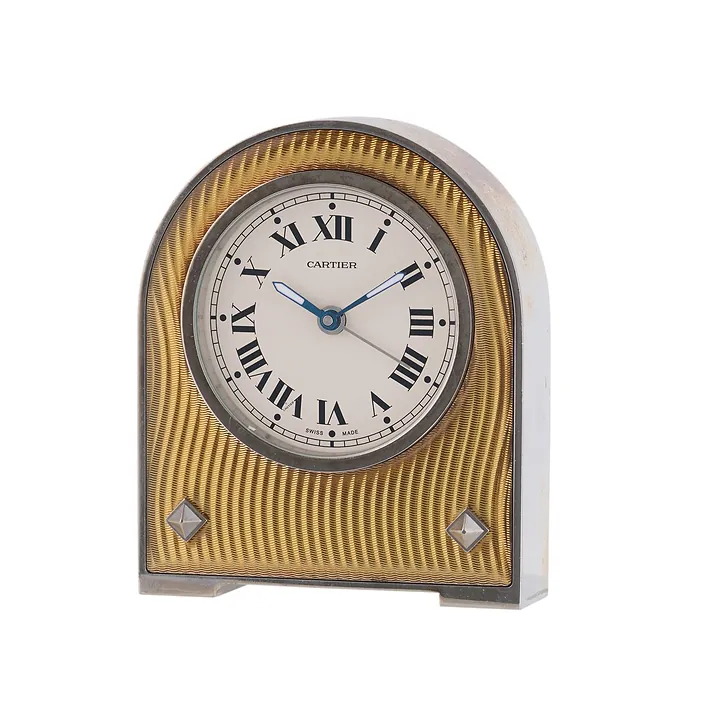
Clocks · c. 2000s
Cartier Lacquer Arched Desk Clock with Alarm, ref. W0100037, c. 2000s
Antiquorum auction archive, Geneva
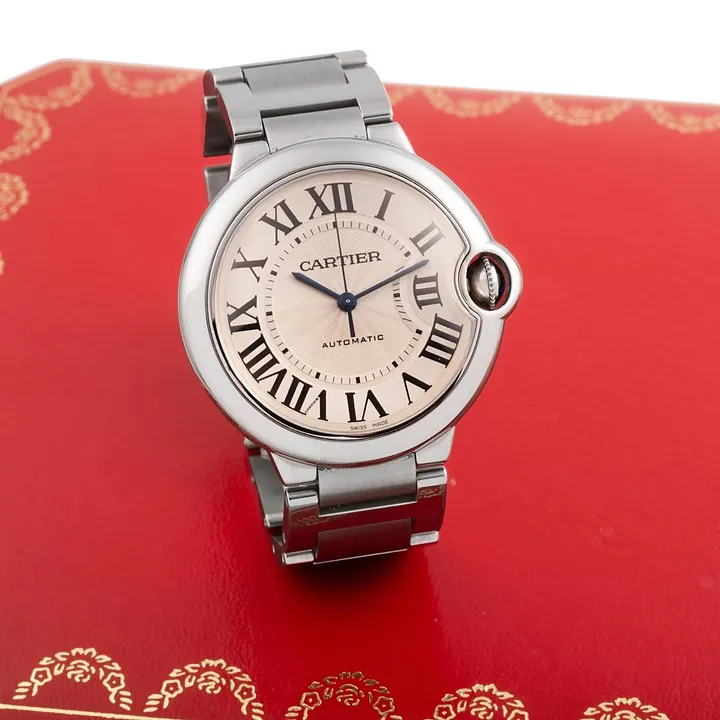
Wristwatches · c. 2010s
Cartier Ballon Bleu, ref. 3284, c. 2010s
Antiquorum auction archive, Geneva

Wristwatches · originally sold in December 2021 (per the lot record)
Cartier Tank Must, ref. CRWSTA0054, originally sold in December 2021
Antiquorum auction archive, Geneva
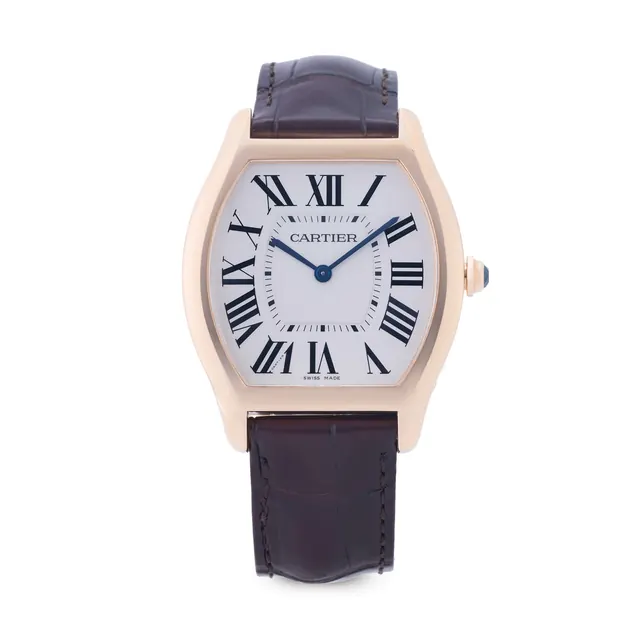
Wristwatches · originally sold in 2023 (per the lot record)
Cartier wristwatch, ref. WGTO0002, Tortue, originally sold in 2023
Antiquorum auction archive, Geneva
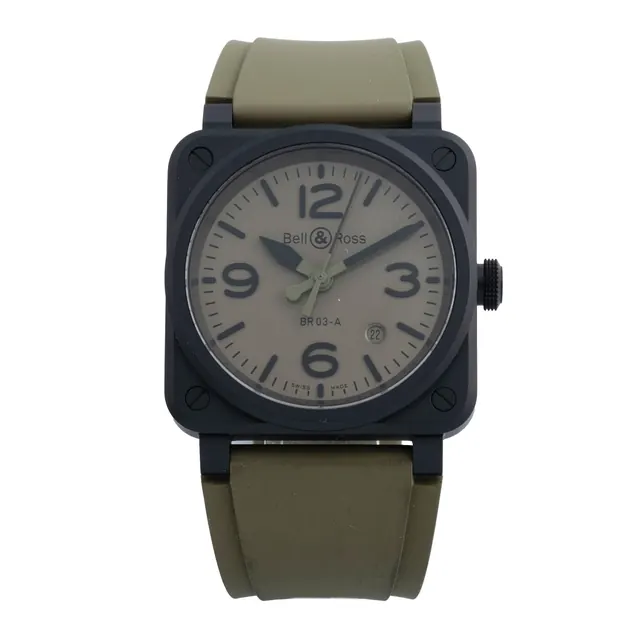
Wristwatches · c. 2020
Bell & Ross wristwatch, ref. BR, Aviation Type, circa 2020
Antiquorum auction archive, Geneva