
Wristwatches · Wristwatch
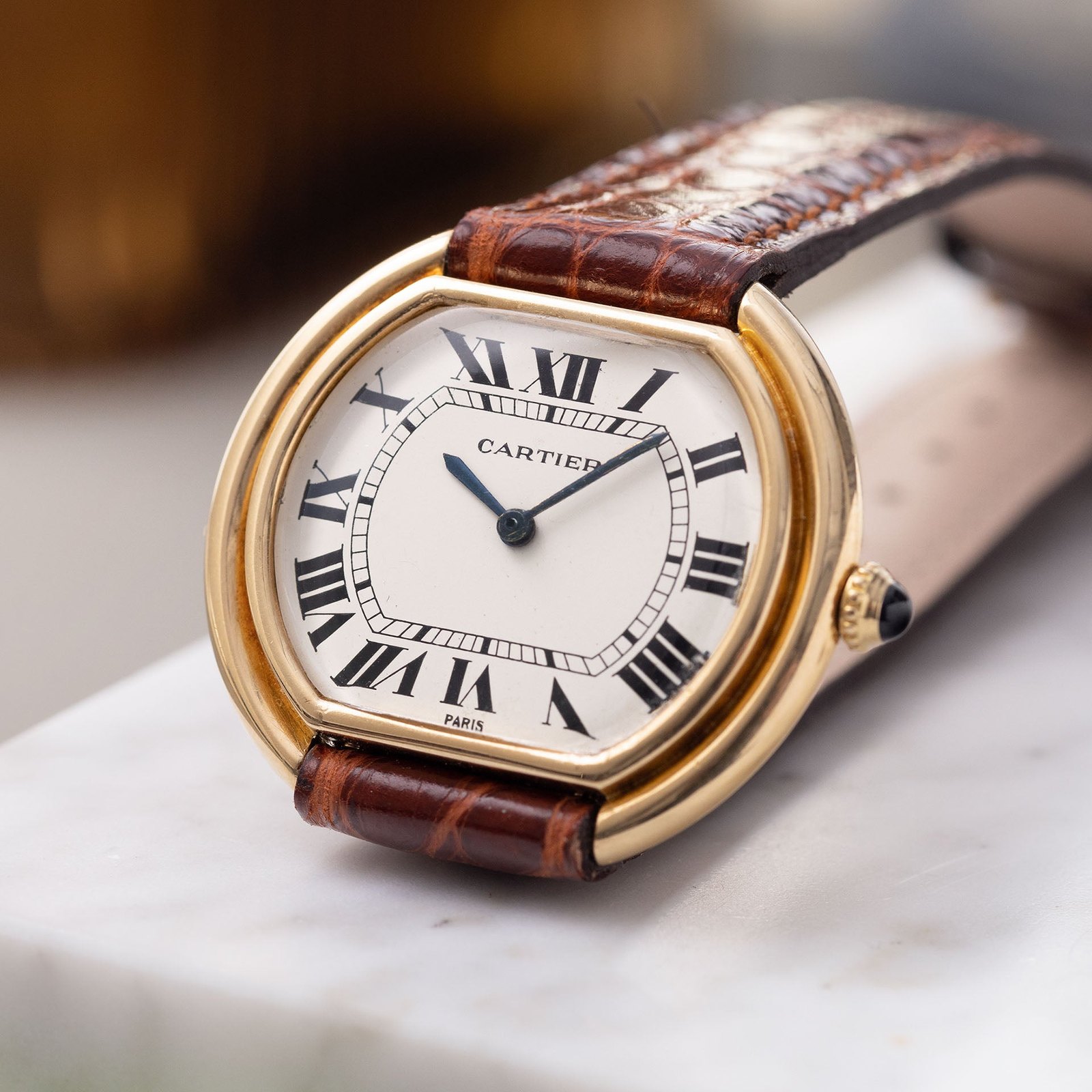
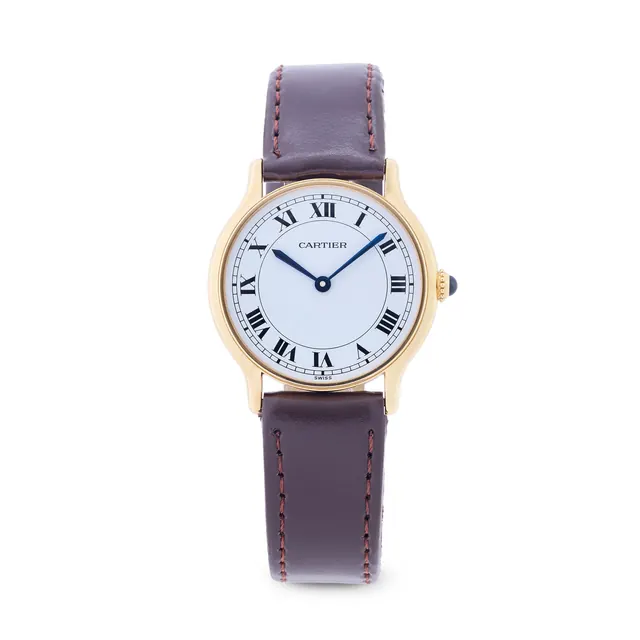
Cartier Paris Gondole Ellipse 1970s 18kt Yellow Gold Large Size
- Maker / attribution
- Cartier (maker)
- Date
- 1970s
- Historical period
- Quartz Revolution (1969 – 1990)
- Country of origin
- France
- Object type
- Wristwatch
- Materials / technique
- yellow gold
- Stock no.
- W-1992
- Credit line
- Dealer listing, Bulang & Sons (W-1992)
- Catalogue title (original)
- Cartier Paris Gondole Ellipse 1970s 18kt Yellow Gold Large Size (English)
View the source record (dealer listing) ↗ (opens another website in a new tab)Suggest a correction
Record summary
Catalogued by Bulang & Sons (dealer), Copenhagen (stock number W-1992), this is a wristwatch by Cartier, made in France, dated 1970s. The Atlas places it in the Quartz Revolution period (1969 – 1990) of its Wristwatches collection. Materials and techniques recorded by the source: yellow gold. The record is illustrated with 6 photographs.
Assembled from the source record's structured fields. Dates and attributions are given as the source states them; where a field is missing the Atlas leaves it blank rather than estimating.
Catalogue description
Dealer description — Bulang & Sons
The hand wound classic… We are delighted to offer this fantastic Cartier Gondole Ellipse from the 1970s Louis Cartier Paris collection. The 28x32mm 18kt yellow gold stepped case is in beautiful original condition. The white dial has black Roman numerals and is signed PARIS. The blued steel hands and blue cabochon winder are both classic Cartier signatures. The watch is fitted with the pictured Bulang and Sons leather strap and comes with the original 18kt gold Cartier deployment clasp. PLEASE NOTE: To fit the deployment clasp, the strap must be cut to the required length. The watch will come with a pin buckle fitted and the new owner can fit the deployment as necessary. The manual wind movement has been fully serviced by our watchmaker. Specifications: - Cartier Gondole - 7829xxxx serial dating to the 1970s - 18kt gold case 28x32mm - White dial signed PARIS with Roman numerals - Blue cabochon winding crown - Manual wind movement - Bulang and Sons strap - 18kt Cartier deployment clasp - Fully serviced by our watchmaker - Includes a handmade leather watch pouch No, it’s not a Tank. And yes, it deserves your attention! While Parisian jeweler to the stars Cartier may be best known in horological circles for its famed Tank watch, the French firm produced — and continues to produce — numerous other watch models that deserve equal billing for their unique and sumptuous designs . The Louis Cartier collection, announced by Cartier Paris in 1973, constituted a redesign of the maison’s watch offerings upon its launch. Fresh takes on classics such as the Tank and Santos Dumont were accompanied by new designs, including that of the Ellipse. A slim, horizontal watch with a simple “Roman” dial, the Ellipse conveys the same spectacular design principles as the Tank in an unconventional format. This particular Ellipse features a beautiful yellow gold case, Cartier's signature cabochon winding crown, and its centerpiece white “Roman” Paris signed dial with blued steel sword hands. Paired to a brown leather strap with a matching 18k yellow gold hidden deployant clasp, this piece makes for a beautiful dress watch, or a daily driver! Everyone knows the Tank. This is your chance to own its equally compelling sibling!
Historical context
Quartz Revolution (1969 – 1990)
Seiko's Astron begins mass quartz timekeeping; traditional industries contract sharply.
Quartz and digital watches transformed the market after 1969. Swiss employment collapsed, Japanese and Hong Kong production soared, and the Swatch (1983) helped the Swiss industry recover; mechanical watches survived as luxury goods.
Read the period in the timelineMore wristwatches from this periodEarlier: Modern Mechanical Horology
Atlas type guide
Wristwatches
Bracelet watches were worn by women from the early nineteenth century — Breguet made one for Caroline Murat, Queen of Naples, in 1810–12 — but the wristwatch only became a man's instrument with military use and aviation in the early twentieth century. Between the World Wars it overtook the pocket watch; the 1920s and 1930s brought rectangular Art Deco cases, water-resistant cases and the first automatic winding systems.
After 1945 the wristwatch became a carrier of identity — dress watches, sports and dive watches, chronographs, calendars — produced by Swiss, American, Japanese, German, Soviet and Chinese industries. The quartz revolution after 1969 and the mechanical renaissance since the 1990s, including the rise of independent watchmakers, complete the story.
What to look for
- The reference number (between the lugs or inside the case back) and serial number, the starting point for dating.
- The calibre: its maker and number are often stamped under the dial or on the bridge.
- Originality of dial, hands and crown — refinished ('redial') dials are common.
- Case material marks: 18K/750, 14K/585, stainless steel, gold-filled, plated.
Dating clues
- Wire-lug cases: before c. 1925.
- Water-resistant screw-down cases: from 1926.
- Quartz movements: from 1969; sapphire crystals widespread after c. 1980.
General guidance written by the Atlas editors about this kind of object. It is not a statement about this particular piece; for that, rely on the source record above and on physical examination.
Related records

Clocks · 1863
Clock by Albert-Ernest Carrier-Belleuse, France, 1863
The Metropolitan Museum of Art, New York

Clocks · c. 1980s
Cartier "art Deco", c. 1980s
Antiquorum auction archive, Geneva

Clocks · c. 2000s
Cartier Desk Clock with Alarm, c. 2000s
Antiquorum auction archive, Geneva

Clocks · c. 2000s
Cartier Lacquer Arched Desk Clock with Alarm, ref. W0100037, c. 2000s
Antiquorum auction archive, Geneva
Wristwatches · c.1989
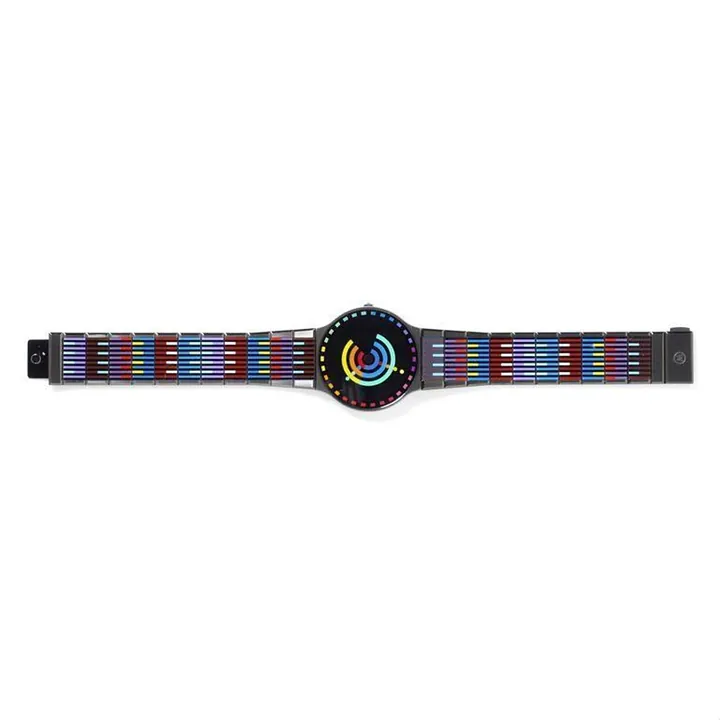
Steel, France and Switzerland, 1989; designed by Yaacov Agam (born 1928) for a limited edition by Movado
Victoria and Albert Museum, London
Wristwatches · c. 1972
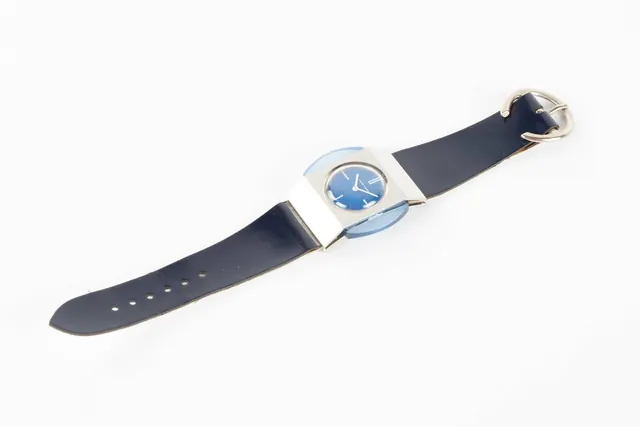
Wristwatch, France, c. 1972
German Clock Museum
Wristwatches · 1986
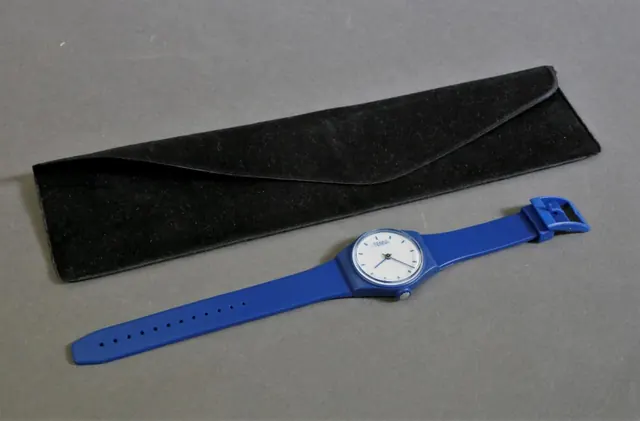
Wristwatch, France, 1986
Työväenmuseo Werstas
Wristwatches · c. 1970-1980s
Cartier wristwatch, ref. 10713, Riviera, circa 1970-1980s
Antiquorum auction archive, Geneva