
Wristwatches · Wristwatch
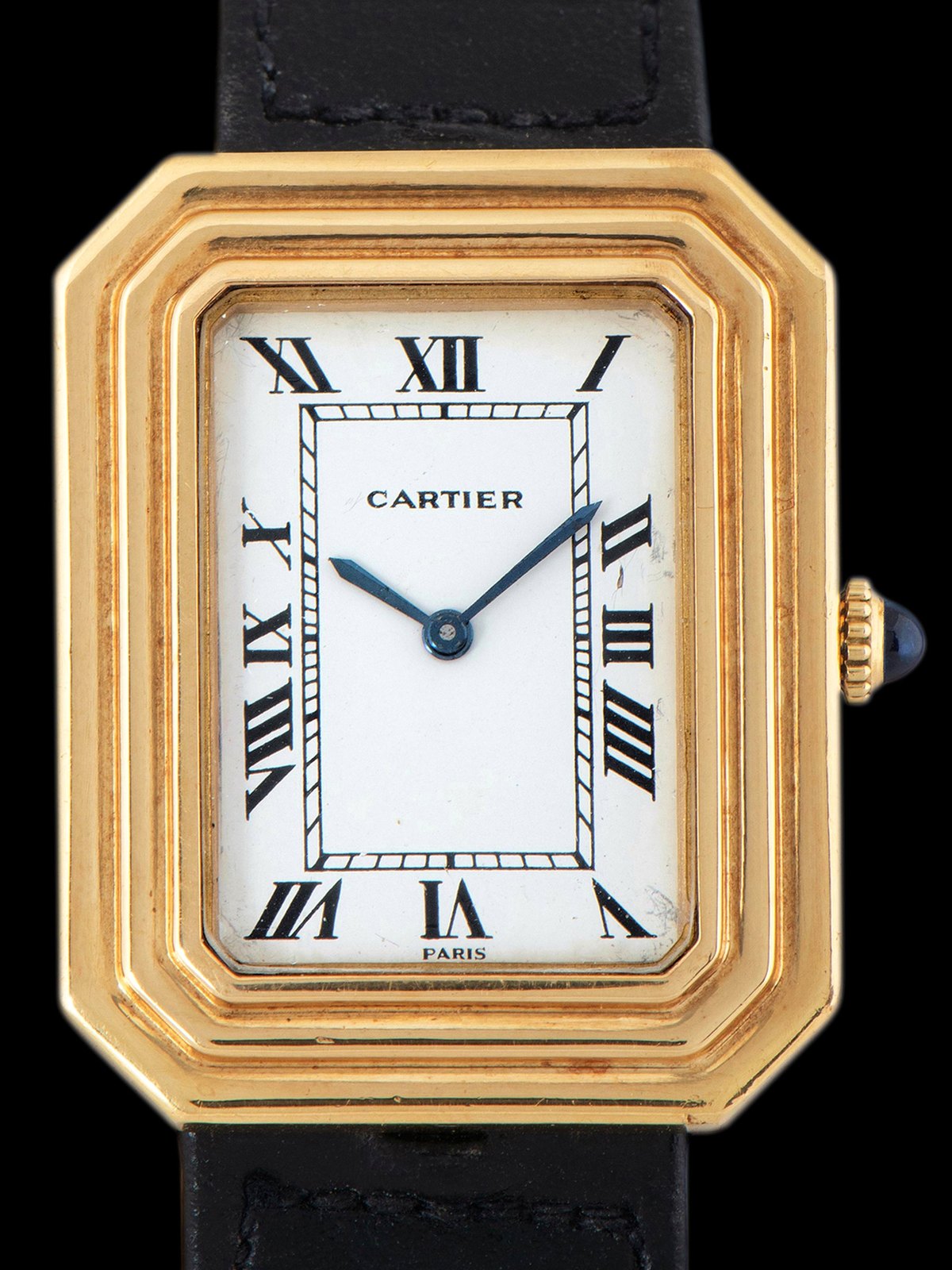
Cartier Paris Cristallor 18K YG "Jumbo" (Ref. 78096) W/ Hidden Lug Case, 1970s
- Maker / attribution
- Cartier (maker)
- Date
- 1970s
- Historical period
- Quartz Revolution (1969 – 1990)
- Country of origin
- France
- Object type
- Wristwatch
- Stock no.
- CTRCRI78096-3
- Credit line
- Dealer listing, Craft & Tailored (CTRCRI78096-3)
- Catalogue title (original)
- 1970s Cartier Paris Cristallor 18K YG "Jumbo" (Ref. 78096) W/ Hidden Lug Case (English)
View the source record (dealer listing) ↗ (opens another website in a new tab)Suggest a correction
Record summary
Catalogued by Craft & Tailored (dealer), Los Angeles (stock number CTRCRI78096-3), this is a wristwatch by Cartier, made in France, dated 1970s. The Atlas places it in the Quartz Revolution period (1969 – 1990) of its Wristwatches collection. The record is illustrated with 6 photographs.
Assembled from the source record's structured fields. Dates and attributions are given as the source states them; where a field is missing the Atlas leaves it blank rather than estimating.
Catalogue description
Dealer description — Craft & Tailored
The Cartier name is synonymous with luxury and has been since the brand's inception in 1847. Offering bespoke and unique jewelry to the world’s elite allowed Cartier to steadily grow through the 19th century and eventually introduced new offerings and wristwatches to their clientele. The Cristallor was introduced alongside the Gondole, Ellipse, and Vendome for the "Louis Cartier Collection" that Cartier launched with the help of Ebel in 1973. The Cristallor features a large vertical case with a stepped construction, a feature shared with the other members of the Louis Cartier Collection. The earliest versions of the Cristallor ref. 78096 features a hidden lug design, helping to highlight the case, while later versions feature traditional lugs and spring bars. The Cristallor was only in production until the very early '80s, something that adds to the rarity and mystique of this special model. In fact, while actual production numbers are unknown, it's widely accepted that there were not a whole lot of these made, and even fewer remain today. SPECS Stock # CTRCRI78096-3 Brand Cartier Style Cristallor Model 78096 Serial 02XX Size Men's Material 18K Yellow Gold Dial White Roman "Paris" Millimeters 28x35 Strap 2pc Black Leather Strap W/ 18K YG Cartier Deployant Clasp CASE & BRACELET The large rectangular 18K yellow gold three-tier stepped case features hidden lugs underneath the case and remains in well-preserved condition, showing honest signs of gentle use and evidence of only being lightly polished in the past. The watch retains its original blue sapphire cabochon crown. The case back retains all of its factory engravings in fully present and legible condition. The watch comes supplied on a 2-piece black leather strap with an 18K yellow gold Cartier deployant buckle. DIAL & HANDS The original white Roman Numeral "Paris" signed dial is in great vintage condition, showing some marks and minor scratches throughout. The original blue hands are in excellent condition with nominal oxidation present. ACCESSORIES None. The watch is keeping time, but the service history is unknown. A movement service can be provided upon request.
Historical context
Quartz Revolution (1969 – 1990)
Seiko's Astron begins mass quartz timekeeping; traditional industries contract sharply.
Quartz and digital watches transformed the market after 1969. Swiss employment collapsed, Japanese and Hong Kong production soared, and the Swatch (1983) helped the Swiss industry recover; mechanical watches survived as luxury goods.
Read the period in the timelineMore wristwatches from this periodEarlier: Modern Mechanical Horology
Atlas type guide
Wristwatches
Bracelet watches were worn by women from the early nineteenth century — Breguet made one for Caroline Murat, Queen of Naples, in 1810–12 — but the wristwatch only became a man's instrument with military use and aviation in the early twentieth century. Between the World Wars it overtook the pocket watch; the 1920s and 1930s brought rectangular Art Deco cases, water-resistant cases and the first automatic winding systems.
After 1945 the wristwatch became a carrier of identity — dress watches, sports and dive watches, chronographs, calendars — produced by Swiss, American, Japanese, German, Soviet and Chinese industries. The quartz revolution after 1969 and the mechanical renaissance since the 1990s, including the rise of independent watchmakers, complete the story.
What to look for
- The reference number (between the lugs or inside the case back) and serial number, the starting point for dating.
- The calibre: its maker and number are often stamped under the dial or on the bridge.
- Originality of dial, hands and crown — refinished ('redial') dials are common.
- Case material marks: 18K/750, 14K/585, stainless steel, gold-filled, plated.
Dating clues
- Wire-lug cases: before c. 1925.
- Water-resistant screw-down cases: from 1926.
- Quartz movements: from 1969; sapphire crystals widespread after c. 1980.
General guidance written by the Atlas editors about this kind of object. It is not a statement about this particular piece; for that, rely on the source record above and on physical examination.
Related records

Clocks · 1863
Clock by Albert-Ernest Carrier-Belleuse, France, 1863
The Metropolitan Museum of Art, New York

Clocks · c. 1980s
Cartier "art Deco", c. 1980s
Antiquorum auction archive, Geneva

Clocks · c. 2000s
Cartier Desk Clock with Alarm, c. 2000s
Antiquorum auction archive, Geneva

Clocks · c. 2000s
Cartier Lacquer Arched Desk Clock with Alarm, ref. W0100037, c. 2000s
Antiquorum auction archive, Geneva
Wristwatches · c.1989
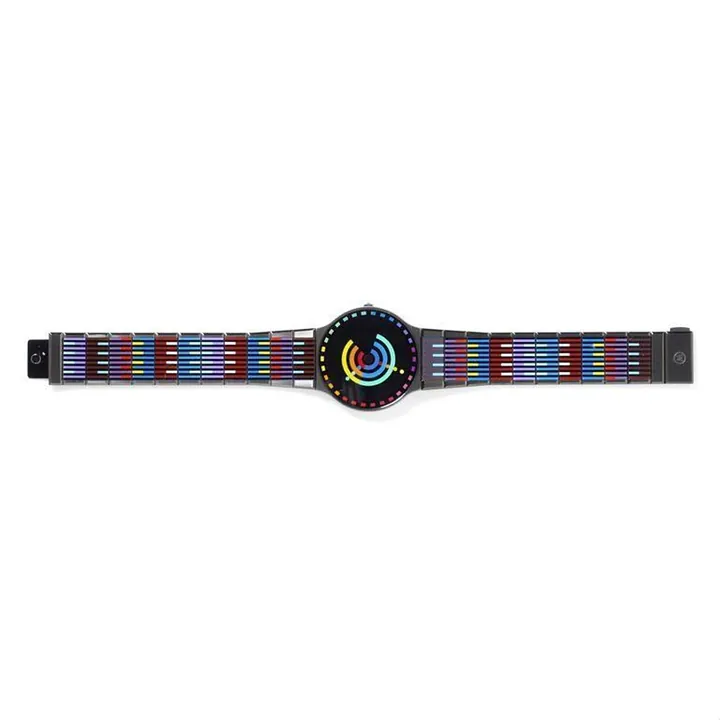
Steel, France and Switzerland, 1989; designed by Yaacov Agam (born 1928) for a limited edition by Movado
Victoria and Albert Museum, London
Wristwatches · c. 1972
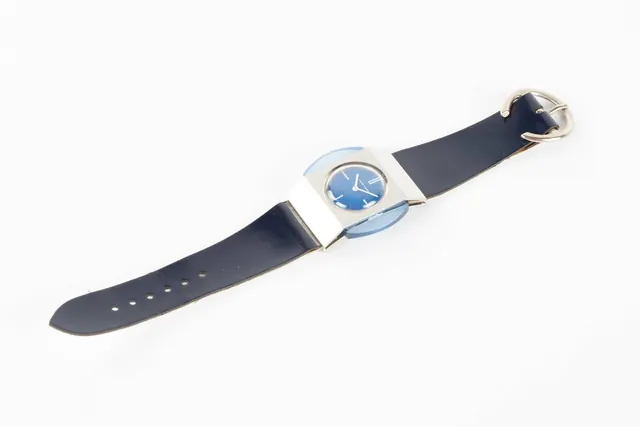
Wristwatch, France, c. 1972
German Clock Museum

Wristwatches · 1986
Wristwatch, France, 1986
Työväenmuseo Werstas
Wristwatches · c. 1970-1980s
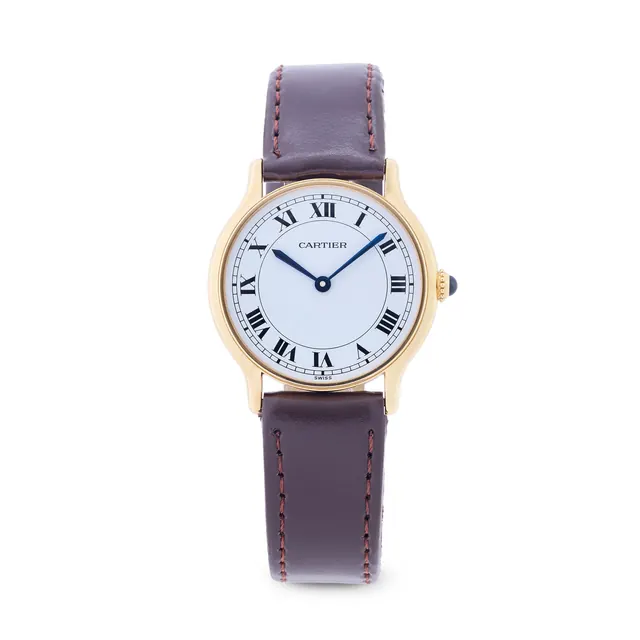
Cartier wristwatch, ref. 10713, Riviera, circa 1970-1980s
Antiquorum auction archive, Geneva