
Wristwatches · Wristwatch
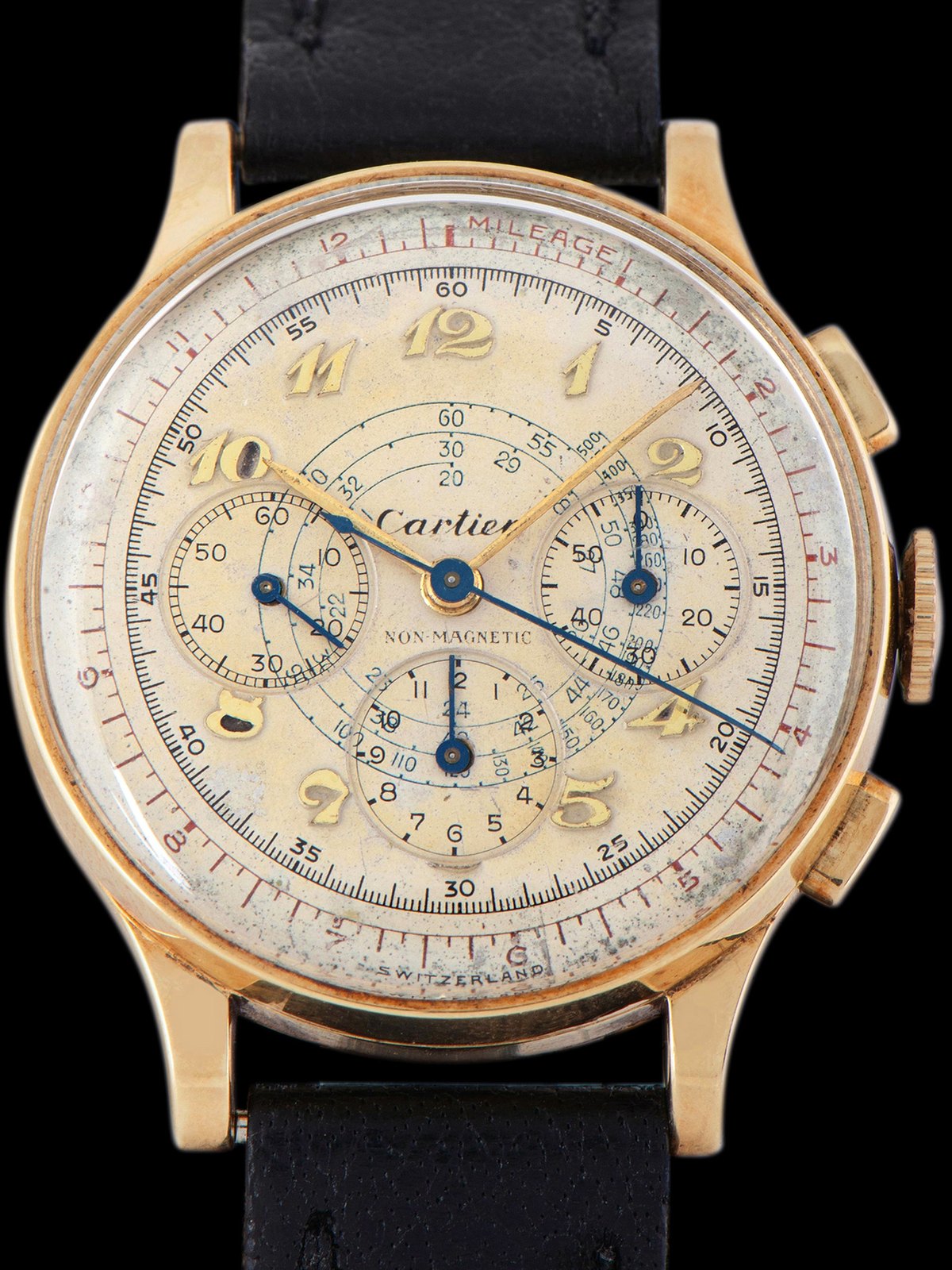
Cartier Branded Movado 'Cal. M95' Chronograph 14K YG (Ref. 49020), 1940s
- Maker / attribution
- Movado (maker)
- Date
- 1940s
- Historical period
- Golden Age of Mechanical Watchmaking (1900 – 1945)
- Country of origin
- Switzerland
- Object type
- Wristwatch
- Stock no.
- MOVCTRM95
- Credit line
- Dealer listing, Craft & Tailored (MOVCTRM95)
- Catalogue title (original)
- 1940s Cartier Branded Movado 'Cal. M95' Chronograph 14K YG (Ref. 49020) (English)
View the source record (dealer listing) ↗ (opens another website in a new tab)Suggest a correction
Record summary
Catalogued by Craft & Tailored (dealer), Los Angeles (stock number MOVCTRM95), this is a wristwatch by Movado, made in Switzerland, dated 1940s. The Atlas places it in the Golden Age of Mechanical Watchmaking period (1900 – 1945) of its Wristwatches collection. The record is illustrated with 6 photographs.
Assembled from the source record's structured fields. Dates and attributions are given as the source states them; where a field is missing the Atlas leaves it blank rather than estimating.
Catalogue description
Dealer description — Craft & Tailored
Movado may just be the perfect example of the joy of vintage watches in relation to their modern counterparts. In the mid-century, Movado competed with the likes of Rolex and Patek Philippe for design accolades and market share, establishing themselves as a premium manufacturer. One whose influence is still very much felt today. The Movado M90 and M95 chronographs, for example, remain today as some of the most sought-after, collectible, and incredibly beautiful wristwatches to come out of the mid-century era of watch design. This revolutionary modular chronograph movement was designed by renowned watchmaker, Frederic Piguet in 1938 for the M90 caliber and the following year for the M95. The most notable difference between the two movements is the number of registers, with the M90 employing two registers while the M95 employs three. Interestingly, the operation of the caliber M95 is inverted from conventional chronographs, with the bottom pusher starting and stopping the chronograph and the top pusher resetting it. While Cartier has been synonymous with luxury jewelry and watches since the brand's inception in 1847, the Maison is best known for their own creations. However, much like Tiffany & Co. and other jewelers, Cartier also retailed other luxury watch brands such as JLC, Rolex, Patek Philippe, and Movado with the Cartier name signed directly on the dial. Much like Tiffany & Co., but even more so, these specially signed dials are extremely rare and sought after within the collector community, with only a handful surfacing every few years. SPECS Stock # MOVCTRM95 Brand Movado "Cartier" Style Chronograph "Cal. M95" Model 49020 Serial 10XXXX Size Men's / Unisex Material 14K Yellow Gold Dial Cream "Aged" W/ Breguet Numerals Millimeters 31.5 Strap 2pc Leather Strap CASE & BRACELET The 14K yellow gold case is beautifully preserved for its age showing minimal evidence of being previously polished with only gentle signs of use present. The watch wears surprisingly larger than its measurements thanks to the impressively slim bezel that allows the dial to take up more visual real estate than typical chronographs of the era. The case retains its original flat pushers and unsigned crown. The snap-on case back features an engraving that reads "M de L". The Cartier inventory number is engraved on the back of the bottom right lugs. The movement features the notable "MXI" import designation for the United States, further validating the watch as 14K yellow gold was the chosen grade of precious metal in the USA in that era. The watch comes supplied on a 2pc leather strap. DIAL & HANDS The original, exceptionally well-preserved for its age and charming Cartier branded dial features Breguet numerals with two timing scales, an inner "snail shell" tachymeter in blue, and an outer mileage scale in red. The dial itself is in wonderful condition and exhibits honest but subtle elements of gentle wear and aging that add to the warm vintage aesthetic of the watch with no major or notable unsightly damage points. The solid yellow gold hour and minute hands are also in excellent condition as are the blued steel sub-register and chronograph hands, which add a welcomed pop of color. ACCESSORIES None. The watch is running and functioning correctly, but the service history is unknown. A movement service can be provided upon request.
Historical context
Golden Age of Mechanical Watchmaking (1900 – 1945)
The wristwatch displaces the pocket watch; waterproof cases, self-winding and grand complications.
The wristwatch overtook the pocket watch. Military use in the First World War, aviation, water-resistant cases (1926), automatic winding (1923–31), rectangular Art Deco designs and early chronographs and calendars defined the period.
Read the period in the timelineMore wristwatches from this periodEarlier: Industrial Revolution
Atlas type guide
Chronographs and split-seconds watches
A chronograph is a watch with an additional seconds hand that can be started, stopped and returned to zero independently of the timekeeping. Louis Moinet built an early example in 1816 and Nicolas Rieussec a recording 'chronographe' in 1821; Adolphe Nicole's heart-shaped reset cam (patented 1862) made the modern return-to-zero possible. Split-seconds (rattrapante) chronographs add a second hand that can be stopped for intermediate times; flyback chronographs restart instantly.
Chronographs were essential tools for doctors (pulsometer scales), artillery (telemeter), engineers and sport. In wristwatches, Valjoux, Venus, Lemania and later the automatic chronographs of 1969 (Zenith El Primero, the Chronomatic Calibre 11 group and Seiko 6139) are milestones.
What to look for
- Push-pieces on the case band or a single button in the crown (monopusher).
- Subsidiary registers for minutes and hours; tachymeter, telemeter or pulsometer scales.
- Column wheel versus cam control visible in the movement.
- Calibre markings of specialist makers (Valjoux, Lemania, Venus, Landeron).
Dating clues
- Pocket chronographs with heart cam reset: after 1862.
- Wrist chronographs: from c. 1910; two-button designs from the 1930s.
- Automatic chronographs: from 1969.
General guidance written by the Atlas editors about this kind of object. It is not a statement about this particular piece; for that, rely on the source record above and on physical examination.
Read next:Flyback chronographChronograph
Related records
Pocket Watches · c. 1960s
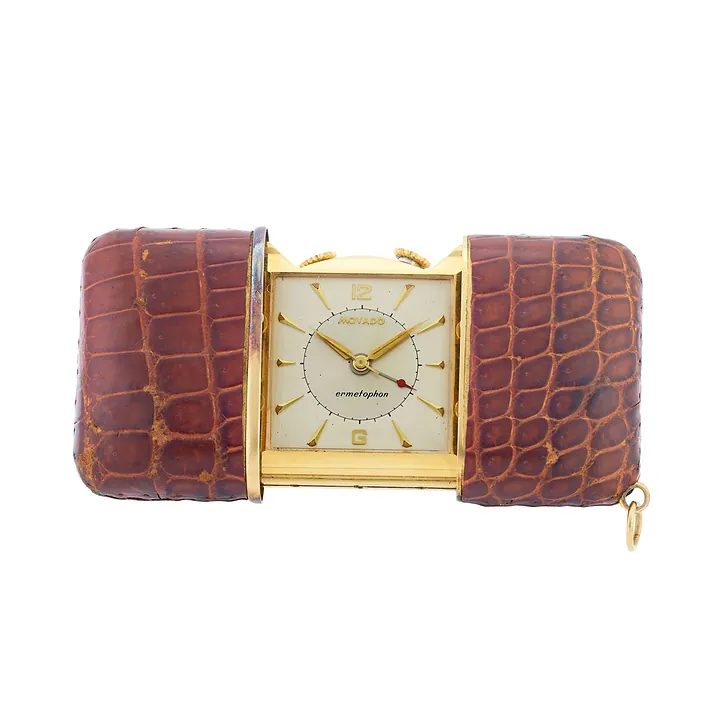
Movado Ermetophone, c. 1960s
Antiquorum auction archive, Geneva
Wristwatches · c. 1920s
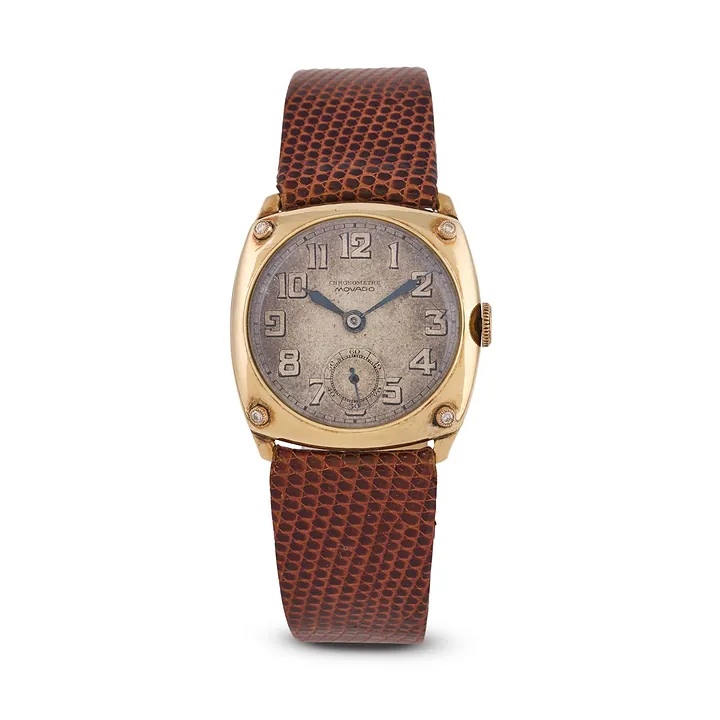
Movado Chronometre, ref. 41536, c. 1920s
Antiquorum auction archive, Geneva
Wristwatches · c. 1930s
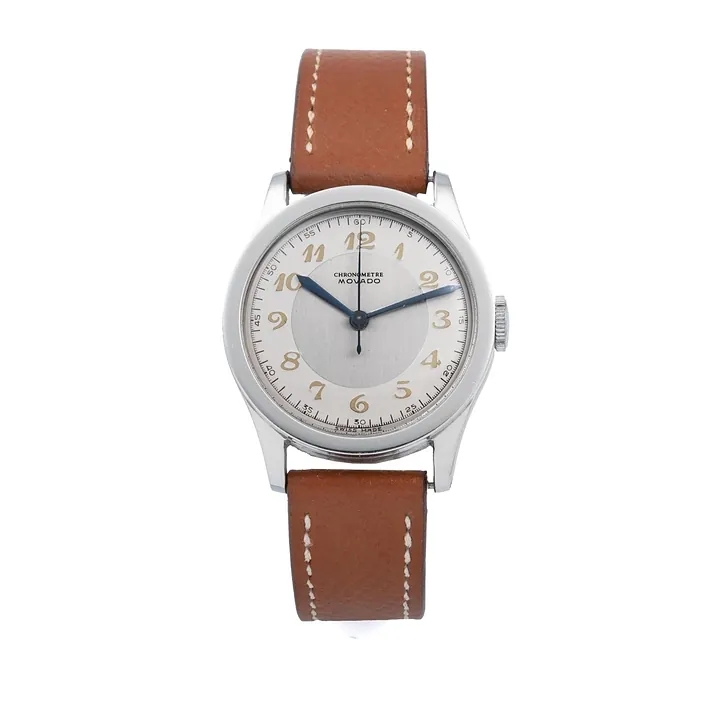
Movado "calatrava", ref. 17726, c. 1930s
Antiquorum auction archive, Geneva
Wristwatches · c.1989
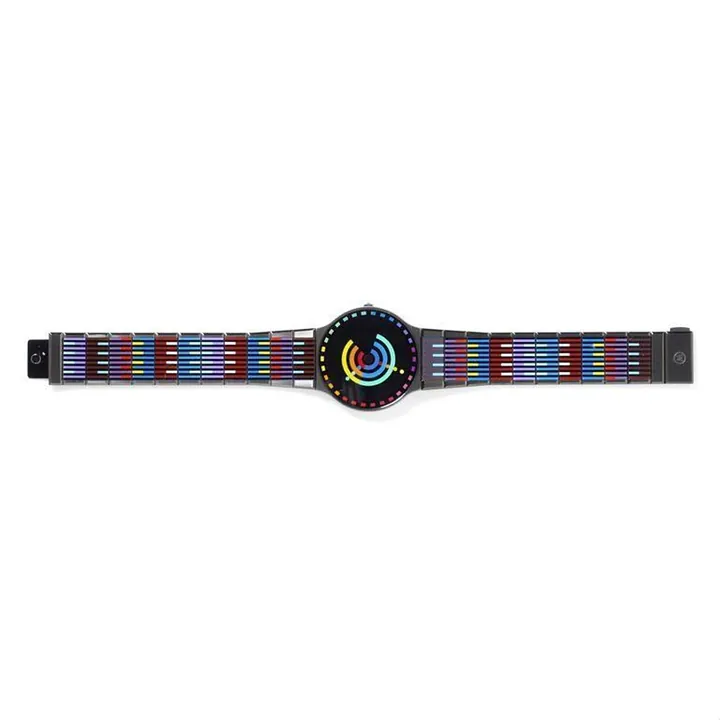
Steel, France and Switzerland, 1989; designed by Yaacov Agam (born 1928) for a limited edition by Movado
Victoria and Albert Museum, London

Wristwatches · 1931
Rolex 'Oyster Perpetual' rotor self-winding wrist-watch, lever escapement, in steel case with glass in back, Montres Rolex SA, Geneva, Switzerland, 1931
Science Museum Group, London

Wristwatches · 1900–1999
Wristwatch by Certina, Switzerland, 1900–1999
Nordic Museum Foundation

Wristwatches · 1900–1999
Wristwatch by Omega, Västerås, 1900–1999
Nordic Museum Foundation

Wristwatches · 1900–1999
Wristwatch by Universal, Switzerland, 1900–1999
Nordic Museum Foundation