
Wristwatches · Wristwatch
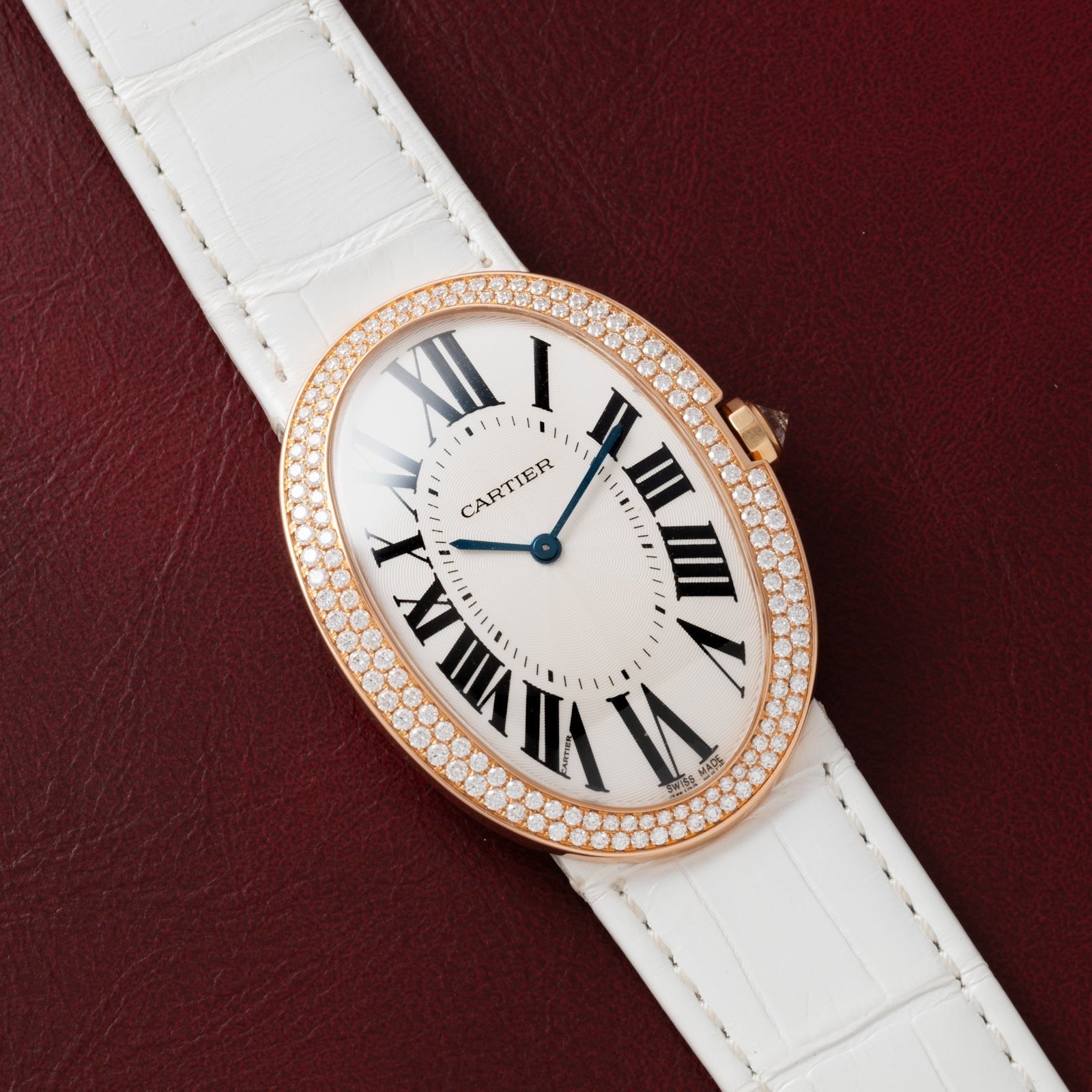
Cartier Baignoire 'Jumbo', c. 2010s
- Maker / attribution
- Cartier (maker)
- Date
- c. 2010s
- Historical period
- Contemporary Horology (2010 – Present)
- Country of origin
- France
- Object type
- Wristwatch
- Dimensions
- Case 32 mm
- Stock no.
- 40950394
- Credit line
- Dealer listing, Analog/Shift (40950394)
- Catalogue title (original)
- Cartier Baignoire 'Jumbo' (English)
View the source record (dealer listing) ↗ (opens another website in a new tab)Suggest a correction
Record summary
Catalogued by Analog/Shift (dealer), New York (stock number 40950394), this is a wristwatch by Cartier, made in France, dated c. 2010s. The Atlas places it in the Contemporary Horology period (2010 – Present) of its Wristwatches collection. Recorded dimensions: Case 32 mm. The record is illustrated with 6 photographs.
Assembled from the source record's structured fields. Dates and attributions are given as the source states them; where a field is missing the Atlas leaves it blank rather than estimating.
Catalogue description
Dealer description — Analog/Shift
No, it’s not a Tank. And yes, it deserves your attention! While Parisian jeweler to the stars Cartier may be best known in horological circles for its famed Tank watch, the French firm produced — and continues to produce — numerous other models that deserve equal billing for their unique and sumptuous designs. The Baignoire — or ‘bathtub,’ for we Americans — is a collection that dates all the way back to 1906. Elegantly rounded with a thick, wide bezel, it still exists in the contemporary Cartier lineup as a series of svelte ladies’ watches whose proportions and executions simply ooze elegance. The particular Baignoire dates to circa the 2010s and features an oval 32mm 18K rose gold case with a sapphire crystal, factory diamond-set bezel, a silver guilloche dial, painted black 'Roman' indices and a matching blued-steel 'sword' handset. To complete the package, this piece is fitted with a signed, gloss white alligator leather strap with a signed rose gold pin buckle. Several watches from different manufacturers have taken on the serpentine aspect of the Baignoire over the years — but there’s something about the original that betrays a thorough understanding of elegance in design. Give this Tank alternative a try today!
Historical context
Contemporary Horology (2010 – Present)
Silicon components, connected watches, optical-lattice research clocks and a thriving independent scene.
Smartwatches became the world's best-selling watches, while mechanical watchmaking focuses on craft, innovation (silicon components, new escapements) and independent makers.
Read the period in the timelineMore wristwatches from this periodEarlier: Mechanical Renaissance
Atlas type guide
Wristwatches
Bracelet watches were worn by women from the early nineteenth century — Breguet made one for Caroline Murat, Queen of Naples, in 1810–12 — but the wristwatch only became a man's instrument with military use and aviation in the early twentieth century. Between the World Wars it overtook the pocket watch; the 1920s and 1930s brought rectangular Art Deco cases, water-resistant cases and the first automatic winding systems.
After 1945 the wristwatch became a carrier of identity — dress watches, sports and dive watches, chronographs, calendars — produced by Swiss, American, Japanese, German, Soviet and Chinese industries. The quartz revolution after 1969 and the mechanical renaissance since the 1990s, including the rise of independent watchmakers, complete the story.
What to look for
- The reference number (between the lugs or inside the case back) and serial number, the starting point for dating.
- The calibre: its maker and number are often stamped under the dial or on the bridge.
- Originality of dial, hands and crown — refinished ('redial') dials are common.
- Case material marks: 18K/750, 14K/585, stainless steel, gold-filled, plated.
Dating clues
- Wire-lug cases: before c. 1925.
- Water-resistant screw-down cases: from 1926.
- Quartz movements: from 1969; sapphire crystals widespread after c. 1980.
General guidance written by the Atlas editors about this kind of object. It is not a statement about this particular piece; for that, rely on the source record above and on physical examination.
Related records
Clocks · 1863
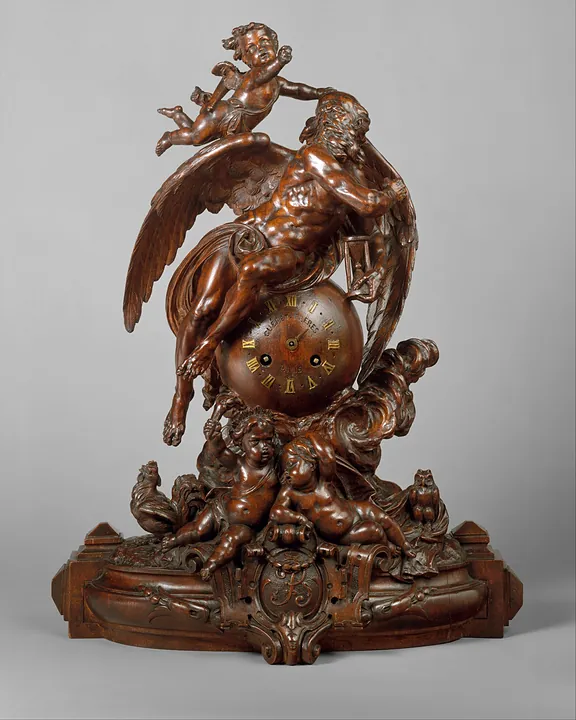
Clock by Albert-Ernest Carrier-Belleuse, France, 1863
The Metropolitan Museum of Art, New York
Clocks · c. 1980s
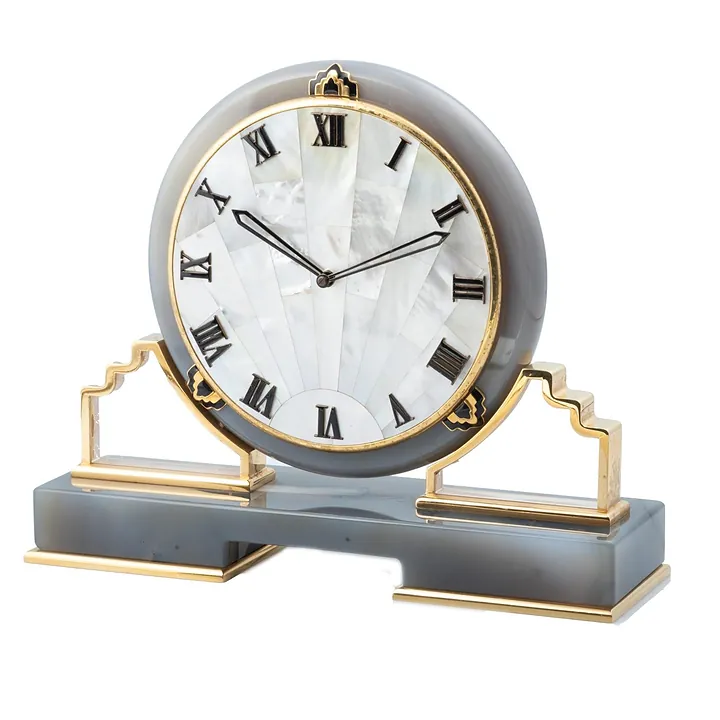
Cartier "art Deco", c. 1980s
Antiquorum auction archive, Geneva
Clocks · c. 2000s
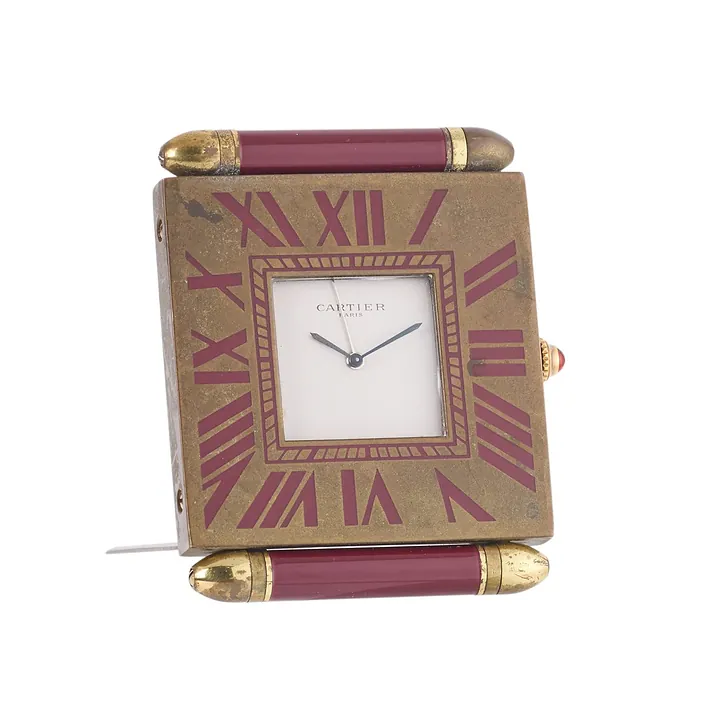
Cartier Desk Clock with Alarm, c. 2000s
Antiquorum auction archive, Geneva
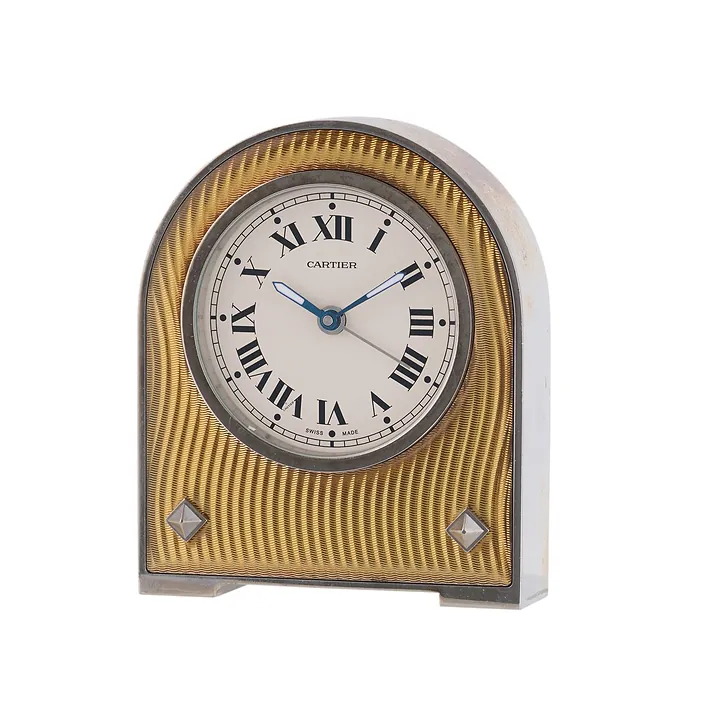
Clocks · c. 2000s
Cartier Lacquer Arched Desk Clock with Alarm, ref. W0100037, c. 2000s
Antiquorum auction archive, Geneva
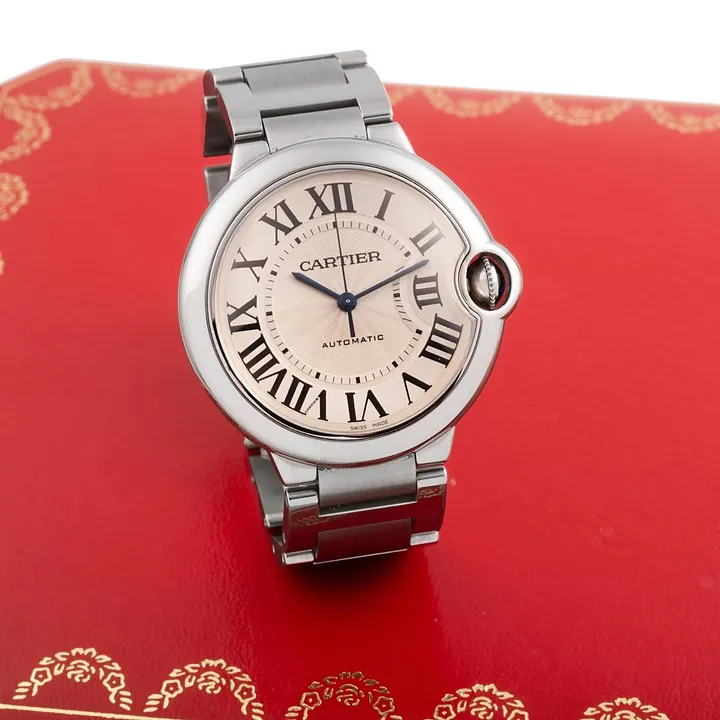
Wristwatches · c. 2010s
Cartier Ballon Bleu, ref. 3284, c. 2010s
Antiquorum auction archive, Geneva
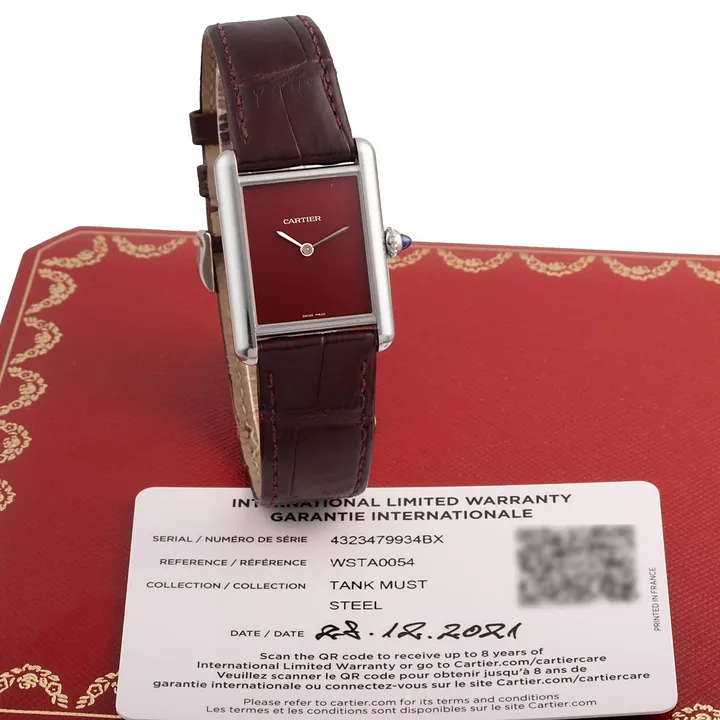
Wristwatches · originally sold in December 2021 (per the lot record)
Cartier Tank Must, ref. CRWSTA0054, originally sold in December 2021
Antiquorum auction archive, Geneva
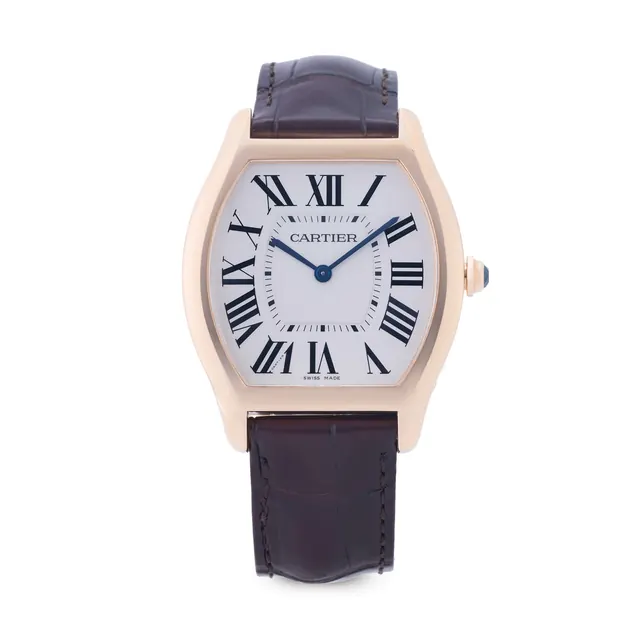
Wristwatches · originally sold in 2023 (per the lot record)
Cartier wristwatch, ref. WGTO0002, Tortue, originally sold in 2023
Antiquorum auction archive, Geneva
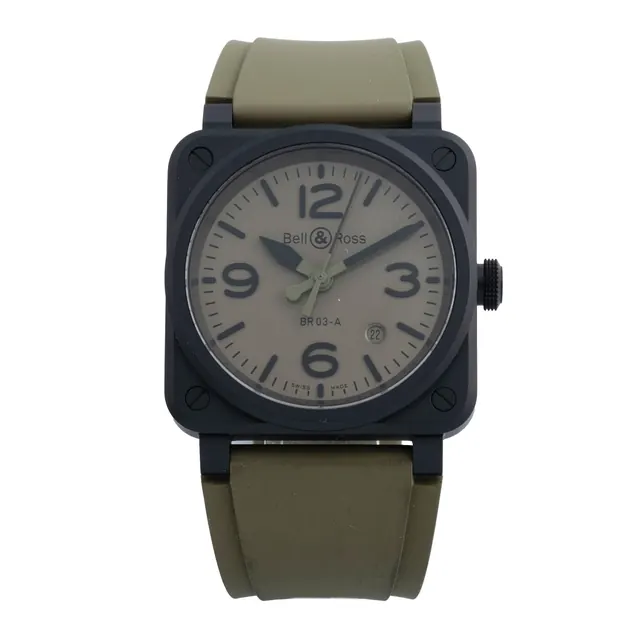
Wristwatches · c. 2020
Bell & Ross wristwatch, ref. BR, Aviation Type, circa 2020
Antiquorum auction archive, Geneva