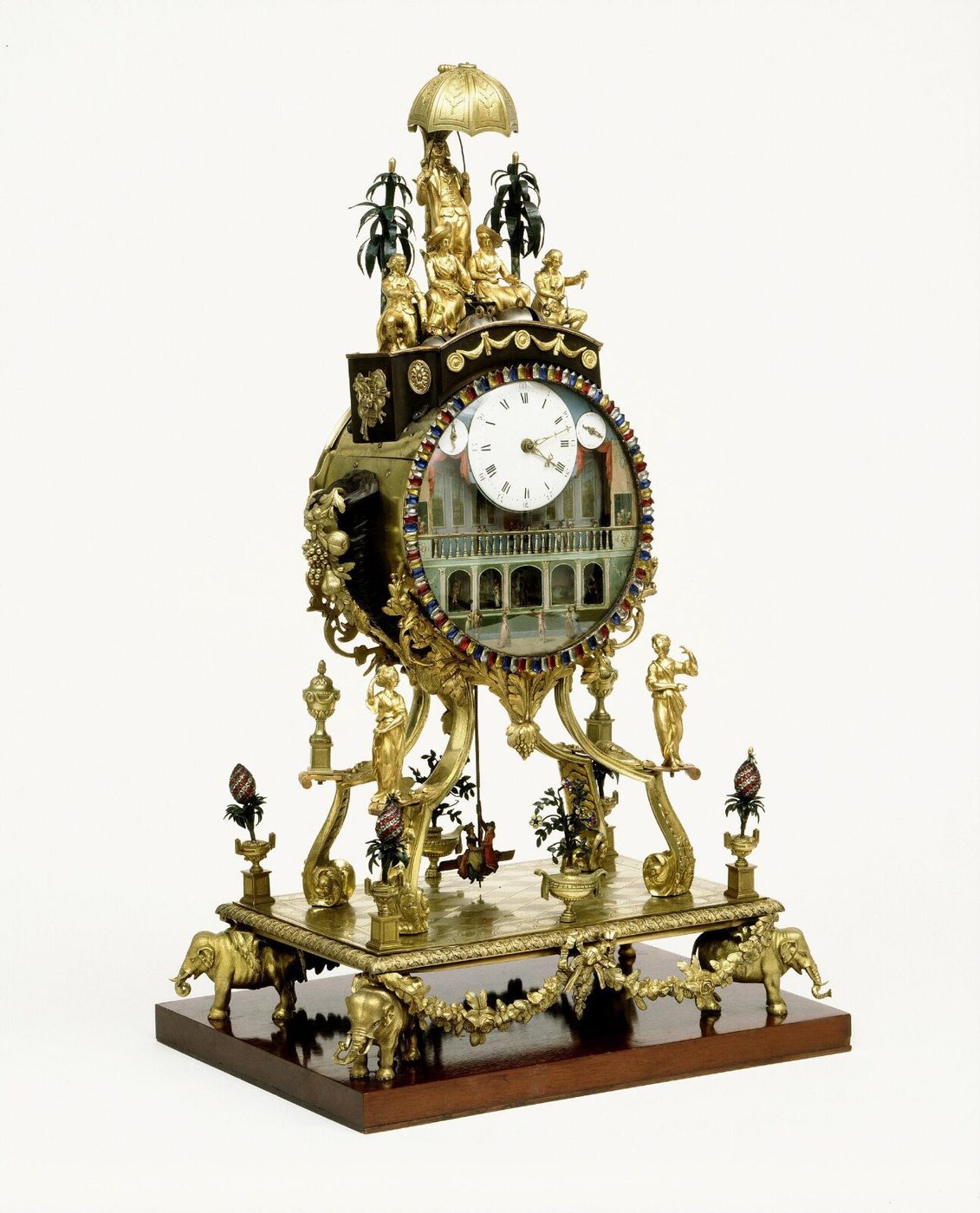
Clocks · Automaton clock
Carpenter clock, automaton clock made for the Chinese market
- Maker / attribution
- William Carpenter (maker)
- Date
- ca. 1780
- Historical period
- Precision & Scientific Horology (1750 – 1850)
- Country of origin
- England
- Place
- London
- Object type
- Automaton clock
- Materials / technique
- Clock case, mechanised figures and bells of gilt brass, with enamelled and glass paste decoration
- Dimensions
- Height: 88.9 cm; Width: 46.99 cm; Depth: 30.7 cm
- Holding institution
- Victoria and Albert Museum, London
- Accession / object no.
- M.1108-1926
- Credit line
- Lt. Col. G. B. Croft-Lyons Bequest
Record summary
Held and catalogued by Victoria and Albert Museum, London (object number M.1108-1926), this is an automaton clock by William Carpenter, made in London, England, dated ca. 1780. The Atlas places it in the Precision & Scientific Horology period (1750 – 1850) of its Clocks collection. Materials and techniques recorded by the source: Clock case, mechanised figures and bells of gilt brass, with enamelled and glass paste decoration. Recorded dimensions: Height: 88.9 cm; Width: 46.99 cm; Depth: 30.7 cm. The record is illustrated with 3 photographs.
Assembled from the source record's structured fields. Dates and attributions are given as the source states them; where a field is missing the Atlas leaves it blank rather than estimating.
Catalogue description
V&A — Summary
Object Type This musical clock by William Carpenter is typical of the kind of elaborate exotic time-piece made in London for export to the East in the late 18th century. Turkey, China and India were the principal destinations for these clocks. Ownership & Use The measurement of time was only one small feature of these clocks. This clock offered a choice of six tunes - two dances, two jigs, a song and a march. The figures dressed in 18th-century costume mounted on the clock, hold bells. The standing figures chime the quarters and strike the hours; the seated figures play the tunes on bells below their feet. These clocks were eagerly bought by Eastern rulers and merchants and were thought of as interesting toys. Examples can still be found in Indian, Turkish and Chinese palace museums. Design The area below the dial is pierced with the design of a palace with two storeys. The lower classical arcade is painted to show a landscape in the background. The upper storey shows scenes from a masked ball set in a ball-room. As the music plays, rows of costumed figures move from left to right. It has been suggested that this clock was made for an Indian client. The Maker William Carpenter worked in London's Soho district from about 1770 to 1805. He specialised in the manufacture of musical clocks and automata of this type.
V&A — Object history
Made in London by William Carpenter (active 1770-1805)
V&A gallery label
British Galleries: British clockmakers were respected worldwide for their skills in producing fine precision work. Clocks like this one, with elaborate gadgetry and rich decoration, were mostly produced for the Asian market. In China they had a novelty value and were collected as status symbols. Many such clocks were owned by the Chinese Emperor.
Inscriptions & marks
Signed 'WILL.M CARPENTER LONDON'
Historical context
Precision & Scientific Horology (1750 – 1850)
Harrison solves longitude; Mudge invents the lever; Breguet's Paris workshop defines the modern watch.
The age of the deadbeat escapement, compensated pendulums and observatory regulators. Domestic clocks spread through the middle classes: English longcase and bracket clocks, French gilt-bronze mantel clocks, Viennese Biedermeier wall clocks, Black Forest painted-shield clocks, and the first American shelf clocks.
Read the period in the timelineMore clocks from this periodEarlier: Early Modern Horology
Atlas type guide
Astronomical, musical and automaton clocks
Astronomical clocks display more than the hour: the positions of the sun and moon in the zodiac, the phase of the moon, the calendar, sometimes the planets and eclipses. From Richard of Wallingford's and Giovanni de' Dondi's fourteenth-century clocks to the Prague Orloj and the Strasbourg cathedral clocks, they demonstrated the order of the cosmos. Renaissance makers in Augsburg and Nuremberg built celestial globe clocks and monstrance clocks as princely treasures.
Automaton and musical clocks entertained as well as informed: figures move, birds sing, organs and carillons play tunes from pinned cylinders. The eighteenth-century trade with China ('sing-songs') and Ottoman Turkey created a market for elaborate English, Swiss and French automata.
What to look for
- Subsidiary dials for moon phase, calendar, zodiac and planetary positions.
- Celestial globes or armillary spheres turned by the movement.
- Pinned cylinders, bellows and pipes or bells for music.
- Figures on cams and levers; separate trains for automaton work.
Dating clues
- Renaissance astronomical table and globe clocks: c. 1550–1650.
- English and Swiss automaton clocks for the Chinese market: c. 1760–1820.
- Picture clocks (clockwork pictures) are mostly nineteenth century.
General guidance written by the Atlas editors about this kind of object. It is not a statement about this particular piece; for that, rely on the source record above and on physical examination.
Read next:Verge escapementFusee
Related records
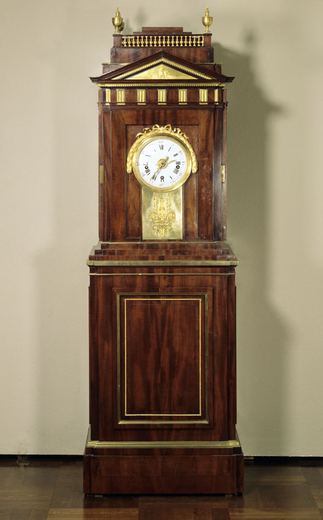
Clocks · 1711–1827
Longcase clock by David Roentgen ( - ), England, 1711–1827
Badisches Landesmuseum Karlsruhe
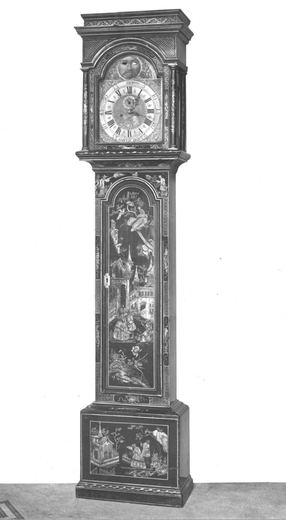
Clocks · 1740-1760
Longcase clock, English, 1740-1760, japanned wood, John Ellicott
Victoria and Albert Museum, London
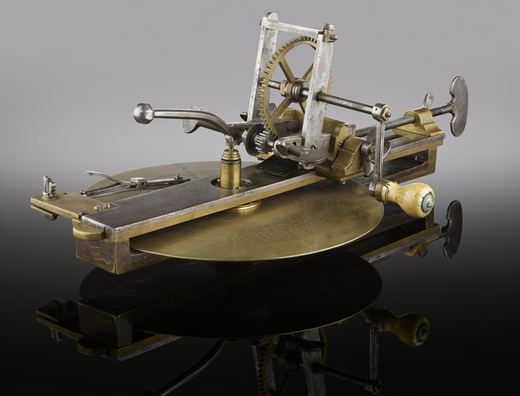
Clocks · 1751
Large wheel engine, signed and dated "John Tipping, Whildon Green, 1751".
Science Museum Group, London
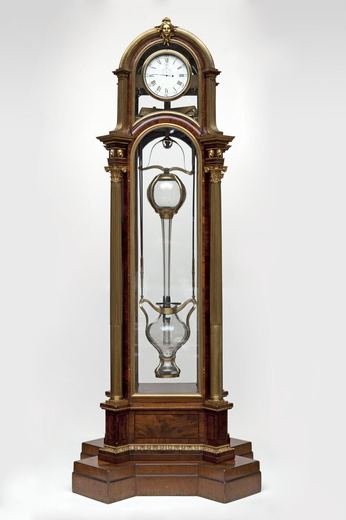
Clocks · ca. 1760
Longcase clock by James Cox, England, ca. 1760
Victoria and Albert Museum, London
Clocks · 1766
Clock by Cumming, Alexander, England, 1766
Science Museum Group, London
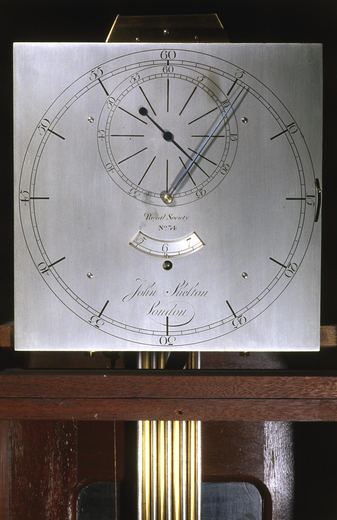
Clocks · 1768-1769
Regulator clock by Shelton, John, England, 1768-1769
Science Museum Group, London
Clocks · ca. 1775
Longcase clock, England, ca. 1775
Victoria and Albert Museum, London
Clocks · ca. 1780
Bracket clock of ebony, with face of West Midlands enamel painted in black and crimson, made by James Tregent, London, England, about 1780
Victoria and Albert Museum, London