
Wristwatches · Wristwatch
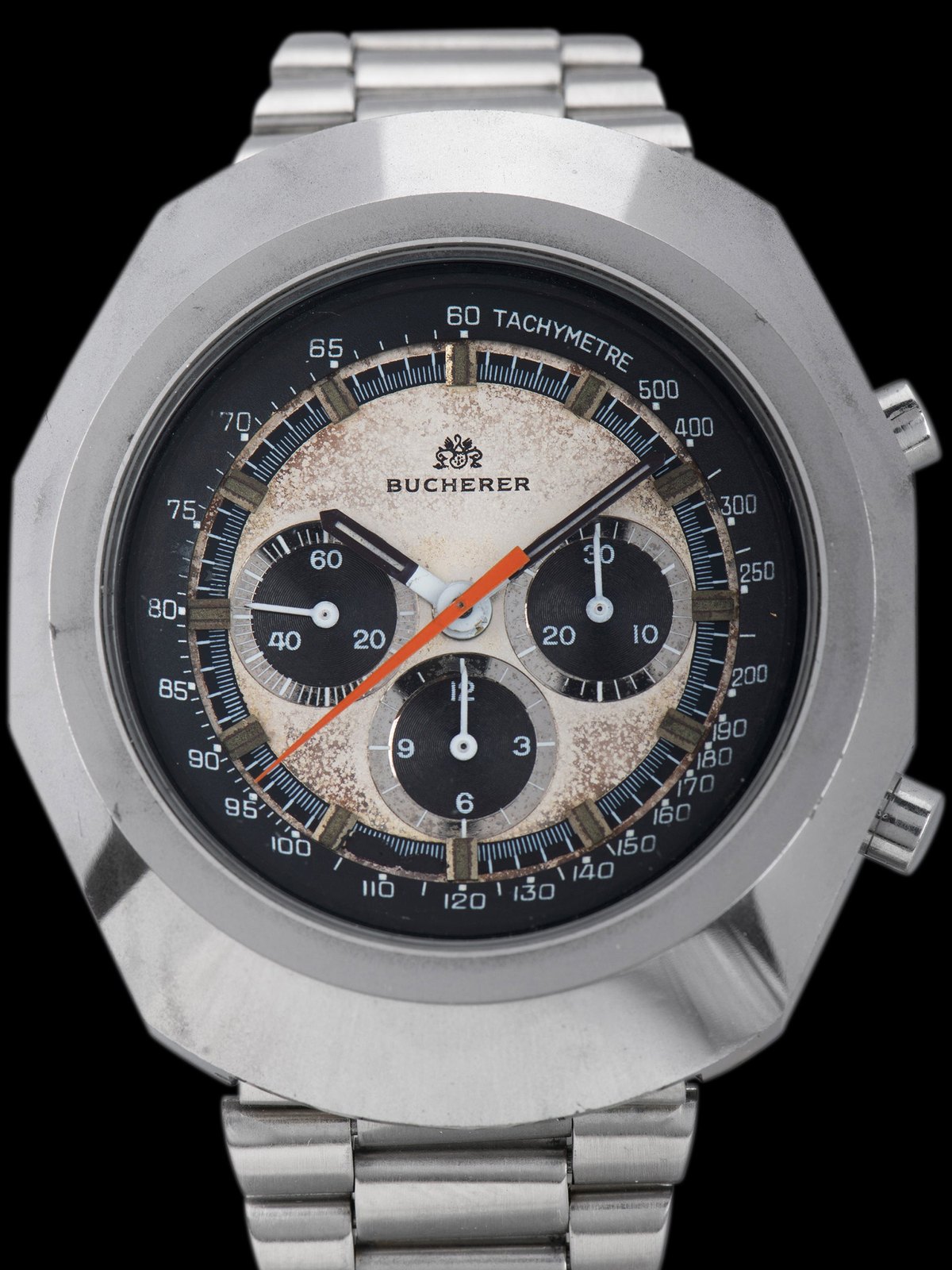
Bucherer Chronograph (Ref. 9656) Lemania Cal. 1873 "Anakin Skywalker", 1970s
- Maker / attribution
- Bucherer (maker)
- Date
- 1970s
- Historical period
- Quartz Revolution (1969 – 1990)
- Country of origin
- Unrecorded in source
- Object type
- Wristwatch
- Dimensions
- Case 44 mm
- Stock no.
- BUCSKY9656
- Credit line
- Dealer listing, Craft & Tailored (BUCSKY9656)
- Catalogue title (original)
- 1970s Bucherer Chronograph (Ref. 9656) Lemania Cal. 1873 "Anakin Skywalker" (English)
View the source record (dealer listing) ↗ (opens another website in a new tab)Suggest a correction
Record summary
Catalogued by Craft & Tailored (dealer), Los Angeles (stock number BUCSKY9656), this is a wristwatch by Bucherer, dated 1970s. The Atlas places it in the Quartz Revolution period (1969 – 1990) of its Wristwatches collection. Recorded dimensions: Case 44 mm. The record is illustrated with 6 photographs.
Assembled from the source record's structured fields. Dates and attributions are given as the source states them; where a field is missing the Atlas leaves it blank rather than estimating.
Catalogue description
Dealer description — Craft & Tailored
Considering the brand has been around in some form or fashion since 1888, Bucherer is one of the lesser-known Swiss brands out there. Initially founded by Carl-Friedrich Bucherer and his wife Luise, the brand started out as Lucerne's first watch and jewelry shop before adding a watchmaking extension in 1919. Like Turler, Tiffany and many large-scale jewelers, Bucherer also did a lot of co-branding and white labeling of watches, one of which is this incredible chronograph from the '70s. In this case, this Bucherer is the twin sister watch to the Omega Seamaster Ref. 145.023, though the piece we have here is much more rare than its more famous sibling. Nicknamed the "Anakin Skywalker" by watch royalty Chuck Maddox, this oversized beauty seemed tailor-made for the Star Wars movies that were released around the same time. It's built out of tungsten, a unique metal that's stronger than both steel and titanium, and features the manual-wind Lemania cal. 1873 movement (the same as the 861 movement used in Omega Speedmasters from the era), plus a ton of external stylistic choices that make this truly one-of-a-kind and something that will stand out no matter where you take it. Stock # BUCSKY9656 Brand Bucherer Style Chronograph "Anakin Skywalker" Model 9656 Serial 29XXXXX Size Men's Material Tungsten W/ SS Case Back Dial Silver "Aged" Millimeters 44 Bracelet Stainless Steel Bracelet CASE & BRACELET The 44mm helmet-like tungsten case exhibits light signs of use and features hidden lugs. It retains its original unsigned crown and two pump pushers. The stainless steel case back shows signs of use appropriate for its age. The watch will be supplied on its original president-style stainless steel bracelet. DIAL & HANDS The panda-style dial is silver with gold fleck accents, features three black sub-dials with metallic outer tracks, and a black outer tachymetre track. The lume inlays at the hour markers have aged to a dark grey color. The hour and minute hands are black with inlaid lume that has been professionally restored with white tritium. The center chronograph hand adds a pop of orange to the otherwise mostly monochromatic look. ACCESSORIES
Historical context
Quartz Revolution (1969 – 1990)
Seiko's Astron begins mass quartz timekeeping; traditional industries contract sharply.
Quartz and digital watches transformed the market after 1969. Swiss employment collapsed, Japanese and Hong Kong production soared, and the Swatch (1983) helped the Swiss industry recover; mechanical watches survived as luxury goods.
Read the period in the timelineMore wristwatches from this periodEarlier: Modern Mechanical Horology
Atlas type guide
Chronographs and split-seconds watches
A chronograph is a watch with an additional seconds hand that can be started, stopped and returned to zero independently of the timekeeping. Louis Moinet built an early example in 1816 and Nicolas Rieussec a recording 'chronographe' in 1821; Adolphe Nicole's heart-shaped reset cam (patented 1862) made the modern return-to-zero possible. Split-seconds (rattrapante) chronographs add a second hand that can be stopped for intermediate times; flyback chronographs restart instantly.
Chronographs were essential tools for doctors (pulsometer scales), artillery (telemeter), engineers and sport. In wristwatches, Valjoux, Venus, Lemania and later the automatic chronographs of 1969 (Zenith El Primero, the Chronomatic Calibre 11 group and Seiko 6139) are milestones.
What to look for
- Push-pieces on the case band or a single button in the crown (monopusher).
- Subsidiary registers for minutes and hours; tachymeter, telemeter or pulsometer scales.
- Column wheel versus cam control visible in the movement.
- Calibre markings of specialist makers (Valjoux, Lemania, Venus, Landeron).
Dating clues
- Pocket chronographs with heart cam reset: after 1862.
- Wrist chronographs: from c. 1910; two-button designs from the 1930s.
- Automatic chronographs: from 1969.
General guidance written by the Atlas editors about this kind of object. It is not a statement about this particular piece; for that, rely on the source record above and on physical examination.
Read next:Flyback chronographChronograph
Related records
Wristwatches · c. 2000
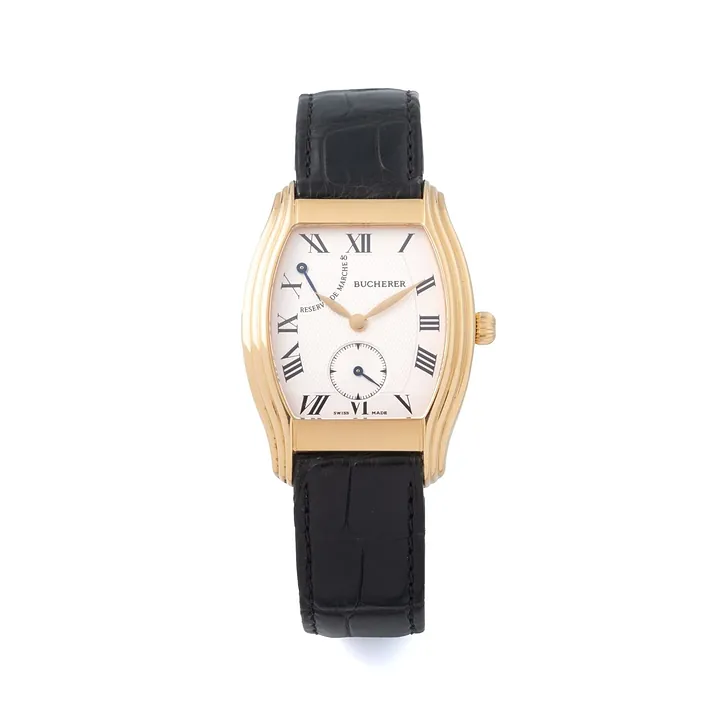
Bucherer Archimedes, ref. 1004-001, c. 2000
Antiquorum auction archive, Geneva
Wristwatches · c. 1970
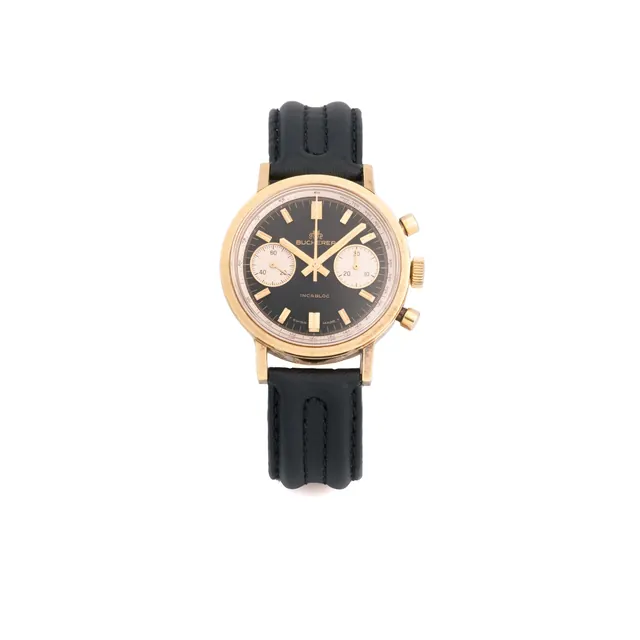
Bucherer wristwatch, Minute Counter Black Dial, circa 1970
Antiquorum auction archive, Geneva
Pocket Watches · c. 1925
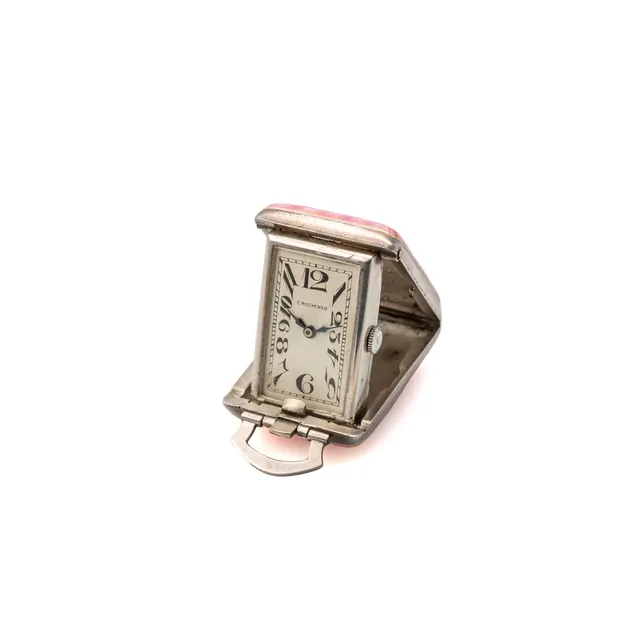
Bucherer pocket watch, Pink Enamel, circa 1925
Antiquorum auction archive, Geneva
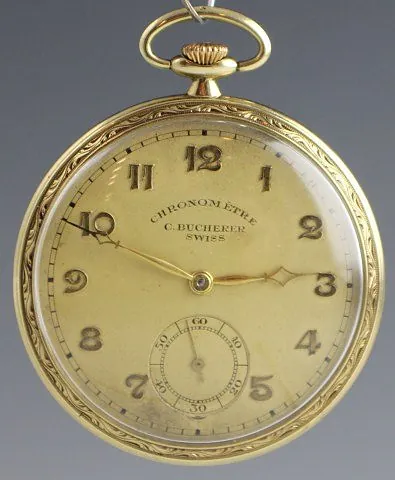
Pocket Watches · c. 1900
Mens 14K gold pocket watch by Bucherer, c. 1900
LiveAuctioneers auction archive

Wristwatches · 1970
Wristwatch by Heno, Switzerland, 1970
Museum Rotterdam
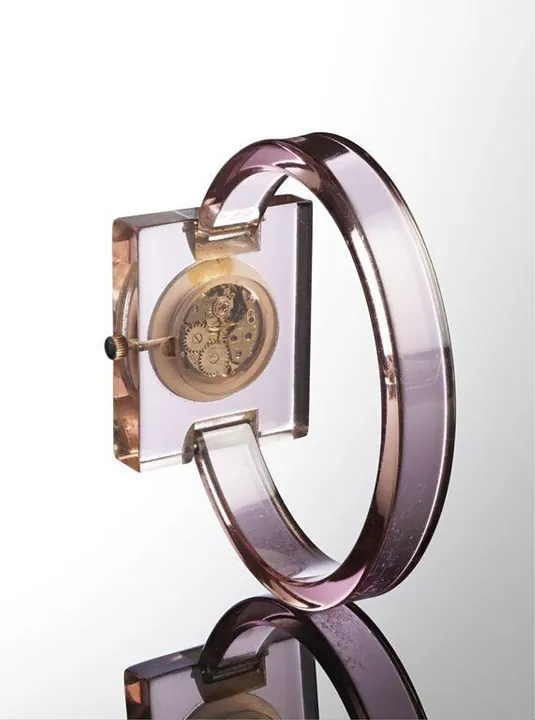
Wristwatches · 1970s
Wristwatch, plastic, by Gucci; Italy, 1970s.
Victoria and Albert Museum, London
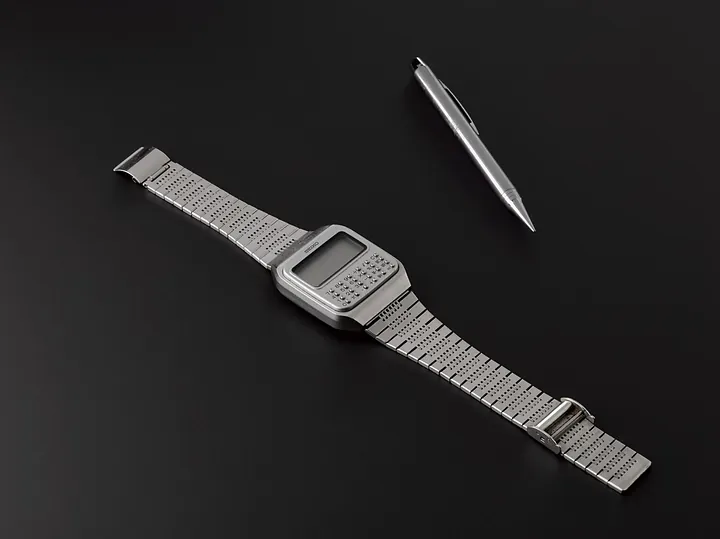
Wristwatches · 1978
Calculator wristwatch by Suwa Seikosha Co. Limited, Japan, 1978
Science Museum Group, London
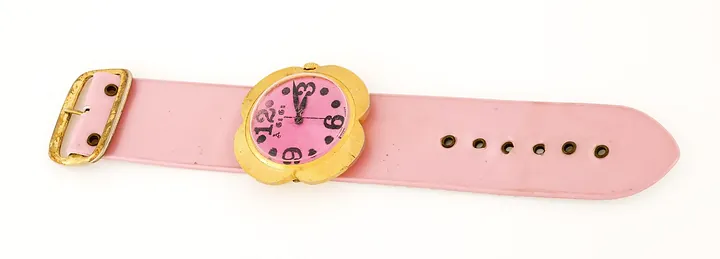
Wristwatches · 1980
Wristwatch, 1980 (no. 71413)
Museum Rotterdam