
Wristwatches · Wristwatch
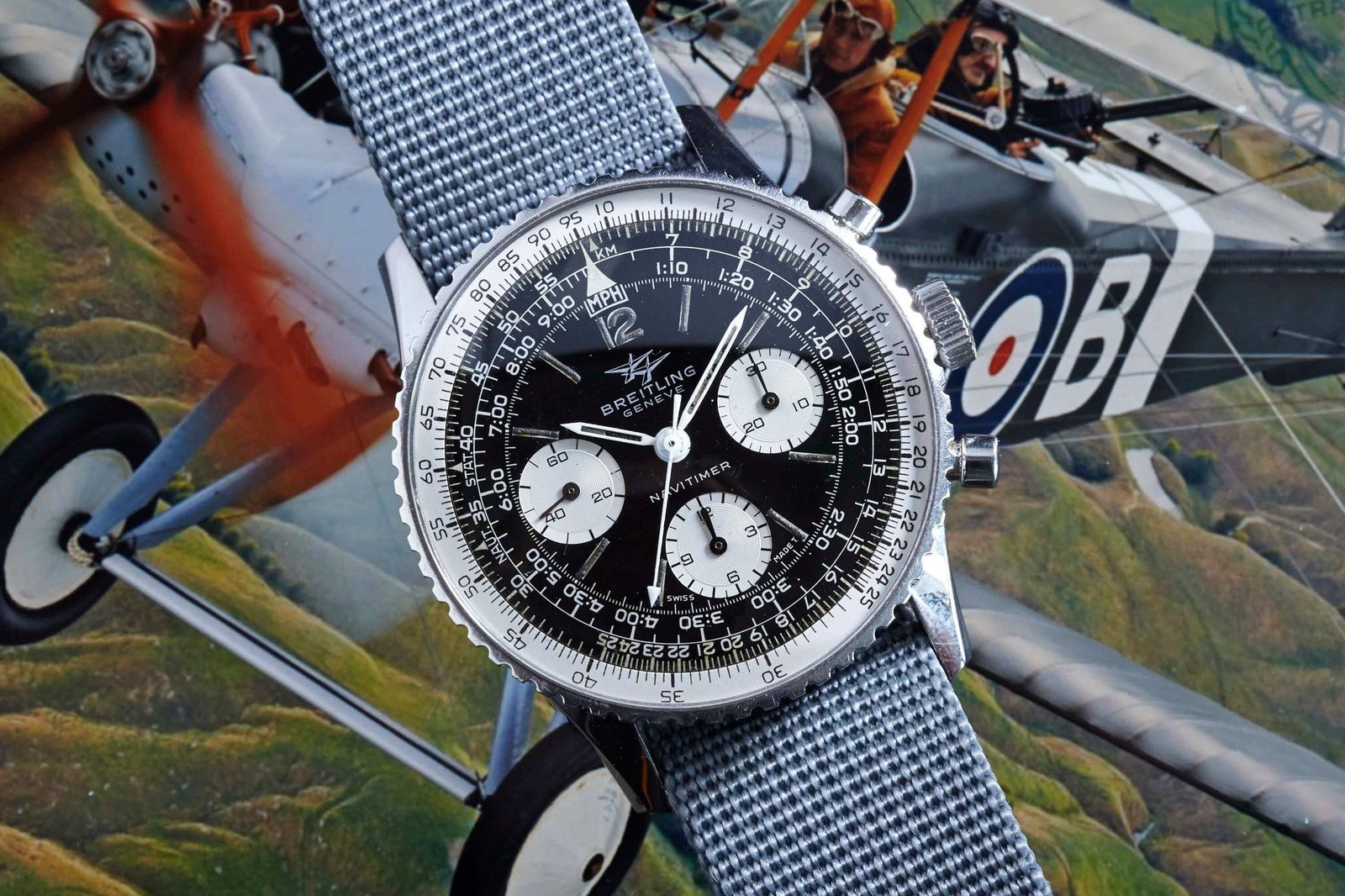
Breitling Navitimer, c. 1967
- Maker / attribution
- Breitling (maker)
- Date
- c. 1967
- Historical period
- Modern Mechanical Horology (1945 – 1969)
- Country of origin
- Switzerland
- Object type
- Wristwatch
- Stock no.
- Product 2388106753
- Credit line
- Dealer listing, Analog/Shift (product 2388106753)
- Catalogue title (original)
- Breitling Navitimer (English)
View the source record (dealer listing) ↗ (opens another website in a new tab)Suggest a correction
Record summary
Catalogued by Analog/Shift (dealer), New York (stock number Product 2388106753), this is a wristwatch by Breitling, made in Switzerland, dated c. 1967. The Atlas places it in the Modern Mechanical Horology period (1945 – 1969) of its Wristwatches collection. The record is illustrated with 6 photographs.
Assembled from the source record's structured fields. Dates and attributions are given as the source states them; where a field is missing the Atlas leaves it blank rather than estimating.
Catalogue description
Dealer description — Analog/Shift
The Breitling Reference 806 Navitimer is easily the most iconic model the brand ever produced, and remains near the top of virtually every vintage watch collector's wish list. Initially developed in the early 1950s, the Navitimer was designed from the ground up to be a function-first tool watch, offering a slide-rule navigation computer function operated by an internally-rotatable bezel. This incredible feature allows pilots to perform essential calculations on their wrist, long before mobile electronics were available. While the true functionality of the Navitimer is lost on most of us, there is no question that serious pilots (and astronauts) depended on their Navitimers as serious navigation tool. It has been said that the 806 spawned an entirely new category of timepieces - wrist instruments - and it would be hard to deny that. While they were produced in large quantities since the early 1950s, the vast majority of 806s on the market today are in a sad state of affairs. Seeing as many were put to use on the job, the majority of them show some pretty serious wear, or worse - have poorly-refinished dials. One look at the complexity of the layout says it all - this is not an easy watch to refinish well. Finding a quality example is a real challenge, and in all of our time in this business, we have only come across a few worthy examples. Fortunately you needn't worry about desirability when it comes to this spectacular example, which dates from approximately 1967. Featuring all-original glossy dial with crisp printing and no signs of water damage or heavy discoloration, this particular model features the iconic "Twin Jet" logo on the dial, and even comes with its original booklets. It is also clad in a fully steel case - whereas a large number from the same era were delivered in gold plate. This example is powered by a high-grade Venus 178 Manual Winding chronograph movement which has just undergone an extensive mechanical restoration. In excellent condition inside and out, with beautifully patinated original lume, original bezel, crisp dial, and a sharp case, this is one of the nicest original examples we have ever encountered. For a look at this history of this important chronograph, check out this great article by our friend Ed Estlow over at Gear Patrol, HERE .
Historical context
Modern Mechanical Horology (1945 – 1969)
Tool watches for divers, pilots and astronauts; electric watches anticipate the electronic age.
The classic era of the mechanical wristwatch: dive watches, chronographs for motor racing and space flight, GMT watches for jet travel, slim dress watches, automatic calendars, and the rise of Japanese manufacturers alongside Swiss, American, German and Soviet industries.
Read the period in the timelineMore wristwatches from this periodEarlier: Golden Age of Mechanical Watchmaking
Atlas type guide
Wristwatches
Bracelet watches were worn by women from the early nineteenth century — Breguet made one for Caroline Murat, Queen of Naples, in 1810–12 — but the wristwatch only became a man's instrument with military use and aviation in the early twentieth century. Between the World Wars it overtook the pocket watch; the 1920s and 1930s brought rectangular Art Deco cases, water-resistant cases and the first automatic winding systems.
After 1945 the wristwatch became a carrier of identity — dress watches, sports and dive watches, chronographs, calendars — produced by Swiss, American, Japanese, German, Soviet and Chinese industries. The quartz revolution after 1969 and the mechanical renaissance since the 1990s, including the rise of independent watchmakers, complete the story.
What to look for
- The reference number (between the lugs or inside the case back) and serial number, the starting point for dating.
- The calibre: its maker and number are often stamped under the dial or on the bridge.
- Originality of dial, hands and crown — refinished ('redial') dials are common.
- Case material marks: 18K/750, 14K/585, stainless steel, gold-filled, plated.
Dating clues
- Wire-lug cases: before c. 1925.
- Water-resistant screw-down cases: from 1926.
- Quartz movements: from 1969; sapphire crystals widespread after c. 1980.
General guidance written by the Atlas editors about this kind of object. It is not a statement about this particular piece; for that, rely on the source record above and on physical examination.
Related records
Clocks · c. 1990s
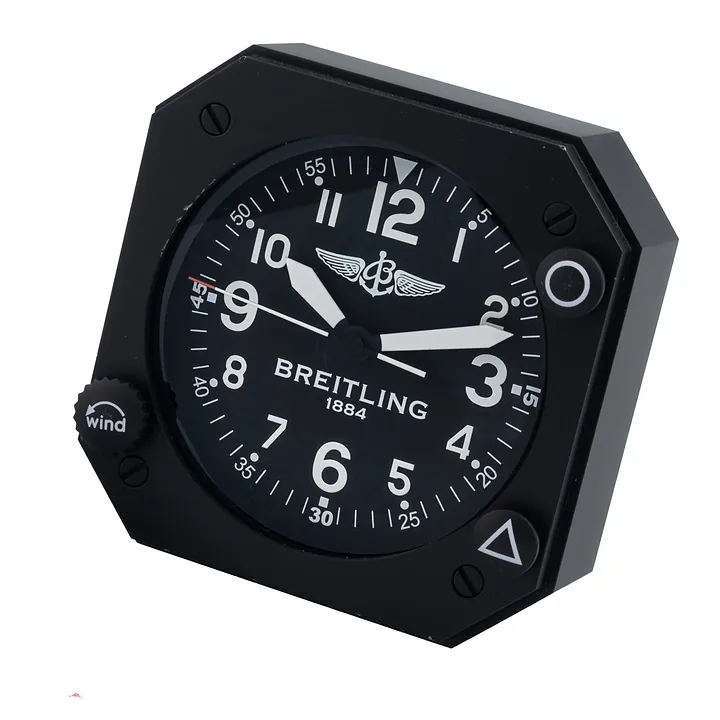
Breitling clock, c. 1990s (Antiquorum Lot 389-18)
Antiquorum auction archive, Geneva
Clocks · c. 1990s
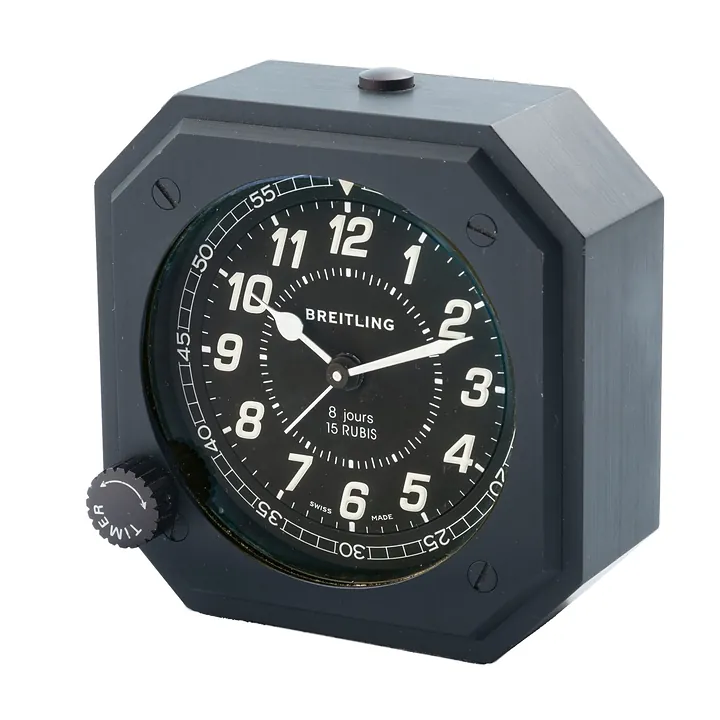
Breitling clock, c. 1990s (Antiquorum Lot 389-20)
Antiquorum auction archive, Geneva
Wristwatches · c. 1940s
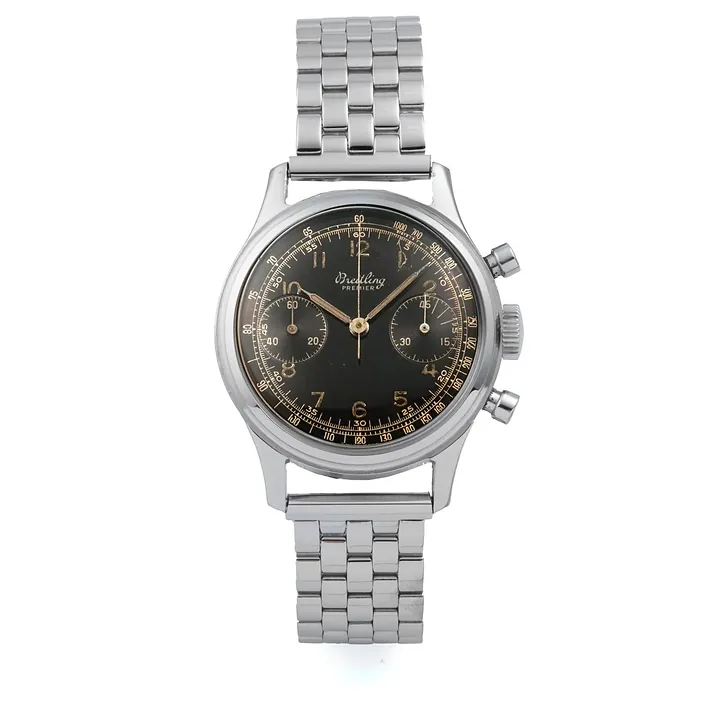
Breitling Premier, ref. 790, c. 1940s
Antiquorum auction archive, Geneva

Wristwatches · c. 1945
Breitling Premier, ref. 790, c. 1945
Antiquorum auction archive, Geneva

Wristwatches · 1945
Wristwatch by Eterna, 1945
Museum Rotterdam

Wristwatches · c. 1945
Universal Genève Uni-Compax, ref. 22492, c. 1945
Antiquorum auction archive, Geneva

Wristwatches · c. 1950s
Baume & Mercier wristwatch, c. 1950s
Antiquorum auction archive, Geneva
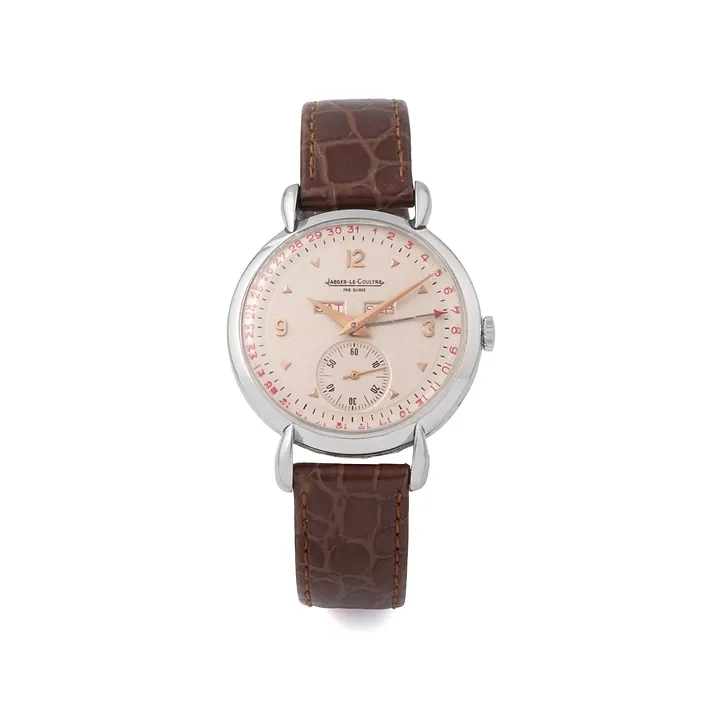
Wristwatches · c. 1950
Jaeger Lecoultre Triple Calendar, c. 1950
Antiquorum auction archive, Geneva