
Wristwatches · Wristwatch
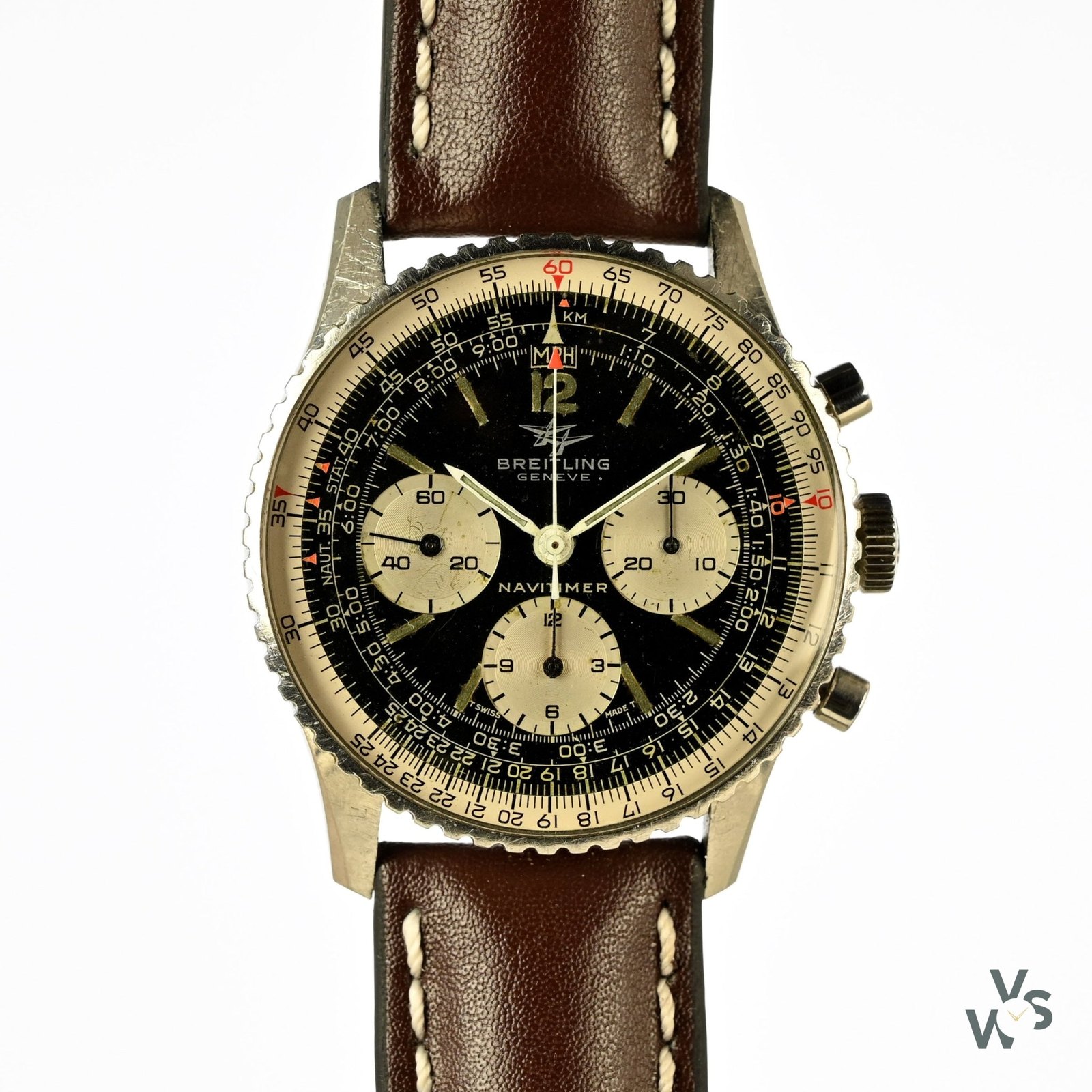
Breitling Geneve Navitimer, ref. 806 Chronograph, Caliber Venus 178 Movement, circa 1960s
- Maker / attribution
- Breitling (maker)
- Date
- c. 1960s
- Historical period
- Modern Mechanical Horology (1945 – 1969)
- Country of origin
- Switzerland
- Object type
- Wristwatch
- Dimensions
- Case 41 mm
- Stock no.
- vws1887
- Credit line
- Dealer listing, Vintage Watch Specialist (vws1887)
- Catalogue title (original)
- Breitling Geneve Navitimer - Reference 806 Chronograph - Caliber Venus 178 Movement - c.1960s (English)
View the source record (dealer listing) ↗ (opens another website in a new tab)Suggest a correction
Record summary
Catalogued by Vintage Watch Specialist (dealer), United Kingdom (stock number vws1887), this is a wristwatch by Breitling, made in Switzerland, dated c. 1960s. The Atlas places it in the Modern Mechanical Horology period (1945 – 1969) of its Wristwatches collection. Recorded dimensions: Case 41 mm. The record is illustrated with 6 photographs.
Assembled from the source record's structured fields. Dates and attributions are given as the source states them; where a field is missing the Atlas leaves it blank rather than estimating.
Catalogue description
Dealer description — Vintage Watch Specialist
A Fantastic Vintage c.1960s Breitling 806 Navitimer 3 Register Chronograph, with Twin Jet Logo and, Caliber 178 Venus Movement with Pillar Wheel Sub-Seconds, 30 mins and, 12 hrs Sub-Dials. In 1952, Willy Breitling was approached by the renowned US Aircraft Owners and Pilots Association (AOPA) and asked to create a new chronograph for its members. He decided to develop an innovative wrist-worn instrument that would enable pilots to perform all necessary flight calculations, including average speed, distance travelled, fuel consumption, rate of climb or descent, and conversion of miles to kilometers or nautical miles. At that time, calculations required a logarithmic slide rule. Willy Breitling, therefore, adapted the original logarithmic slide rule of the 1940s Chronomat for aviation purposes and integrated it into a rotating bezel, surrounded by small beads to make it easier to manipulate. The case diameter was fixed at 41 millimeters, which was large for its time – large enough to ensure that all the information provided by the dial would be easy to read. The readability was further enhanced by oversized Arabic numerals filled with radium that efficiently contrasted with the black dial. As for the name, what could be more evocative than Navitimer, a combination of navigation and timer? When the Navitimer was finally introduced to the AOPA, it was an instant success among the association’s members What’s On Offer A fantastic example of the iconic 806 reference on offer here from Breitling. This is the nicer variant in our opinion with the larger sub-registers, sometimes called the 'big eyes'. Although this watch is fairly beefy at 41mm, it wears very comfortably on the wrist. The milled edge of the bezel and robust steel case with chronograph pushers at 2 and 4 o’clock make for a stylishly substantial package. The dished subdials punch out nicely against the black dial and seem to balance out a somewhat complex dial. The lume on the hour markers has deteriorated a little however, the hands are in good shape and the arrowhead seconds hand in blood red adds a stylish pop of colour along with the other subtle red accents on the outer scale. An iconic watch with sophisticated features which has aged well and will sit well alongside any modern-day counterpart. A classic model that has stood the test of time and is still in production today!
Historical context
Modern Mechanical Horology (1945 – 1969)
Tool watches for divers, pilots and astronauts; electric watches anticipate the electronic age.
The classic era of the mechanical wristwatch: dive watches, chronographs for motor racing and space flight, GMT watches for jet travel, slim dress watches, automatic calendars, and the rise of Japanese manufacturers alongside Swiss, American, German and Soviet industries.
Read the period in the timelineMore wristwatches from this periodEarlier: Golden Age of Mechanical Watchmaking
Atlas type guide
Chronographs and split-seconds watches
A chronograph is a watch with an additional seconds hand that can be started, stopped and returned to zero independently of the timekeeping. Louis Moinet built an early example in 1816 and Nicolas Rieussec a recording 'chronographe' in 1821; Adolphe Nicole's heart-shaped reset cam (patented 1862) made the modern return-to-zero possible. Split-seconds (rattrapante) chronographs add a second hand that can be stopped for intermediate times; flyback chronographs restart instantly.
Chronographs were essential tools for doctors (pulsometer scales), artillery (telemeter), engineers and sport. In wristwatches, Valjoux, Venus, Lemania and later the automatic chronographs of 1969 (Zenith El Primero, the Chronomatic Calibre 11 group and Seiko 6139) are milestones.
What to look for
- Push-pieces on the case band or a single button in the crown (monopusher).
- Subsidiary registers for minutes and hours; tachymeter, telemeter or pulsometer scales.
- Column wheel versus cam control visible in the movement.
- Calibre markings of specialist makers (Valjoux, Lemania, Venus, Landeron).
Dating clues
- Pocket chronographs with heart cam reset: after 1862.
- Wrist chronographs: from c. 1910; two-button designs from the 1930s.
- Automatic chronographs: from 1969.
General guidance written by the Atlas editors about this kind of object. It is not a statement about this particular piece; for that, rely on the source record above and on physical examination.
Read next:Flyback chronographChronograph
Related records
Clocks · c. 1990s
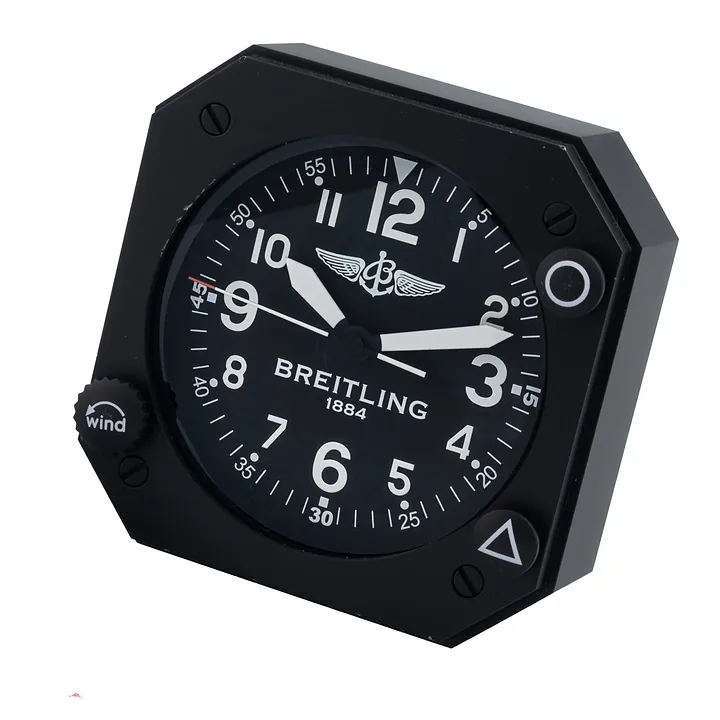
Breitling clock, c. 1990s (Antiquorum Lot 389-18)
Antiquorum auction archive, Geneva
Clocks · c. 1990s
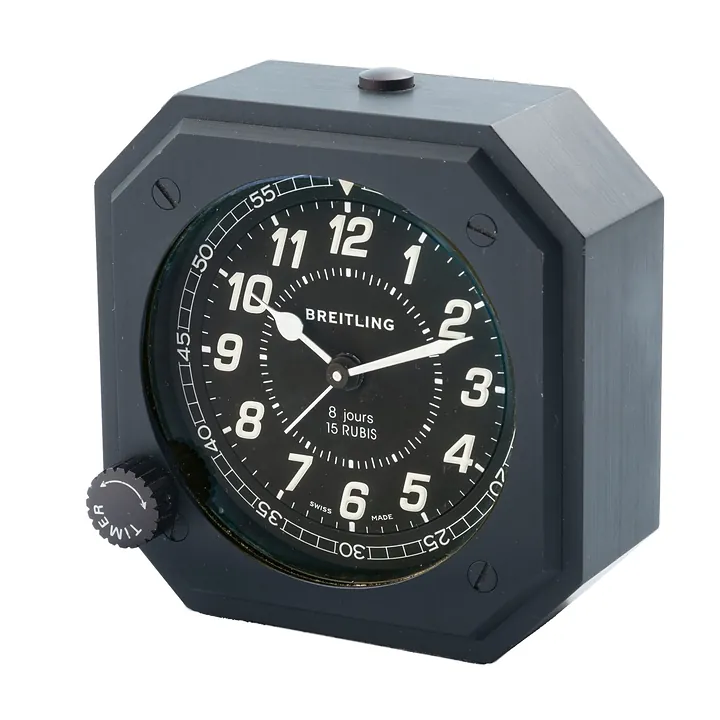
Breitling clock, c. 1990s (Antiquorum Lot 389-20)
Antiquorum auction archive, Geneva
Wristwatches · c. 1940s
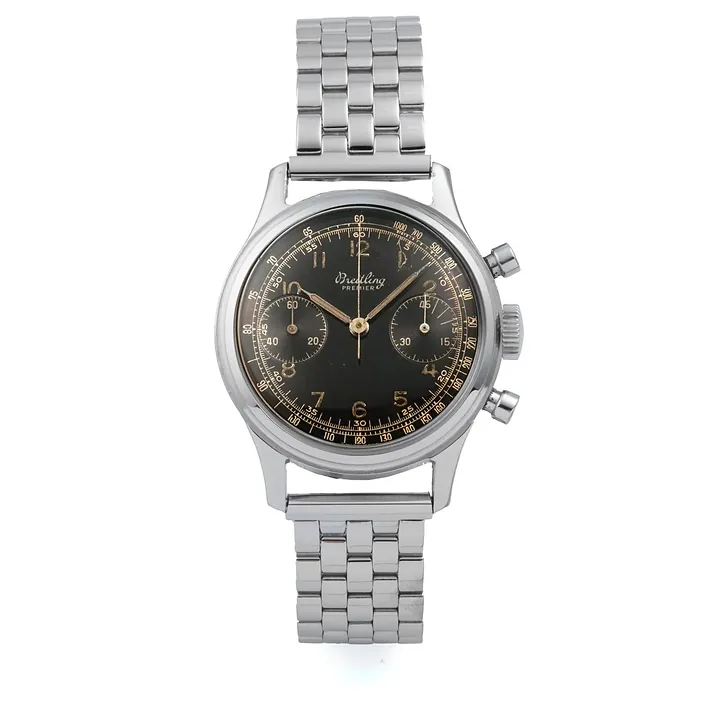
Breitling Premier, ref. 790, c. 1940s
Antiquorum auction archive, Geneva

Wristwatches · c. 1945
Breitling Premier, ref. 790, c. 1945
Antiquorum auction archive, Geneva

Wristwatches · 1945
Wristwatch by Eterna, 1945
Museum Rotterdam

Wristwatches · c. 1945
Universal Genève Uni-Compax, ref. 22492, c. 1945
Antiquorum auction archive, Geneva

Wristwatches · c. 1950s
Baume & Mercier wristwatch, c. 1950s
Antiquorum auction archive, Geneva
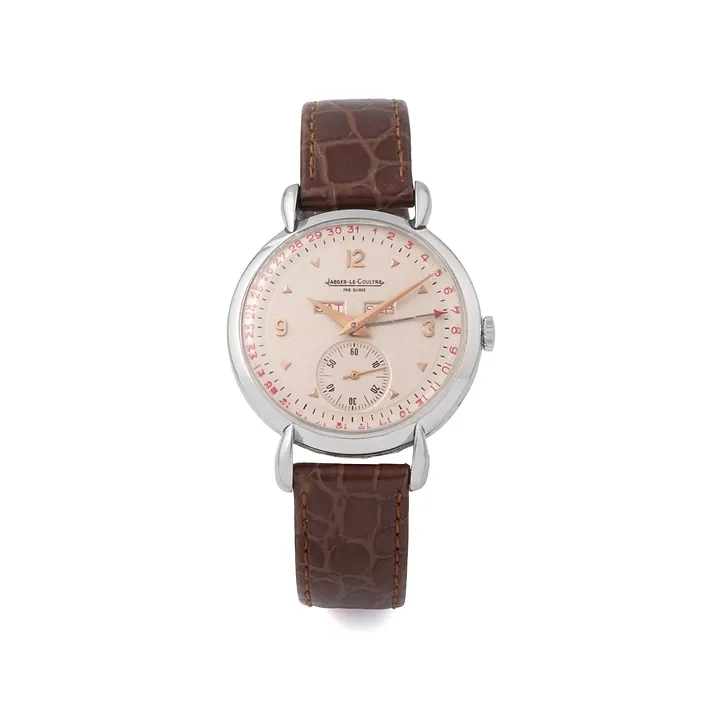
Wristwatches · c. 1950
Jaeger Lecoultre Triple Calendar, c. 1950
Antiquorum auction archive, Geneva