
Wristwatches · Wristwatch
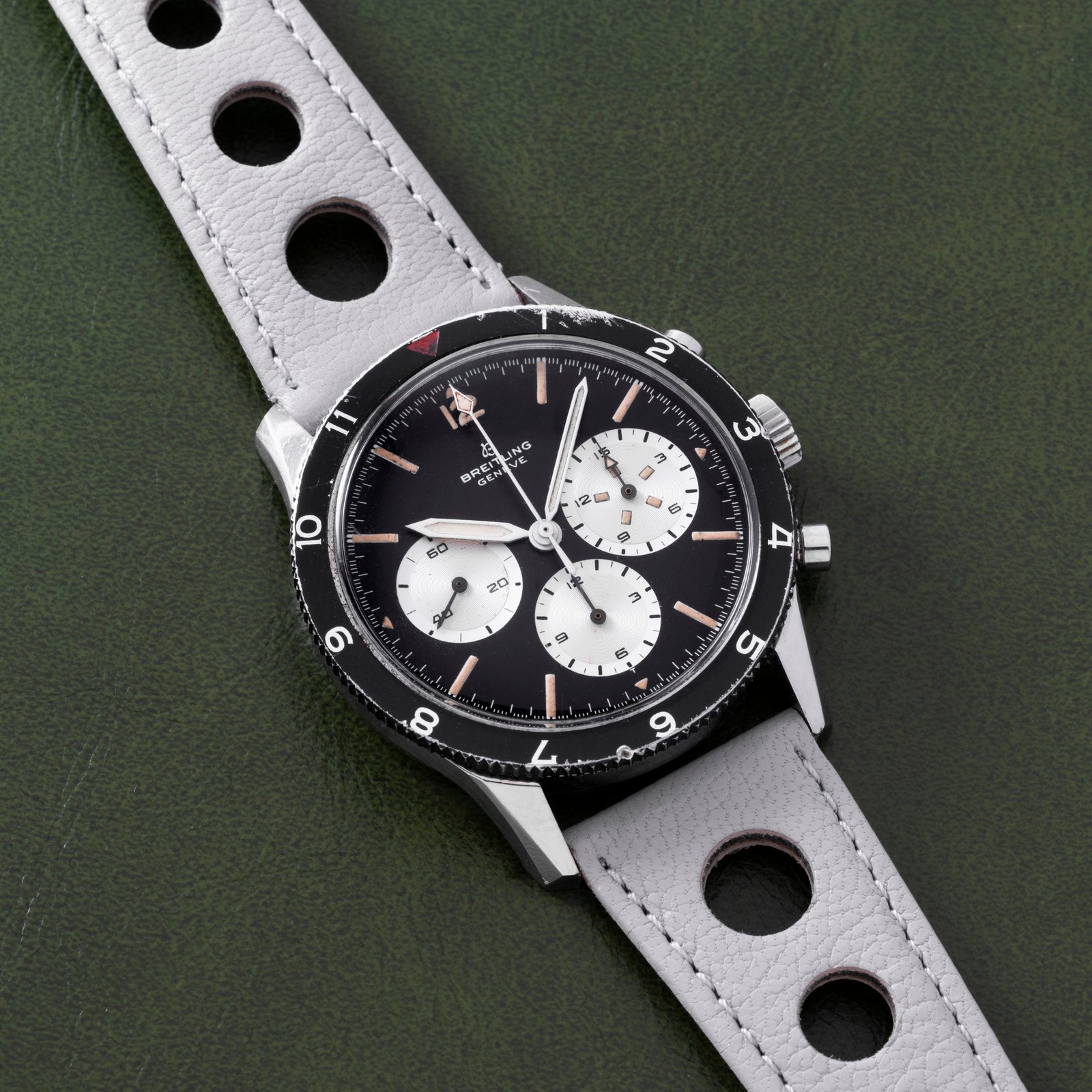
Breitling Co-Pilot Chronograph, c. 1965
- Maker / attribution
- Breitling (maker)
- Date
- c. 1965
- Historical period
- Modern Mechanical Horology (1945 – 1969)
- Country of origin
- Switzerland
- Object type
- Wristwatch
- Dimensions
- Case 41 mm
- Stock no.
- 40940072
- Credit line
- Dealer listing, Analog/Shift (40940072)
- Catalogue title (original)
- Breitling Co-Pilot Chronograph (English)
View the source record (dealer listing) ↗ (opens another website in a new tab)Suggest a correction
Record summary
Catalogued by Analog/Shift (dealer), New York (stock number 40940072), this is a wristwatch by Breitling, made in Switzerland, dated c. 1965. The Atlas places it in the Modern Mechanical Horology period (1945 – 1969) of its Wristwatches collection. Recorded dimensions: Case 41 mm. The record is illustrated with 6 photographs.
Assembled from the source record's structured fields. Dates and attributions are given as the source states them; where a field is missing the Atlas leaves it blank rather than estimating.
Catalogue description
Dealer description — Analog/Shift
Like the Breguet Type 20, the Breitling Reference 765 or AVI was designed for helicopter pilots in the French army. Eager to secure the contract, in 1953 Breitling designed a watch that they thought would be perfect for the job. Unlike the Navitimer, the dial of the AVI displayed only the most essential information pilots needed — the requisite hours and minutes, indicated by large luminescent hands, and registers for running seconds, 12 hours, and 30 minutes. Unfortunately, the French military specification — Type 20 —required a flyback function, which the AVI lacked. Not to be deterred, Breitling adapted it for civilian use, and in 1964 it debuted as the Co-Pilot. This watch was worn to perfection by Raquel Welch in the 1967 film Fathom , in which an Italian skydiver (played by Welch as the title character) finds herself embroiled in international espionage. Breitling ads promoted the watch’s appearance on film, stating that either the watch or the woman “[Steals] the scenes, in film and real life.” Though the Co-Pilot retained the diameter of its predecessor (a whopping 41mm, large for the period), it underwent some cosmetic changes that made it stand out amidst Breitling’s chronograph offerings: The rotating 12h steel bezel, previously steel, was now anodized aluminum. (The bezel was also released in other variants, like the ‘Double-Scale,’ which displayed scales for both 60 minutes and 12 hours. The ‘Double-Scale’ bezel found its way to a cousin of the Co-Pilot, the 765 Yachting.) Additionally, the dial — previously black-on-black — was given a distinctive black-and-white colorway now known as ‘reverse panda’ by collectors.The new variant of Co-Pilot with the white chronograph registers found its way on the wrist of someone less glamorous (but no less exciting) than Raquel Welch — Jean-Claude Killy. Though best associated with the Rolex Dato-Compax that now bears his name in collecting circles, Killy also sported a Reference 765 Co-Pilot before pledging himself to the Crown as a brand ambassador. Most notably, he wore the Co-Pilot during the 1968 Winter Olympics in Grenoble, France, where he won gold medals in downhill, giant slalom, and slalom — the “Triple Crown” of alpine skiing — thus securing his legacy. This particular Co-Pilot, a Reference 765CP, dates to circa 1965 and comes in with a 42.5mm stainless steel case with dual barrel pushers, a signed crown, and a bidirecitonal rotating black aluminum bezel with a 12-hour markers. It features a matte black Tritium 'reverse panda' dial with recessed, silver sub registers, a an outer white minute track, and a matching white painted 'sword' handset. Powered by a Venus Calibre 178 manual winding chronograph movement, this piece comes fitted to one of our red Analog:Shift Montone leather straps with a steel pin buckle. Whether plunging toward Earth from a De Havilland DH-89A like Welch in Fathom, slaloming down the slopes in the French Alps a la Killy, or are a seasoned Breitling collector, this piece makes for a great option! While these are not exactly scarce, finding one in excellent overall condition such as this is always a treat.
Historical context
Modern Mechanical Horology (1945 – 1969)
Tool watches for divers, pilots and astronauts; electric watches anticipate the electronic age.
The classic era of the mechanical wristwatch: dive watches, chronographs for motor racing and space flight, GMT watches for jet travel, slim dress watches, automatic calendars, and the rise of Japanese manufacturers alongside Swiss, American, German and Soviet industries.
Read the period in the timelineMore wristwatches from this periodEarlier: Golden Age of Mechanical Watchmaking
Atlas type guide
Chronographs and split-seconds watches
A chronograph is a watch with an additional seconds hand that can be started, stopped and returned to zero independently of the timekeeping. Louis Moinet built an early example in 1816 and Nicolas Rieussec a recording 'chronographe' in 1821; Adolphe Nicole's heart-shaped reset cam (patented 1862) made the modern return-to-zero possible. Split-seconds (rattrapante) chronographs add a second hand that can be stopped for intermediate times; flyback chronographs restart instantly.
Chronographs were essential tools for doctors (pulsometer scales), artillery (telemeter), engineers and sport. In wristwatches, Valjoux, Venus, Lemania and later the automatic chronographs of 1969 (Zenith El Primero, the Chronomatic Calibre 11 group and Seiko 6139) are milestones.
What to look for
- Push-pieces on the case band or a single button in the crown (monopusher).
- Subsidiary registers for minutes and hours; tachymeter, telemeter or pulsometer scales.
- Column wheel versus cam control visible in the movement.
- Calibre markings of specialist makers (Valjoux, Lemania, Venus, Landeron).
Dating clues
- Pocket chronographs with heart cam reset: after 1862.
- Wrist chronographs: from c. 1910; two-button designs from the 1930s.
- Automatic chronographs: from 1969.
General guidance written by the Atlas editors about this kind of object. It is not a statement about this particular piece; for that, rely on the source record above and on physical examination.
Read next:Chronograph
Related records
Clocks · c. 1990s
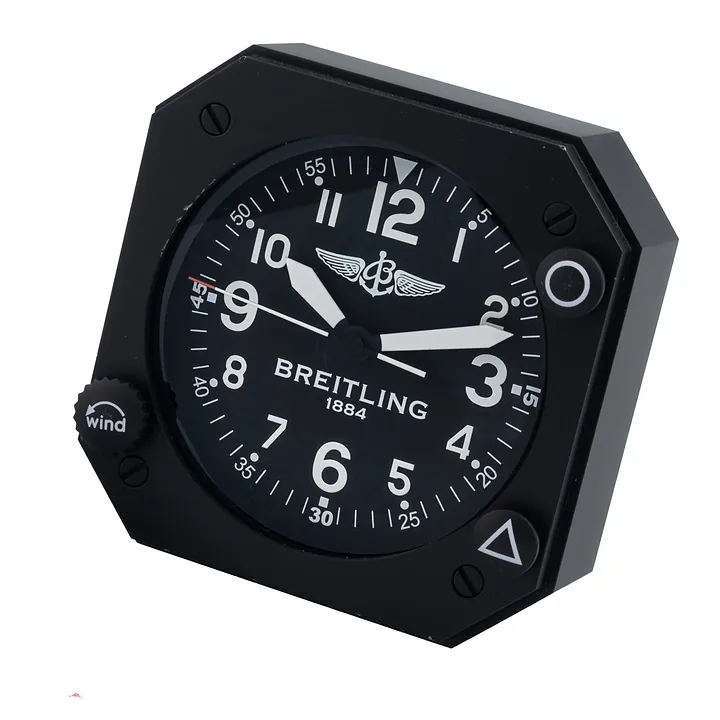
Breitling clock, c. 1990s (Antiquorum Lot 389-18)
Antiquorum auction archive, Geneva
Clocks · c. 1990s
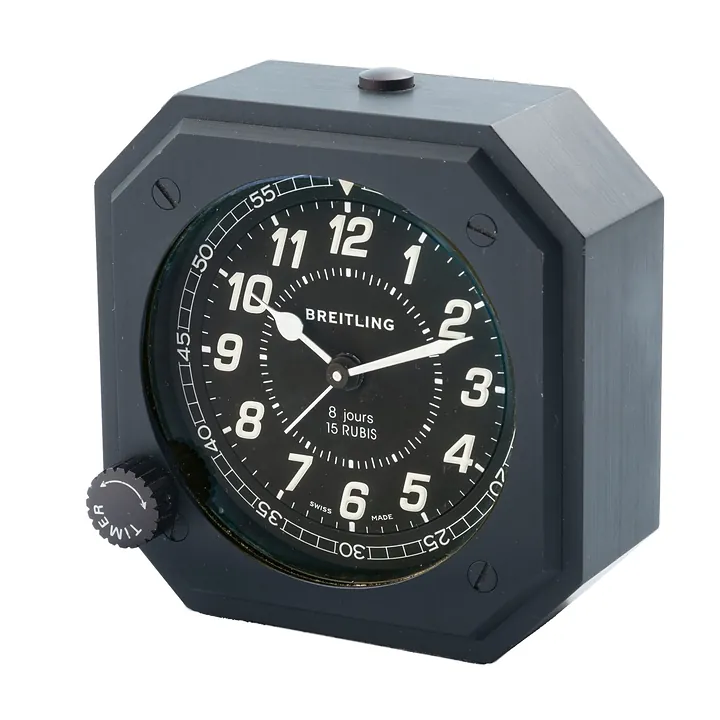
Breitling clock, c. 1990s (Antiquorum Lot 389-20)
Antiquorum auction archive, Geneva
Wristwatches · c. 1940s
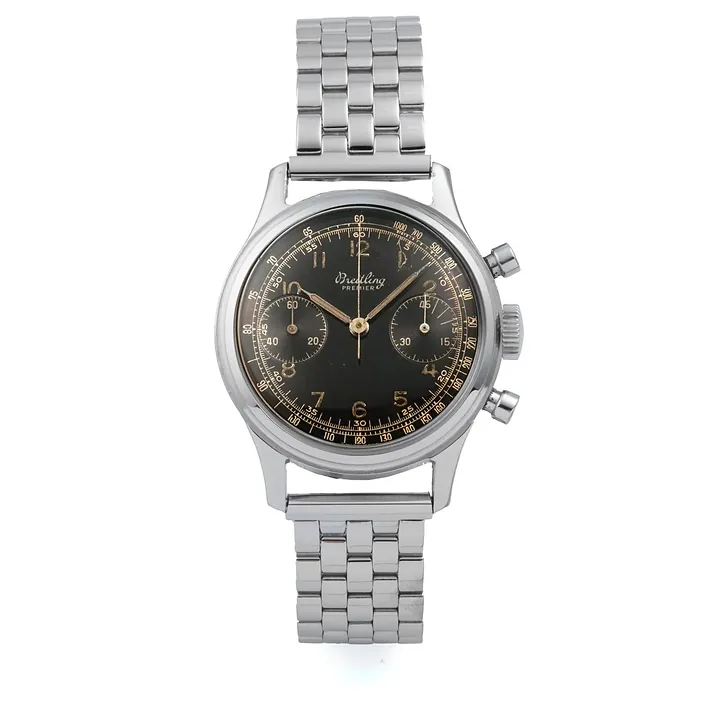
Breitling Premier, ref. 790, c. 1940s
Antiquorum auction archive, Geneva

Wristwatches · c. 1945
Breitling Premier, ref. 790, c. 1945
Antiquorum auction archive, Geneva

Wristwatches · 1945
Wristwatch by Eterna, 1945
Museum Rotterdam

Wristwatches · c. 1945
Universal Genève Uni-Compax, ref. 22492, c. 1945
Antiquorum auction archive, Geneva

Wristwatches · c. 1950s
Baume & Mercier wristwatch, c. 1950s
Antiquorum auction archive, Geneva
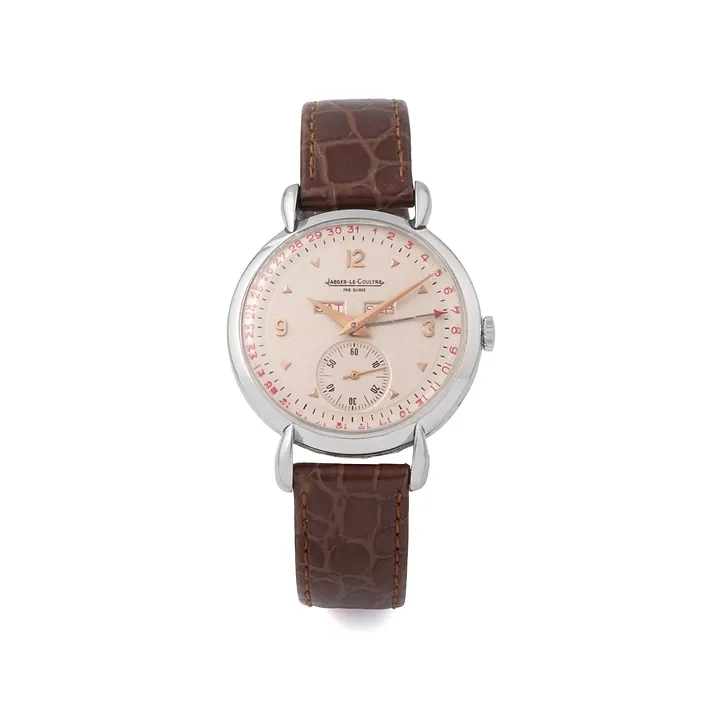
Wristwatches · c. 1950
Jaeger Lecoultre Triple Calendar, c. 1950
Antiquorum auction archive, Geneva