
Wristwatches · Wristwatch
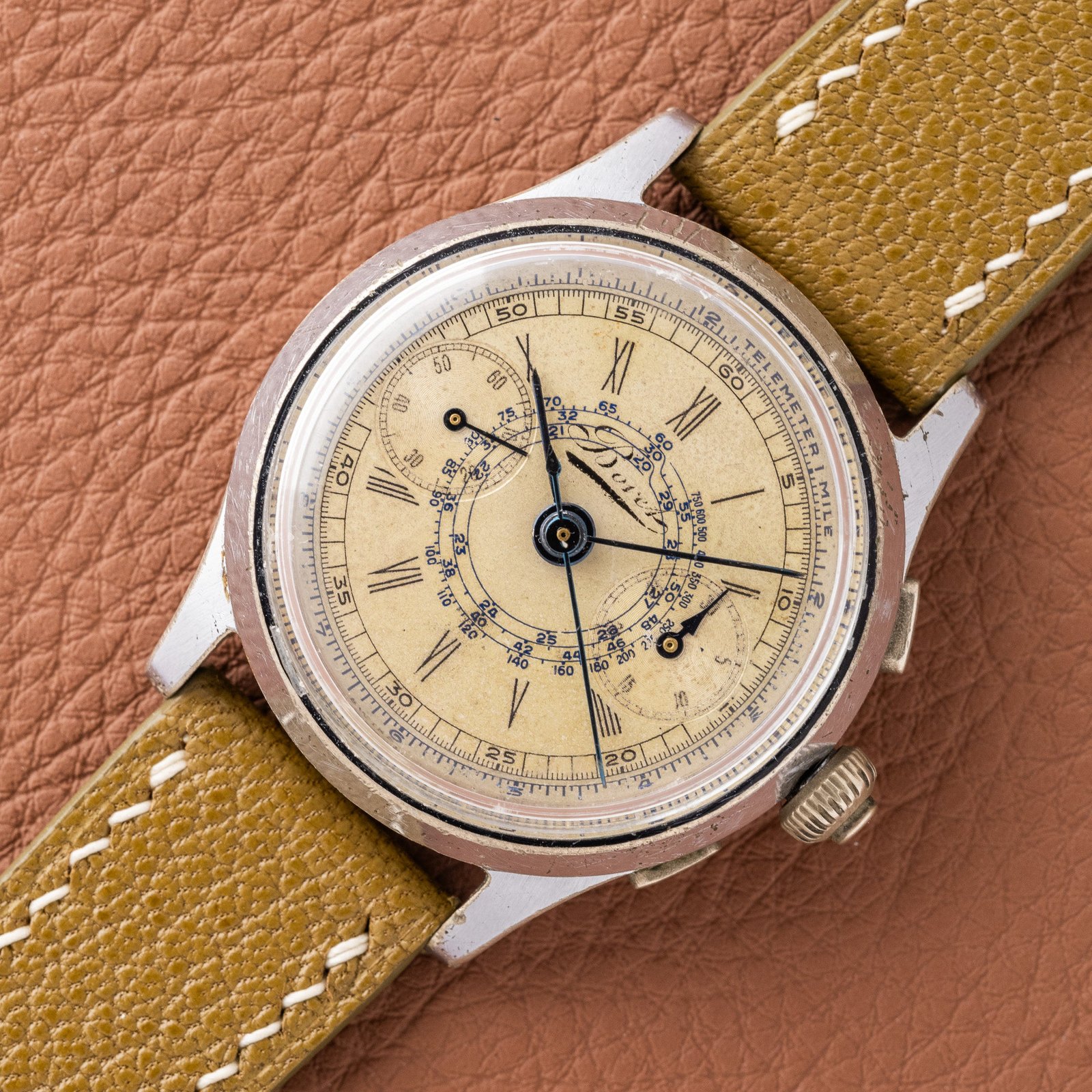
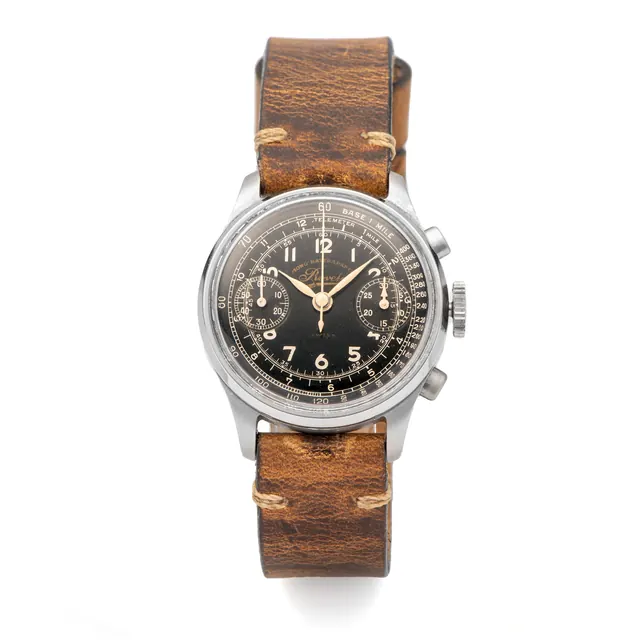
Bovet Three-Pusher Landeron 47 Chronograph, 1940s
- Maker / attribution
- Bovet (maker)
- Date
- 1940s
- Historical period
- Golden Age of Mechanical Watchmaking (1900 – 1945)
- Country of origin
- Switzerland
- Object type
- Wristwatch
- Dimensions
- Case 34 mm
- Stock no.
- Product 8315425587383
- Credit line
- Dealer listing, Huntington Company (product 8315425587383)
- Catalogue title (original)
- 1940s Bovet Three-Pusher Landeron 47 Chronograph (English)
View the source record (dealer listing) ↗ (opens another website in a new tab)Suggest a correction
Record summary
Catalogued by Huntington Company (dealer) (stock number Product 8315425587383), this is a wristwatch by Bovet, made in Switzerland, dated 1940s. The Atlas places it in the Golden Age of Mechanical Watchmaking period (1900 – 1945) of its Wristwatches collection. Recorded dimensions: Case 34 mm. The record is illustrated with 6 photographs.
Assembled from the source record's structured fields. Dates and attributions are given as the source states them; where a field is missing the Atlas leaves it blank rather than estimating.
Catalogue description
Dealer description — Huntington Company
History & Significance This Bovet chronograph represents a very specific and increasingly hard-to-find chapter of mid-century Swiss watchmaking. During the 1930s and 1940s, Bovet produced a small number of professional chronographs using ébauches from Landeron, including the distinctive Landeron 47, a manually wound, column-wheel chronograph best known for its three-pusher configuration. The Landeron 47 predates the more common cam-switched Landeron movements that followed in the post-war era. Its layout, with separate pushers for start, stop, and reset, reflects early chronograph architecture before standardization took hold. These movements were robust, purpose-built tools and were commonly paired with multi-scale dials intended for scientific, aviation, or industrial timing use. This example features a beautifully aged multi-scale dial with tachymeter and telemeter markings, Roman numerals, and blued steel hands. The overall aesthetic is unmistakably pre-war, both in proportions and in execution, and it stands as a strong example of a utilitarian chronograph from a brand better known today for decorative pocket watches. Writer’s Thoughts Early three-pusher chronographs have a presence that modern watches simply cannot replicate. The case wears compact but substantial, and the dial has developed an even, honest patina that feels earned rather than forced. This is the type of watch that appeals to collectors who value mechanical history and originality over polish or perfection. It wears best on leather and feels exactly as a 1940s chronograph should. Our Promise Every watch we offer is carefully inspected and evaluated for authenticity and originality. We stand behind each piece we sell and disclose all known details and condition observations as accurately as possible. Specifications Brand: Bovet Model: Chronograph Year: circa 1940s Case Material: Nickle plated with Stainless steel caseback Case Size: 34 mm Movement: Manual-wind chronograph Strap: Alran Goatskin Buckle/Clasp: Pin buckle Contents: Watch only Condition Case: Shows visible surface wear consistent with age and use, including light to moderate scratches and handling marks. Case retains strong proportions with well-defined lugs. Bezel: Smooth bezel shows honest wear with scratching and patina consistent with a vintage chronograph of this era. Pushers: Three-button chronograph configuration is intact, with pushers showing surface wear consistent with use. Crystal: Acrylic crystal shows light surface marks consistent with age. Dial: Original dial exhibits attractive, even patina throughout with legible scales and well-preserved printing. All original with no restoration. Hands: Original blued steel hands present with matching aging, showing no corrosion. Strap: The Leather strap is new. Buckle/Clasp: New steel buckle.
Historical context
Golden Age of Mechanical Watchmaking (1900 – 1945)
The wristwatch displaces the pocket watch; waterproof cases, self-winding and grand complications.
The wristwatch overtook the pocket watch. Military use in the First World War, aviation, water-resistant cases (1926), automatic winding (1923–31), rectangular Art Deco designs and early chronographs and calendars defined the period.
Read the period in the timelineMore wristwatches from this periodEarlier: Industrial Revolution
Atlas type guide
Chronographs and split-seconds watches
A chronograph is a watch with an additional seconds hand that can be started, stopped and returned to zero independently of the timekeeping. Louis Moinet built an early example in 1816 and Nicolas Rieussec a recording 'chronographe' in 1821; Adolphe Nicole's heart-shaped reset cam (patented 1862) made the modern return-to-zero possible. Split-seconds (rattrapante) chronographs add a second hand that can be stopped for intermediate times; flyback chronographs restart instantly.
Chronographs were essential tools for doctors (pulsometer scales), artillery (telemeter), engineers and sport. In wristwatches, Valjoux, Venus, Lemania and later the automatic chronographs of 1969 (Zenith El Primero, the Chronomatic Calibre 11 group and Seiko 6139) are milestones.
What to look for
- Push-pieces on the case band or a single button in the crown (monopusher).
- Subsidiary registers for minutes and hours; tachymeter, telemeter or pulsometer scales.
- Column wheel versus cam control visible in the movement.
- Calibre markings of specialist makers (Valjoux, Lemania, Venus, Landeron).
Dating clues
- Pocket chronographs with heart cam reset: after 1862.
- Wrist chronographs: from c. 1910; two-button designs from the 1930s.
- Automatic chronographs: from 1969.
General guidance written by the Atlas editors about this kind of object. It is not a statement about this particular piece; for that, rely on the source record above and on physical examination.
Read next:Flyback chronographChronograph
Related records
Pocket Watches · c. 1875
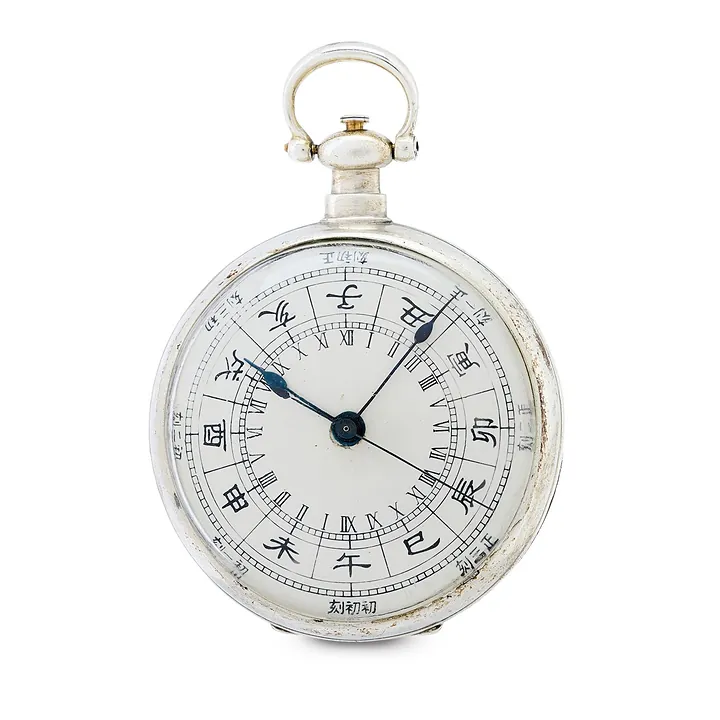
Bovet pocket watch, c. 1875
Antiquorum auction archive, Geneva
Wristwatches · c. 1940s
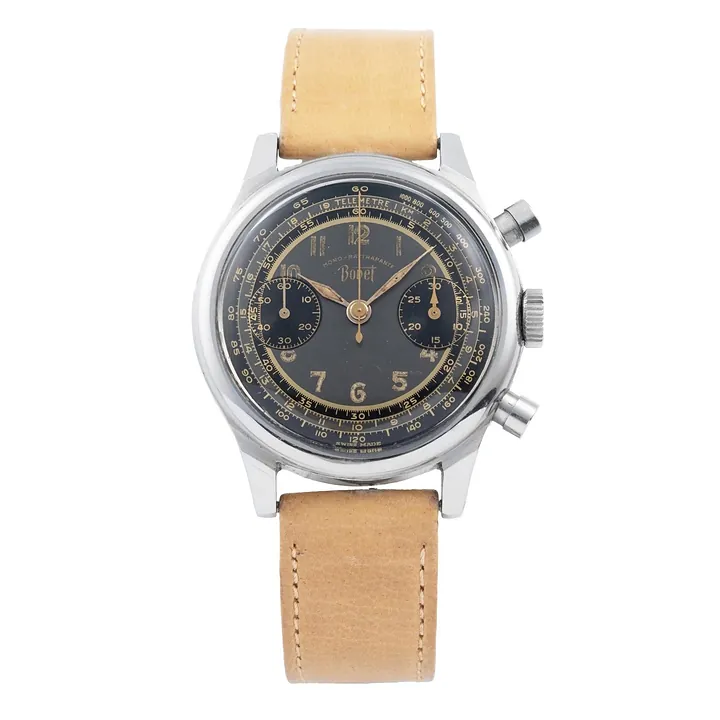
Bovet Mono-Rattrapante, ref. 5347, c. 1940s (Antiquorum Lot 390-81)
Antiquorum auction archive, Geneva
Wristwatches · c. 1940s
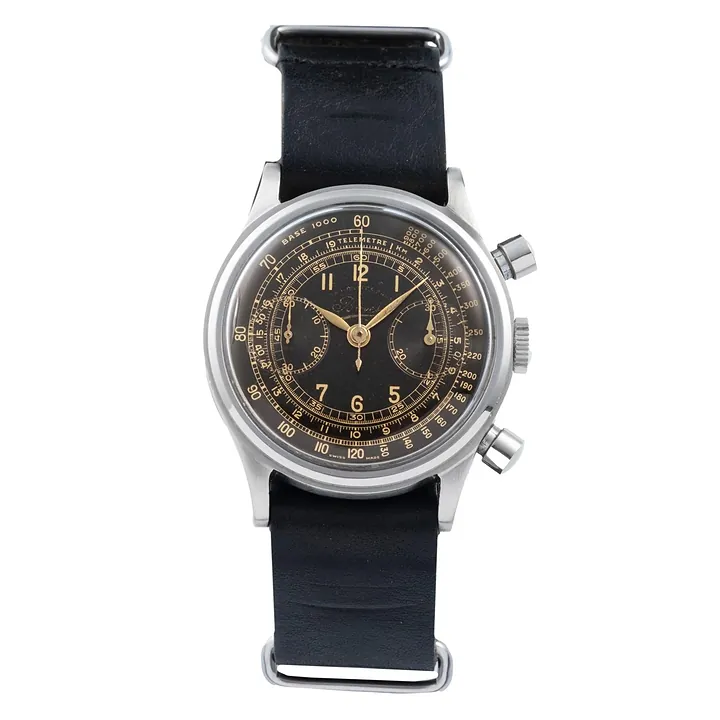
Bovet Mono-Rattrapante, ref. 5347, c. 1940s (Antiquorum Lot 390-82)
Antiquorum auction archive, Geneva
Wristwatches · c. 1950s
Bovet wristwatch, Mono Rattrapante Black Dial, circa 1950's
Antiquorum auction archive, Geneva

Wristwatches · 1931
Rolex 'Oyster Perpetual' rotor self-winding wrist-watch, lever escapement, in steel case with glass in back, Montres Rolex SA, Geneva, Switzerland, 1931
Science Museum Group, London

Wristwatches · 1900–1999
Wristwatch by Certina, Switzerland, 1900–1999
Nordic Museum Foundation
Wristwatches · 1900–1999
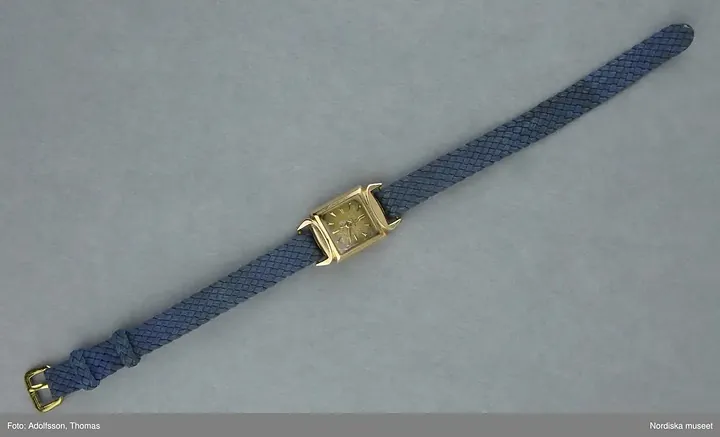
Wristwatch by Omega, Västerås, 1900–1999
Nordic Museum Foundation
Wristwatches · 1900–1999
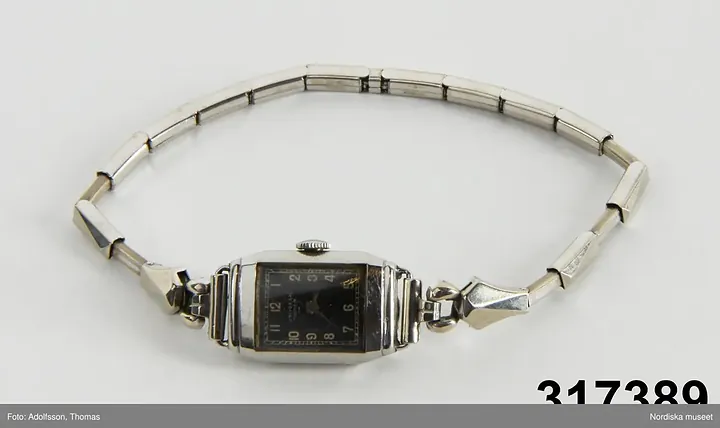
Wristwatch by Universal, Switzerland, 1900–1999
Nordic Museum Foundation