
Wristwatches · Wristwatch
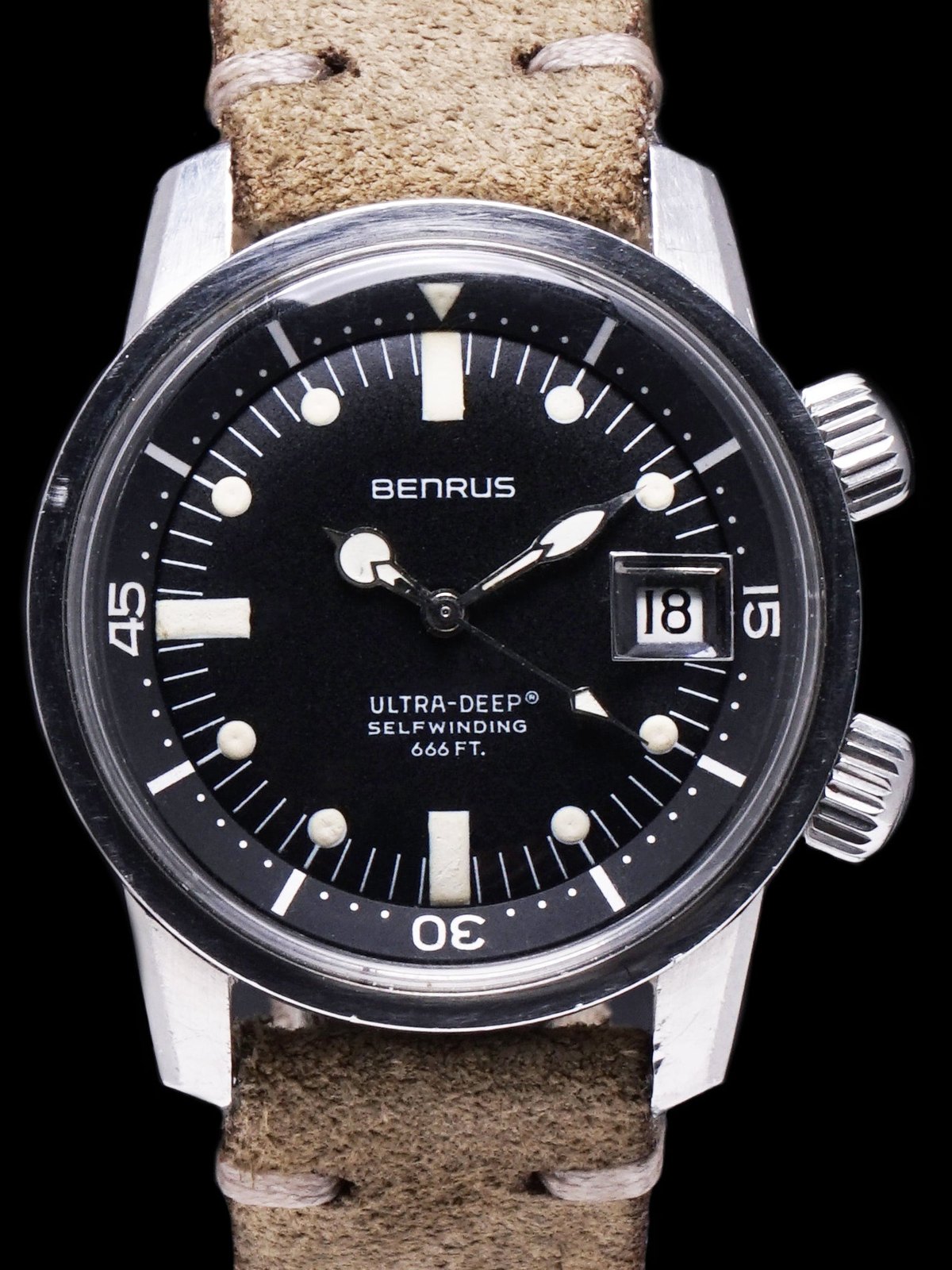
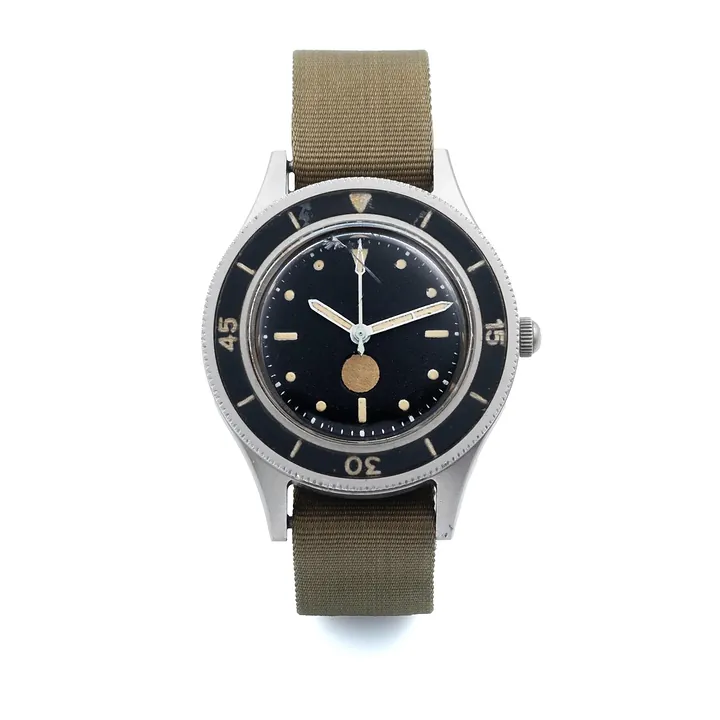
Benrus Ultra-Deep (Ref. 6089) Super-Compressor, 1960s
- Maker / attribution
- Benrus (maker)
- Date
- 1960s
- Historical period
- Modern Mechanical Horology (1945 – 1969)
- Country of origin
- United States
- Object type
- Wristwatch
- Dimensions
- Case 36.5 mm
- Stock no.
- BRS6089
- Credit line
- Dealer listing, Craft & Tailored (BRS6089)
- Catalogue title (original)
- 1960s Benrus Ultra-Deep (Ref. 6089) Super-Compressor (English)
View the source record (dealer listing) ↗ (opens another website in a new tab)Suggest a correction
Record summary
Catalogued by Craft & Tailored (dealer), Los Angeles (stock number BRS6089), this is a wristwatch by Benrus, made in United States, dated 1960s. The Atlas places it in the Modern Mechanical Horology period (1945 – 1969) of its Wristwatches collection. Recorded dimensions: Case 36.5 mm. The record is illustrated with 6 photographs.
Assembled from the source record's structured fields. Dates and attributions are given as the source states them; where a field is missing the Atlas leaves it blank rather than estimating.
Catalogue description
Dealer description — Craft & Tailored
Patented in 1956 by Ervin Piquerez SA (EPSA), the SuperCompressor case possessed a unique sealing system that set it apart from other dive watch cases of the day. When exposed to higher water pressure, the spring-loaded case back of the SuperCompressor case sealed even tighter. Another innovation with the SuperCompressor was its a three-pronged approach to securing the bezel. Whereas the bezels of most dive watches of the period rotated in both directions--running the risk of the diver miscalculating the amount of air left in his tank--the bezel of the SuperCompressor included an internal timing ring, only rotated in one direction, and locked. The diver must rotate the bezel with an additional crown, giving the SuperCompressor case its distinctive twin crown appearance. While not the best innovation in practice (due to the difficulty of manipulating a crown with diving gloves), the SuperCompressor case gained popularity. Dozens of other brands released dive watches with SuperCompressor cases, the most notable being Jaeger-LeCoultre, Enicar, Universal Genève, and IWC, Benrus, and Longines. SPECS Stock # BRS6089 Brand Benrus Style Ultra-Deep Model 6089 Serial N/A Size Men's Material SS Dial Black Millimeters 36.5mm Bracelet 2pc Handmade Leather Strap CASE & BRACELET The excellent super-compressor case retains factory chamfer and shows honest signs of use. The case retains its original twin crowns, showing the iconic super compressor cross-hatched texture. The original crystal with integrated cyclops is in wonderful condition. The case back still lightly, displays its original factory engravings. The watch will come supplied on a 2pc handmade leather strap. DIAL & HANDS The original matte black dial with inner rotating bezel is in stunning condition. The dial features the "Ultra-Deep" designation with a 666ft depth rating. The tritium lume plots have taken on a nice ivory patina and show no degradation under U.V. light inspection. The unique original tritium hands match the dial perfectly, under U.V. light inspection the hour hand shows some light degradation. ACCESSORIES
Historical context
Modern Mechanical Horology (1945 – 1969)
Tool watches for divers, pilots and astronauts; electric watches anticipate the electronic age.
The classic era of the mechanical wristwatch: dive watches, chronographs for motor racing and space flight, GMT watches for jet travel, slim dress watches, automatic calendars, and the rise of Japanese manufacturers alongside Swiss, American, German and Soviet industries.
Read the period in the timelineMore wristwatches from this periodEarlier: Golden Age of Mechanical Watchmaking
Atlas type guide
Wristwatches
Bracelet watches were worn by women from the early nineteenth century — Breguet made one for Caroline Murat, Queen of Naples, in 1810–12 — but the wristwatch only became a man's instrument with military use and aviation in the early twentieth century. Between the World Wars it overtook the pocket watch; the 1920s and 1930s brought rectangular Art Deco cases, water-resistant cases and the first automatic winding systems.
After 1945 the wristwatch became a carrier of identity — dress watches, sports and dive watches, chronographs, calendars — produced by Swiss, American, Japanese, German, Soviet and Chinese industries. The quartz revolution after 1969 and the mechanical renaissance since the 1990s, including the rise of independent watchmakers, complete the story.
What to look for
- The reference number (between the lugs or inside the case back) and serial number, the starting point for dating.
- The calibre: its maker and number are often stamped under the dial or on the bridge.
- Originality of dial, hands and crown — refinished ('redial') dials are common.
- Case material marks: 18K/750, 14K/585, stainless steel, gold-filled, plated.
Dating clues
- Wire-lug cases: before c. 1925.
- Water-resistant screw-down cases: from 1926.
- Quartz movements: from 1969; sapphire crystals widespread after c. 1980.
General guidance written by the Atlas editors about this kind of object. It is not a statement about this particular piece; for that, rely on the source record above and on physical examination.
Related records
Wristwatches · c. 1960
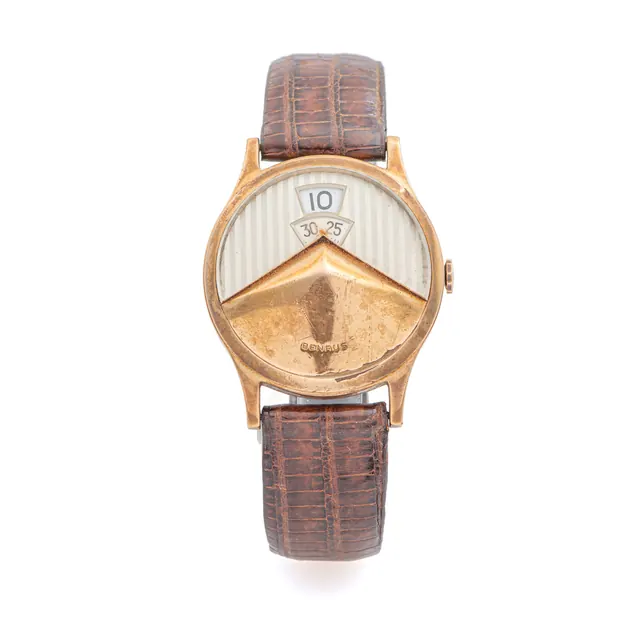
Benrus wristwatch, Dial-O-Rama Digital Jump Hour, circa 1960
Antiquorum auction archive, Geneva
Wristwatches · 1970s
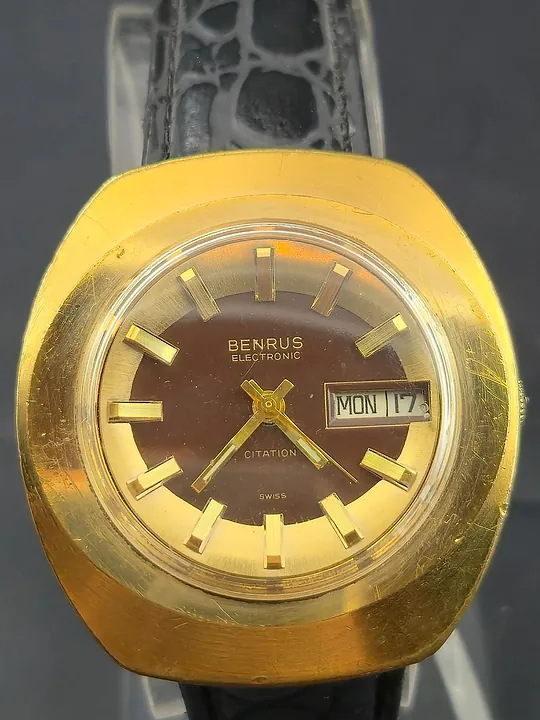
1970s Benrus Citation Electronic HS19 7J Day-Date Wristwatch, Gold-Tone Case, New Battery, Running
LiveAuctioneers auction archive
Wristwatches · 1950s
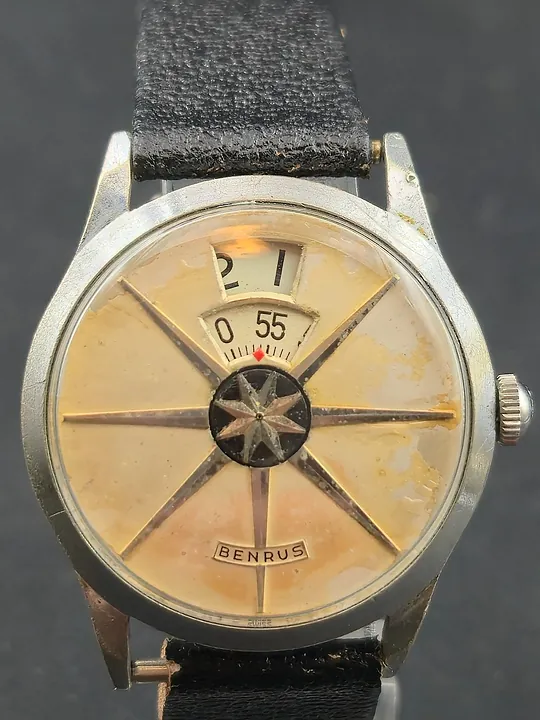
1950s Benrus “Dial-O-Rama” Jump Hour 17J Manual Wind Watch, 33 mm – Runs
LiveAuctioneers auction archive
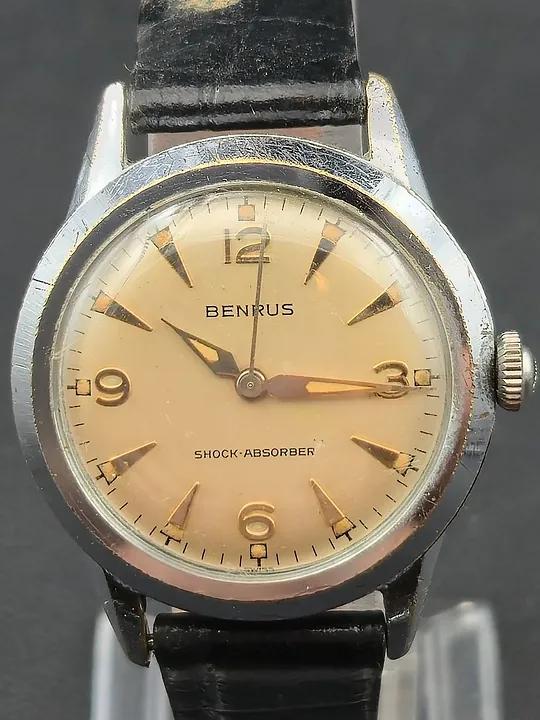
Wristwatches · 1940s
1940s Benrus Shock Absorber 17J U.S. Zone Germany 32mm Runs
LiveAuctioneers auction archive
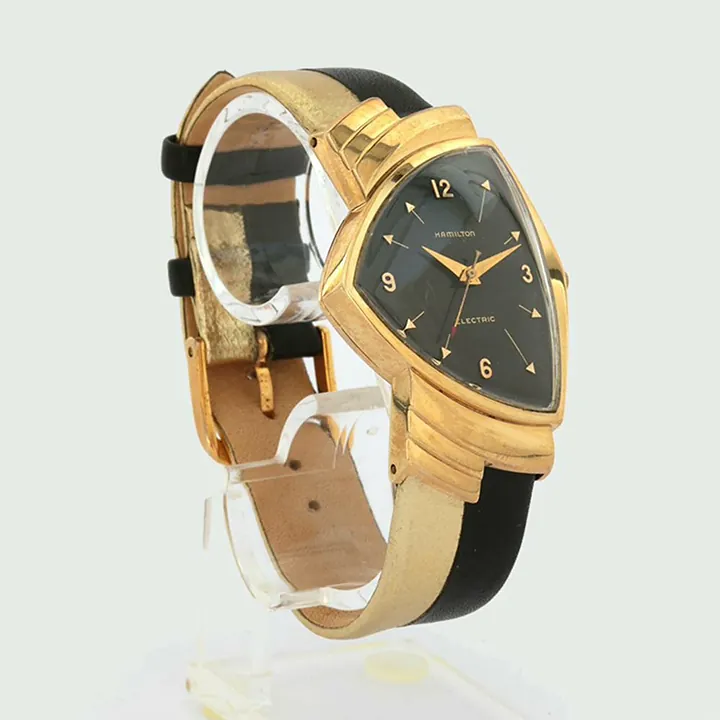
Wristwatches · c. 1957
Wristwatch by Richard H. Arbib, United States, c. 1957
German Clock Museum
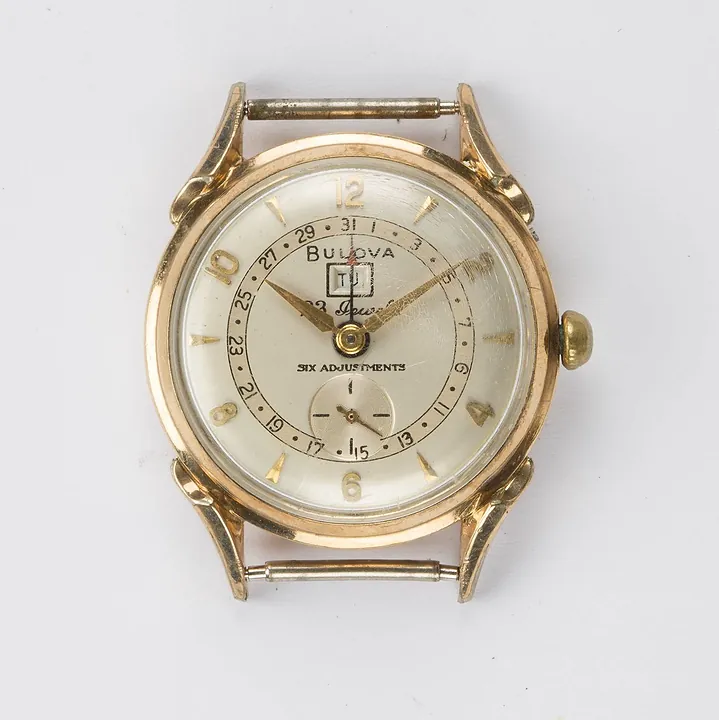
Wristwatches · 1959
Wristwatch by Josef Bulova, United States, 1959
German Clock Museum
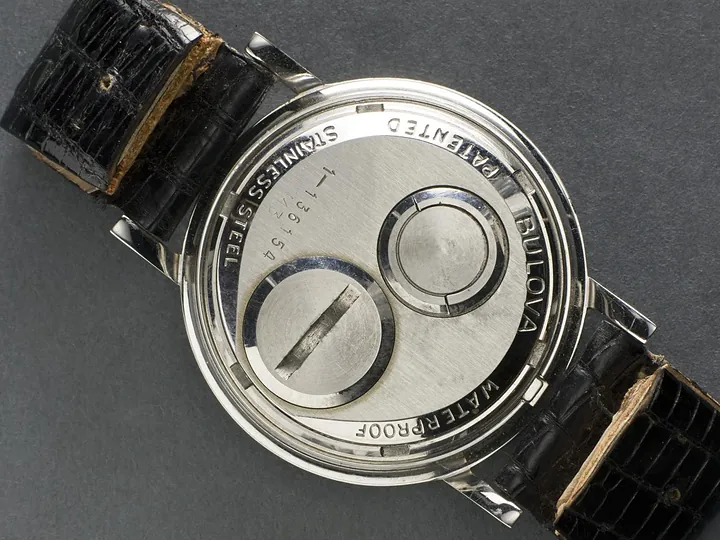
Wristwatches · 1960–1963
Bulova Accutron tuning-fork wristwatch on a demonstration stand, designed by Max Hetzel, United States, 1960–1963
Science Museum Group, London
Wristwatches · 1964
Tornek-Rayville wristwatch, ref. TR 900, 1964
Antiquorum auction archive, Geneva