Clocks · Astronomical clock
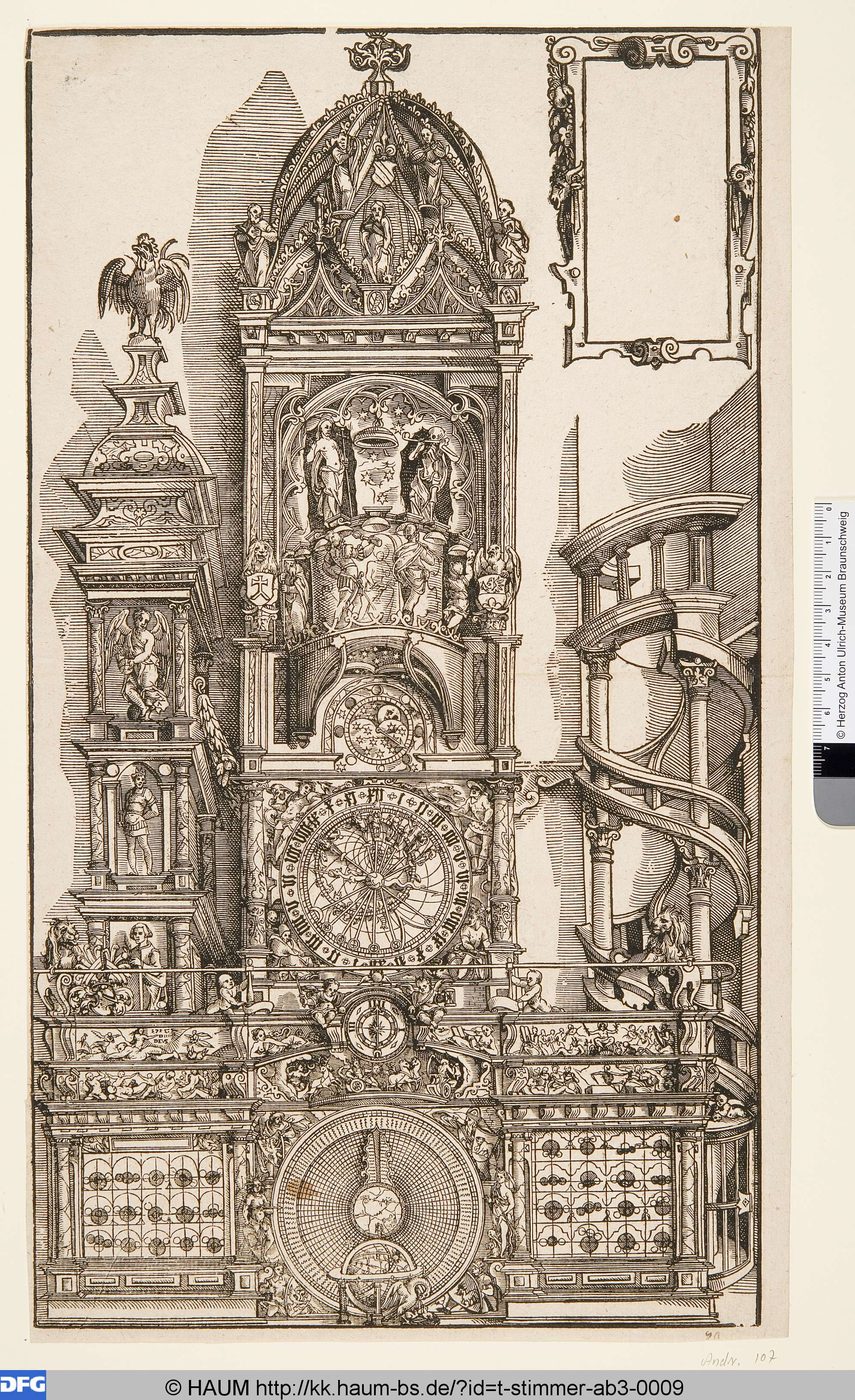
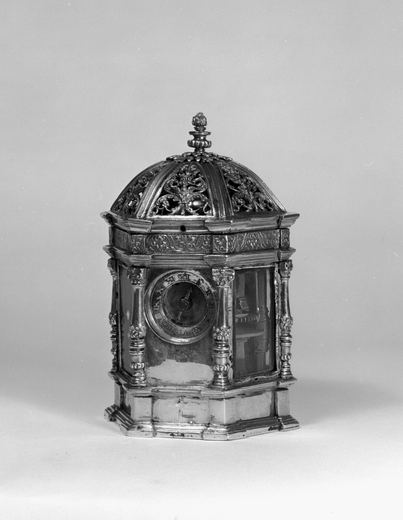
Astronomical clock by Tobias Stimmer, France, 1574
- Maker / attribution
- Tobias Stimmer (creator)
- Date
- 1574
- Historical period
- Renaissance Horology (1400 – 1600)
- Country of origin
- France
- Object type
- Astronomical clock
- Holding institution
- Herzog Anton Ulrich Museum
- Accession / object no.
- item_DHS6TEDM6KPRNN2LZPLYG76TVIKP7SBD
- Catalogue title (original)
- The Astronomical Clock in the Münster of Strassburg (English)
Record summary
Held and catalogued by Herzog Anton Ulrich Museum (object number item_DHS6TEDM6KPRNN2LZPLYG76TVIKP7SBD), this is an astronomical clock by Tobias Stimmer, made in France, dated 1574. The Atlas places it in the Renaissance Horology period (1400 – 1600) of its Clocks collection. The record is illustrated with 1 photograph.
Assembled from the source record's structured fields. Dates and attributions are given as the source states them; where a field is missing the Atlas leaves it blank rather than estimating.
Catalogue description
The source record does not include a narrative description. The structured fields above are reproduced from it.
Historical context
Renaissance Horology (1400 – 1600)
Spring power makes clocks portable; Nuremberg and Augsburg produce the first watches; the Prague Orloj is built.
Spring power made the domestic clock portable. Augsburg and Nuremberg produced gilt-brass table clocks, often with astronomical dials and alarms; weight-driven Gothic wall clocks and English lantern clocks served households. Clocks of this period have foliot or balance-wheel control and usually only an hour hand.
Read the period in the timelineMore clocks from this periodEarlier: Medieval Period
Atlas type guide
Astronomical, musical and automaton clocks
Astronomical clocks display more than the hour: the positions of the sun and moon in the zodiac, the phase of the moon, the calendar, sometimes the planets and eclipses. From Richard of Wallingford's and Giovanni de' Dondi's fourteenth-century clocks to the Prague Orloj and the Strasbourg cathedral clocks, they demonstrated the order of the cosmos. Renaissance makers in Augsburg and Nuremberg built celestial globe clocks and monstrance clocks as princely treasures.
Automaton and musical clocks entertained as well as informed: figures move, birds sing, organs and carillons play tunes from pinned cylinders. The eighteenth-century trade with China ('sing-songs') and Ottoman Turkey created a market for elaborate English, Swiss and French automata.
What to look for
- Subsidiary dials for moon phase, calendar, zodiac and planetary positions.
- Celestial globes or armillary spheres turned by the movement.
- Pinned cylinders, bellows and pipes or bells for music.
- Figures on cams and levers; separate trains for automaton work.
Dating clues
- Renaissance astronomical table and globe clocks: c. 1550–1650.
- English and Swiss automaton clocks for the Chinese market: c. 1760–1820.
- Picture clocks (clockwork pictures) are mostly nineteenth century.
General guidance written by the Atlas editors about this kind of object. It is not a statement about this particular piece; for that, rely on the source record above and on physical examination.
Read next:Verge escapementFusee
Related records
Clocks · 1530
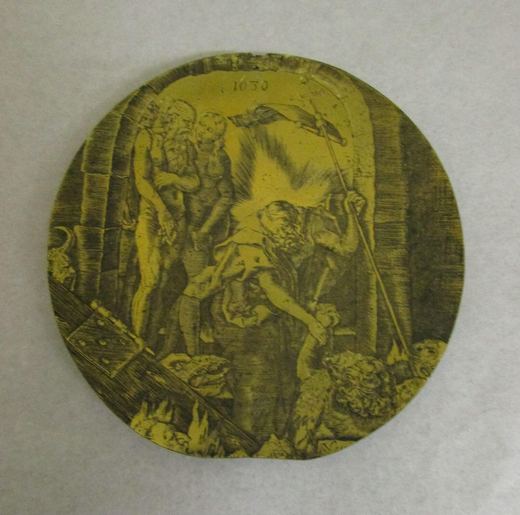
Clock cover by Albrecht Dürer, France, 1530
Victoria and Albert Museum, London
Clocks · ca.1540
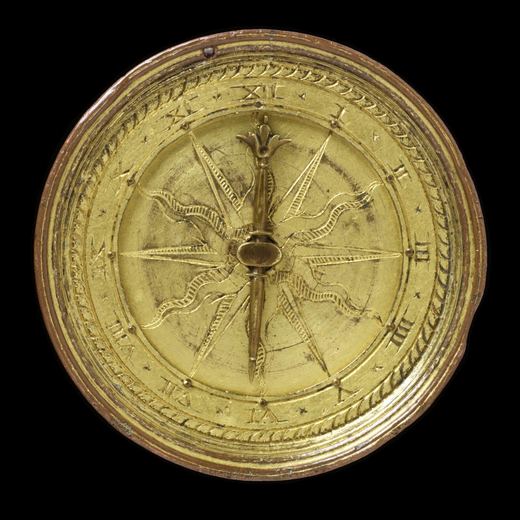
Drum clock and case, made in France or Germany, about 1540. Gilded brass, engraved with the Crucifixion
Victoria and Albert Museum, London
Clocks · 1544
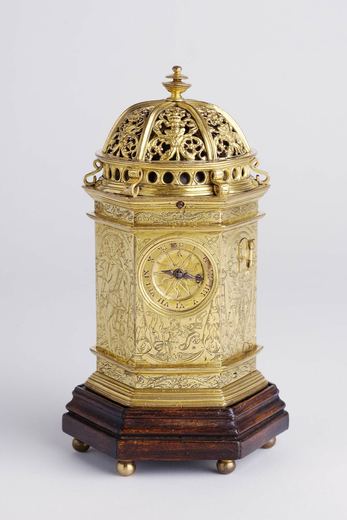
Table clock by Noel Dauville, France, 1544
German Clock Museum
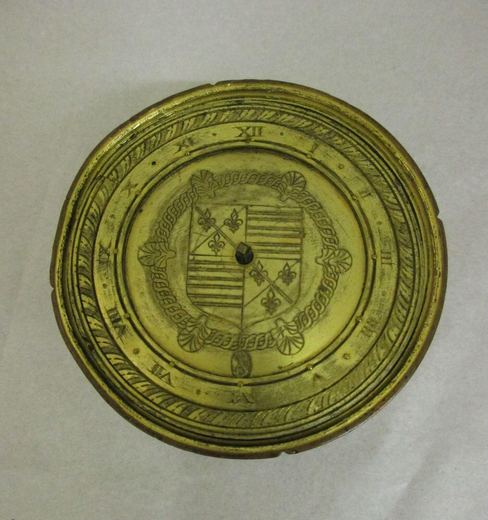
Clocks · ca. 1550
Clock, gilt metal, France, ca. 1550
Victoria and Albert Museum, London
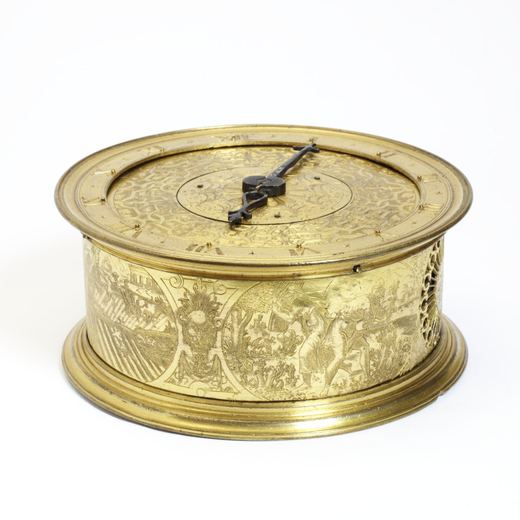
Clocks · 1560-80
Drum clock with alarm engraved with scenes representing the months. Made in France, 1560-80, movement by Félix Loubet
Victoria and Albert Museum, London
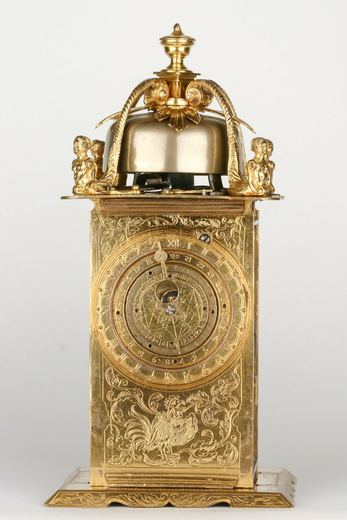
Clocks · 1573
Table clock, France, 1573
German Clock Museum
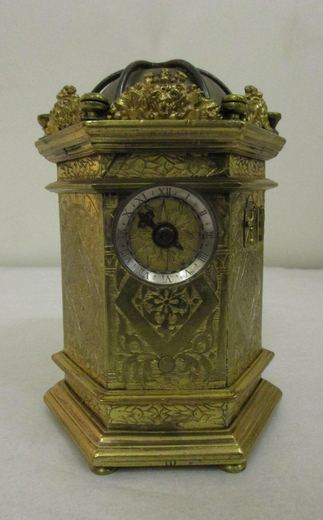
Clocks · 1580-1600
An hexagonal table clock, engraved gilt brass, French, late 16th century
Victoria and Albert Museum, London
Clocks · ca. 1600
Table Clock, sheet brass, engraved, pierced and gilt, Paris, ca.1600, signed 'B(?) Pichard, à Paris'
Victoria and Albert Museum, London