
Instruments · Astrolabe
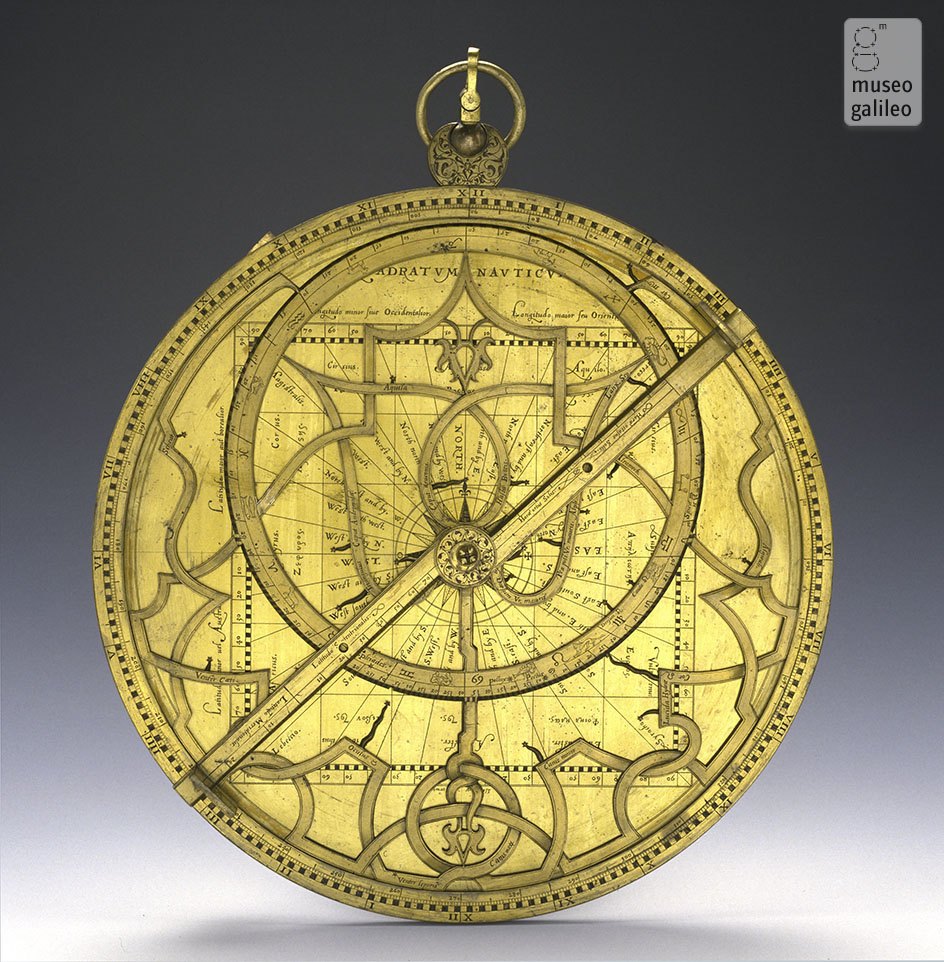
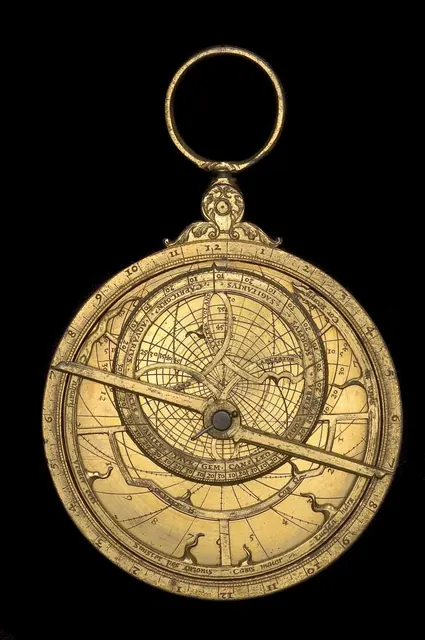
Astrolabe by Thomas Gemini, England, 1550–1559
- Maker / attribution
- Thomas Gemini (maker)
- Date
- 1550–1559
- Historical period
- Renaissance Horology (1400 – 1600)
- Country of origin
- England
- Place
- English
- Object type
- Astrolabe
- Materials / technique
- brass
- Dimensions
- diameter 355 mm
- Holding institution
- Museo Galileo, Florence
- Accession / object no.
- Inv. 1093
- Credit line
- Museo Galileo, Florence
- Catalogue title (original)
- Astrolabe (English)
View the source record ↗ (opens another website in a new tab)Suggest a correction
Record summary
Held and catalogued by Museo Galileo, Florence (object number Inv. 1093), this is an astrolabe by Thomas Gemini, made in English, England, dated 1550–1559. The Atlas places it in the Renaissance Horology period (1400 – 1600) of its Instruments collection. Materials and techniques recorded by the source: brass. Recorded dimensions: diameter 355 mm. The record is illustrated with 2 photographs.
Assembled from the source record's structured fields. Dates and attributions are given as the source states them; where a field is missing the Atlas leaves it blank rather than estimating.
Catalogue description
Catalogue description — Museo Galileo
This astrolabe was made by Thomas Gemini. On the front are the rete and the alidade. The mater carries the mariner's quadrant and the names of the winds in English, Greek, and Latin. The date is incomplete, but the three engraved digits (155) narrow the time frame for the instrument's construction to 1550-1559. On the back is a universal planisphere with another alidade fitted with a mobile perpendicular arm and a jointed index. The tympanums are missing. Provenance: Robert Dudley bequest to the Medici collections.
Provenance
Medici collections
Historical context
Renaissance Horology (1400 – 1600)
Spring power makes clocks portable; Nuremberg and Augsburg produce the first watches; the Prague Orloj is built.
Instrument-making flourished in Nuremberg, Augsburg, Louvain and London: ivory diptych dials, astronomical compendia, astrolabes and nocturnals for wealthy patrons, navigators and scholars.
Read the period in the timelineMore instruments from this periodEarlier: Medieval Period
Atlas type guide
Astrolabes, quadrants and astronomical compendia
The planispheric astrolabe is a two-dimensional model of the sky. A pierced rotating star map (the rete) turns over a plate engraved for a particular latitude; by aligning a star or the sun with its observed altitude, the user can read the time of day or night, the time of sunrise and sunset, and solve many other astronomical problems. Developed in the Hellenistic world and refined by astronomers in the Islamic world from the eighth century, it reached Latin Europe through al-Andalus.
Quadrants, compendia, armillary spheres and later orreries belong to the same family of instruments that model the heavens. They were teaching tools, status objects and practical time-finders. Many surviving examples are signed and dated, which makes them important evidence for the history of instrument-making workshops in Baghdad, Isfahan, Lahore, Toledo, Louvain, Nuremberg, London and elsewhere.
What to look for
- The latitudes engraved on the plates — they show which cities the instrument was made for.
- The script and calendar used: Arabic or Persian inscriptions, abjad numerals, Hebrew or Latin text indicate tradition and region.
- The design of the rete: the number of named stars and the style of the star pointers changes by region and period.
- Shadow squares, unequal-hour lines and zodiac scales on the back (dorsum).
- Signatures, dedications and dates, often hidden on the throne (kursi) or the back.
Dating clues
- Signed and dated astrolabes allow precise dating; undated ones are attributed by star positions on the rete, which shift slowly through precession.
- Gothic-style retes with tracery are typical of European instruments of the fourteenth and fifteenth centuries.
- Printed paper astrolabes and planispheres became common from the sixteenth century onward.
General guidance written by the Atlas editors about this kind of object. It is not a statement about this particular piece; for that, rely on the source record above and on physical examination.
Related records
Instruments · 1551
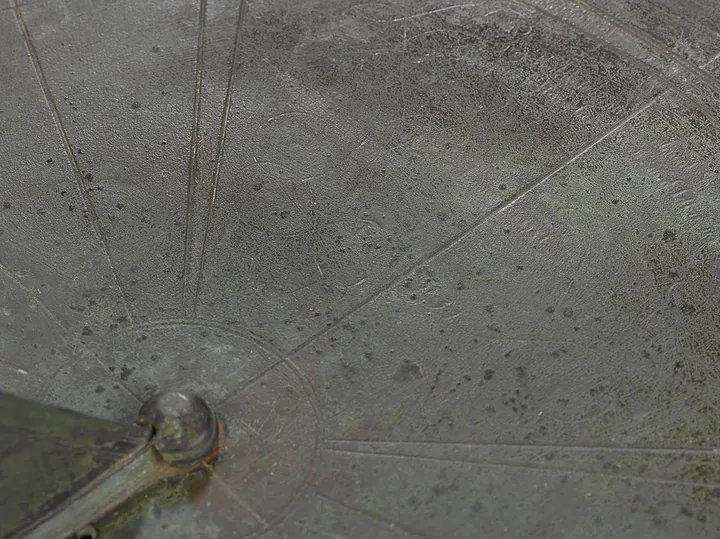
Horizontal sundial, by assumed to have been made by Thomas Gemini, 1551, with initials W.B. which possibly refers to William Buckley.
Science Museum Group, London
Instruments · 1568–1590
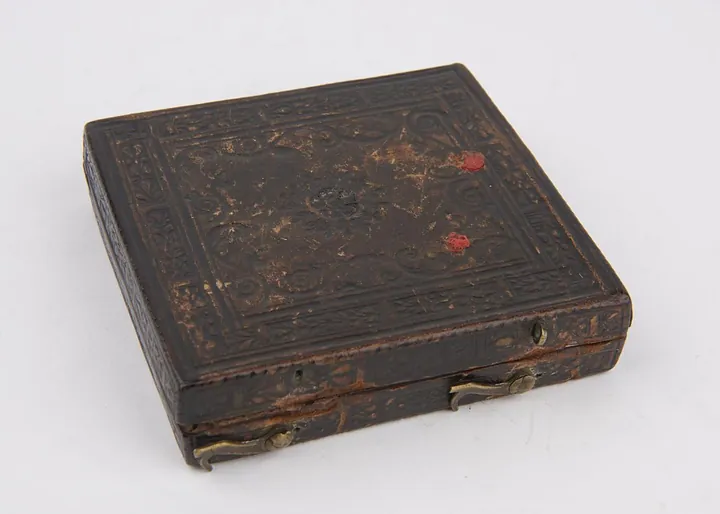
Original leather case for silver altitude sundial, made by Humfrey Cole, London, 1568–1590.
Science Museum Group, London
Instruments · 1568–1590
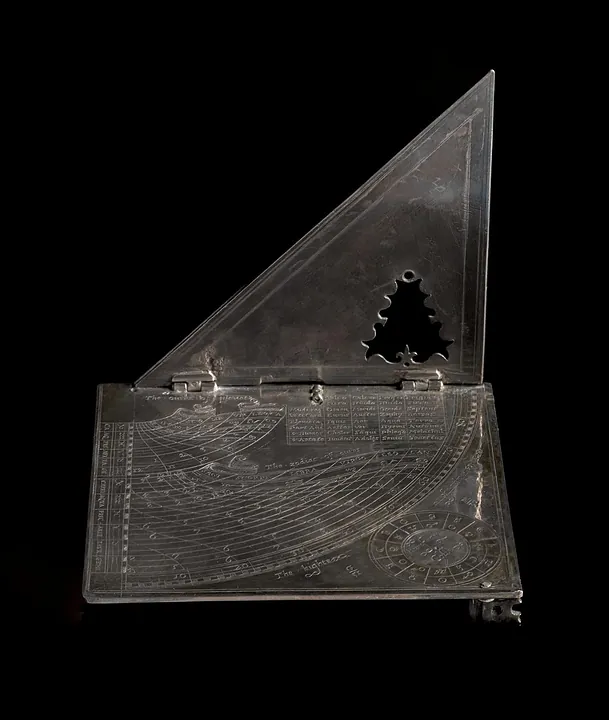
Silver altitude sundial made and signed by Humfray Cole, London, 1568–1590. It was made for use in latitude 51°30 secs, in which London is located
Science Museum Group, London
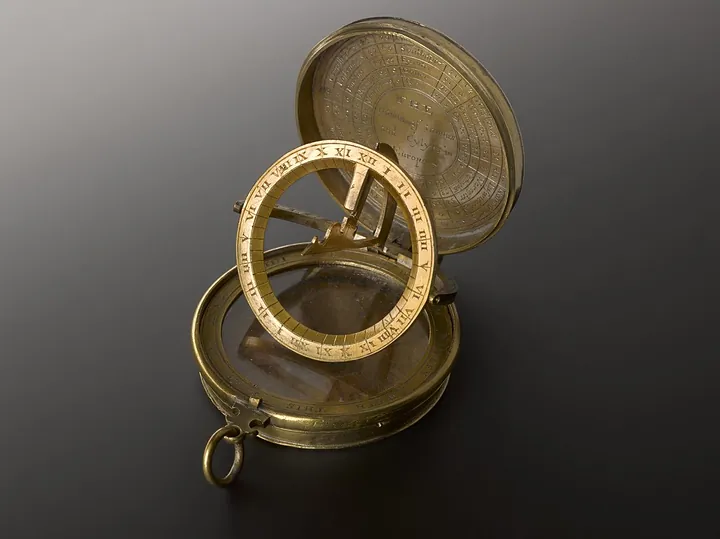
Instruments · 1588
Sundial by A. Ryther, England, 1588
Science Museum Group, London
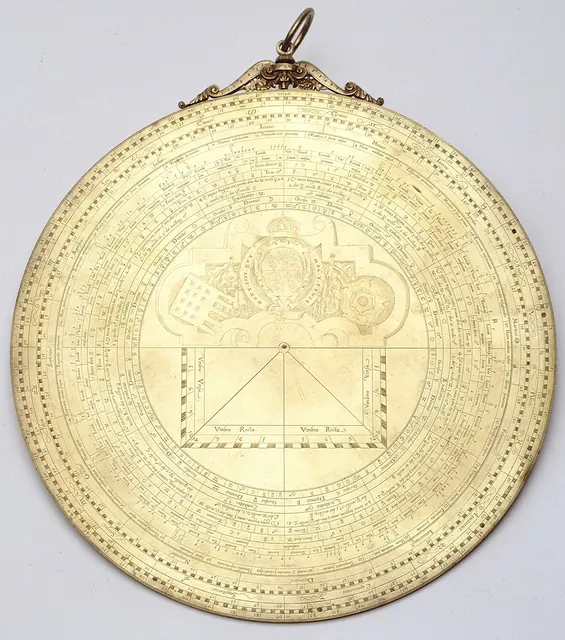
Instruments · 1552
Astrolabe, England, 1552
Royal Museums Greenwich
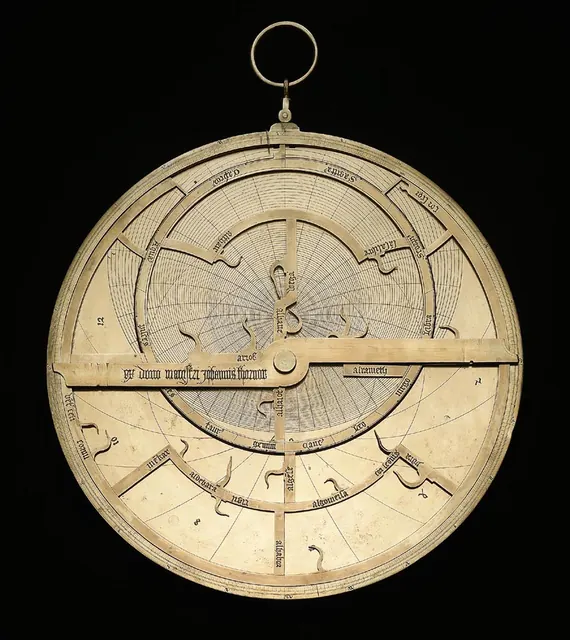
Instruments · mid-15th century
Astrolabe, England, mid-15th century
Royal Museums Greenwich
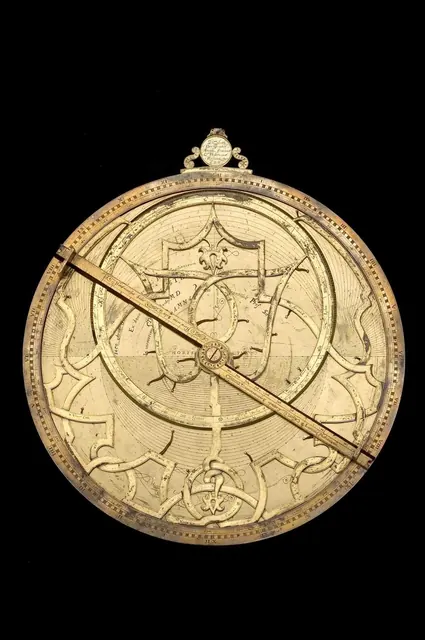
Instruments · 1559
Astrolabe by Thomas Geminus, England, 1559
History of Science Museum, University of Oxford
Instruments · 1570–1610
Astrolabe by Humfray Cole, England, 1570–1610
History of Science Museum, University of Oxford