
Pocket Watches · Key-winding pocket watch
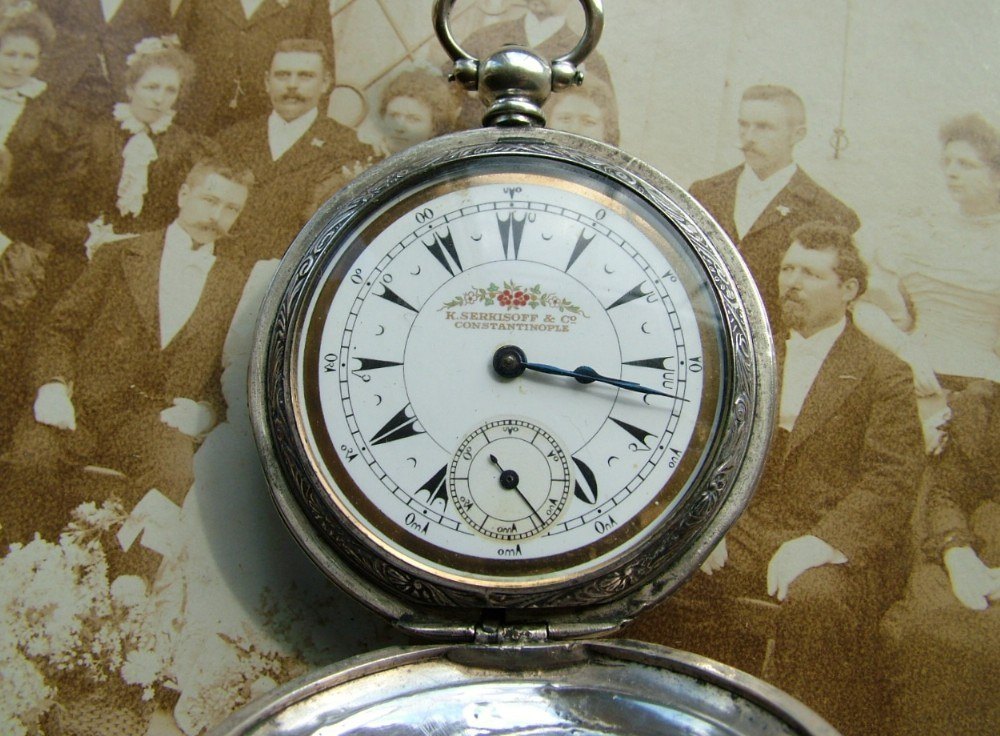
Antique Ottoman Empire Billodes Pocket Watch
- Maker / attribution
- Billodes (Georges Favre-Jacot) (source attribution)
- Date
- 1900–1920
- Historical period
- Golden Age of Mechanical Watchmaking (1900 – 1945)
- Country of origin
- Switzerland
- Object type
- Key-winding pocket watch
- Materials / technique
- 800 silver
- Holding institution
- The Vintage Wrist Watch Company
- Accession / object no.
- antique-ottoman-empire-billodes-pocket-watch-2bb594b4ea
- Credit line
- The Vintage Wrist Watch Company
- Catalogue title (original)
- Sold: Antique Ottoman Empire Billodes Pocket Watch 1900 - 1920 | Sellingantiques (English)
View the source record ↗ (opens another website in a new tab)Suggest a correction
Record summary
Held and catalogued by The Vintage Wrist Watch Company (object number antique-ottoman-empire-billodes-pocket-watch-2bb594b4ea), this is a key-winding pocket watch attributed to Billodes (Georges Favre-Jacot), made in Switzerland, dated 1900–1920. The Atlas places it in the Golden Age of Mechanical Watchmaking period (1900 – 1945) of its Pocket Watches collection. Materials and techniques recorded by the source: 800 silver. The record is illustrated with 1 photograph.
Assembled from the source record's structured fields. Dates and attributions are given as the source states them; where a field is missing the Atlas leaves it blank rather than estimating.
Catalogue description
Original object description
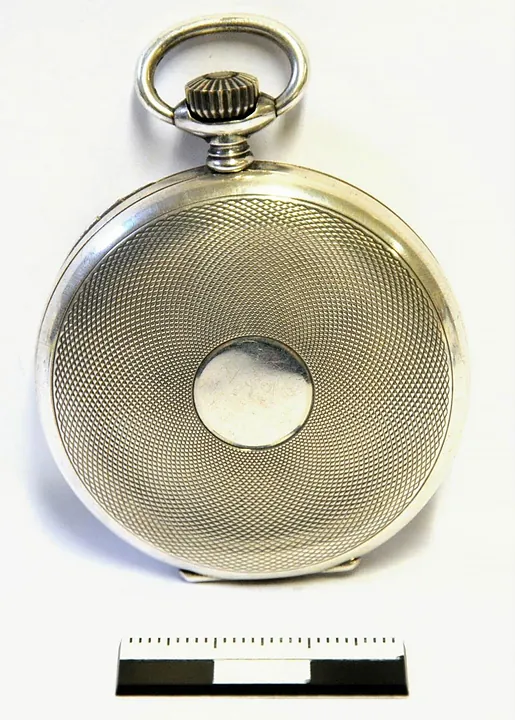
Produced between 1900 and 1920 for the Ottoman market, this open-face pocket watch is cased in 0.800 silver and measures 50 mm in diameter. The outer covers and internal dust cap bear hallmarks for Billodes—the trade name utilized by Georges Favre-Jacot prior to the adoption of the Zenith name in 1911—while the exterior features engraved decoration alongside a partially faded cartouche. Inscribed with the name of the Constantinople retailer K. Serkisoff & Co., the white dial presents Ottoman Turkish numerals, blued steel hands, a peripheral minute track, floral embellishments below the 12 o'clock position, and a subsidiary seconds dial. It is fitted with a key-wound Swiss movement bearing two Billodes stamps.
Historical context
Golden Age of Mechanical Watchmaking (1900 – 1945)
The wristwatch displaces the pocket watch; waterproof cases, self-winding and grand complications.
The pocket watch reached technical maturity and then began to give way to the wristwatch after the First World War. Complicated watches for collectors such as Henry Graves Jr. and James Ward Packard, railroad watches, and slim Art Deco dress watches are characteristic.
Read the period in the timelineMore pocket watches from this periodEarlier: Industrial Revolution
Atlas type guide
Watches for the Chinese and Ottoman markets
From the late eighteenth century English and Swiss makers produced watches specifically for export to China and the Ottoman Empire. For China, Fleurier houses such as Bovet, Juvet and Vrard made matching pairs of watches with richly engraved and decorated movements, often with the duplex escapement whose centre seconds hand jumps in full seconds. For Ottoman buyers, London makers such as George Prior and Markwick Markham supplied verge watches with Turkish numerals in triple or quadruple cases of tortoiseshell and silver.
These watches reflect global trade networks and the tastes of distant markets, and are important evidence for cross-cultural exchange in horology.
What to look for
- Engraved, fully decorated movements visible under a glass back.
- Duplex escapement with a jumping centre seconds hand.
- Chinese characters on the movement (e.g. the maker's name in transliteration).
- Turkish (Ottoman) numerals on the dial and multiple protective outer cases.
Dating clues
- Chinese-market Fleurier watches: c. 1820–1900.
- English Ottoman-market watches: c. 1770–1850.
General guidance written by the Atlas editors about this kind of object. It is not a statement about this particular piece; for that, rely on the source record above and on physical examination.
Read next:Verge escapement
Related records
Pocket Watches · c. 1900
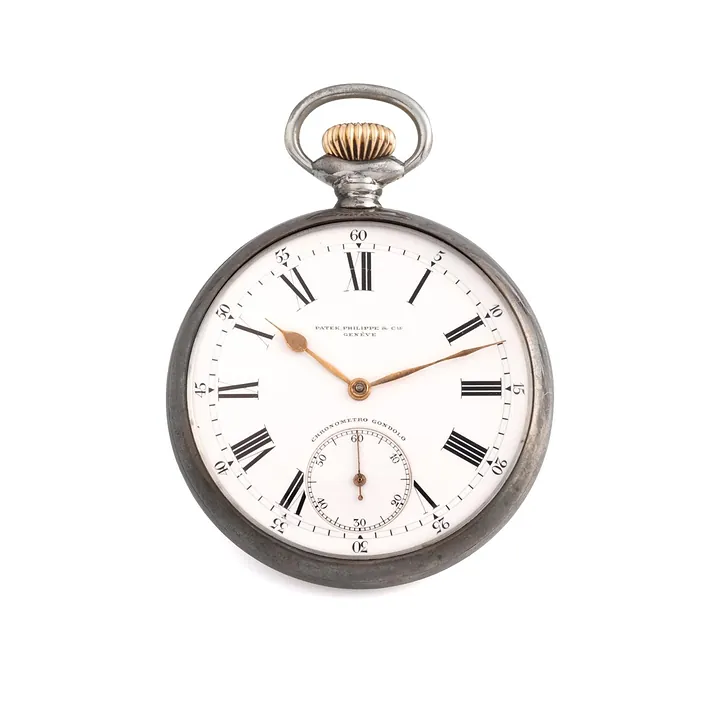
Patek Philippe Chronometro Gondolo, c. 1900
Antiquorum auction archive, Geneva
Pocket Watches · c. 1900
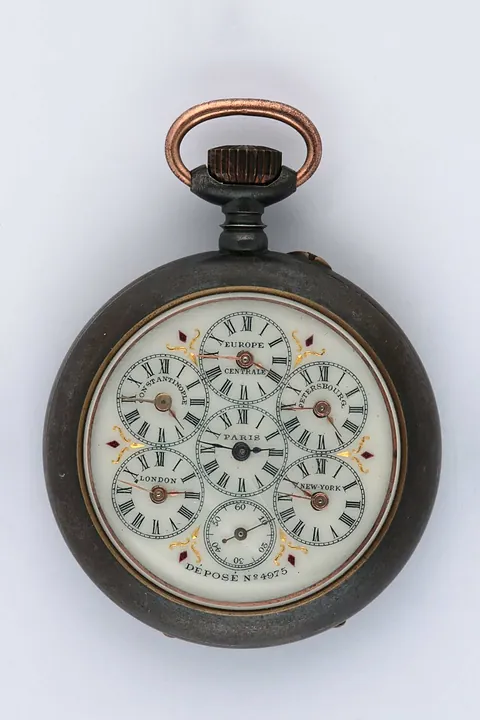
Pocket watch by A. Sandoz-Boucherin, Switzerland, c. 1900
German Clock Museum
Pocket Watches · 1900
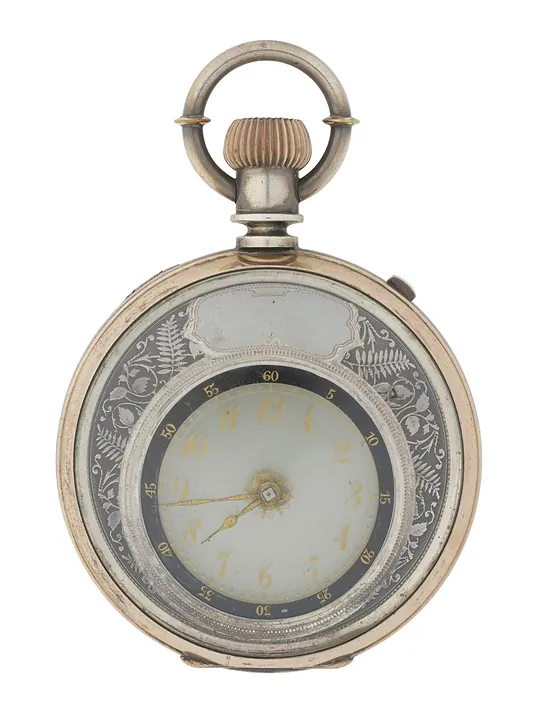
Pocket watch by Armand Schwob & Frère, Switzerland, 1900
Science Museum Group, London
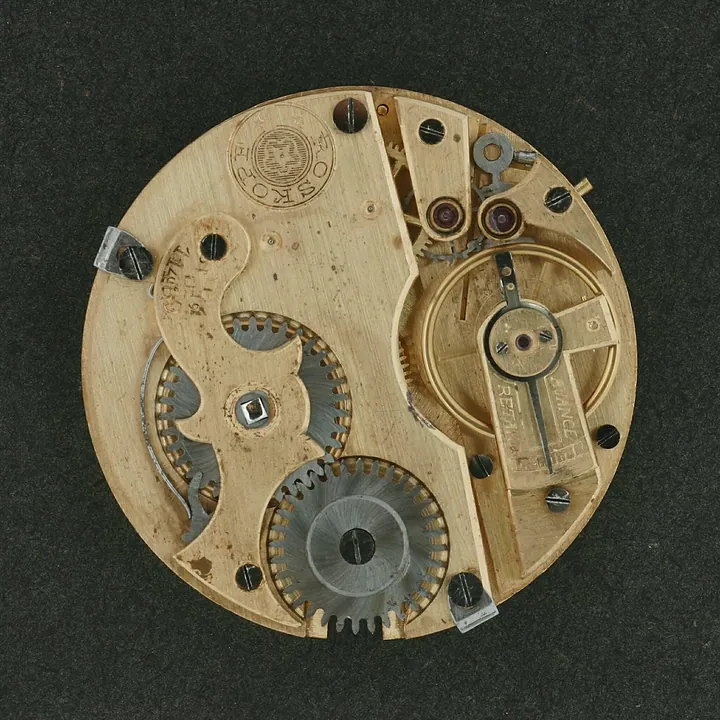
Pocket Watches · c. 1900
Pocket watch by Vve. Chs. Léon Schmid und Cie, Switzerland, c. 1900
German Clock Museum
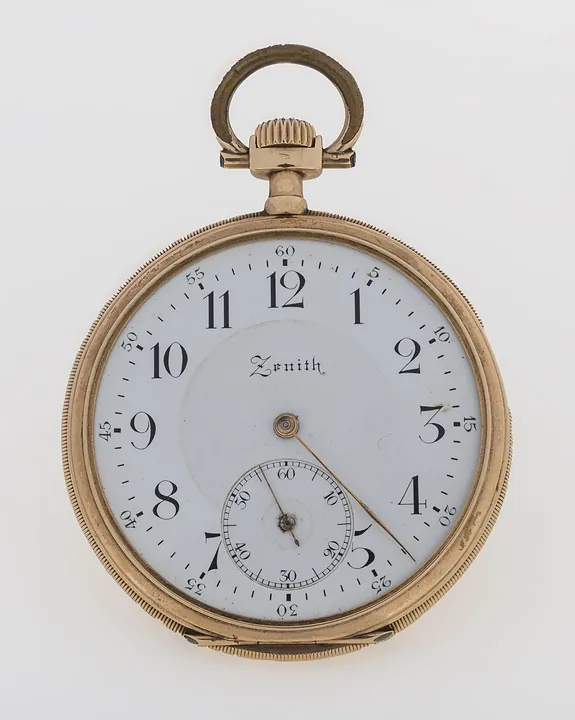
Pocket Watches · 1900
Pocket watch by Zenith, Switzerland, 1900
Museum Rotterdam
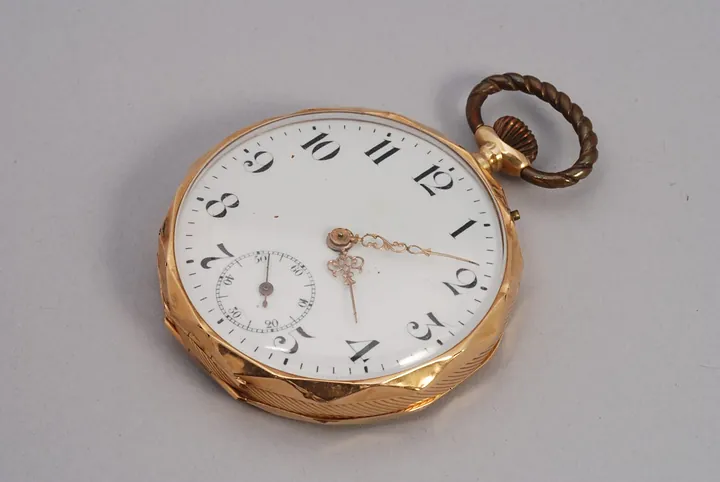
Pocket Watches · 1900
Pocket watch, Switzerland, 1900
Museum Rotterdam
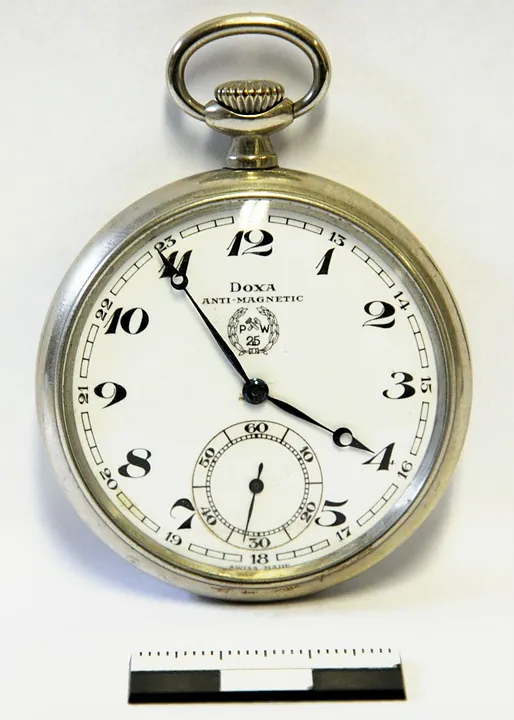
Pocket Watches · 1900–1999
Pocket watch, Switzerland, 1900–1999
Montanhistorisches Dokumentationszentrum
Pocket Watches · 1900–1999
Pocket watch, Switzerland, 1900–1999
Montanhistorisches Dokumentationszentrum