
Wristwatches · Wristwatch
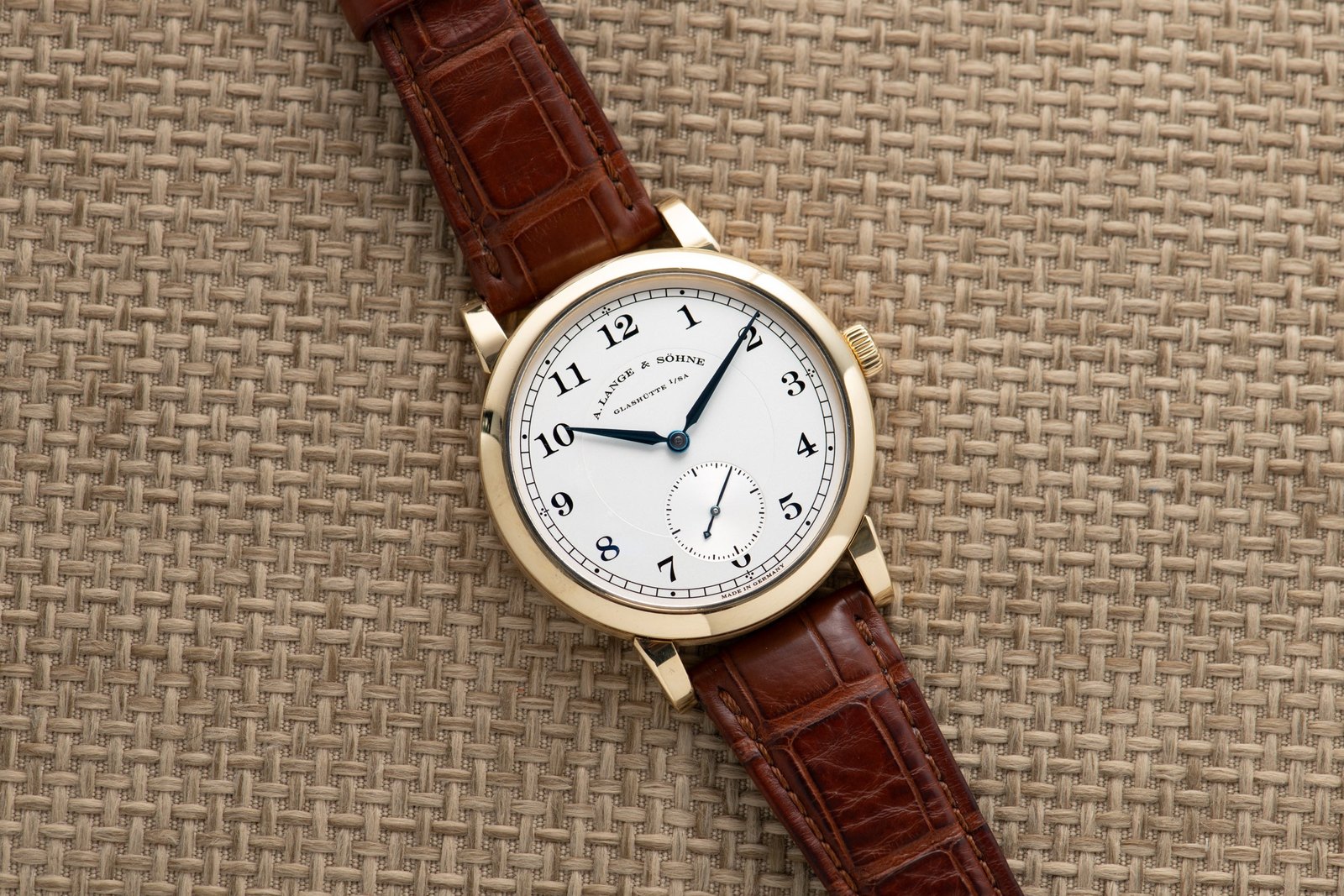
A. Lange & Söhne Lange 1815, 2018
- Maker / attribution
- A. Lange & Söhne (maker)
- Date
- 2018
- Historical period
- Contemporary Horology (2010 – Present)
- Country of origin
- Germany
- Object type
- Wristwatch
- Dimensions
- Case 40 mm
- Stock no.
- 40991794
- Credit line
- Dealer listing, Analog/Shift (40991794)
- Catalogue title (original)
- A. Lange & Söhne Lange 1815 (English)
View the source record (dealer listing) ↗ (opens another website in a new tab)Suggest a correction
Record summary
Catalogued by Analog/Shift (dealer), New York (stock number 40991794), this is a wristwatch by A. Lange & Söhne, made in Germany, dated 2018. The Atlas places it in the Contemporary Horology period (2010 – Present) of its Wristwatches collection. Recorded dimensions: Case 40 mm. The record is illustrated with 6 photographs.
Assembled from the source record's structured fields. Dates and attributions are given as the source states them; where a field is missing the Atlas leaves it blank rather than estimating.
Catalogue description
Dealer description — Analog/Shift
Born in 1815, Ferdinand Adolph Lange received a rigorous education at the hands of nurses and governesses. At the age of 15, he became a student at the Saxon Technical school in Dresden. Following that, he pursued training under Johann Christian Friedrich Gutkaes, Sr, royal clockmaker to the King of Saxony. In 1846 he and his brother-in-law formed A. Lange & Söhne . Lange’s use of precision tools and instruments allowed the manufacture to attain a level of precision that was heretofore unknown in mass-produced watches. After his death in 1878, his sons Richard and Emil would carry on his legacy. However, the Soviet occupation of East Germany at the end of the Second World War saw an end to A. Lange & Söhne. But after Reunification in the 1990s, the manufacture would make its triumphant return. At the helm of the company would be another Lange, Ferdinand’s great-grandson Walter. The 1815 collection honors this watchmaking legacy. Simple and elegant, it’s a careful distillation of Saxon watchmaking and design — adorned with just enough decoration to be beautiful, its otherwise minimalist look mixes Bauhaus principles with classical aesthetics. This particular example, a Reference 233.021, dates to 2018 and features a 40mm 18K yellow gold case, a sapphire crystal, a sapphire exhibition caseback, a signed crown and a beautiful polished bezel, An equally gorgeous satin silver dial features a set of printed ‘Arabic’ indices, a peripheral ‘railroad’ minute track, a constant-seconds subsidiary register at 6 o’clock and a matching, blued-steel ‘lance’ handset. But this 1815 wouldn’t be a Lange without a stunning in-house movement — in this case, the manually-wound Caliber L051.1. From its detailed finishing, to its city-like architecture, this movement is utterly captivating to behold, and serves as a quick explanation as to Lange’s elevated status in the watch world. In outstanding condition and showing only light wear throughout, this 1815 comes with a factory books and guarantee paperwork confirming case, serial and movement numbers. If you can spend your hard-earned money on art or watches, why not spend it on both?
Historical context
Contemporary Horology (2010 – Present)
Silicon components, connected watches, optical-lattice research clocks and a thriving independent scene.
Smartwatches became the world's best-selling watches, while mechanical watchmaking focuses on craft, innovation (silicon components, new escapements) and independent makers.
Read the period in the timelineMore wristwatches from this periodEarlier: Mechanical Renaissance
Atlas type guide
Wristwatches
Bracelet watches were worn by women from the early nineteenth century — Breguet made one for Caroline Murat, Queen of Naples, in 1810–12 — but the wristwatch only became a man's instrument with military use and aviation in the early twentieth century. Between the World Wars it overtook the pocket watch; the 1920s and 1930s brought rectangular Art Deco cases, water-resistant cases and the first automatic winding systems.
After 1945 the wristwatch became a carrier of identity — dress watches, sports and dive watches, chronographs, calendars — produced by Swiss, American, Japanese, German, Soviet and Chinese industries. The quartz revolution after 1969 and the mechanical renaissance since the 1990s, including the rise of independent watchmakers, complete the story.
What to look for
- The reference number (between the lugs or inside the case back) and serial number, the starting point for dating.
- The calibre: its maker and number are often stamped under the dial or on the bridge.
- Originality of dial, hands and crown — refinished ('redial') dials are common.
- Case material marks: 18K/750, 14K/585, stainless steel, gold-filled, plated.
Dating clues
- Wire-lug cases: before c. 1925.
- Water-resistant screw-down cases: from 1926.
- Quartz movements: from 1969; sapphire crystals widespread after c. 1980.
General guidance written by the Atlas editors about this kind of object. It is not a statement about this particular piece; for that, rely on the source record above and on physical examination.
Related records
Movements & Components · 1900
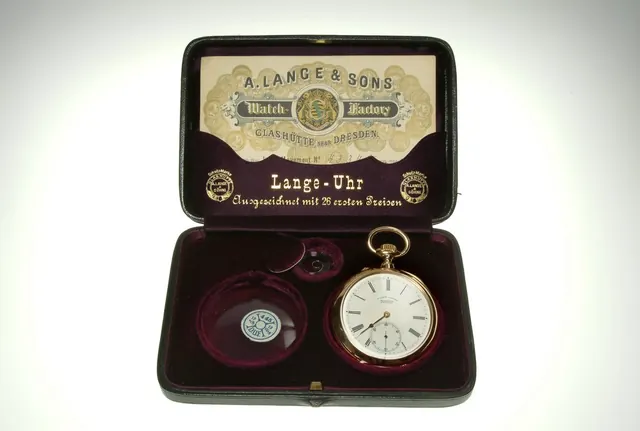
Pocket watch by A. Lange & Söhne, Germany, 1900
Kulturstiftung Sachsen-Anhalt - Museum Schloss Neuenburg
Pocket Watches · c. 1941
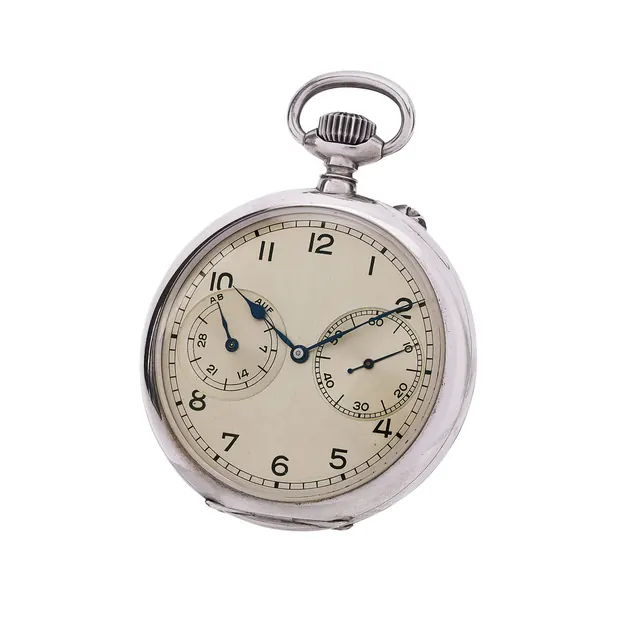
A. Lange & Söhne pocket watch, Observation Pocket Watch, circa 1941
Antiquorum auction archive, Geneva
Pocket Watches · c. 1946
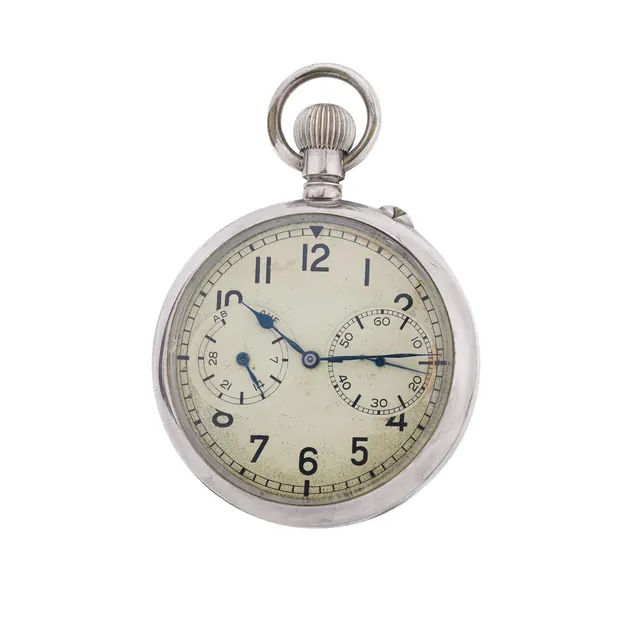
A. Lange & Söhne pocket watch, Military Observation Pocket Watch, circa 1946
Antiquorum auction archive, Geneva
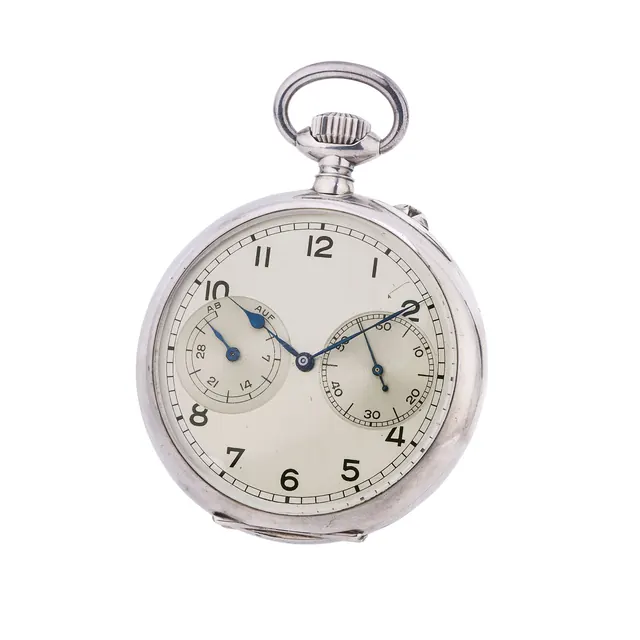
Pocket Watches · c. 1942
A. Lange & Söhne pocket watch, Military Observation Pocket Watch, circa 1942
Antiquorum auction archive, Geneva
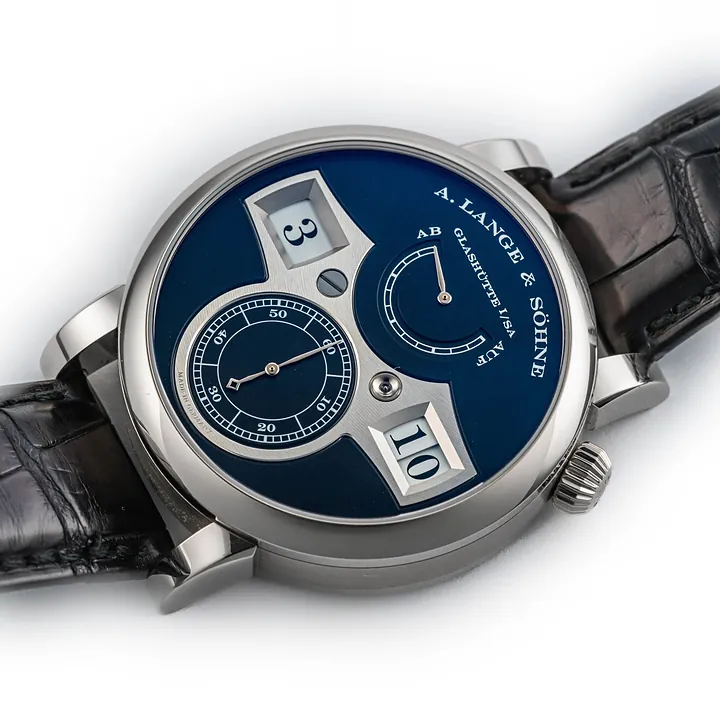
Wristwatches · c. 2018
A.Lange & Söhne Zeitwerk, ref. 140.029, c. 2018
Antiquorum auction archive, Geneva
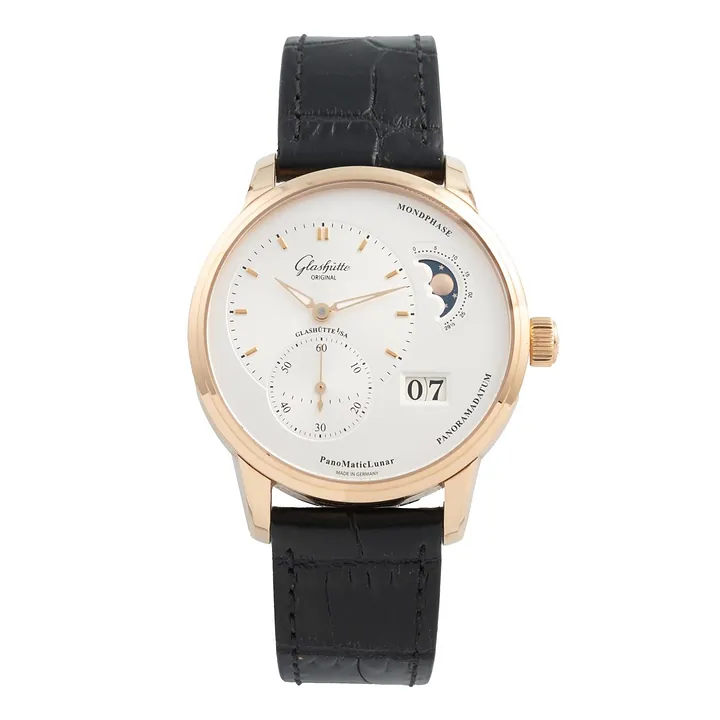
Wristwatches · originally sold in April 2022 (per the lot record)
Glashã¼tte Original Panomaticlunar, ref. 1-90-02-45-35-04, originally sold in April 2022
Antiquorum auction archive, Geneva
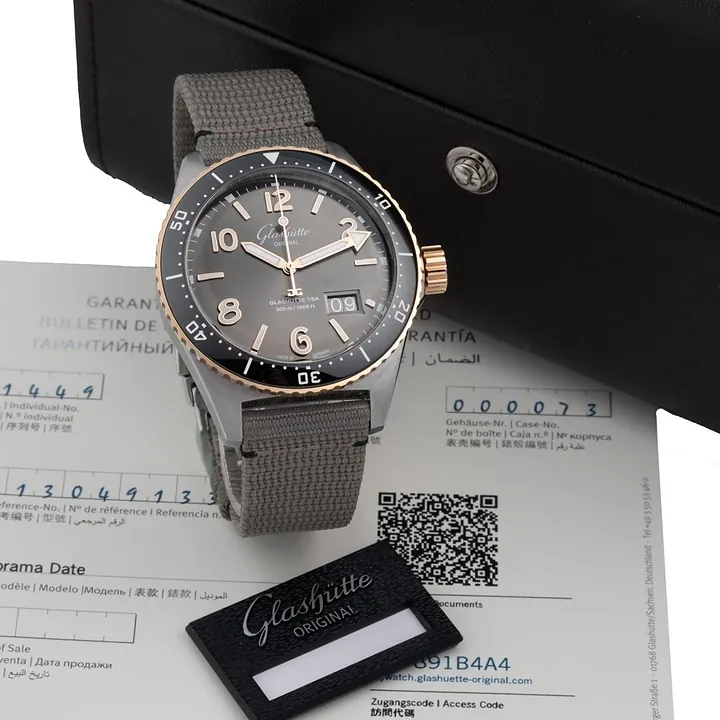
Wristwatches · c. 2022
Glashütte Original Seaq Panorama Date, ref. 1-36-13-04-91-33, c. 2022
Antiquorum auction archive, Geneva
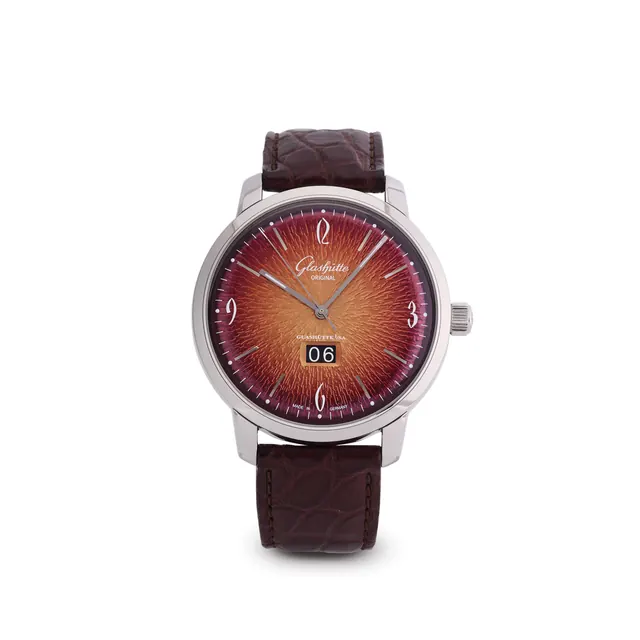
Wristwatches · originally sold in December 2021 (per the lot record)
Glashütte Original wristwatch, ref. W23947090204, Sixities Panorama Date Annual Edition, originally sold in December 2021 (per the lot record)
Antiquorum auction archive, Geneva