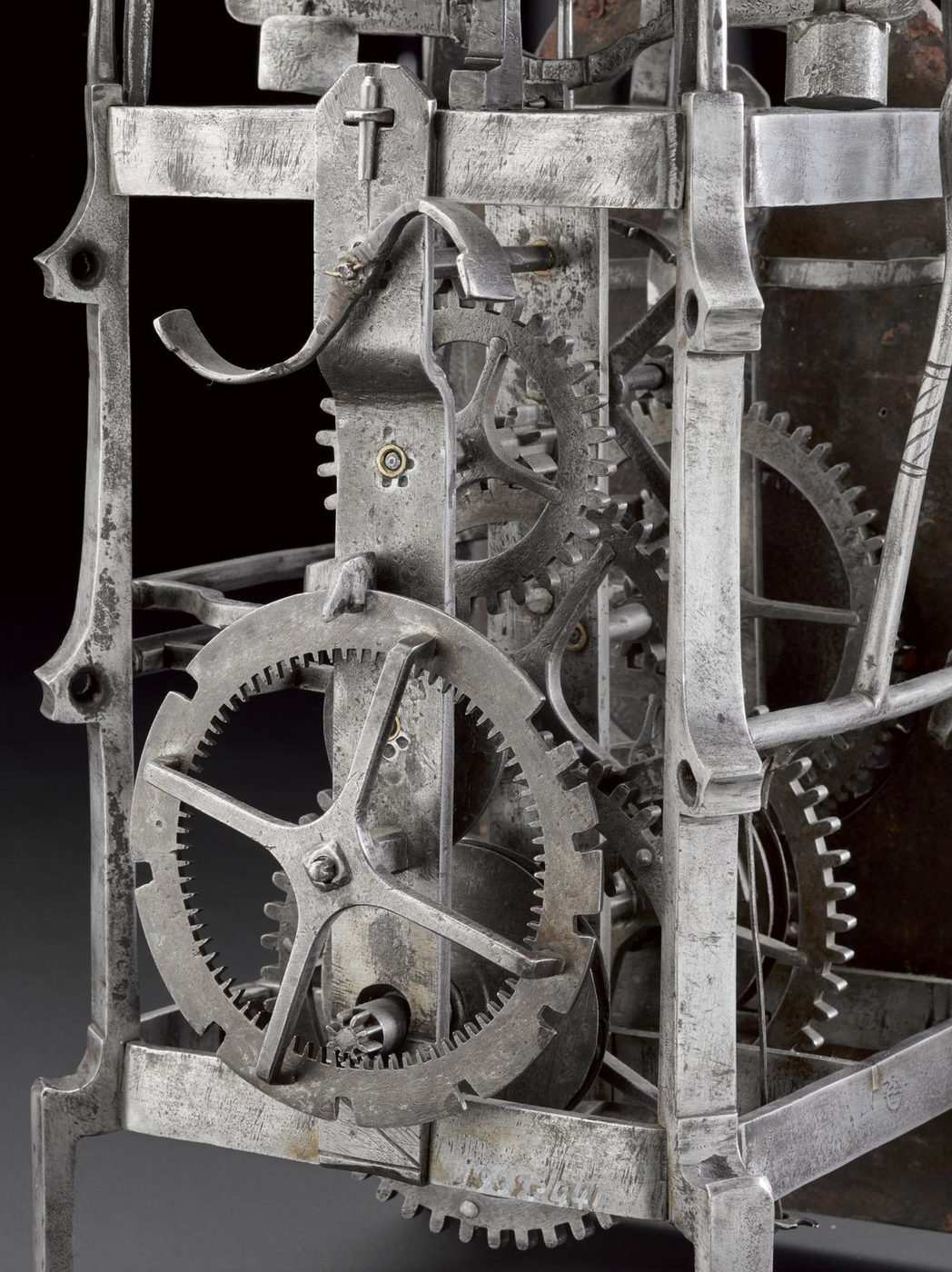
Clocks · Weight-driven balance wheel clock
16th century iron chamber-clock with weight and rope
- Maker / attribution
- Liechty, Ulrich Andreas (maker)
- Date
- 1596
- Historical period
- Renaissance Horology (1400 – 1600)
- Country of origin
- Switzerland
- Place
- Zurich, Zürich canton, Switzerland, Winterthur
- Object type
- Weight-driven balance wheel clock
- Dimensions
- overall: 390 mm x 160 mm x 190 mm, 6.4 kg
- Holding institution
- Science Museum Group, London
- Accession / object no.
- 1932-441
- Credit line
- Mr. W. E. Miller
- Catalogue title (original)
- 16th century iron chamber-clock
Record summary
Held and catalogued by Science Museum Group, London (object number 1932-441), this is a weight-driven balance wheel clock by Liechty, Ulrich Andreas, made in Zurich, Zürich canton, Switzerland, Winterthur, dated 1596. The Atlas places it in the Renaissance Horology period (1400 – 1600) of its Clocks collection. Recorded dimensions: overall: 390 mm x 160 mm x 190 mm, 6.4 kg. The record is illustrated with 4 photographs.
Assembled from the source record's structured fields. Dates and attributions are given as the source states them; where a field is missing the Atlas leaves it blank rather than estimating.
Catalogue description
The source record does not include a narrative description. The structured fields above are reproduced from it.
Historical context
Renaissance Horology (1400 – 1600)
Spring power makes clocks portable; Nuremberg and Augsburg produce the first watches; the Prague Orloj is built.
Spring power made the domestic clock portable. Augsburg and Nuremberg produced gilt-brass table clocks, often with astronomical dials and alarms; weight-driven Gothic wall clocks and English lantern clocks served households. Clocks of this period have foliot or balance-wheel control and usually only an hour hand.
Read the period in the timelineMore clocks from this periodEarlier: Medieval Period
Atlas type guide
Lantern, chamber and Gothic clocks
Domestic weight-driven clocks were made in southern Germany, Switzerland, Italy and Flanders from the fifteenth century. These 'Gothic' or chamber clocks have an open iron frame with corner posts, a verge escapement controlled by a foliot or balance wheel, and often an alarm or hour striking on a bell mounted above.
In England the lantern clock appeared around 1600: a brass posted-frame clock with a bell on top under decorative frets, hung on a hook or set on a wall bracket. After about 1658 many were converted to pendulum control, so originality of the escapement is a key question for any surviving example.
What to look for
- Iron (continental) or brass (English) posted frames with turned corner pillars and finials.
- A single hour hand — minute hands are rare before the pendulum era.
- Evidence of conversion: plugged holes, replaced escapement wheels or later pendulums.
- Fret designs and engraving on the dial centre, which help date English lantern clocks.
Dating clues
- Continental Gothic chamber clocks: c. 1450–1650.
- English lantern clocks: c. 1600–1720, with provincial examples later.
- Short 'bob' pendulum conversions after 1658; long pendulums with anchor escapement after c. 1670.
General guidance written by the Atlas editors about this kind of object. It is not a statement about this particular piece; for that, rely on the source record above and on physical examination.
Related records
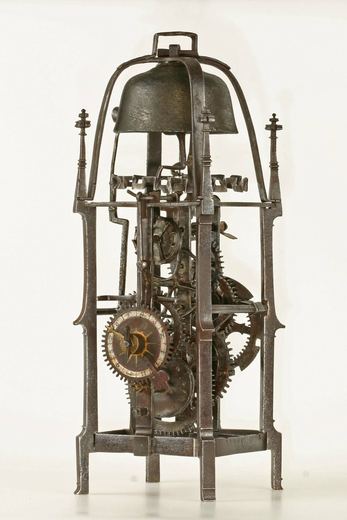
Clocks · 1400–1499
Alarm clock, Germany, 1400–1499
German Clock Museum
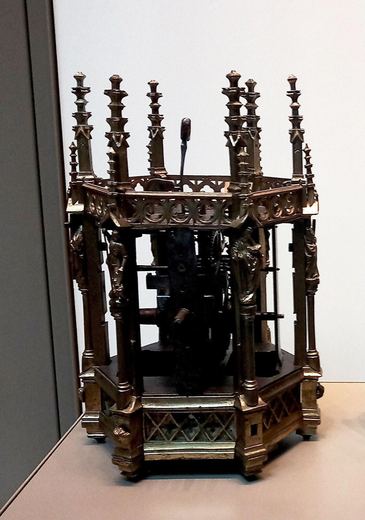
Clocks · Mid-15th century
Clock with iron movement in gilt brass case. Burgundian; mid-15th-century (with later restorations).
Victoria and Albert Museum, London
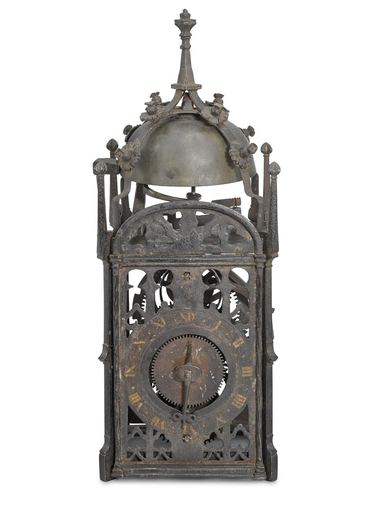
Clocks · 1400-1499
Lantern clock, Germany, 1400-1499
Science Museum Group, London
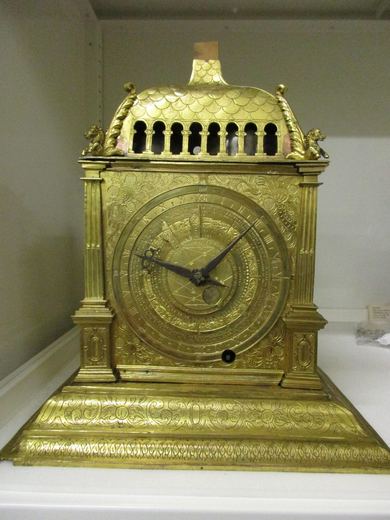
Clocks · 1500-1600
An astronomical clock in a gilt-bronze case, Venetian, sixteenth century.
Victoria and Albert Museum, London
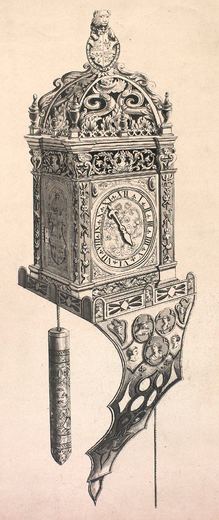
Clocks · 1500–1599
Bracket clock by Anne Boleyn, United Kingdom, 1500–1599
Archaeology Data Service
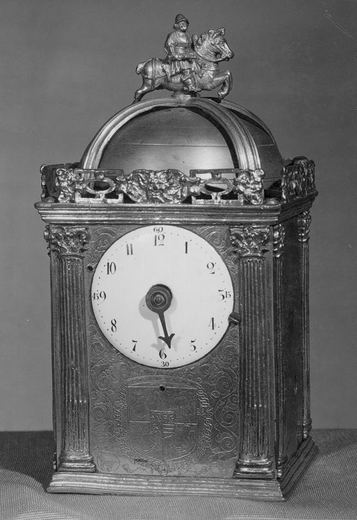
Clocks · 1500–1599
Clock by P. Plantart, Belgium, 1500–1599
Royal Institute for Cultural Heritage
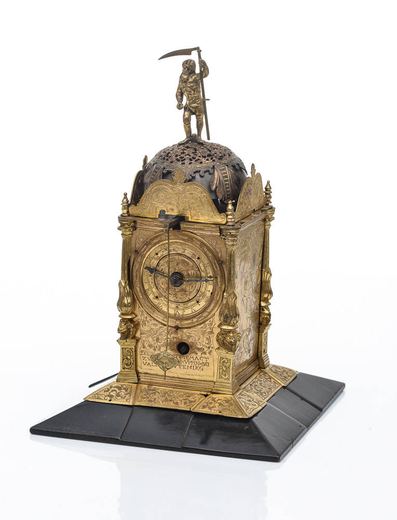
Clocks · 1500–1599
Table clock by Rutenieg, Valentin (um 1550) (Uhrmacher), Germany, 1500–1599
City Museum Berlin
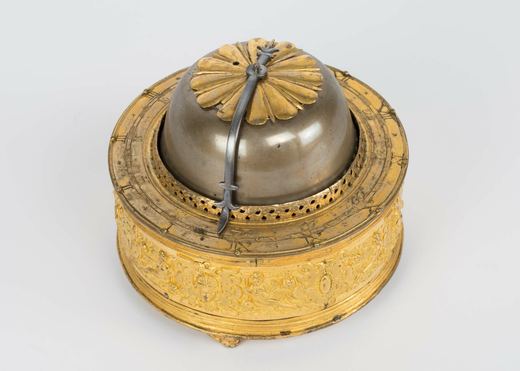
Clocks · 1500–1599
Table clock, Denmark, 1500–1599
German Clock Museum