Manufacturer
Chopard
Also recorded as: Chopard & Cie · L.U. Chopard · Louis-Ulysse Chopard · Chopard Genève
Watch and jewellery house founded in the Jura, owned since 1963 by the Scheufele family.
Louis-Ulysse Chopard founded his business at Sonvilier in the Bernese Jura in 1860, making pocket watches and chronometers. The firm moved to Geneva in the twentieth century, and in 1963 it was bought by Karl Scheufele, from a family of goldsmiths and watch-case makers in Pforzheim, whose descendants still run it.
Under the Scheufeles Chopard became known for jewellery watches, above all the 'Happy Diamonds' design of 1976 in which loose diamonds move between two sapphire crystals, and for sports watches linked to the Mille Miglia car race. In 1996 it opened a movement workshop in Fleurier, Chopard Manufacture, to make its own L.U.C calibres, named after the founder.
How to recognise the work: early pocket watches are signed L.U. Chopard, from the founder's initials, which also give the name to the modern L.U.C calibres. Watches from the Scheufele era are often jewellery watches; 'Happy Diamonds' models from 1976 have loose diamonds moving freely between two sapphire crystals.
Louis-Ulysse Chopard set up in Sonvilier in 1860, having seen that a finished watch was more profitable than a movement alone. After his death in 1915 his son Paul-Louis and grandson Paul-André ran the firm, which made pocket watches and women's wristwatches; it moved to La Chaux-de-Fonds in 1921 and in 1937, with 150 employees, to Geneva, where its movements could bear the Geneva Seal. Paul-André took over in 1943.
In 1963, with no children to succeed him, Paul-André sold the firm to Karl Scheufele III, a goldsmith and watchmaker from Pforzheim who wanted a movement maker for his own business. The factory moved to Meyrin outside Geneva in 1974, men's sports watches and diamond jewellery followed in the 1980s, and until the Fleurier manufacture opened in 1996 Chopard's movements were assembled from parts bought in.
- Country
- Switzerland
- City / centre
- Sonvilier; Geneva; Fleurier
- Founded
- 1860
- Status
- Active
- Key people
- Louis-Ulysse Chopard (1836–1915); Karl Scheufele (owner from 1963)
Innovations & specialities
- 'Happy Diamonds' moving-diamond dial (1976)
- L.U.C in-house calibres (from 1996)
Timeline
- 1860Louis-Ulysse Chopard founds the firm at Sonvilier
- 1915Founder dies; son and grandson take over
- 1921Moves to La Chaux-de-Fonds
- 1937Moves to Geneva
- 1963Bought by Karl Scheufele III
- 1974Factory moves to Meyrin
- 1976Happy Diamonds
- 1996Movement manufacture opens in Fleurier
Works by Chopard in the catalogue
All 55 records →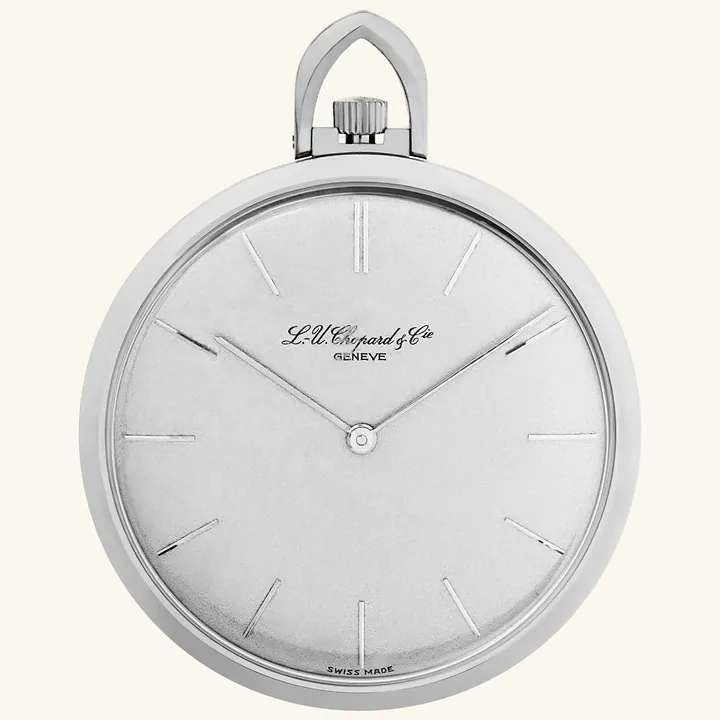
Pocket Watches · 20th century
Chopard 18-carat white gold pocket watch, ref. 9877
WatchMuseum.org shop
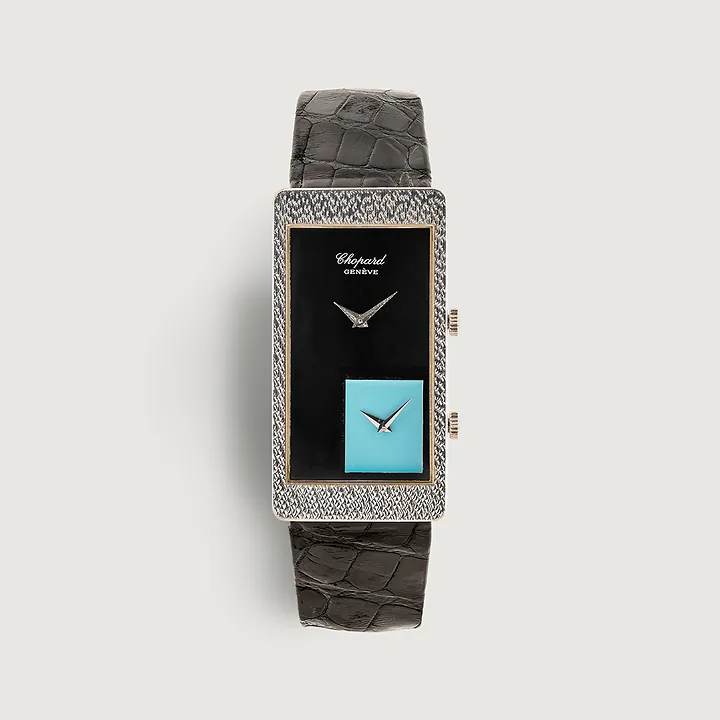
Wristwatches · 1970s
Chopard Kutchinsky Dual Time White Gold Onyx & Turquoise, 1970s
Watches of Knightsbridge (dealer), London
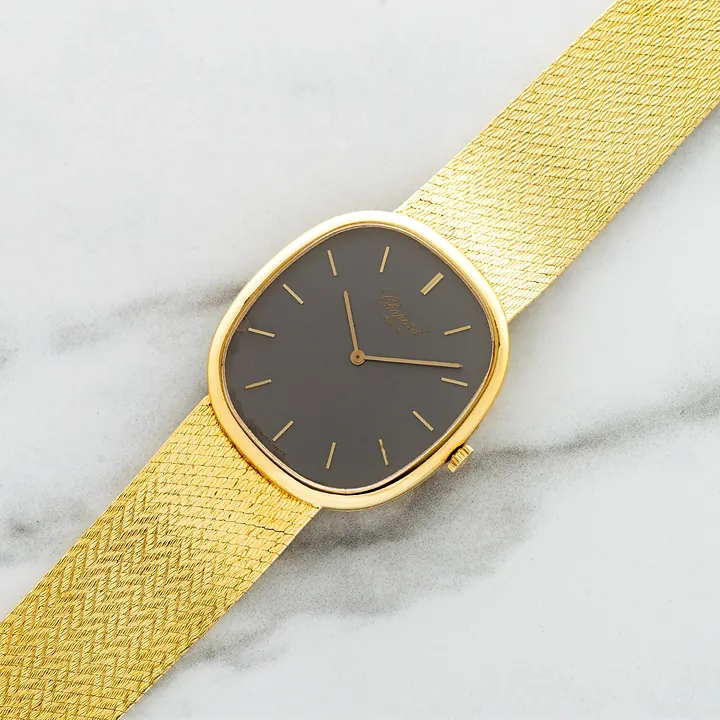
Wristwatches · c. 1980s
Chopard "Ellipse" 2152 with Light Grey Dial
Collectors Corner NY (dealer), New York
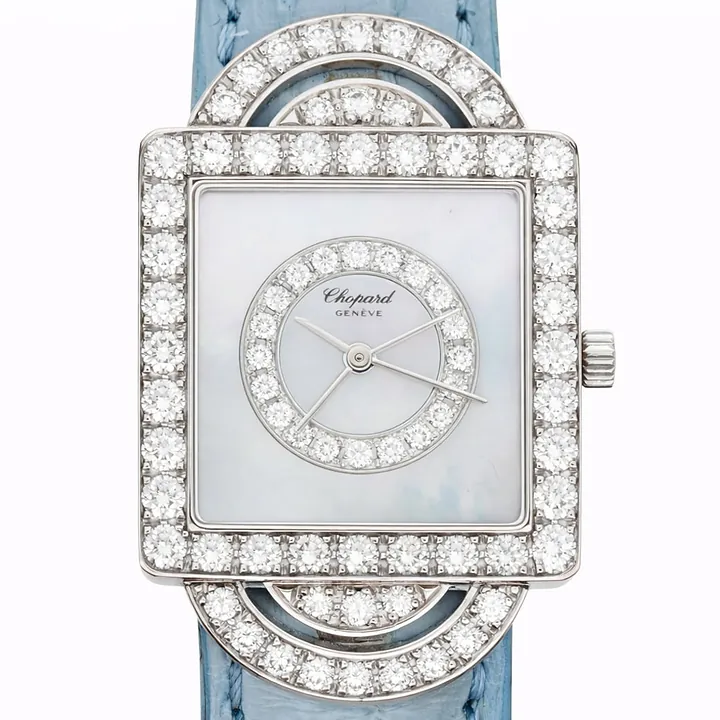
Wristwatches · c. 1990s
Chopard “Your Hour Diamond & MOP Ladies Watch, c. 1990s
LiveAuctioneers auction archive
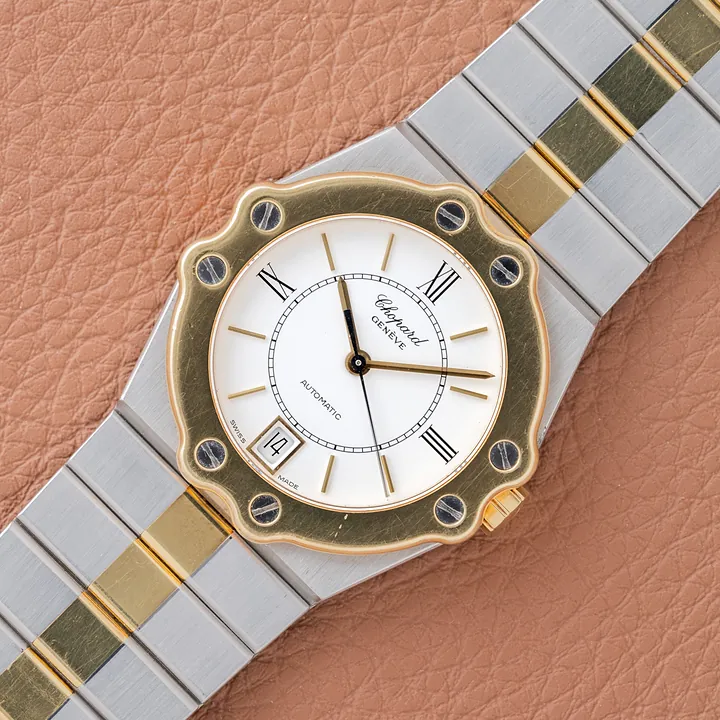
Wristwatches · 1990s
Chopard St. Moritz Automatic (Ref. 8183), 1990s
Huntington Company (dealer)
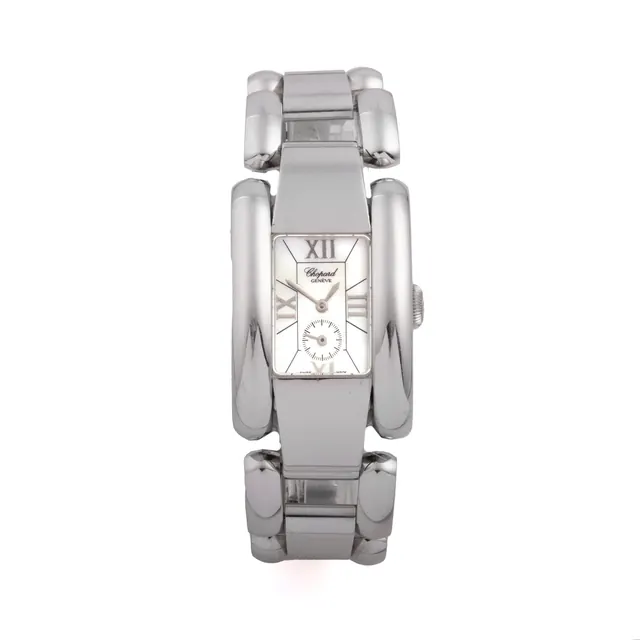
Wristwatches · c. 1990
Chopard wristwatch, ref. 8357, la Strada, circa 1990
Antiquorum auction archive, Geneva
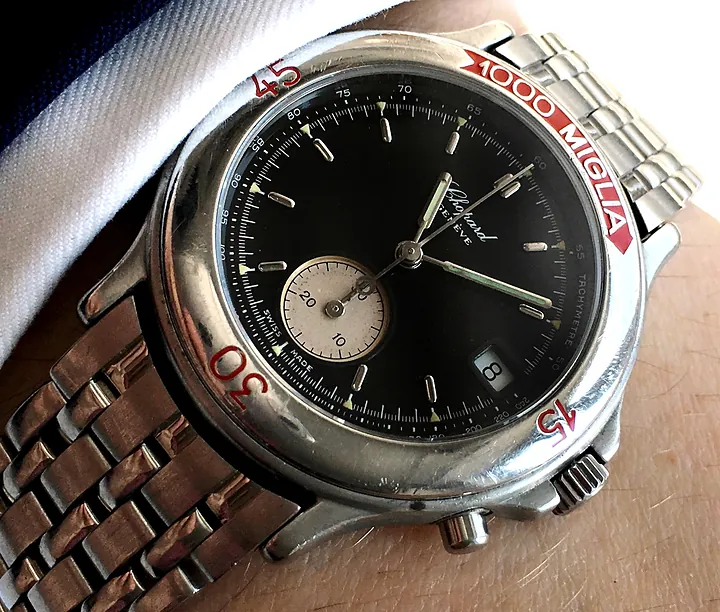
Wristwatches · 1998
Chopard Mille Miglia Chrono Quartz 1000, ref. 8141, 1998
Vintage Portfolio (dealer), Vienna
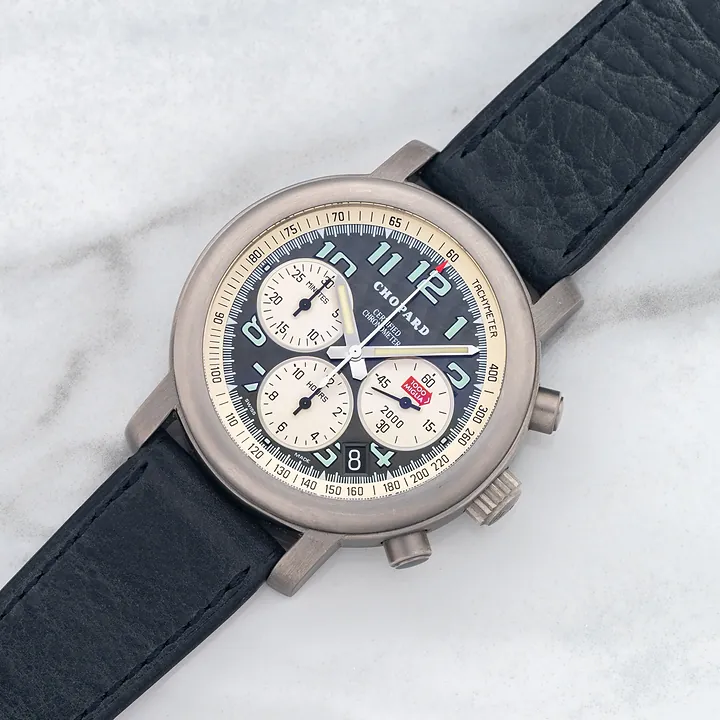
Wristwatches · c. 2000s
Chopard Mille Miglia Titanium Racing Chronograph
Collectors Corner NY (dealer), New York
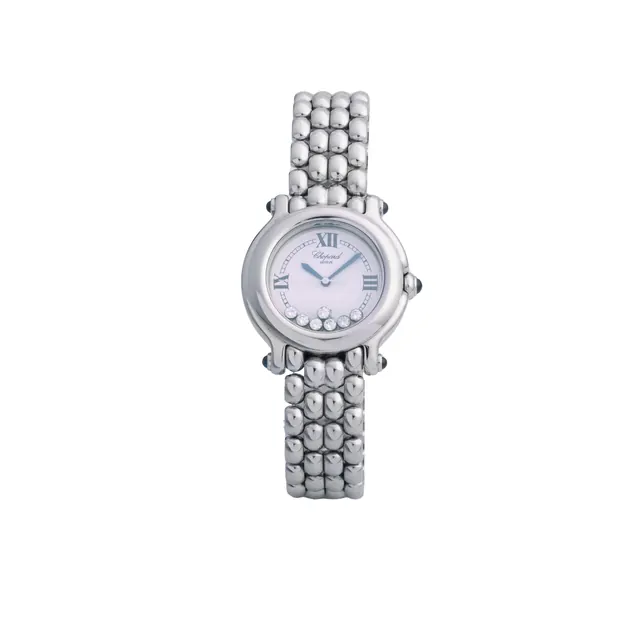
Wristwatches · 2000s
Chopard wristwatch, ref. 8236, 2000s
Antiquorum auction archive, Geneva
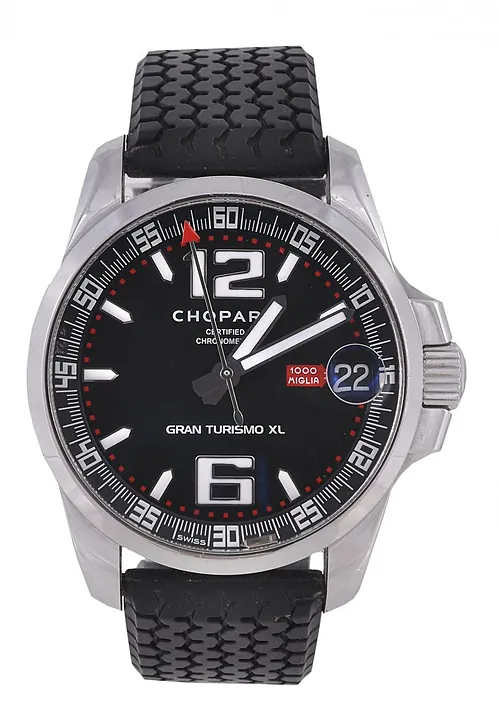
Wristwatches · c. 2005
Chopard, Gran Turismo XL, a gentleman's stainless steel, c. 2005
LiveAuctioneers auction archive
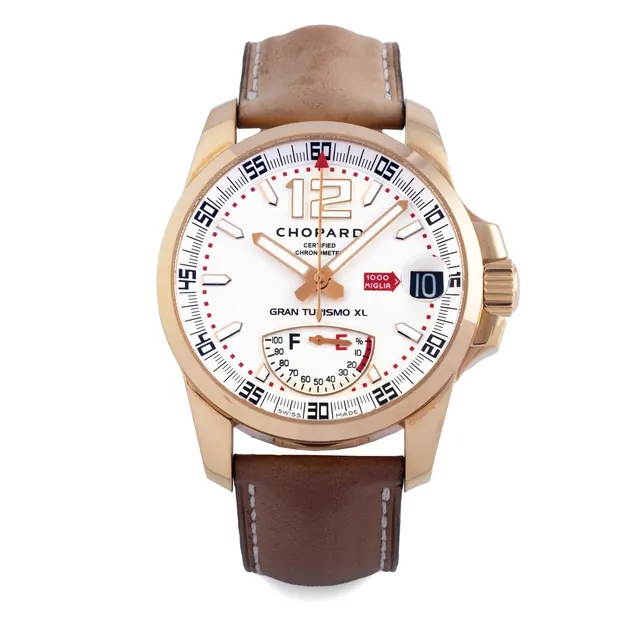
Wristwatches · c. 2010s
Chopard wristwatch, ref. 1272, Mille Miglia Gt Xl, circa 2010's
Antiquorum auction archive, Geneva
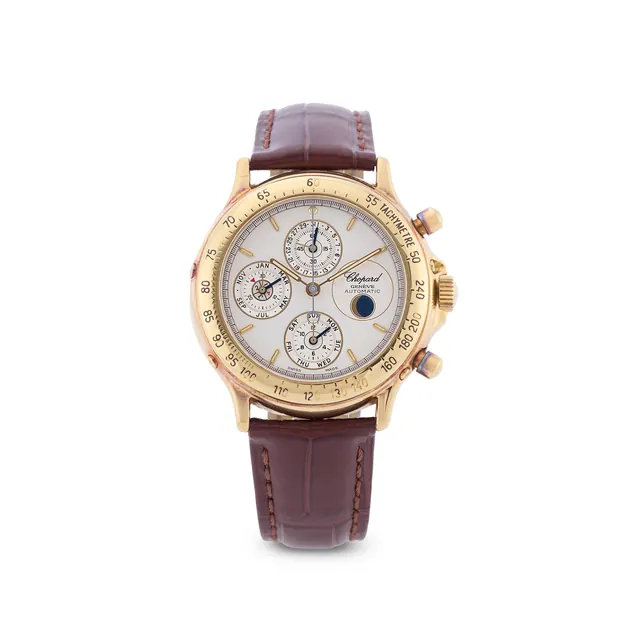
Wristwatches · 2017
Chopard wristwatch, ref. 36/1208, Classic Perpetual Calendar Limited 12/50, Sold in June, 2017
Antiquorum auction archive, Geneva
Linked through the Atlas maker authority list, which reconciles the spellings used by different institutions. Attributions are as stated by each holding institution or auction house.