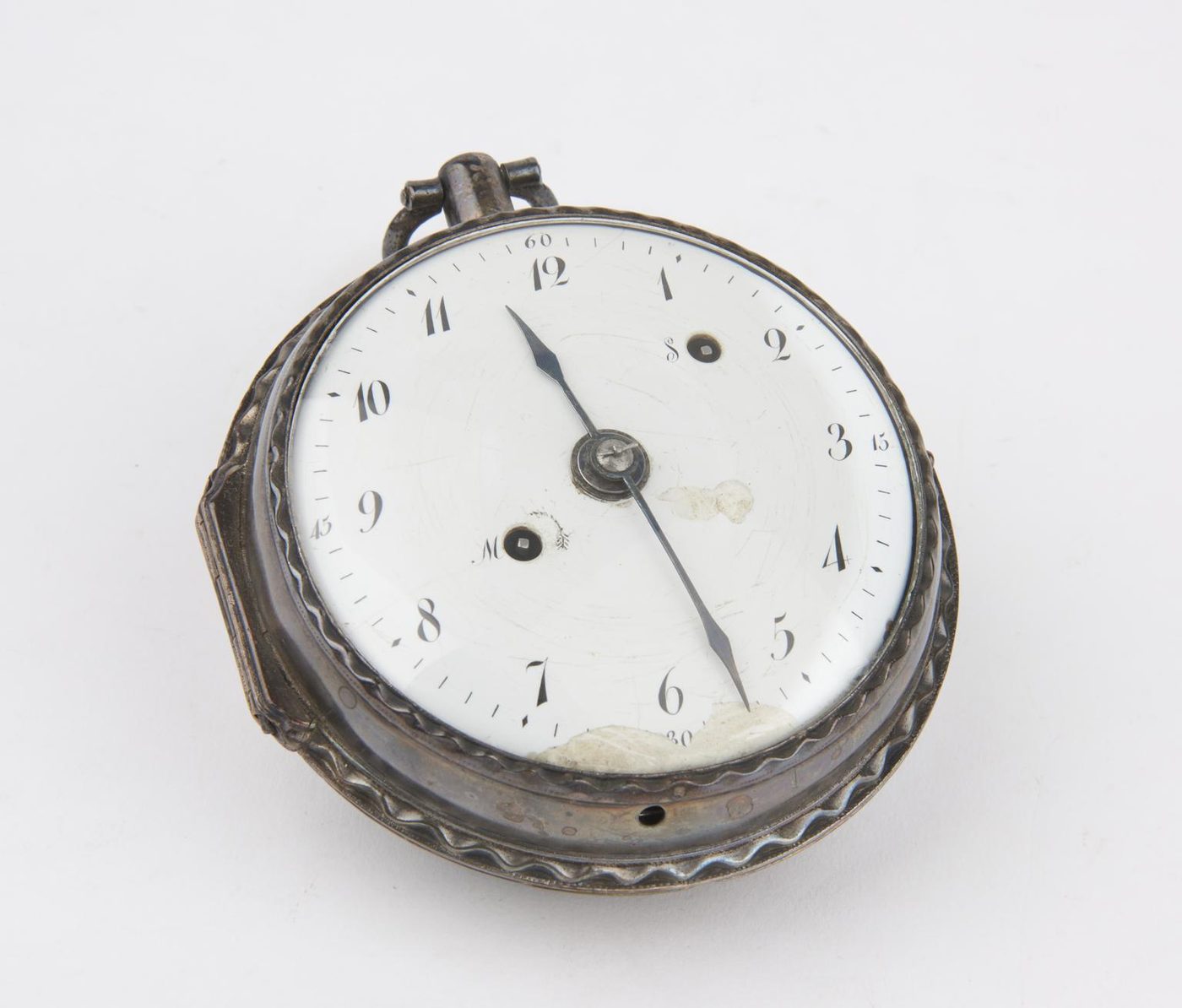
Escapement
Virgule escapement
Also known as: Comma escapement · Échappement à virgule
How it works
A comma-shaped ('virgule') pallet on the balance staff receives impulse from pins on the escape wheel in one direction; on the return the tooth rests on the curved inside of the comma.
Why it was invented
Like the cylinder, it was a way of making thin, elegant French watches without the verge's upright crown wheel.
- Invented
- c. 1750s–1780s
- Credited to
- Attributed to Jean-André Lepaute; used by Jean-Antoine Lépine
- Historical period
- Precision & Scientific Horology
History and development
Associated with the Paris workshops of Lepaute and Lépine in the third quarter of the 18th century, it appears in fine French watches of c. 1770–1800. It was demanding to make and wore quickly, and Breguet and others abandoned it in favour of the cylinder and lever.
Related mechanisms
In the catalogue
Open in the catalogue →
Records are linked when the holding institution's description names this mechanism; check each source record for confirmation.