Pocket Watches · Watch
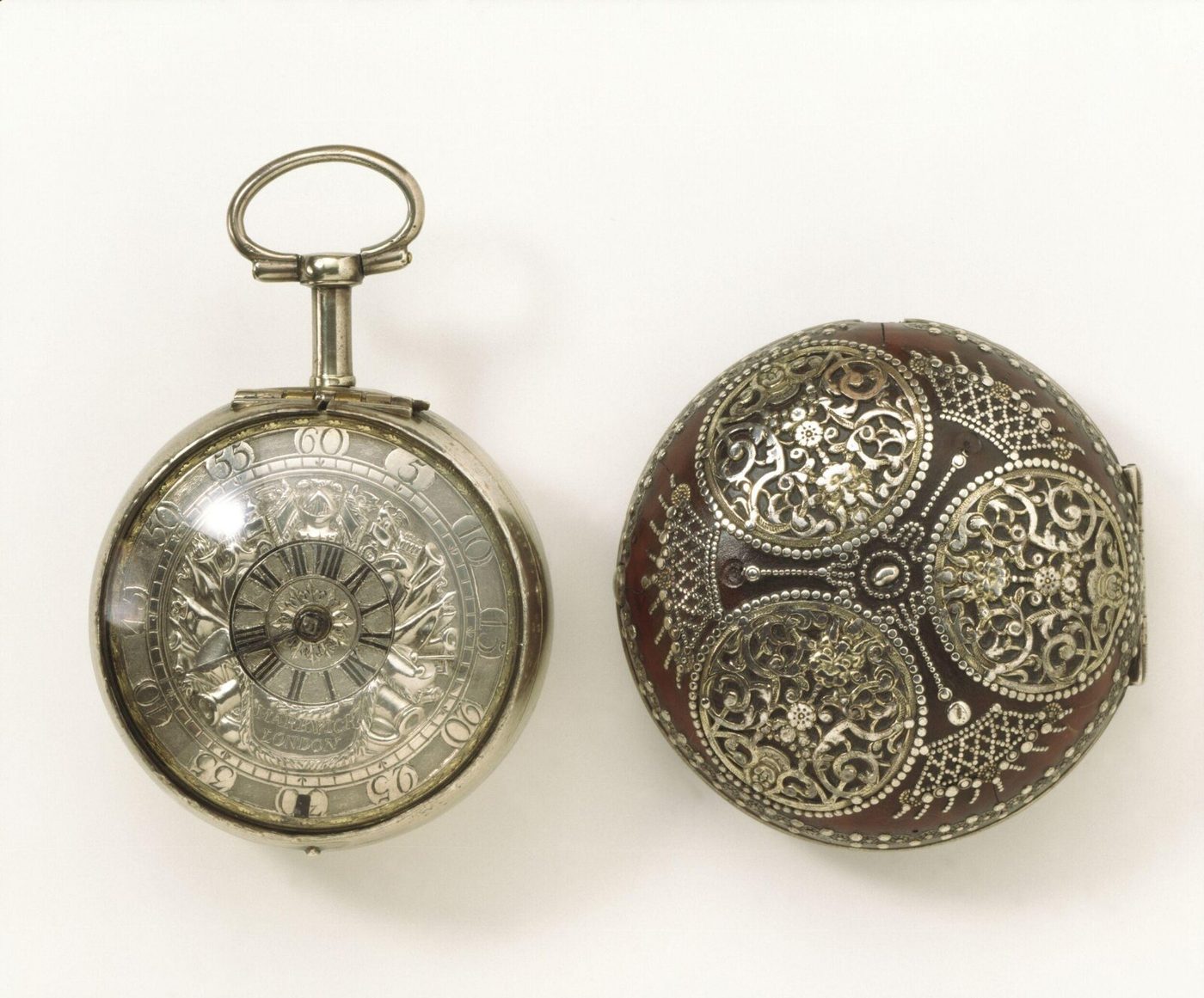
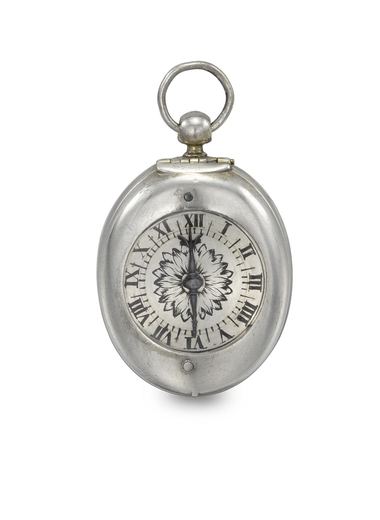
Watch with two cases
- Maker / attribution
- Unrecorded in source
- Date
- ca. 1700
- Historical period
- Early Modern Horology (1600 – 1750)
- Country of origin
- England
- Place
- London
- Object type
- Watch
- Materials / technique
- Silver dial and inner case; tortoiseshell outer case
- Dimensions
- Depth: 3 cm (maximum, estimated)
- Holding institution
- Victoria and Albert Museum, London
- Accession / object no.
- 1148 to B-1893
Record summary
Held and catalogued by Victoria and Albert Museum, London (object number 1148 to B-1893), this is a watch, made in London, England, dated ca. 1700. The Atlas places it in the Early Modern Horology period (1600 – 1750) of its Pocket Watches collection. Materials and techniques recorded by the source: Silver dial and inner case; tortoiseshell outer case. Recorded dimensions: Depth: 3 cm (maximum, estimated). The record is illustrated with 4 photographs.
Assembled from the source record's structured fields. Dates and attributions are given as the source states them; where a field is missing the Atlas leaves it blank rather than estimating.
Catalogue description
V&A — Summary
Object Type The watch movement has a verge escapement and a chain-driven fusee to regulate the power of the mainspring. The face has a differential dial: the single hand indicates the minutes around the circumference of the dial and shows the hours on the small central disc, which revolves so that the appropriate hour is below the hand. Around 1700 there was considerable variation in the layouts of dials. Watchmakers experimented to find the most legible way of showing minutes as well as hours. This increase in precision was made possible by the introduction of the balance spring in the 1670s, which gave watches much greater accuracy. People James Markwick (sometimes Marquet) was apprenticed in 1656, became a Freeman in 1666, and worked until the early 1700s. He appears to have had a fiery character. In September 1677 he was fined for abusing the Master of the Clockmakers' Company at a feast. In 1686 he refused to pay a fine for absence from a Clockmakers' Company court (meeting of senior members) and left 'in an abrupt and angry manner'. Materials & Techniques Tortoiseshell comes from various species of marine turtle. It is thermoplastic and can be softened by hot water or steam then pressed into shape. Piqué work is created by studding the surface with small, profiled silver rods to give a spangled effect. The technique was introduced to Britain in the late 17th century by Huguenot craftsmen. Condition The bow (the suspension oval at the top of the watch) is a late 18th-century replacement.
V&A — Object history
Made in London by James Markwick (active 1656-1705); inner case made by a London silversmith using the mark 'WF', possibly William Finch (active 1691- about 1701)
V&A gallery label
British Galleries: Several specialists contributed to making this watch and its cases. James Markwick made the mechanism and the inner case may be the work of William Finch. The maker of the outer case is unidentified. Silver studding or 'piqué' work was decorative but also protected the tortoiseshell from wear.
Inscriptions & marks
Watch movement numbered '288'
Historical context
Early Modern Horology (1600 – 1750)
Huygens' pendulum and balance spring transform accuracy; English makers develop the anchor and deadbeat escapements.
The balance spring (c. 1675) improved watches dramatically and introduced the minute hand. English pair-cased verge watches with pierced balance cocks and French oignons were typical; enamel painting at Blois and Geneva, and the repeating watch (1680s), made watches objects of great refinement.
Read the period in the timelineMore pocket watches from this periodEarlier: Renaissance Horology
Atlas type guide
Pocket watches
The pocket watch was the dominant personal timekeeper from the late seventeenth century until the First World War. Its development tracks the history of the escapement: verge watches with fusees until the late eighteenth century; Thomas Mudge's lever escapement (c. 1755) and the cylinder escapement popularised by George Graham and later by Swiss makers; and the Swiss and English lever watches of the nineteenth century. Lépine's bar-bridge calibre and keyless winding made watches thinner and easier to use.
Industrialisation transformed the trade: American factories such as Waltham (from 1850) and Elgin produced interchangeable parts by machine, and Swiss makers responded with their own mechanisation after the 1876 Philadelphia Exhibition. By 1900 a reliable watch was affordable to millions; the finest makers continued to produce complications and precision watches.
What to look for
- The escapement: verge (crown wheel), cylinder, duplex, English or Swiss lever.
- Key winding (a square arbor in dial or back) or keyless crown winding.
- Signatures and serial numbers on the movement, dial and inside case back.
- Hallmarks, case maker's marks and gold or silver standards stamped in the case.
- Dial material: enamel, silver, gold, later printed metal.
Dating clues
- Verge watches dominate before c. 1800; cylinder watches c. 1770–1900; lever watches after c. 1820.
- Keyless winding: increasingly common after c. 1860.
- Manufacturer serial number lists exist for Waltham, Elgin, Longines, Omega, Patek Philippe and others.
General guidance written by the Atlas editors about this kind of object. It is not a statement about this particular piece; for that, rely on the source record above and on physical examination.
Related records
Pocket Watches · ca. 1610-1620
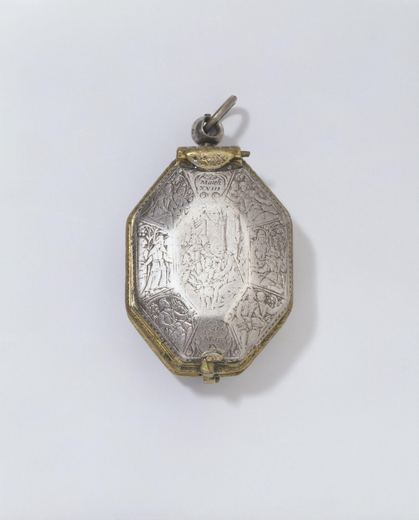
Case and dial of engraved silver and gilt brass. English, about 1640.
Victoria and Albert Museum, London
Pocket Watches · ca. 1610
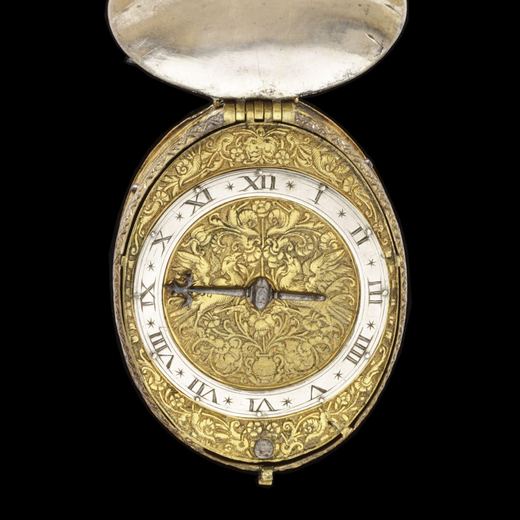
Watch by N. Ridgdale, England, ca. 1610
Victoria and Albert Museum, London
Pocket Watches · 1622-1628
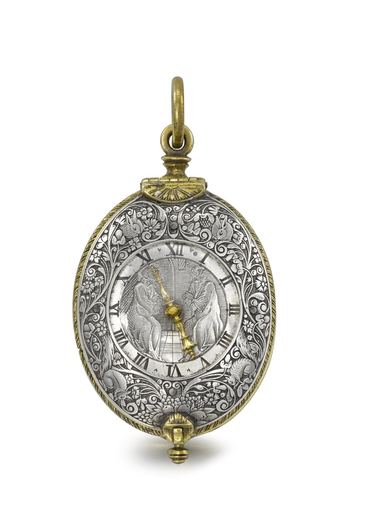
Pocket watch by Vautrollier, James, England, 1622-1628
Science Museum Group, London
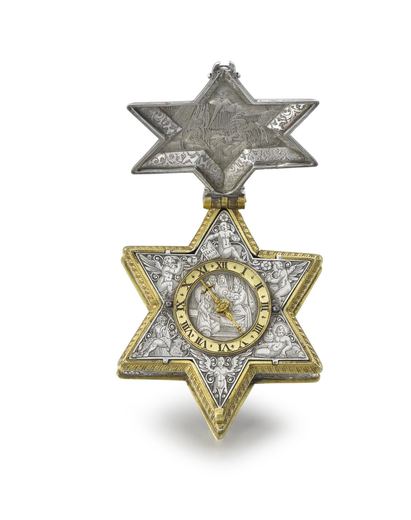
Pocket Watches · 1625
Pocket watch by Ramsay, David, England, 1625
Science Museum Group, London
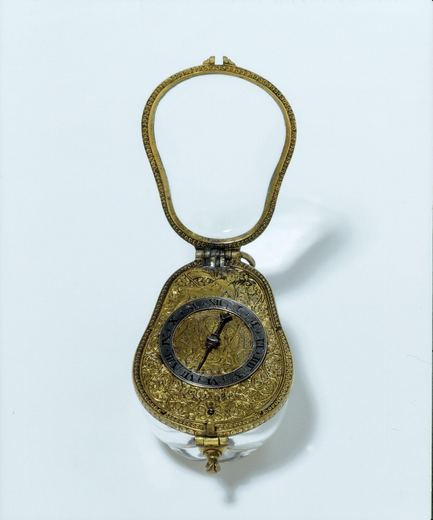
Pocket Watches · ca. 1635
Jewellery, England
Victoria and Albert Museum, London
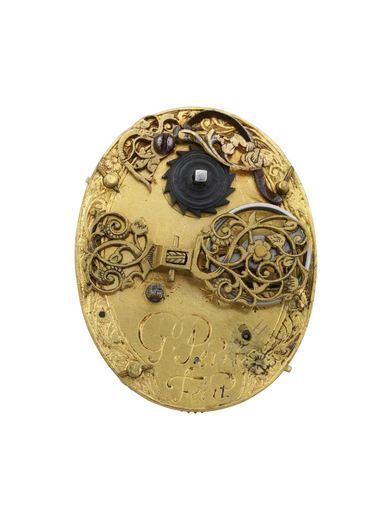
Pocket Watches · 1630
Pocket watch by Petit, G, England, 1630
Science Museum Group, London
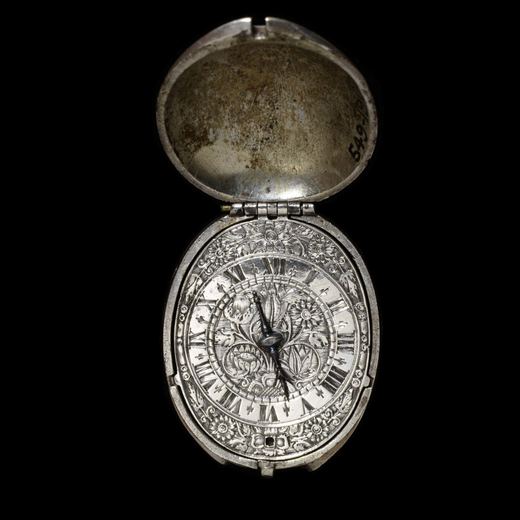
Pocket Watches · 1630-50
Watch by Henry Grendon, England, 1630-50
Victoria and Albert Museum, London
Pocket Watches · 1640
Pocket watch by Sampson Shelton, England, 1640
Science Museum Group, London