Movements & Components · Watch case
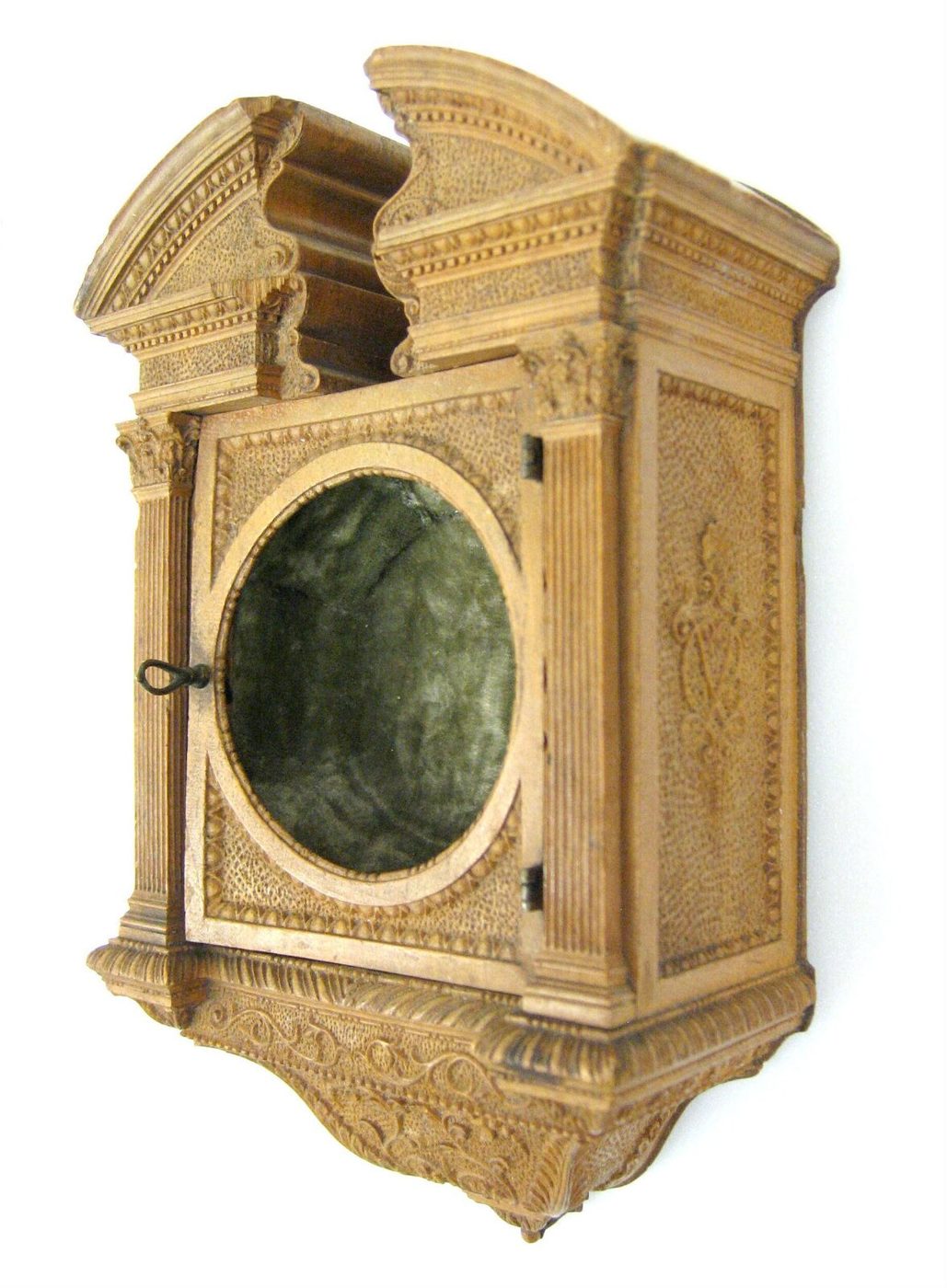
Watch case, English, 1800-1820, Charles Bowley
- Maker / attribution
- Unrecorded in source
- Date
- 1800-1820
- Historical period
- Precision & Scientific Horology (1750 – 1850)
- Country of origin
- England
- Place
- England
- Object type
- Watch case
- Materials / technique
- boxwood, mahogany, velvet
- Dimensions
- Height: 13.7 cm; Width: 8.6 cm
- Holding institution
- Victoria and Albert Museum, London
- Accession / object no.
- 522-1907
Record summary
Held and catalogued by Victoria and Albert Museum, London (object number 522-1907), this is a watch case, made in England, dated 1800-1820. The Atlas places it in the Precision & Scientific Horology period (1750 – 1850) of its Movements & Components collection. Materials and techniques recorded by the source: boxwood, mahogany, velvet. Recorded dimensions: Height: 13.7 cm; Width: 8.6 cm. The record is illustrated with 3 photographs.
Assembled from the source record's structured fields. Dates and attributions are given as the source states them; where a field is missing the Atlas leaves it blank rather than estimating.
Catalogue description
V&A — Physical description
Carved boxwood watch case signed Chas. Howley. Surmounted by a broken pediment enriched with egg and tongue and dentil mouldings and supported on two fluted Corinthian pilasters resting on a corbel carved with delicate floral scrollwork and wavy stems. On each side of the case is a cipher formed of the letters C B L. Between the columns is a hinged door with a circular opening for a watch. The inside of the case is lined with faded green velvet and the back is veneered with mahogany.
V&A — Object history
Bought from the Trustees of the Massey-Mainwaring Estate.
Historical context
Precision & Scientific Horology (1750 – 1850)
Harrison solves longitude; Mudge invents the lever; Breguet's Paris workshop defines the modern watch.
The age of escapement invention: cylinder, duplex, lever, detent and many experimental escapements; compensation balances and fine finishing.
Read the period in the timelineMore movements & components from this periodEarlier: Early Modern Horology
Atlas type guide
Cases, keys and accessories
Clock and watch cases protect the movement and express taste and status. Watch cases were made by separate specialist case-makers whose marks, along with assay hallmarks, help to date and place them. Clock cases were the work of cabinet-makers, bronze founders, ceramic factories and silversmiths, so they belong as much to the history of decorative arts as to horology.
Keys, chatelaines, watch stands, watch papers and winding tools are part of the material culture of timekeeping: they show how timepieces were worn, displayed, wound and maintained.
What to look for
- Case maker's sponsor's marks and assay hallmarks in gold and silver cases.
- Materials: shagreen, tortoiseshell, enamel, porcelain, jasperware, gilt bronze.
- Breguet-style ratchet keys, crank keys and watch-key fobs.
- Engraved names, presentations and dates.
Dating clues
- English hallmark date letters allow exact dating of the case assay.
- Porcelain cases from Meissen and Sèvres: mostly eighteenth century.
General guidance written by the Atlas editors about this kind of object. It is not a statement about this particular piece; for that, rely on the source record above and on physical examination.
Related records
Movements & Components · 1740-70
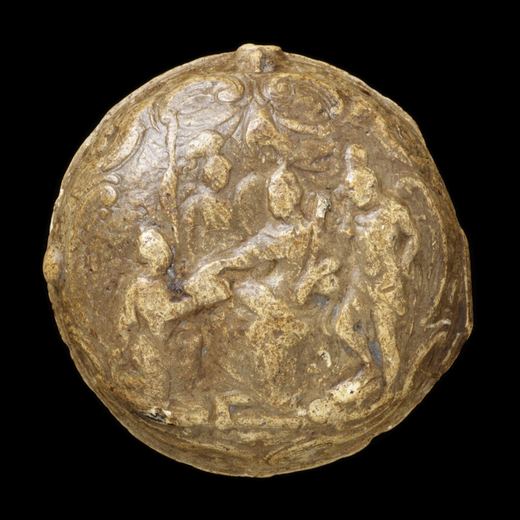
Plaster cast of a watch case, made in England in 1740-70
Victoria and Albert Museum, London
Movements & Components · 1750
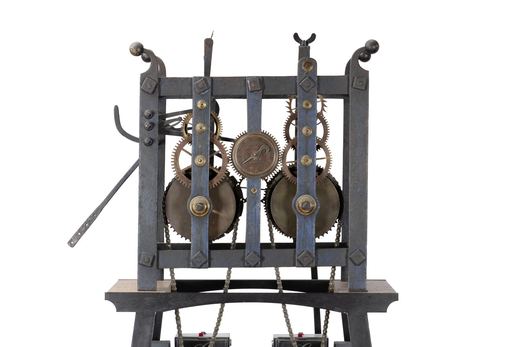
Clock movement by Smith, William, England, 1750
Science Museum Group, London
Movements & Components · 1750-1775
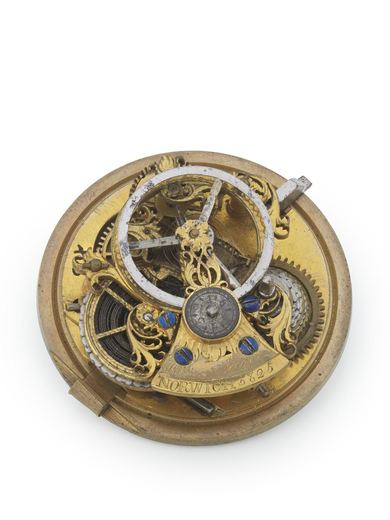
Watch movement by Amyot, Peter, England, 1750-1775
Science Museum Group, London
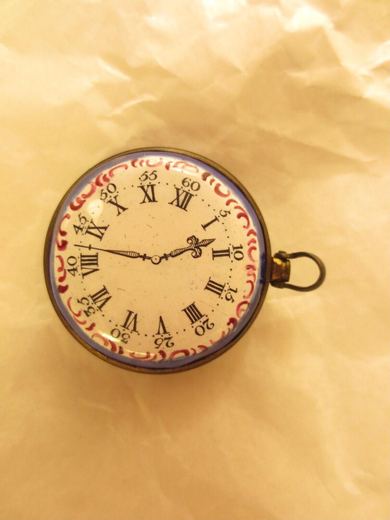
Movements & Components · late 18th century
Watch, Bilston enamel, England, late 18th century
Victoria and Albert Museum, London
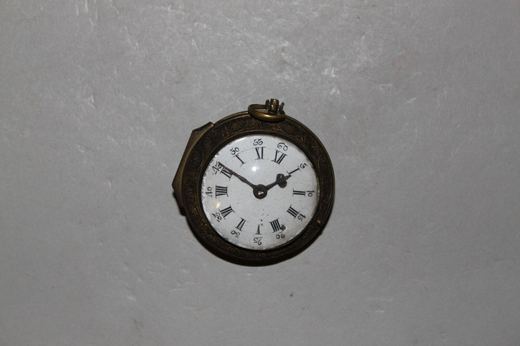
Movements & Components · late 18th century
Watch, cast brass and Bilston enamel, England, late 18th century (V&A 1664-1871)
Victoria and Albert Museum, London
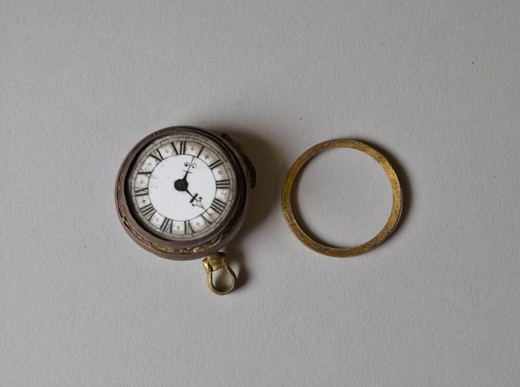
Movements & Components · late 18th century
Watch, cast brass and Bilston enamel, England, late 18th century (V&A 1665-1871)
Victoria and Albert Museum, London
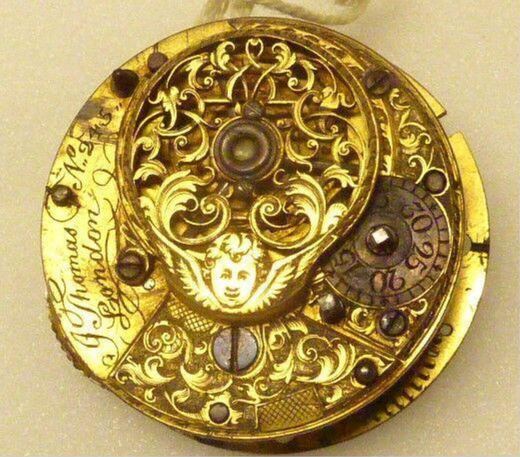
Movements & Components · 1770-1780
Brass, pierced and engraved, English (London), 1770-1780
Victoria and Albert Museum, London
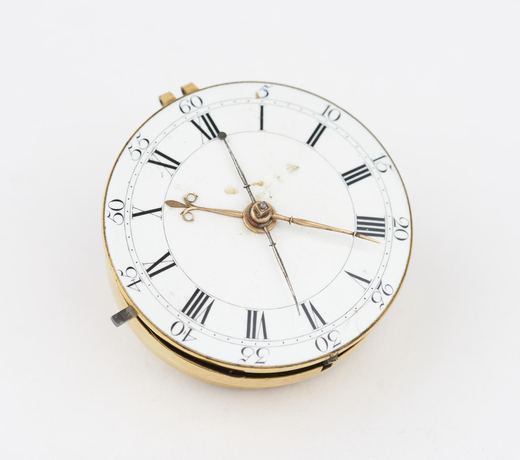
Movements & Components · 1775
Cylinder escapement, by J. Davis, about 1775, England
Science Museum Group, London