Pocket Watches · Watch
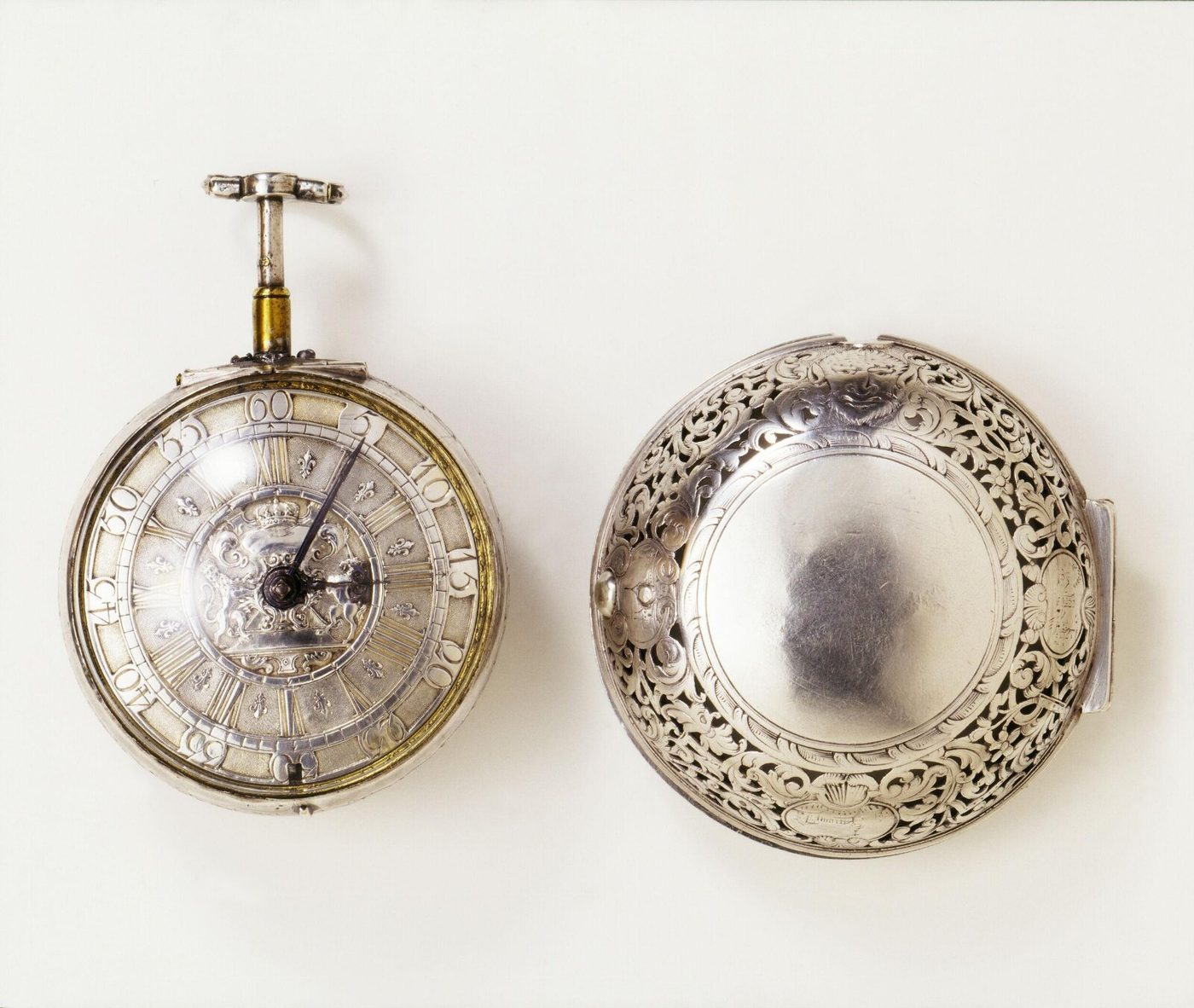
Watch by Daniel Quare, England, ca. 1700
- Maker / attribution
- Daniel Quare (maker)
- Date
- ca. 1700
- Historical period
- Early Modern Horology (1600 – 1750)
- Country of origin
- England
- Place
- London
- Object type
- Watch
- Materials / technique
- Engraved silver cases and dial; quarter-repeating movement with verge escapement
- Holding institution
- Victoria and Albert Museum, London
- Accession / object no.
- 1362&A-1904
Record summary
Held and catalogued by Victoria and Albert Museum, London (object number 1362&A-1904), this is a watch by Daniel Quare, made in London, England, dated ca. 1700. The Atlas places it in the Early Modern Horology period (1600 – 1750) of its Pocket Watches collection. Materials and techniques recorded by the source: Engraved silver cases and dial; quarter-repeating movement with verge escapement. The record is illustrated with 4 photographs.
Assembled from the source record's structured fields. Dates and attributions are given as the source states them; where a field is missing the Atlas leaves it blank rather than estimating.
Catalogue description
V&A — Summary
Object Type This watch has inner and outer cases of engraved silver, which are pierced to allow the sound of the bell in the inner case to be heard. It repeats the quarters when the pendant is pressed down. People The maker, Daniel Quare (1648-1724), worked in London at St Martin's le Grand, and later, by 1680, at the King's Arms, Exchange Alley. He was a Quaker, and is said to have died in Croydon, but he was buried in the Quakers' Burial Ground at Bunhill Fields. He was one of the outstanding clockmakers and watchmakers of the generation in which London watchmaking established a leadership in Europe. He was at the forefront of the development of the repeating watch in the 1680s. In 1687 he was granted a patent for his system of repeating work after a dispute with Edward Barlow, which was taken to James II (ruled 1685-1688) for adjudication. The lion and unicorn on the dial of this watch may refer to Quare's address, and to his royal patronage Trading The customer bought a watch complete with cases from the retailer (watchmaker, goldsmith or jeweller). You might buy the watch off the shelf, or you might commission a watch that had cases decorated in the way you wanted. Normally the customer met only the watchmaker or his salesman in the shop. It was the watchmaker's job to organise the army of specialist craftsmen who made and decorated the movement and the cases.
V&A — Object history
Watch made in London by Daniel Quare, London (born in Somerset, 1648, died in Croydon, Surrey, 1724)
V&A gallery label
British Galleries: GENTLEMAN'S ACCESSORIES In about 1680 separate pockets made of soft leather were stitched to the seams inside loose-fitting breeches. Here a gentleman of fashion could carry valuables such as these without creating an unsightly bulge, and safe from pickpockets. The gold box was probably used for snuff or for cachous - pills made from cashew nut or licorice, taken by smokers to sweeten their breath.
Historical context
Early Modern Horology (1600 – 1750)
Huygens' pendulum and balance spring transform accuracy; English makers develop the anchor and deadbeat escapements.
The balance spring (c. 1675) improved watches dramatically and introduced the minute hand. English pair-cased verge watches with pierced balance cocks and French oignons were typical; enamel painting at Blois and Geneva, and the repeating watch (1680s), made watches objects of great refinement.
Read the period in the timelineMore pocket watches from this periodEarlier: Renaissance Horology
Atlas type guide
Pocket watches
The pocket watch was the dominant personal timekeeper from the late seventeenth century until the First World War. Its development tracks the history of the escapement: verge watches with fusees until the late eighteenth century; Thomas Mudge's lever escapement (c. 1755) and the cylinder escapement popularised by George Graham and later by Swiss makers; and the Swiss and English lever watches of the nineteenth century. Lépine's bar-bridge calibre and keyless winding made watches thinner and easier to use.
Industrialisation transformed the trade: American factories such as Waltham (from 1850) and Elgin produced interchangeable parts by machine, and Swiss makers responded with their own mechanisation after the 1876 Philadelphia Exhibition. By 1900 a reliable watch was affordable to millions; the finest makers continued to produce complications and precision watches.
What to look for
- The escapement: verge (crown wheel), cylinder, duplex, English or Swiss lever.
- Key winding (a square arbor in dial or back) or keyless crown winding.
- Signatures and serial numbers on the movement, dial and inside case back.
- Hallmarks, case maker's marks and gold or silver standards stamped in the case.
- Dial material: enamel, silver, gold, later printed metal.
Dating clues
- Verge watches dominate before c. 1800; cylinder watches c. 1770–1900; lever watches after c. 1820.
- Keyless winding: increasingly common after c. 1860.
- Manufacturer serial number lists exist for Waltham, Elgin, Longines, Omega, Patek Philippe and others.
General guidance written by the Atlas editors about this kind of object. It is not a statement about this particular piece; for that, rely on the source record above and on physical examination.
Read next:Detached lever escapementFuseeIdentification Centre
Related records
Movements & Components · 1700
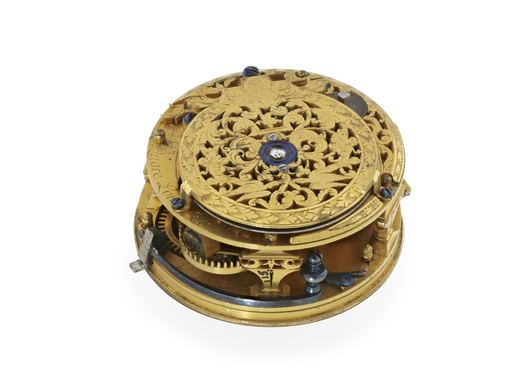
Watch movement by Quare, Daniel, England, 1700
Science Museum Group, London
Pocket Watches · 1710
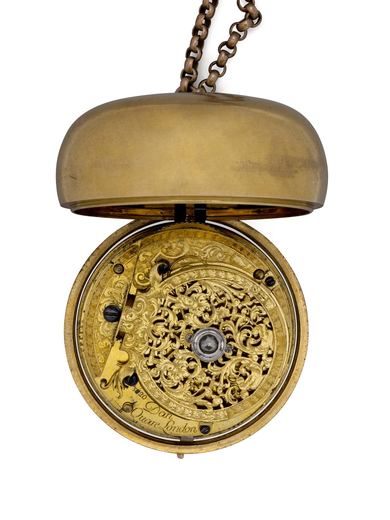
Pocket watch by Quare, Daniel, England, 1710
Science Museum Group, London
Pocket Watches · 1712
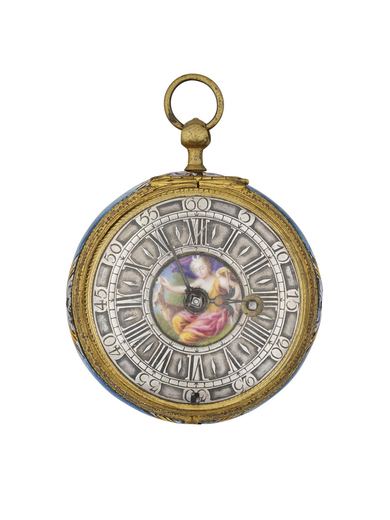
Pocket watch by Quare, Daniel; Huaud Frères, England, 1712
Science Museum Group, London
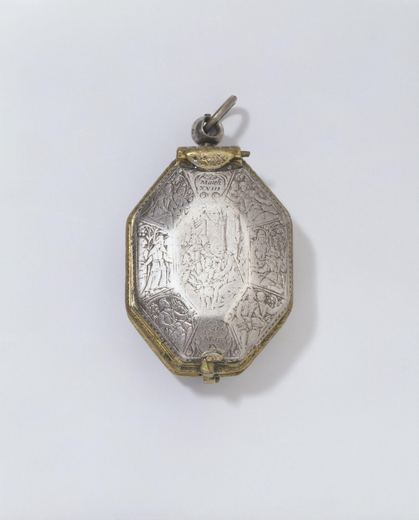
Pocket Watches · ca. 1610-1620
Case and dial of engraved silver and gilt brass. English, about 1640.
Victoria and Albert Museum, London
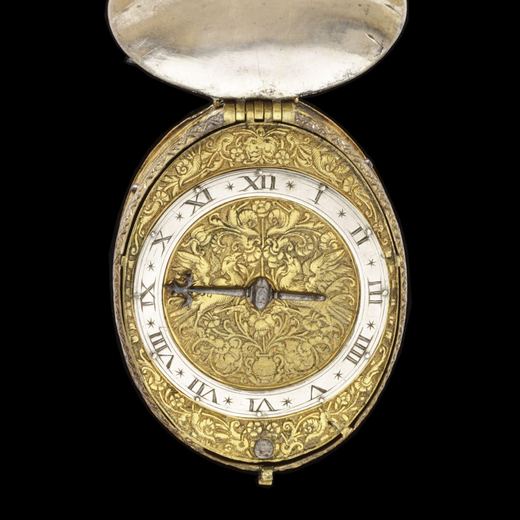
Pocket Watches · ca. 1610
Watch by N. Ridgdale, England, ca. 1610
Victoria and Albert Museum, London
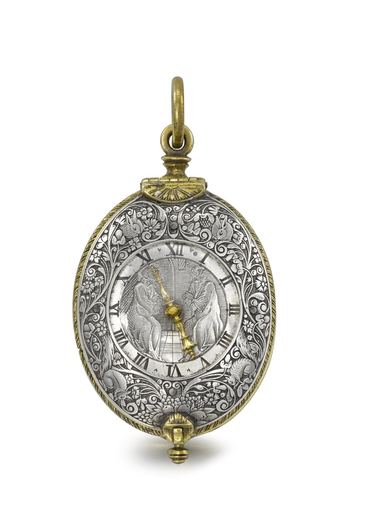
Pocket Watches · 1622-1628
Pocket watch by Vautrollier, James, England, 1622-1628
Science Museum Group, London
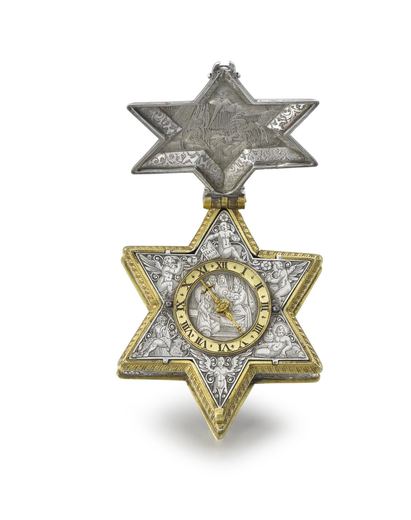
Pocket Watches · 1625
Pocket watch by Ramsay, David, England, 1625
Science Museum Group, London
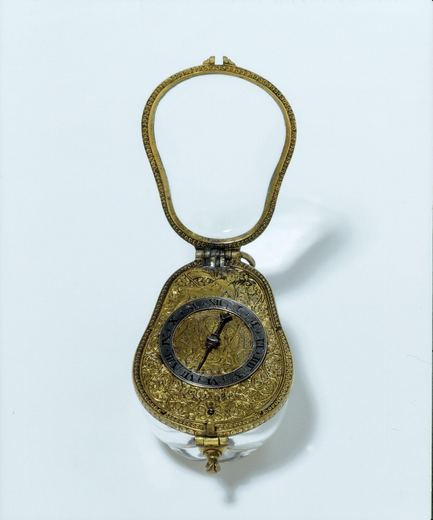
Pocket Watches · ca. 1635
Jewellery, England
Victoria and Albert Museum, London