Clocks · Table clock
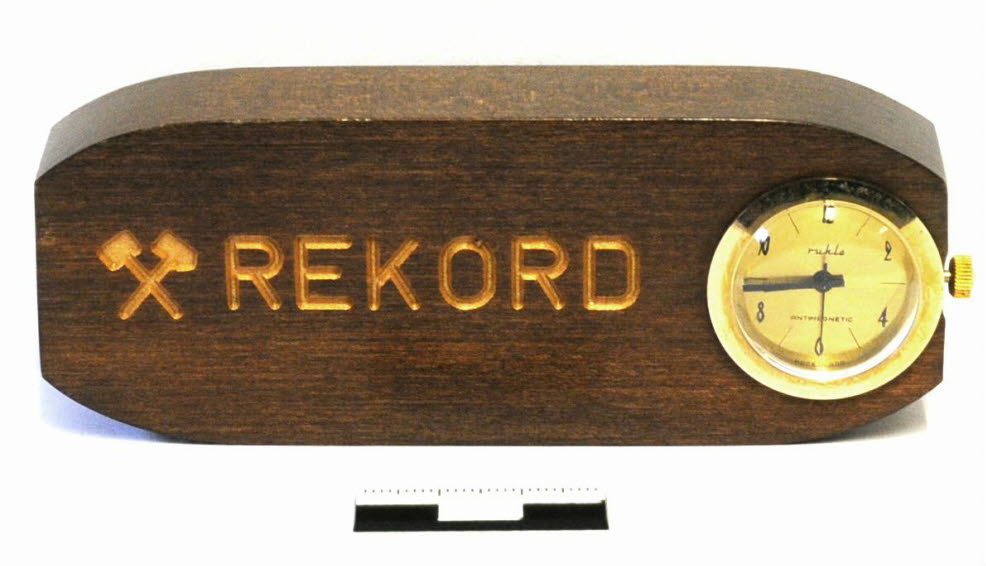
Table clock, Germany, 1900–1999
- Maker / attribution
- Unrecorded in source
- Date
- 1900–1999
- Historical period
- Modern Mechanical Horology (1945 – 1969)
- Country of origin
- Germany
- Place
- Germany
- Object type
- Table clock
- Holding institution
- Montanhistorisches Dokumentationszentrum
- Accession / object no.
- item_SAD2KTSKXIHXHLI3JEXVEDJI2ZTL7OC4
- Catalogue title (original)
- Tischuhr in Form eines Briketts (Rekord / VVB Braunkohle) (German)
Record summary
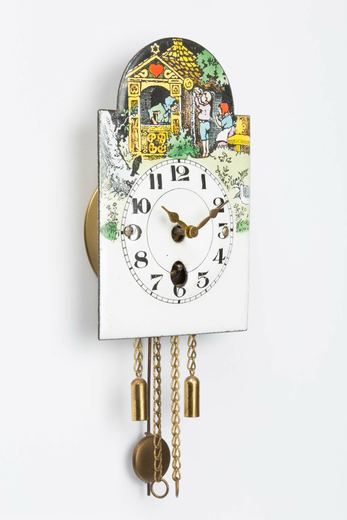
Held and catalogued by Montanhistorisches Dokumentationszentrum (object number item_SAD2KTSKXIHXHLI3JEXVEDJI2ZTL7OC4), this is a table clock, made in Germany, dated 1900–1999. The Atlas places it in the Modern Mechanical Horology period (1945 – 1969) of its Clocks collection. The record is illustrated with 1 photograph.
Assembled from the source record's structured fields. Dates and attributions are given as the source states them; where a field is missing the Atlas leaves it blank rather than estimating.
Catalogue description
Catalogue description from Montanhistorisches Dokumentationszentrum (def)
Tischuhr in Form eines Briketts, aus Holz gefertigt, mit eingesetzter Uhr in der rechten Hälfte und beidseitiger Gravur. Die Vorderseite zeigt Schlägel und Eisen mit dem Schriftzug "REKORD". Die Rückseite trägt den Schriftzug "VVB BRAUNKOHLE". Die Uhr selbst besitzt ein goldfarbenes Gehäuse mit geriffelter und herausziehbarer Krone auf Position 3. Das Uhrenglas ist in einem Deckel mit breiter Lünette eingelassen. Unter dem Uhrenglas liegt ein goldfarbenes Zifferblatt mit arabischen Ziffern und schwarzen Stunden- und Minutenzeiger. Zusätzlich zeigt das Zifferblatt das Herstellerlogo "ruhla" auf Position 12 und die Angaben "ANTIMAGNETIC" und "MADE IN GDR" auf Position 6. Das Stellen der Zeiger erfolgt über die gezogene Krone. Die Tischuhr besitzt die Form eines Briketts und trägt den Markenname "Rekord". Dieser wurde 1961 in der DDR als Brikettmarke angemeldet und als einheitlicher Markenname verwendet.
Historical context
Modern Mechanical Horology (1945 – 1969)
Tool watches for divers, pilots and astronauts; electric watches anticipate the electronic age.
Post-war clocks combined new materials and industrial design: plastic and metal cases, battery-powered transistor movements from the late 1950s, and design classics by George Nelson, Max Bill and others. The first caesium atomic clock (1955) moved the definition of time from astronomy to physics.
Read the period in the timelineMore clocks from this periodEarlier: Golden Age of Mechanical Watchmaking
Atlas type guide
Bracket, table and spring-driven clocks
Spring-driven clocks freed timekeeping from the hanging weight. The coiled mainspring, documented from the fifteenth century, made portable table clocks possible; to even out its declining force, makers used the fusee, a conical pulley connected to the barrel by a gut line or chain. Renaissance table clocks from Augsburg and Nuremberg — drum-shaped, square or tower-shaped in gilt brass — were luxury scientific objects, often with astronomical dials and alarms.
After the pendulum, English makers developed the bracket clock: a wooden case with a carrying handle, a short pendulum with a verge escapement, and often repeating work to sound the hours on demand at night. Later examples use the anchor escapement. In the nineteenth century, 'table clock' became a broad term for spring clocks of every nationality.
What to look for
- A fusee in the movement (cone-shaped pulley) and the type of line — gut or chain.
- Verge escapement with a short bob pendulum, often with a decoratively engraved backplate.
- Repeat cords or buttons that make the clock strike again on demand.
- Gilt-brass engraved cases and horizontal dials on Renaissance pieces.
- Case shapes: inverted bell, bell top, break-arch, lancet or balloon.
Dating clues
- Drum and tower table clocks: c. 1520–1650.
- Ebony veneered English bracket clocks with verge escapements: c. 1670–1800.
- Engraved backplates were usual on English clocks until c. 1800, then generally plain.
General guidance written by the Atlas editors about this kind of object. It is not a statement about this particular piece; for that, rely on the source record above and on physical examination.
Related records
Clocks · 1900–1999
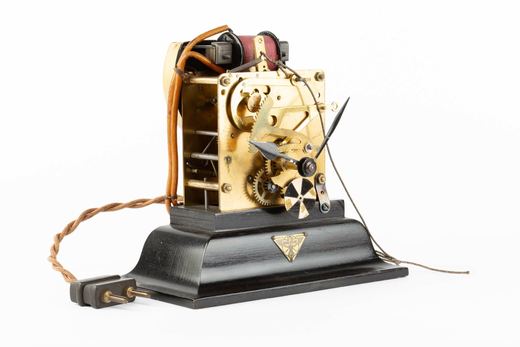
Clock by Friedrich Mauthe, Germany, 1900–1999 (German Clock Museum Museu_ProvidedCHO_museum_digital_59468__technical_number_)
German Clock Museum
Clocks · 1900–1999
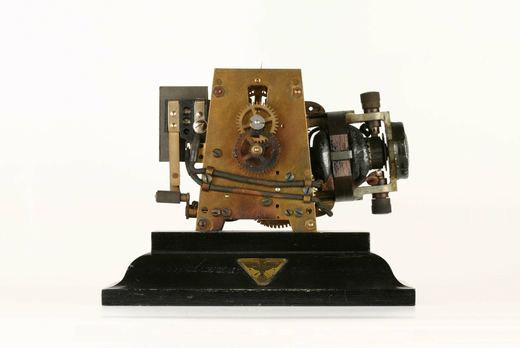
Clock by Friedrich Mauthe, Germany, 1900–1999 (German Clock Museum Museu_ProvidedCHO_museum_digital_59469__technical_number_)
German Clock Museum
Clocks · 1900–1999
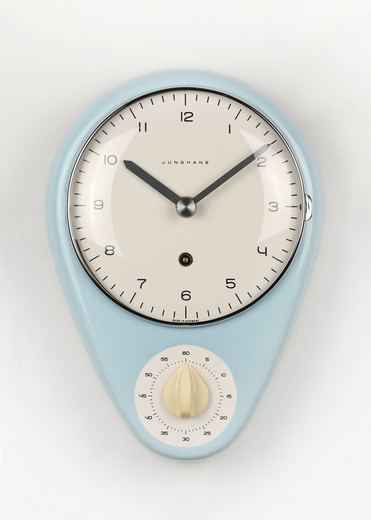
Clock, Germany, 1900–1999 (German Clock Museum Museu_ProvidedCHO_museum_digital_58196__technical_number_)
German Clock Museum
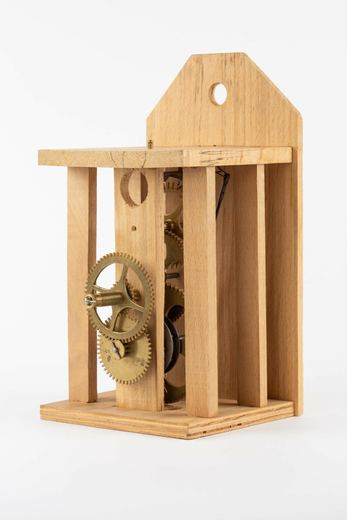
Clocks · 1900–1999
Clock, Germany, 1900–1999 (German Clock Museum Museu_ProvidedCHO_museum_digital_59377__technical_number_)
German Clock Museum
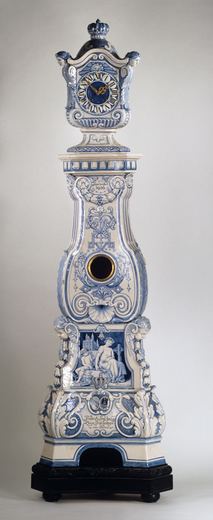
Clocks · 1900–1999
Longcase clock by Staatliche Majolika-Manufaktur Karlsruhe, Germany, 1900–1999
Badisches Landesmuseum Karlsruhe
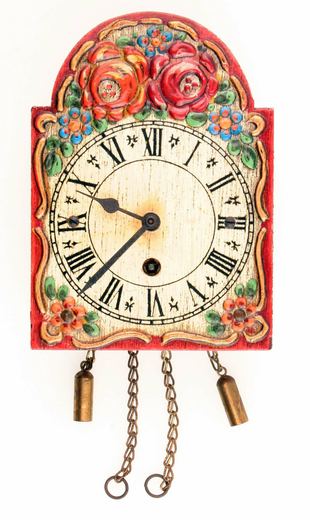
Clocks · 1900–1999
Mantel clock by Wintermantel & Co., Germany, 1900–1999 (German Clock Museum Museu_ProvidedCHO_museum_digital_56059__technical_number_)
German Clock Museum
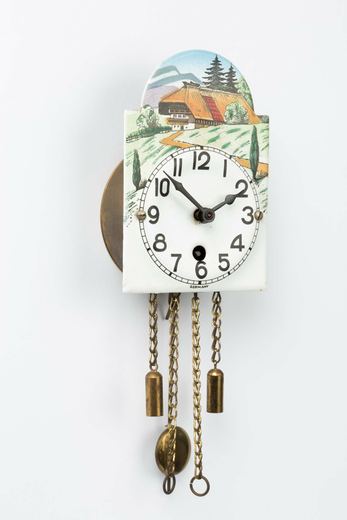
Clocks · 1900–1999
Mantel clock by Wintermantel & Co., Germany, 1900–1999 (German Clock Museum Museu_ProvidedCHO_museum_digital_56060__technical_number_)
German Clock Museum
Clocks · 1900–1999
Mantel clock by Wintermantel & Co., Germany, 1900–1999 (German Clock Museum Museu_ProvidedCHO_museum_digital_56061__technical_number_)
German Clock Museum