Movements & Components · Mock-up; escapement; historical model
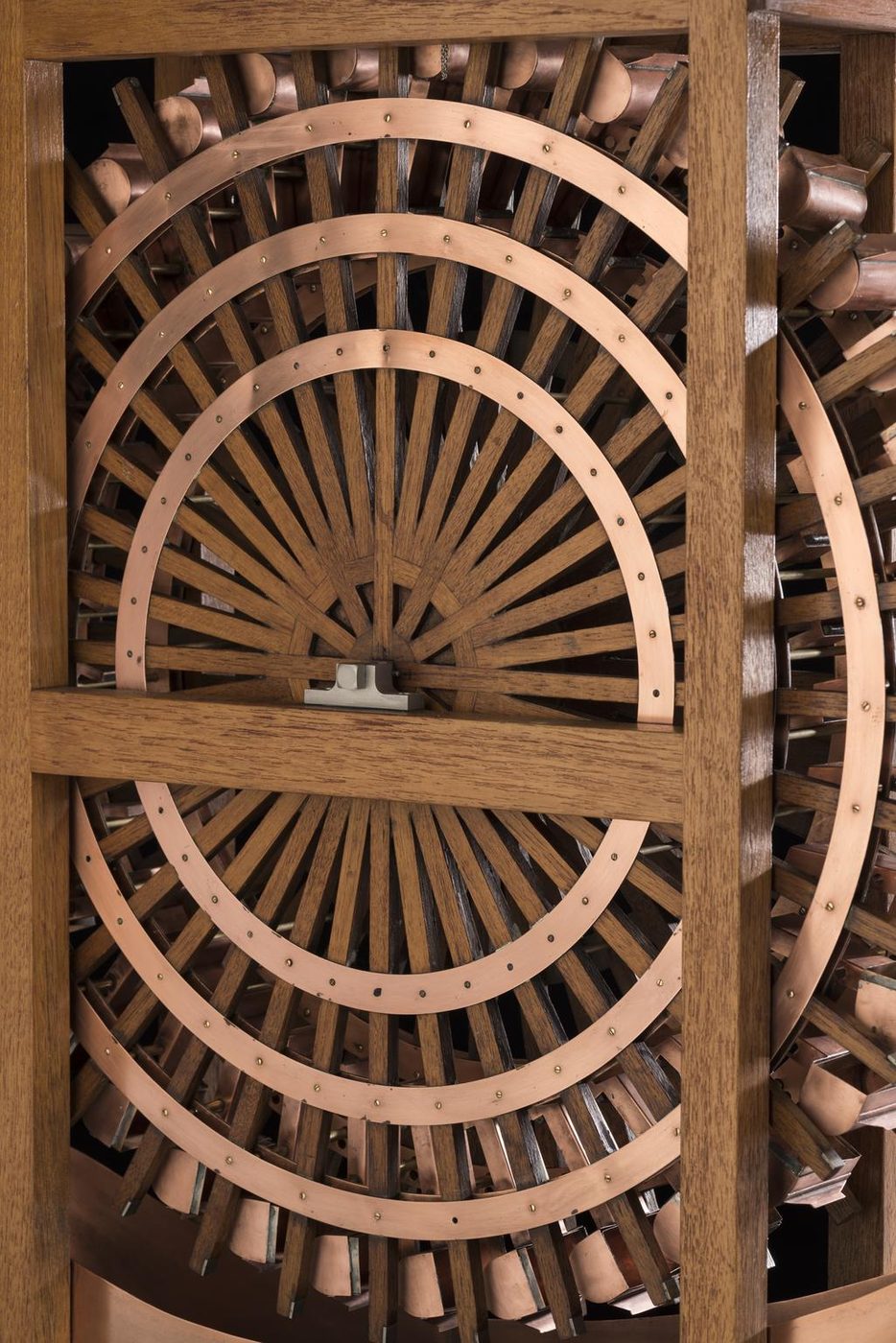
Scale model, (scale 1:6), of Su Song's astronomical clock-tower water-balance escapement, originally used in 1088. Model made in 1965.
- Maker / attribution
- Science Museum; Su Song (maker); Science Museum (maker)
- Date
- 1965
- Historical period
- Modern Mechanical Horology (1945 – 1969)
- Country of origin
- England
- Place
- South Kensington, Kensington and Chelsea, London, Greater London, England, United Kingdom, South Kensington
- Object type
- Mock-up; escapement; historical model
- Dimensions
- overall: 750 mm x 730 mm x 225 mm,
- Holding institution
- Science Museum Group, London
- Accession / object no.
- 1965-8
- Credit line
- Science Museum
- Catalogue title (original)
- Scale model of Su Song's Water-Balance Escapement
Record summary
Held and catalogued by Science Museum Group, London (object number 1965-8), this is a mock-up; escapement; historical model by Science Museum; Su Song, made in South Kensington, Kensington and Chelsea, London, Greater London, England, United Kingdom, South Kensington, dated 1965. The Atlas places it in the Modern Mechanical Horology period (1945 – 1969) of its Movements & Components collection. Recorded dimensions: overall: 750 mm x 730 mm x 225 mm. The record is illustrated with 4 photographs.
Assembled from the source record's structured fields. Dates and attributions are given as the source states them; where a field is missing the Atlas leaves it blank rather than estimating.
Catalogue description
Science Museum Group description
There was a tradition of mechanical knowledge in China for thousands of years before the mechanical clock arrived in China from Europe in the late 1500s. In the 1960s, scholars rediscovered an ancient text about a water-powered astronomical clock tower made in China by Su Song (1020-1101, Song dynasty) in 1088. The text revealed that the clock tower contained a waterwheel which functioned as an escapement. An escapement is a mechanism which controls the release of energy in small quantities at regular intervals. It is an essential part of mechanical clocks. This discovery challened the long-held belief that mechanical clocks originated entirely in Europe. In fact, some elements of the invention may have emerged in multiple locations throughout history, including China. This scale model was made by the Science Museum Workshops in 1965.
Historical context
Modern Mechanical Horology (1945 – 1969)
Tool watches for divers, pilots and astronauts; electric watches anticipate the electronic age.
Automatic winding, shock protection (Incabloc), and high-beat movements; electric and tuning-fork movements appeared.
Read the period in the timelineMore movements & components from this periodEarlier: Golden Age of Mechanical Watchmaking
Atlas type guide
Escapements and escapement models
The escapement is the heart of every mechanical clock and watch: it releases the gear train one tooth at a time and gives small impulses to the oscillator (pendulum or balance) to keep it swinging. The verge (thirteenth century), anchor (c. 1670), deadbeat (c. 1715), cylinder (1720s), lever (c. 1755), detent (1780s) and co-axial (1970s) escapements each solved problems of friction, recoil and isochronism in different ways.
Large demonstration models of escapements were made for teaching in horological schools, for patent applications and for exhibitions. They are valuable because they make visible, at large scale, the minute interactions that take place in a watch many times per second.
What to look for
- The shape of the escape wheel teeth: crown wheel (verge), pointed (anchor), club-toothed (Swiss lever), ratchet (English lever), or two-tiered (co-axial).
- Pallets: flags on an arbor (verge), anchor-shaped, jewelled lever fork, or a detent spring.
- Whether impulse is given directly, through a lever, or in one direction only (detent).
- Teaching models usually carry the name of a school or demonstrator.
Dating clues
- Verge: c. 1275–1850.
- Anchor and deadbeat for clocks: after c. 1670 and c. 1715.
- Club-tooth Swiss lever: standard after c. 1880; co-axial in series from 1999.
General guidance written by the Atlas editors about this kind of object. It is not a statement about this particular piece; for that, rely on the source record above and on physical examination.
Read next:Verge escapementAnchor (recoil) escapementDetached lever escapementSpring detent escapementCo-axial escapementGrasshopper escapementEscapement simulation lab
Related records
Movements & Components · 1944-1947
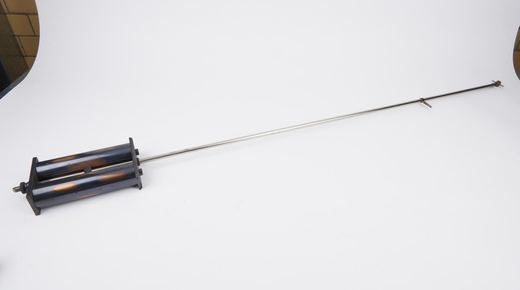
Pendulum from the Parriss rolling-ball free pendulum clock, by E. G. Parriss, Nuneaton, England, 1944-1947
Science Museum Group, London
Movements & Components · 1945-1964
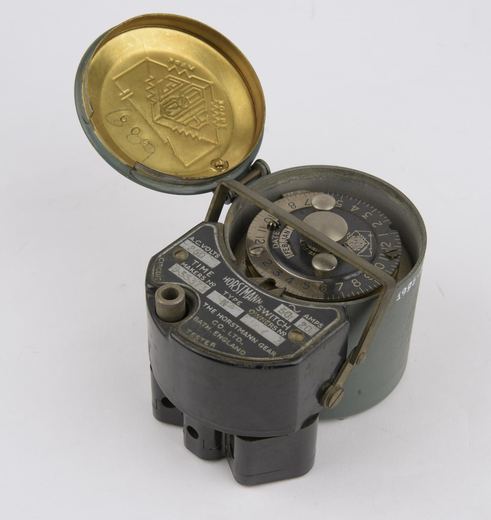
Clockwork timeswitch with electric wind, and with months dial, by the Horstmann Gear Co. Ltd., Bath, England
Science Museum Group, London
Movements & Components · 1947-1949
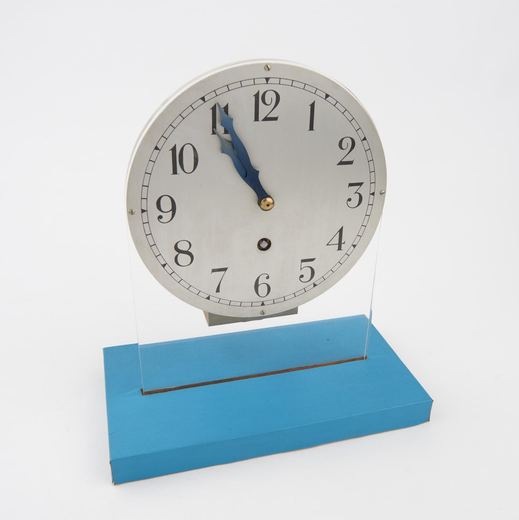
Eight-day pendulum table clock with star-wheel magnetic escapement, in perspex case, 1947-1949
Science Museum Group, London
Movements & Components · 1947-1949
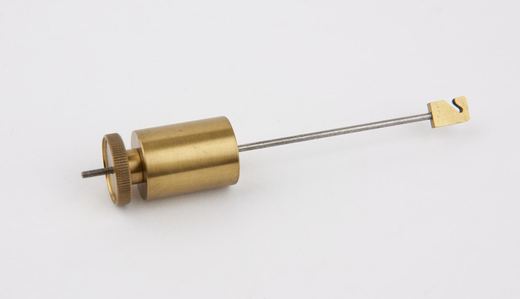
Pendulum weight for eight-day pendulum table clock with star-wheel magnetic escapement, 1947-1949
Science Museum Group, London
Movements & Components · 1947-1949
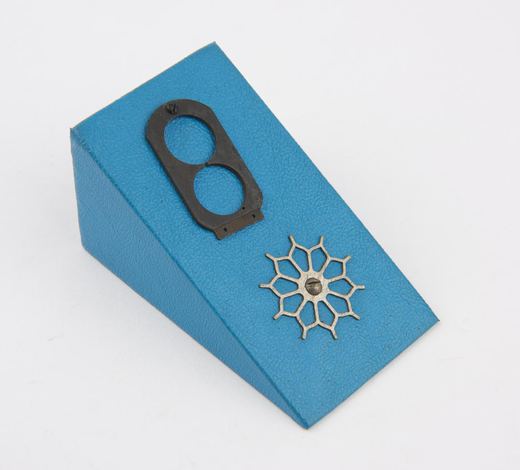
Spare star-wheel and magnet mounted on a small block for eight-day pendulum table clock with star-wheel magnetic escapement, in perspex case, 1947-1949
Science Museum Group, London
Movements & Components · 1960-1965
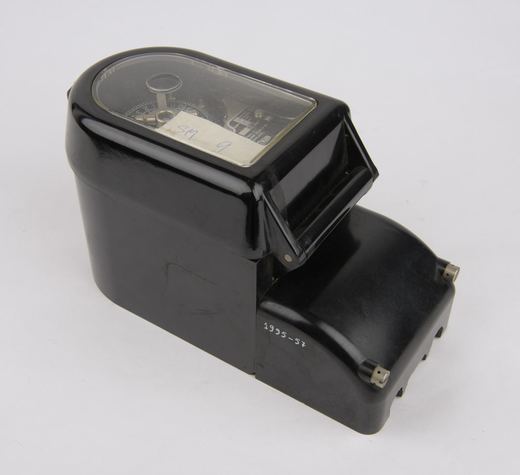
Clock movement by Horstmann Gear Co. Ltd. (maker), England, 1960-1965
Science Museum Group, London
Movements & Components · 1960-1969
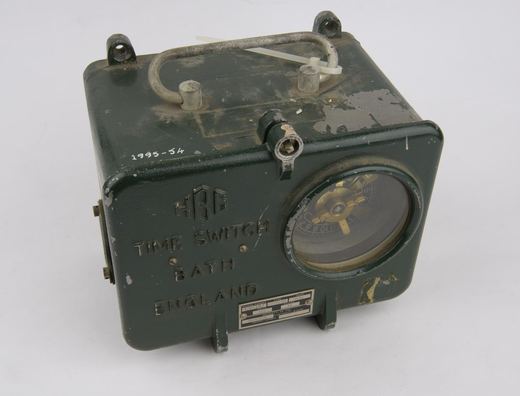
Clock movement by Horstmann Gear Co. Ltd. (maker), England, 1960-1969
Science Museum Group, London
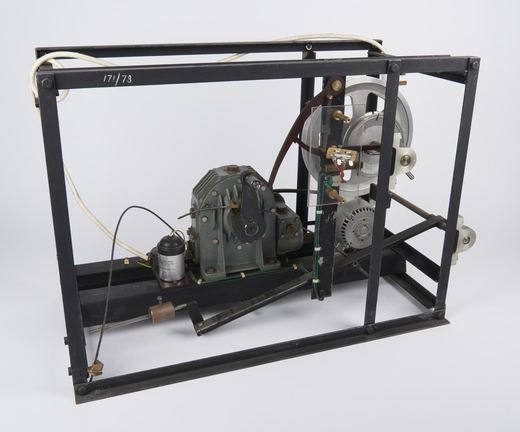
Movements & Components · 1961-1974
Electrical winding mechanism for reconstruction of Dondi clock. Reconstruction made from detailed account of astrarium written by Dondi, 1961-1974
Science Museum Group, London