Pocket Watches · Pocket watch
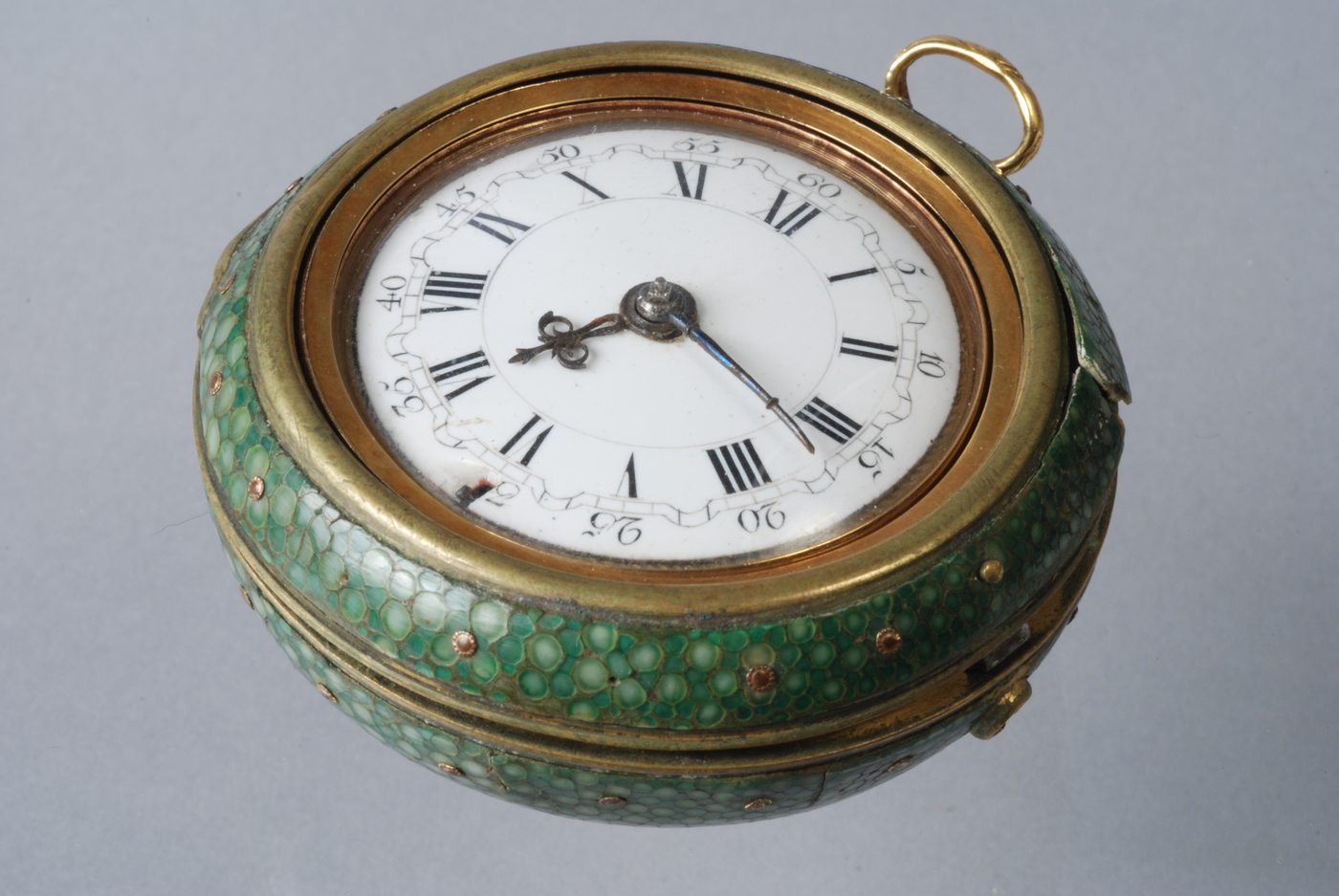
Pocket watch by Cornelis Uyterweer, France, 1730
- Maker / attribution
- Cornelis Uyterweer (creator)
- Date
- 1730
- Historical period
- Early Modern Horology (1600 – 1750)
- Country of origin
- France
- Object type
- Pocket watch
- Holding institution
- Museum Rotterdam
- Accession / object no.
- europeana_fashion_5225_A_C
- Catalogue title (original)
- Zakhorloge met beschermkap van groen roggeleer in gouden buitenkast met voorstelling 'Oordeel van Paris' en binnenkast en met emaille wijzerplaat (Dutch)
Record summary
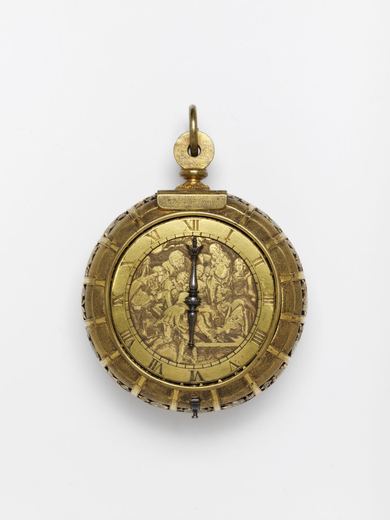
Held and catalogued by Museum Rotterdam (object number europeana_fashion_5225_A_C), this is a pocket watch by Cornelis Uyterweer, made in France, dated 1730. The Atlas places it in the Early Modern Horology period (1600 – 1750) of its Pocket Watches collection. The record is illustrated with 1 photograph.
Assembled from the source record's structured fields. Dates and attributions are given as the source states them; where a field is missing the Atlas leaves it blank rather than estimating.
Catalogue description
Catalogue description from Museum Rotterdam (Dutch)
Wit emaille wijzerplaat met minuutboogjes en Arabische cijfers voor de minuten en Romeinse cijfers voor de uren. Stalen wijzer van het zogenoemde 'beetle-and-poker' type. Gladde gouden binnenkast. Het uurwerk met spillegang, met snek. Waaiervormige pilaren, aan de bovenzijde ajourgezaagd. Ajourgezaagde stuiting voor de snek. Op de achterplatine een zilveren gesloten brug met een gedreven voorstelling van Amor bij een vogelnest, waaruit een gevleugeld hart opvliegt. Onder de niervormige opening met glasruitje de tekst: "LE.VOLAGE.ME.FUIT". Daarachter het zichtbare gedeelte van de balans in de vorm van een gegroefd lensje. Naast de kloof een vierkante geblauwde stift voor de regulage. Rond de signatuur een ajourgezaagd floraal ornament. De gouden buitenkast met een ornamentband met faunen die muziekmaken, een hoorn des overvloeds dragen, bellen blazen. In het centrum een scene met de ontvangst van een hooggeplaatst persoon door een vorst (?), die een geschenk aanvaardt. Op de achtergrond Mercurius en twee Moorse bedienden. Sluitring versierd met schelpen, honden, vogels temidden van florale ornamenten. Kom gevoerd met roze zijde (-achtig) materiaal. Beschermkast van messing, aan de buitenzijde voorzien van groen roggeleer, vastgenageld met messing nageltjes. De kom (en oorspronkelijk ook de sluitring) is gevoerd met segmenten rode fluweel stof.
Shown in the original language of the source catalogue. An editor-reviewed English translation has not yet been published; we do not publish machine translations as authoritative text.
Historical context
Early Modern Horology (1600 – 1750)
Huygens' pendulum and balance spring transform accuracy; English makers develop the anchor and deadbeat escapements.
The balance spring (c. 1675) improved watches dramatically and introduced the minute hand. English pair-cased verge watches with pierced balance cocks and French oignons were typical; enamel painting at Blois and Geneva, and the repeating watch (1680s), made watches objects of great refinement.
Read the period in the timelineMore pocket watches from this periodEarlier: Renaissance Horology
Atlas type guide
Pocket watches
The pocket watch was the dominant personal timekeeper from the late seventeenth century until the First World War. Its development tracks the history of the escapement: verge watches with fusees until the late eighteenth century; Thomas Mudge's lever escapement (c. 1755) and the cylinder escapement popularised by George Graham and later by Swiss makers; and the Swiss and English lever watches of the nineteenth century. Lépine's bar-bridge calibre and keyless winding made watches thinner and easier to use.
Industrialisation transformed the trade: American factories such as Waltham (from 1850) and Elgin produced interchangeable parts by machine, and Swiss makers responded with their own mechanisation after the 1876 Philadelphia Exhibition. By 1900 a reliable watch was affordable to millions; the finest makers continued to produce complications and precision watches.
What to look for
- The escapement: verge (crown wheel), cylinder, duplex, English or Swiss lever.
- Key winding (a square arbor in dial or back) or keyless crown winding.
- Signatures and serial numbers on the movement, dial and inside case back.
- Hallmarks, case maker's marks and gold or silver standards stamped in the case.
- Dial material: enamel, silver, gold, later printed metal.
Dating clues
- Verge watches dominate before c. 1800; cylinder watches c. 1770–1900; lever watches after c. 1820.
- Keyless winding: increasingly common after c. 1860.
- Manufacturer serial number lists exist for Waltham, Elgin, Longines, Omega, Patek Philippe and others.
General guidance written by the Atlas editors about this kind of object. It is not a statement about this particular piece; for that, rely on the source record above and on physical examination.
Related records
Pocket Watches · 1730
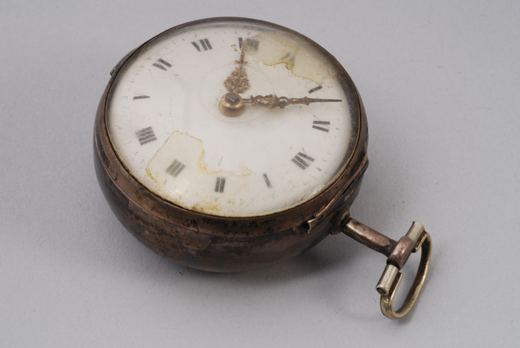
Pocket watch by Cornelis Uyterweer, 1730
Museum Rotterdam
Pocket Watches · 1750
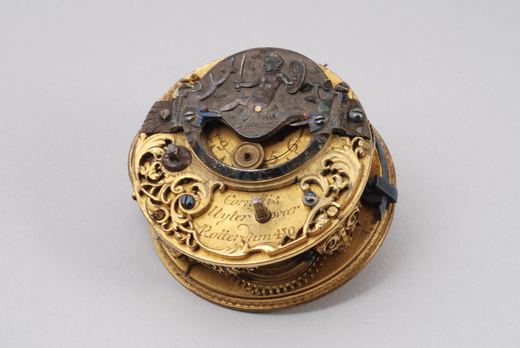
Pocket watch by Cornelis Uyterweer, 1750
Museum Rotterdam
Pocket Watches · 1600
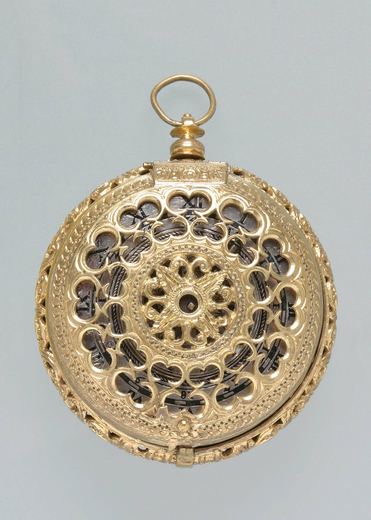
Pocket watch by Hans Reinboldt, France, 1600
German Clock Museum
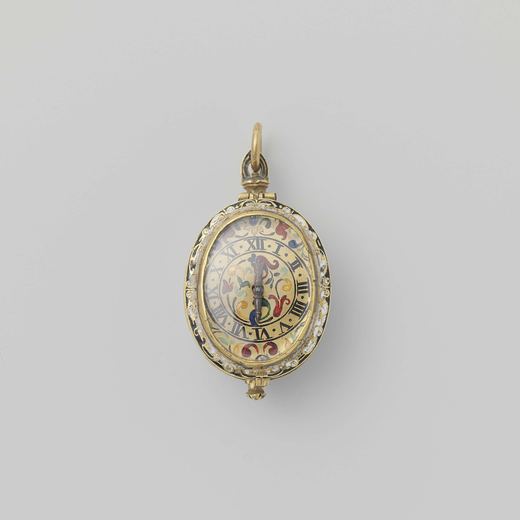
Pocket Watches · 1600
Pocket watch by anoniem, France, 1600
Rijksmuseum
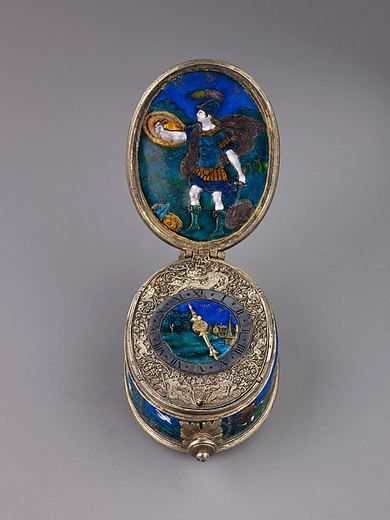
Pocket Watches · first quarter of 17th century
Watch by Suzanne de Court, France, first quarter of 17th century
The Metropolitan Museum of Art, New York
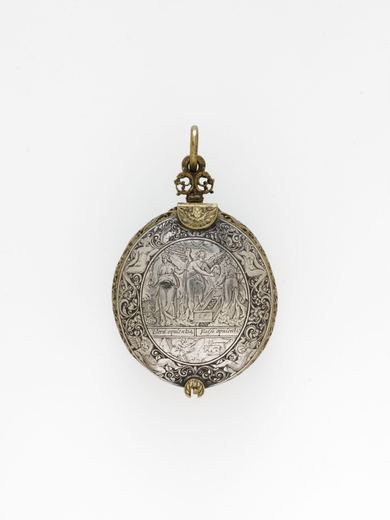
Pocket Watches · early 17th century
Watch of engraved and pierced silver and gilt brass, signed 'Noel Hubert A Rouen', France, early 17th century
Victoria and Albert Museum, London
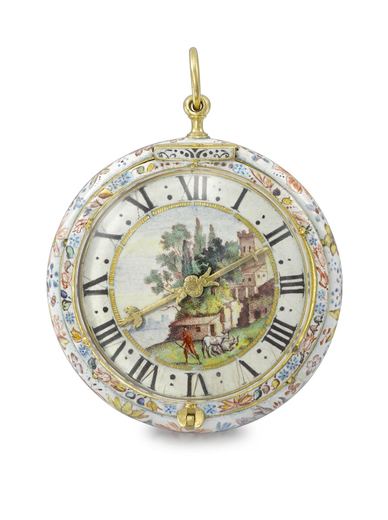
Pocket Watches · 1601-1700
Pocket watch by Margotin, D, France, 1601-1700
Science Museum Group, London
Pocket Watches · 1630
Carriage watch with gilt brass case and engraved dial by Nicolas Lemaindre, Blois, 1630
Victoria and Albert Museum, London