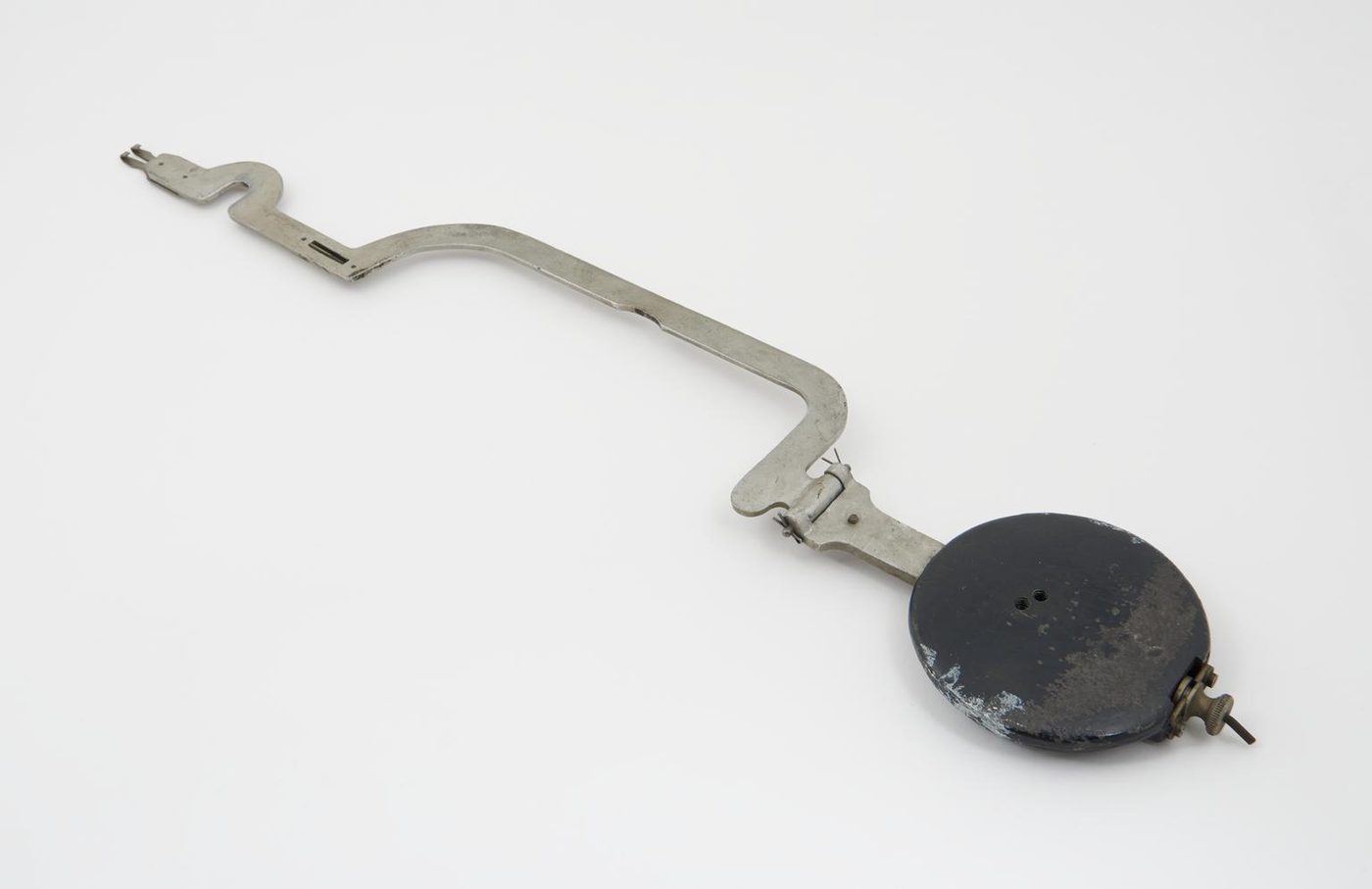
Movements & Components · Pendulum - timepiece
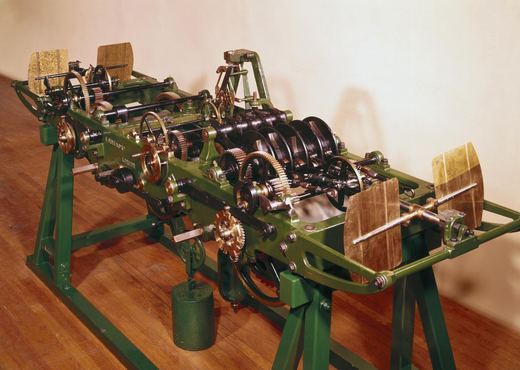
Pendulum from the time recorder, by the British Time Recorder Co. Ltd, London, England, 1940-1970
- Maker / attribution
- British Time Recorder Company Limited (maker)
- Date
- 1905
- Historical period
- Golden Age of Mechanical Watchmaking (1900 – 1945)
- Country of origin
- England
- Place
- London, Greater London, England, United Kingdom, London
- Object type
- Pendulum - timepiece
- Holding institution
- Science Museum Group, London
- Accession / object no.
- 2004-173/3
- Credit line
- BT Group plc
- Catalogue title (original)
- Pendulum, from time recorder
Record summary
Held and catalogued by Science Museum Group, London (object number 2004-173/3), this is a pendulum - timepiece by British Time Recorder Company Limited, made in London, Greater London, England, United Kingdom, London, dated 1905. The Atlas places it in the Golden Age of Mechanical Watchmaking period (1900 – 1945) of its Movements & Components collection. The record is illustrated with 1 photograph.
Assembled from the source record's structured fields. Dates and attributions are given as the source states them; where a field is missing the Atlas leaves it blank rather than estimating.
Catalogue description
Science Museum Group description
"Clocking in" time recorder, made by the British Time Recorder Co. Ltd, London, England and used at the General Post Office (GPO) Central Telegraph Office on the corner of Newgate Street and St Martin's Le Grand, London for exchange workers clocking in and out from 1905 onwards.
Historical context
Golden Age of Mechanical Watchmaking (1900 – 1945)
The wristwatch displaces the pocket watch; waterproof cases, self-winding and grand complications.
Precision lever movements, electric clock mechanisms and new alloys (invar, elinvar) characterised the period.
Read the period in the timelineMore movements & components from this periodEarlier: Industrial Revolution
Atlas type guide
Pendulums, balances and balance springs
The oscillator determines a timekeeper's rate. Galileo observed the near-isochronism of the pendulum; Huygens applied it to clocks in 1656 and the balance spring to watches in 1675. Temperature changes alter pendulum length and balance-spring elasticity, so eighteenth- and nineteenth-century makers devised compensation: Graham's mercury pendulum, Harrison's gridiron, bimetallic split balances for chronometers and watches, and Charles-Édouard Guillaume's invar and elinvar alloys (Nobel Prize in Physics, 1920).
Balance springs evolved from flat spirals to Breguet's overcoil (1795) and helical springs for chronometers; twentieth-century alloys (Nivarox) and twenty-first-century silicon springs largely solved temperature and magnetism problems.
What to look for
- Compensated pendulums: multiple rods of steel and brass (gridiron), jars of mercury, or wood and invar rods.
- Bimetallic split balances with screws, versus monometallic (Glucydur) solid balances.
- Overcoil (Breguet) or flat hairsprings; regulator index arms.
- Material names stamped on the balance or spring (e.g. 'Nivarox', 'Glucydur').
Dating clues
- Gridiron and mercury pendulums: from c. 1720–1730.
- Cut bimetallic balances: c. 1780–1950.
- Monometallic balances with self-compensating springs: after c. 1930.
General guidance written by the Atlas editors about this kind of object. It is not a statement about this particular piece; for that, rely on the source record above and on physical examination.
Read next:Balance spring (hairspring)Anchor (recoil) escapement
Related records
Movements & Components · 1900-1935
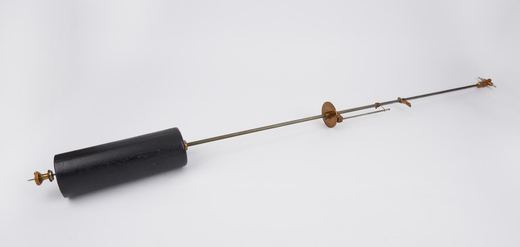
Pendulum from the synchronome clock, by The Synchronome Company Limited, London, England, United Kingdom, 1900-1935
Science Museum Group, London
Movements & Components · 1903
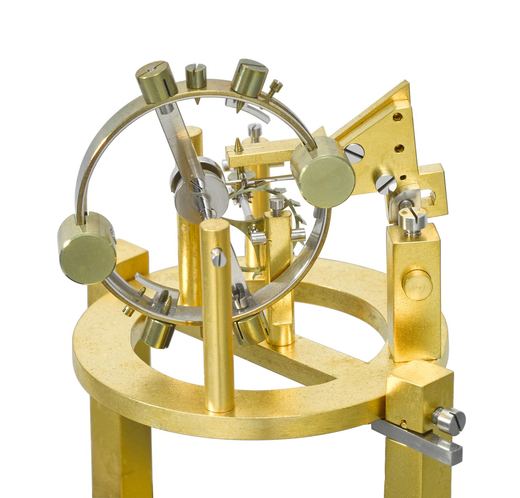
Chronometer escapement mounted as an exhibition model and housed in a domed glazed case. Made by William T. Hayes.
Science Museum Group, London
Movements & Components · 1923-1925
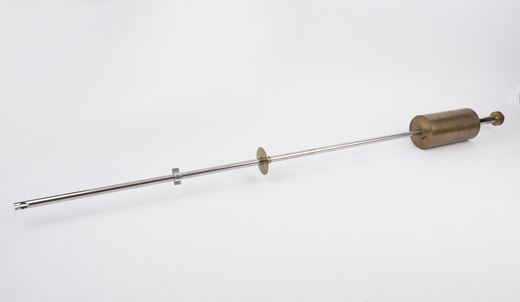
Pendulum from the English Reifler escapement astronomical clock designed by E. T. Cottingham, by Thomas Mercer & Co, St. Albans, England, 1923-1925
Science Museum Group, London
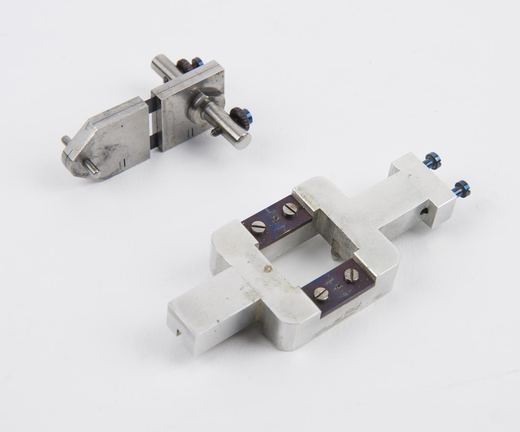
Movements & Components · 1923-1925
Pendulum suspension from the English Reifler escapement astronomical clock designed by E. T. Cottingham, by Thomas Mercer & Co, St. Albans, England, 1923-1925
Science Museum Group, London
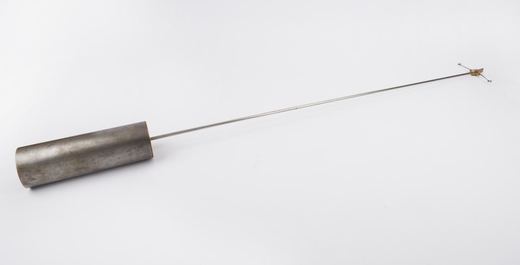
Movements & Components · 1930-1940
Pendulum from the example of the free pendulum clock, by Captain Edwin .E. Craig, Hindhead, Surrey, England, 1930-1940
Science Museum Group, London
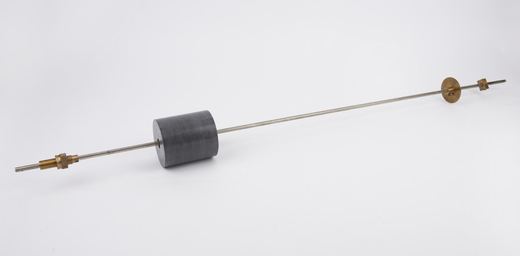
Movements & Components · before 1935
Pendulum from the Shortt free pendulum clock, by the Synchronome Company Limited, London, United Kingdom, 1920-1940
Science Museum Group, London
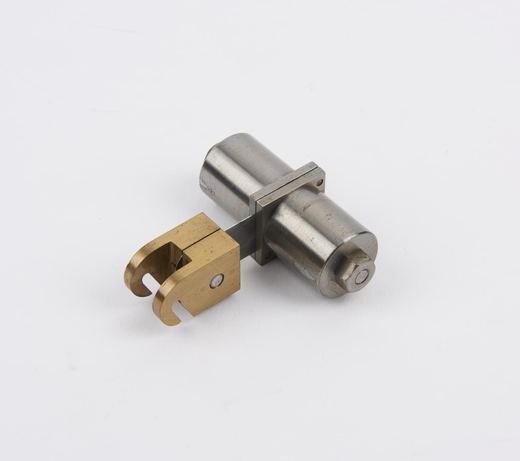
Movements & Components · before 1935
Pendulum top palette from the Shortt free pendulum clock, by the Synchronome Company Limited, London, United Kingdom, 1920-1940
Science Museum Group, London
Movements & Components · 1939
Escapement model by E.Dent and Co.Ltd; Grimthorpe, Edmund Beckett, Baron, 1816-1905, England, 1939
Science Museum Group, London