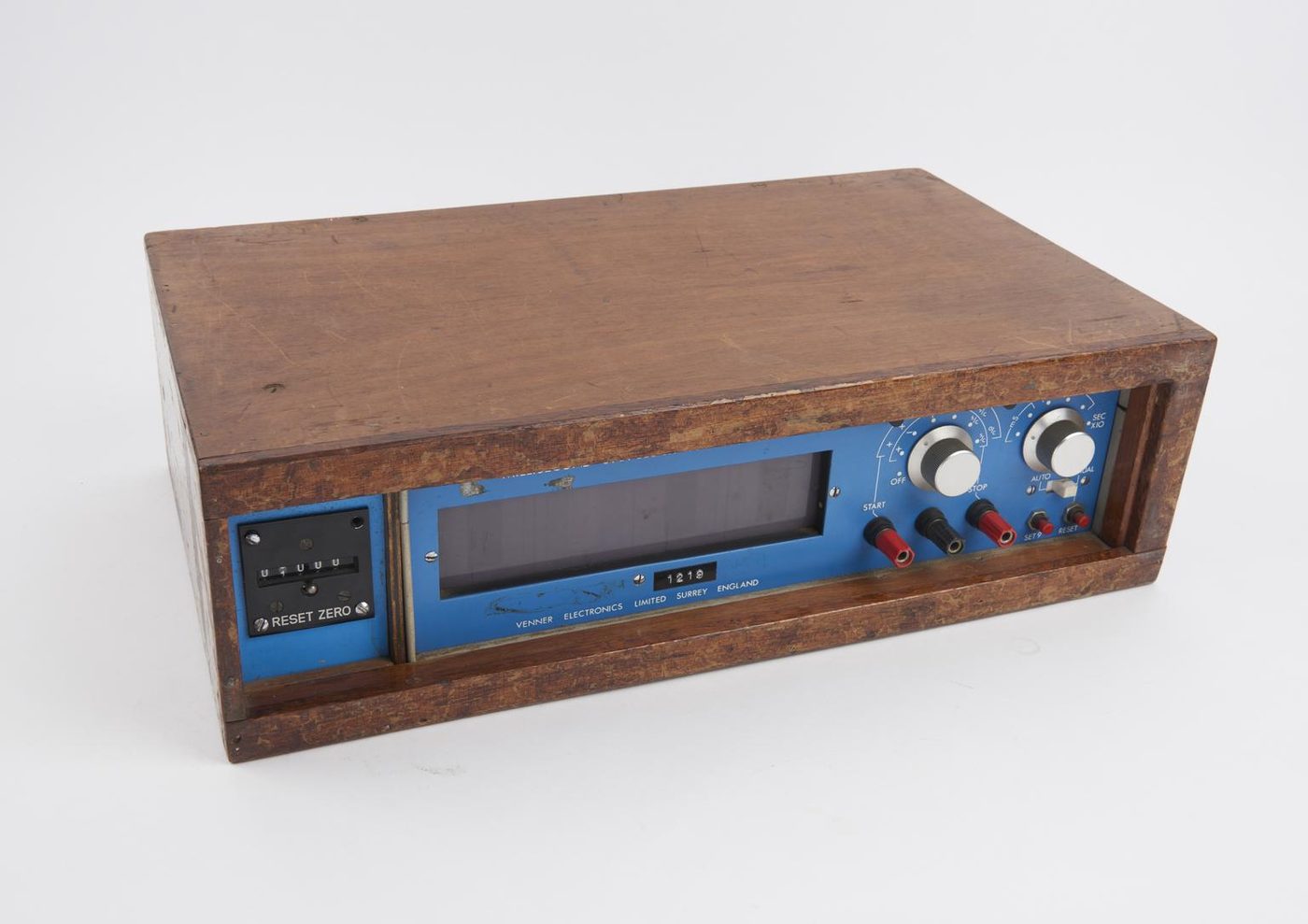
Clocks · Stopclock
Millisecond Stopclock type TSA3314 by Venner Electronics Limited, 1963
- Maker / attribution
- Venner Electronics Ltd. (maker) (maker)
- Date
- 1963
- Historical period
- Modern Mechanical Horology (1945 – 1969)
- Country of origin
- Unrecorded in source
- Object type
- Stopclock
- Holding institution
- Science Museum Group, London
- Accession / object no.
- 1987-238
- Credit line
- Hall, G.
- Catalogue title (original)
- Millisecond Stopclock type TSA3314 by Venner Electronics Limited
Record summary
Held and catalogued by Science Museum Group, London (object number 1987-238), this is a stopclock by Venner Electronics Ltd. (maker), dated 1963. The Atlas places it in the Modern Mechanical Horology period (1945 – 1969) of its Clocks collection. The record is illustrated with 1 photograph.
Assembled from the source record's structured fields. Dates and attributions are given as the source states them; where a field is missing the Atlas leaves it blank rather than estimating.
Catalogue description
The source record does not include a narrative description. The structured fields above are reproduced from it.
Historical context
Modern Mechanical Horology (1945 – 1969)
Tool watches for divers, pilots and astronauts; electric watches anticipate the electronic age.
Post-war clocks combined new materials and industrial design: plastic and metal cases, battery-powered transistor movements from the late 1950s, and design classics by George Nelson, Max Bill and others. The first caesium atomic clock (1955) moved the definition of time from astronomy to physics.
Read the period in the timelineMore clocks from this periodEarlier: Golden Age of Mechanical Watchmaking
Atlas type guide
Quartz, digital and designer clocks
Transistors, integrated circuits and quartz crystals brought precise timekeeping into every household after the 1960s. Quartz clocks divide the 32,768 Hz vibration of a tuning-fork crystal down to one pulse per second to drive a stepping motor or a digital display. Digital clocks with flip cards, nixie tubes, LEDs and LCDs, and clock radios became emblems of modern design.
Designers such as George Nelson, Max Bill, Dieter Rams and Richard Sapper treated the clock as a field for industrial design; manufacturers including Junghans, Kienzle, Braun, Seiko, Citizen and Sony produced landmark models now collected and held by design museums.
What to look for
- Battery compartments and quartz movement labels.
- Display technology: split-flap cards, LED, LCD, vacuum fluorescent.
- Designer names and model numbers on the base or back.
Dating clues
- Transistorised clocks: from the late 1950s.
- Consumer quartz clocks: from the early 1970s.
- Radio-controlled clocks: from the mid-1980s.
General guidance written by the Atlas editors about this kind of object. It is not a statement about this particular piece; for that, rely on the source record above and on physical examination.
Related records

Clocks · 1873–2021
Clock, Poland, 1873–2021
The International Center for Information Management Systems and Services
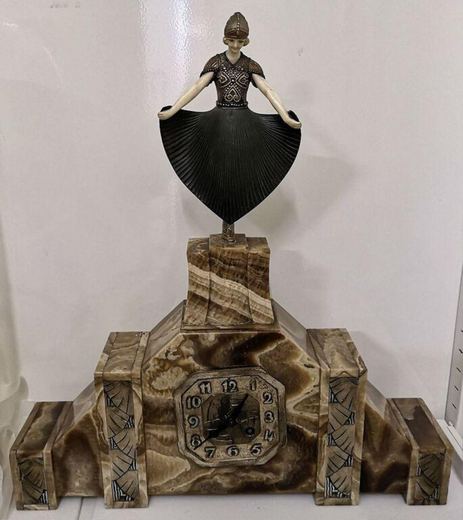
Clocks · 20th century
Base Metal, 20th c. Bronze, marble and ivory clock by Chiparus
Victoria and Albert Museum, London
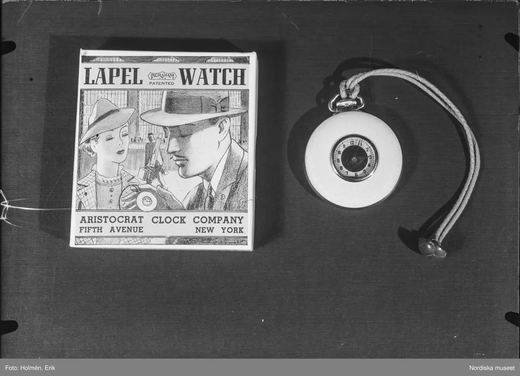
Clocks · 1900–1999
Clock by Erik Holmén, 1900–1999
Nordic Museum Foundation
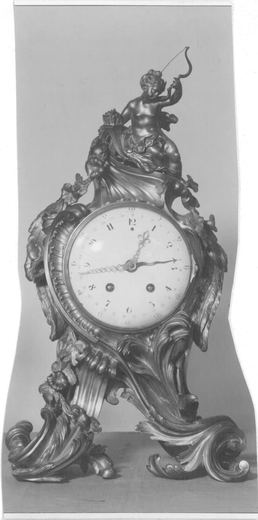
Clocks · 1900–1999
Clock by Französisch (Schule), 1900–1999
Fine Arts Museum Vienna
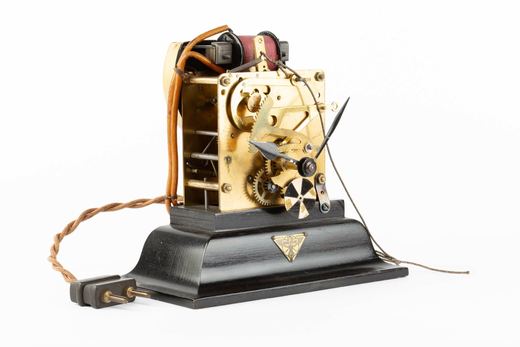
Clocks · 1900–1999
Clock by Friedrich Mauthe, Germany, 1900–1999 (German Clock Museum Museu_ProvidedCHO_museum_digital_59468__technical_number_)
German Clock Museum
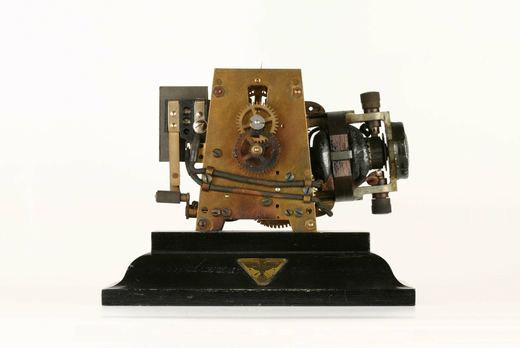
Clocks · 1900–1999
Clock by Friedrich Mauthe, Germany, 1900–1999 (German Clock Museum Museu_ProvidedCHO_museum_digital_59469__technical_number_)
German Clock Museum
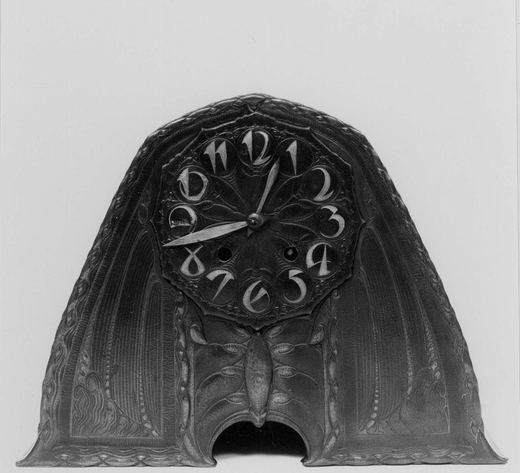
Clocks · 1900–1999
Clock by G. H. Lantman, Netherlands, 1900–1999
Royal Institute for Cultural Heritage
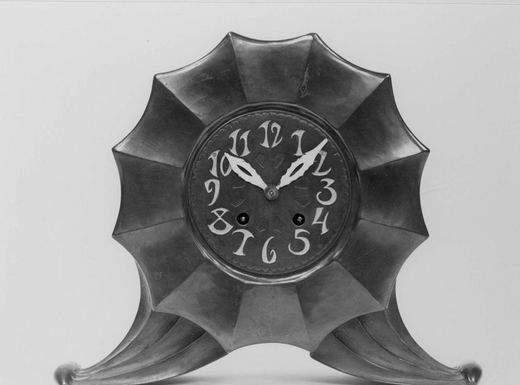
Clocks · 1900–1999
Clock by J. Winkelman, Belgium, 1900–1999
Royal Institute for Cultural Heritage