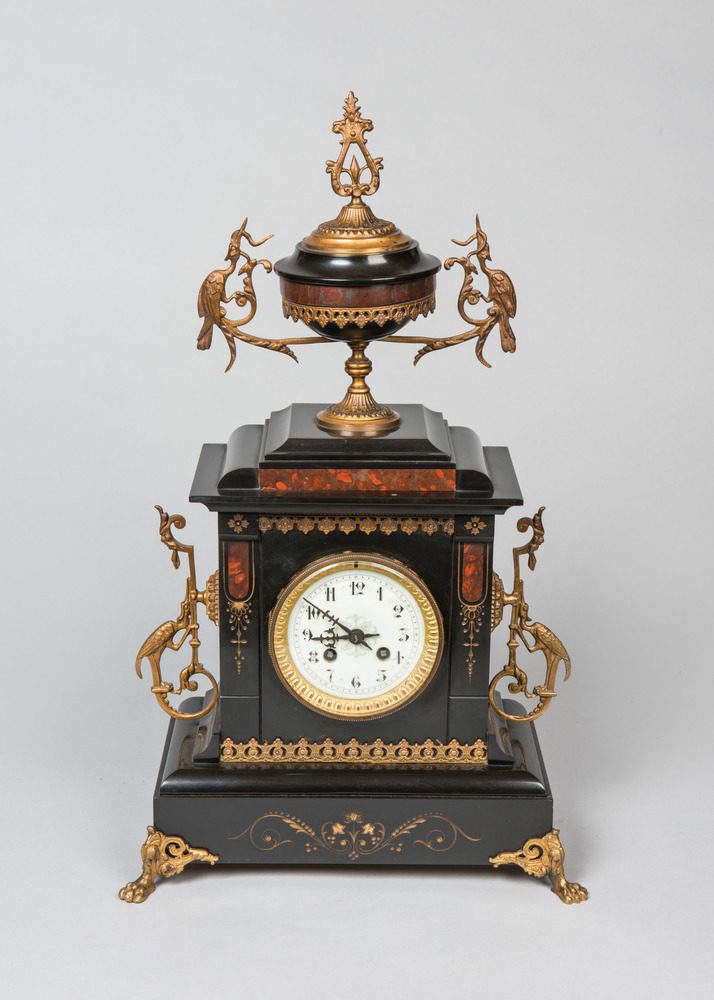
Clocks · Mantel clock
Mantel clock by Anoniem, 1858
- Maker / attribution
- Anoniem (creator)
- Date
- 1858
- Historical period
- Industrial Revolution (1850 – 1900)
- Country of origin
- Unrecorded in source
- Object type
- Mantel clock
- Holding institution
- Geldersch Landschap & Kasteelen
- Accession / object no.
- resource_document_collectiegelderland_P6AYWI76VHEDOUEXWEFZPPYQIW2WJCHDZP4MSQAQYKF3NM43U6RA
- Catalogue title (original)
- Marmeren pendule (Dutch)
Record summary
Held and catalogued by Geldersch Landschap & Kasteelen (object number resource_document_collectiegelderland_P6AYWI76VHEDOUEXWEFZPPYQIW2WJCHDZP4MSQAQYKF3NM43U6RA), this is a mantel clock by Anoniem, dated 1858. The Atlas places it in the Industrial Revolution period (1850 – 1900) of its Clocks collection. The record is illustrated with 1 photograph.
Assembled from the source record's structured fields. Dates and attributions are given as the source states them; where a field is missing the Atlas leaves it blank rather than estimating.
Catalogue description
Catalogue description from Geldersch Landschap & Kasteelen (Dutch)
Pendule met een hoofdvorm van marmer en metalen decoraties. De pendule wordt bekroond door een urn met oren bestaande uit bronzen vogelvormen. Deze bronzen vogel-vorm decoraties bevinden zich ook aan de zijden van de klok. De wijzerplaat is van emaille. Het geheel rust op vier klauw-vormige pootjes.
Shown in the original language of the source catalogue. An editor-reviewed English translation has not yet been published; we do not publish machine translations as authoritative text.
Historical context
Industrial Revolution (1850 – 1900)
American interchangeable-parts manufacture; railroad time standards; Swiss and German factory systems.
Factory production transformed the clock into an everyday object. American makers (Seth Thomas, Ansonia, Waterbury) and German factories (Junghans, Gustav Becker, Lenzkirch) sold millions of shelf, wall and alarm clocks worldwide; France produced standardised Paris movements and carriage clocks; electric time distribution began.
Read the period in the timelineMore clocks from this periodEarlier: Precision & Scientific Horology
Atlas type guide
Mantel and French pendule clocks
The mantel clock — the French pendule de cheminée — is as much decorative art as timekeeper. From the late seventeenth century Parisian clockmakers worked with cabinet-makers, bronze founders and gilders (ciseleurs-doreurs) to create cases in Boulle marquetry, gilt bronze and marble, while the movements were often supplied by specialist makers. Clocks of the Louis XIV, Louis XV and Louis XVI periods, and Empire clocks with allegorical figures, set fashions copied across Europe.
The nineteenth century industrialised the type. The 'Paris movement', a standardised round movement with silk-thread or Brocot suspension and count-wheel striking, was made in huge numbers by firms such as Japy and Vincenti, and fitted into cases of every style and material.
What to look for
- Round 'Paris' movements with makers' stamps (e.g. Japy Frères, Vincenti, S. Marti) and medal marks from exhibitions.
- Suspension type: silk thread (earlier) or Brocot adjustable suspension (after c. 1840).
- Visible Brocot escapement on the dial in later clocks.
- Fire-gilt (mercury) gilding on bronzes versus later electro-gilding.
- Signed dials naming a retailer rather than the movement maker.
Dating clues
- Silk-suspension Paris movements: c. 1800–1850.
- Brocot suspension and visible escapements: after c. 1840.
- Exhibition medal stamps on movements give dates after the medal year.
General guidance written by the Atlas editors about this kind of object. It is not a statement about this particular piece; for that, rely on the source record above and on physical examination.
Read next:Anchor (recoil) escapement
Related records
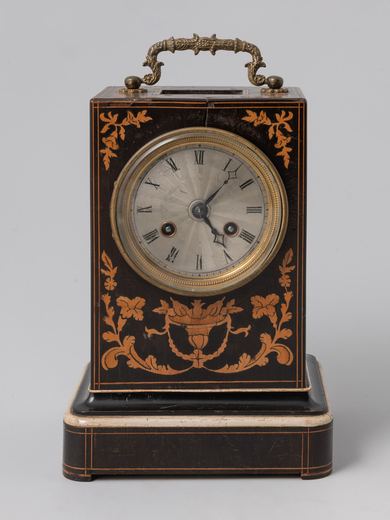
Clocks · 1800
Mantel clock by Anoniem, 1800
Geldersch Landschap & Kasteelen
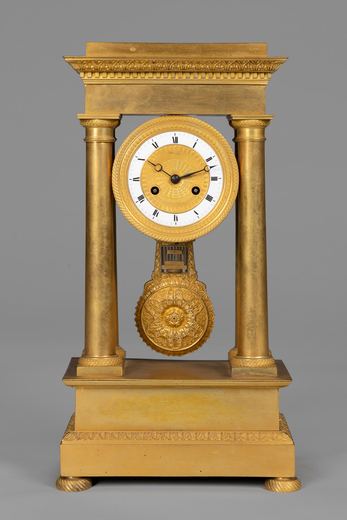
Clocks · 1824
Mantel clock by Anoniem, France, 1824
Geldersch Landschap & Kasteelen
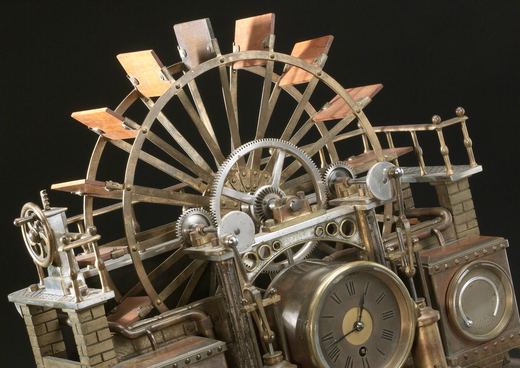
Clocks · 1801-1900
Clock (French) symbolising motive power, gilt bronze finish, with two keys, 1801-1900
Science Museum Group, London
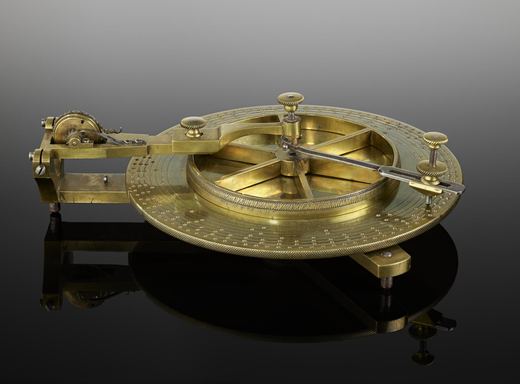
Clocks · 1801-1900
Instrument for ruling clock dials, 1800s.
Science Museum Group, London
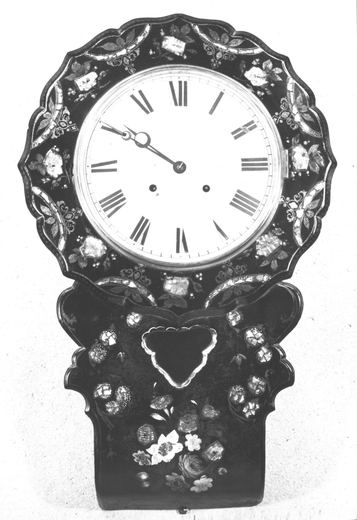
Clocks · 1830-1870
Wall clock in a papier mâché case with painted decoration. English, mid 19th century.
Victoria and Albert Museum, London
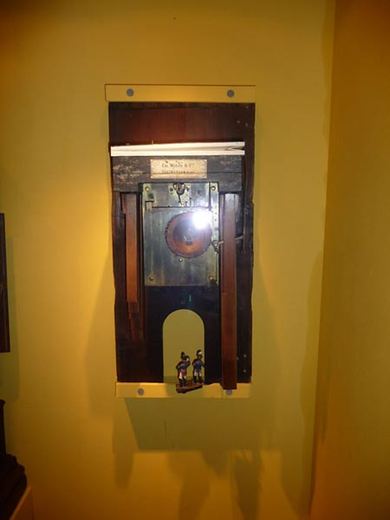
Clocks · 1832–1896
Clock by Emilian Wehrle, Germany, 1832–1896
Badisches Landesmuseum Karlsruhe
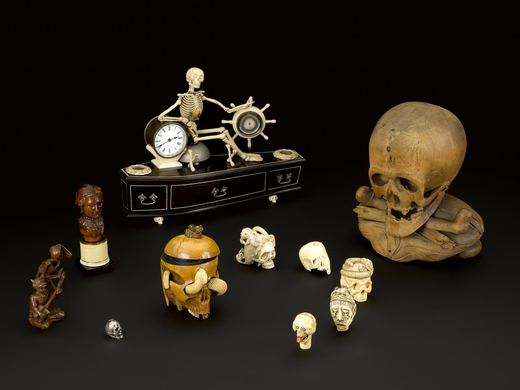
Clocks · 1840-1900
Alarm clock, mounted on model of coffin with skeleton, probably English, 1840-1900
Science Museum Group, London
Clocks · 1840-1880
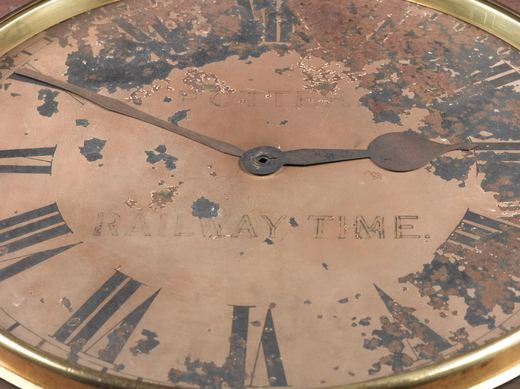
Clock dial marked "Potter, Railway Time" with two hands, unknown maker, British, 1840-1880
Science Museum Group, London