Clocks · Oil-lamp clock
Oil-lamp clock, Einbeck, 1700–1799
- Maker / attribution
- Unrecorded in source
- Date
- 1700–1799
- Historical period
- Early Modern Horology (1600 – 1750)
- Country of origin
- Unrecorded in source
- Place
- Einbeck
- Object type
- Oil-lamp clock
- Holding institution
- Einbeck City Museum
- Accession / object no.
- item_24UHZK4QSTHPHUCNESLASIBGL4LRQGOV
- Catalogue title (original)
- Öluhr Zinn Ambrosius Camona Einbeck (German)
Record summary
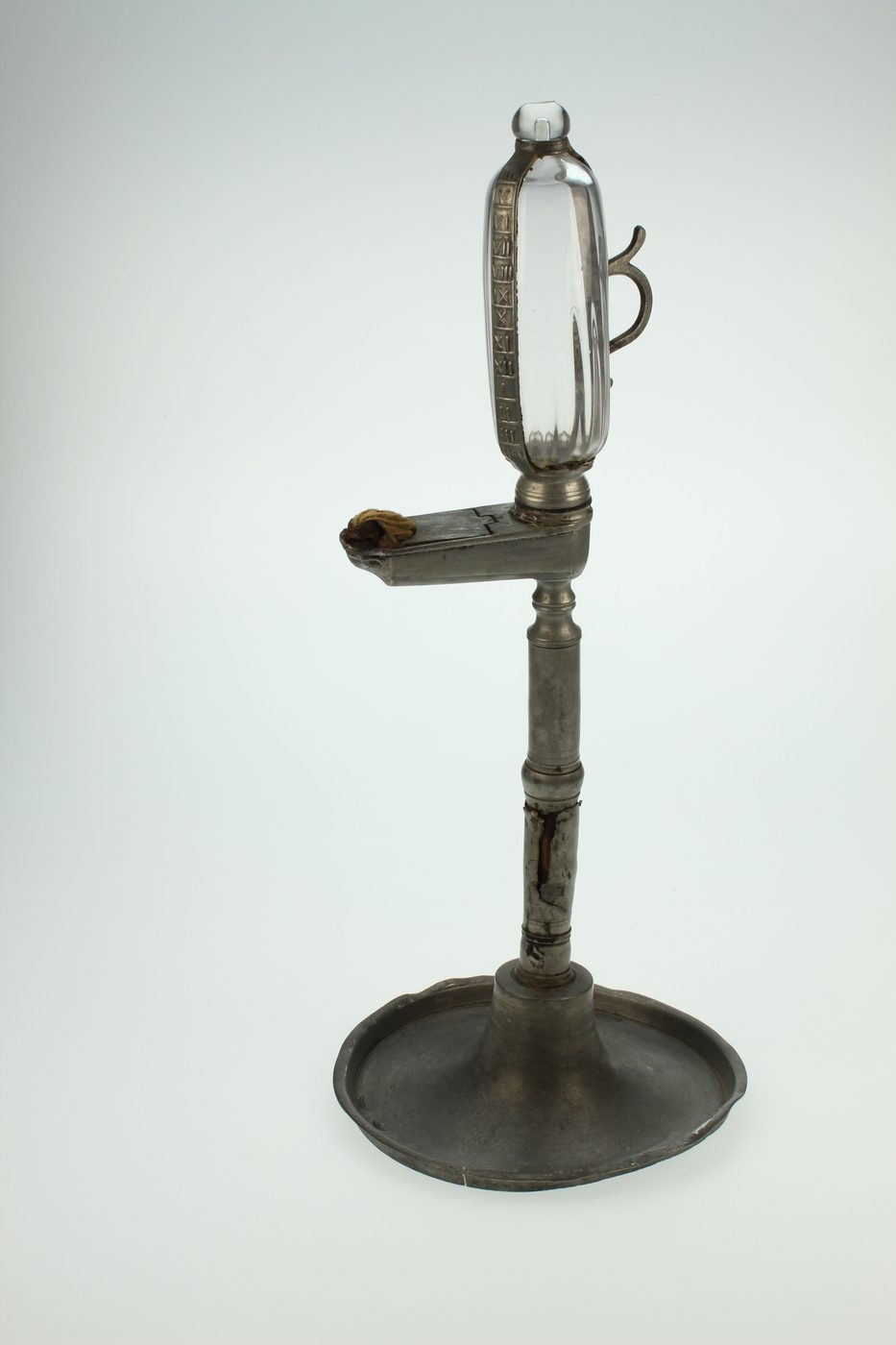
Held and catalogued by Einbeck City Museum (object number item_24UHZK4QSTHPHUCNESLASIBGL4LRQGOV), this is an oil-lamp clock, made in Einbeck, dated 1700–1799. The Atlas places it in the Early Modern Horology period (1600 – 1750) of its Clocks collection. The record is illustrated with 1 photograph.
Assembled from the source record's structured fields. Dates and attributions are given as the source states them; where a field is missing the Atlas leaves it blank rather than estimating.
Catalogue description
Catalogue description from Einbeck City Museum (def)
Öluhr mit Glasaufsatz (Ölbehälter), auf Tellerfuß röhrenförmiger profilierter Hohlschaft, zerbrochen und mit einem eingesteckten Holz geflickt. Tülle mit frisch eingelegtem Docht, Dochthalter korrodiert (Eisen). Glasbehälter leicht gerippt, klar, umfasst von zwei Zinnbändern, eines trägt den Griff, auf dem anderen sind die römischen Zahlen von IV (oben) über XII bis IIII (unten) aufgetragen. - Marke Ambrosius Camona unter der Klappe der Tülle. Drei nur unvollständig abgeschlagene Marken auf dem Tellerfuß.
Historical context
Early Modern Horology (1600 – 1750)
Huygens' pendulum and balance spring transform accuracy; English makers develop the anchor and deadbeat escapements.
Huygens's pendulum (1656–57) improved clock accuracy from about a quarter of an hour to under a minute a day. The anchor escapement (c. 1670) and the long seconds pendulum created the longcase clock; London makers such as Fromanteel, Knibb, Tompion and Quare led European clockmaking, and French makers created the Boulle pendule.
Read the period in the timelineMore clocks from this periodEarlier: Renaissance Horology
Atlas type guide
Water, fire and incense clocks
Before the mechanical clock, intervals and hours were measured by flow and combustion. Outflow and inflow water clocks were used in Egypt, Mesopotamia, Greece, China and the Islamic world; Chinese and Japanese incense clocks burned powdered incense along a maze-like path; oil-lamp clocks with graduated glass reservoirs were popular in German-speaking Europe in the seventeenth and eighteenth centuries.
These timekeepers needed constant correction and could not keep the hour automatically for long periods, but they underpinned temple ritual, legal procedure, astronomy and the earliest monumental astronomical clocks such as Su Song's clock tower (1090s) and al-Jazari's designs (1206).
What to look for
- Graduated vessels or glass reservoirs with hour scales.
- Incense trays with stencils for laying the powder trail.
- Pewter oil-lamp clocks with a glass reservoir marked in Roman numerals.
Dating clues
- Oil-lamp clocks are mostly eighteenth century and often reproduced later.
- Incense clocks were made in China and Japan into the twentieth century.
General guidance written by the Atlas editors about this kind of object. It is not a statement about this particular piece; for that, rely on the source record above and on physical examination.
Read next:Su Song's astronomical clock tower
Related records
Clocks · 1550–1650
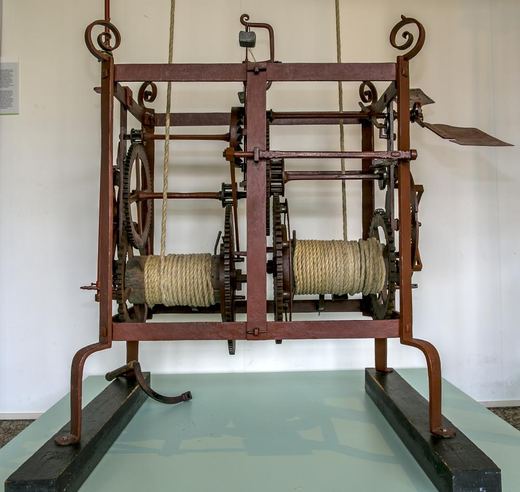
Turret clock, Netherlands, 1550–1650
Museum Klok & Peel
Clocks · case 1554, movement ca. 1680
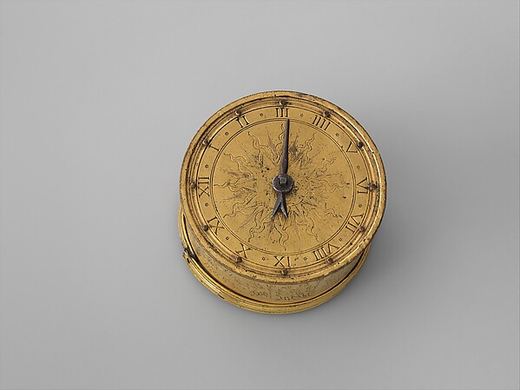
Table clock by Caspar Behaim (Chasparus Bohemus), Austria, case 1554, movement ca. 1680
The Metropolitan Museum of Art, New York
Clocks · 1590–1610
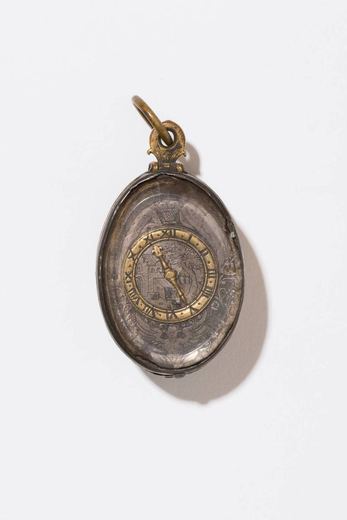
Clock, France, 1590–1610
MAK – Museum of Applied Arts
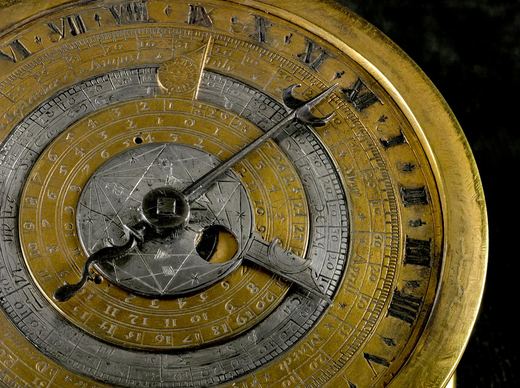
Clocks · 1598-1603
Circular table-clock with calendrical and lunar indications made by Nicholas Vallin in London between 1598 and 1603.
Science Museum Group, London
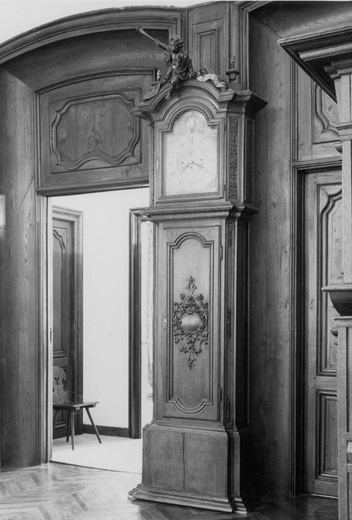
Clocks · 1600–1699
Clock by Joannes Volcker, Belgium, 1600–1699 (Royal Institute for Cultural Heritage AP_10156031)
Royal Institute for Cultural Heritage
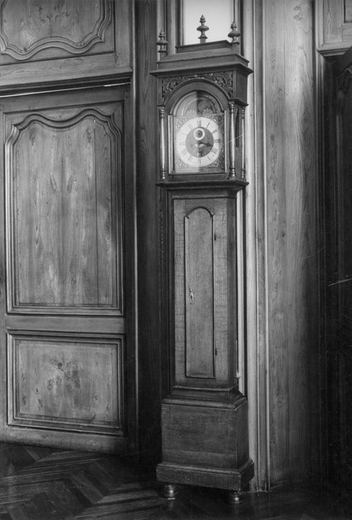
Clocks · 1600–1699
Clock by Joannes Volcker, Belgium, 1600–1699 (Royal Institute for Cultural Heritage AP_10156032)
Royal Institute for Cultural Heritage
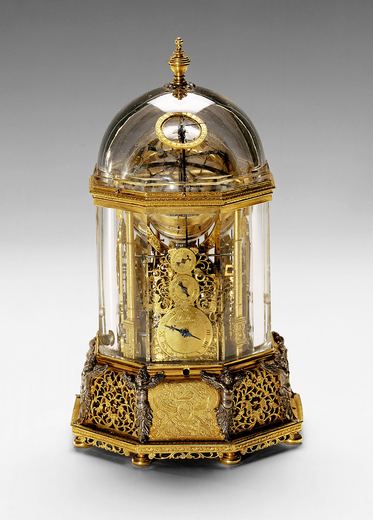
Clocks · 1600–1699
Clock by Jobst Bürgi (ascribed to), Czech Republic, 1600–1699
Fine Arts Museum Vienna
Clocks · 1600-1700
Clock, Germany, 1600-1700
Victoria and Albert Museum, London