Clocks · Clock
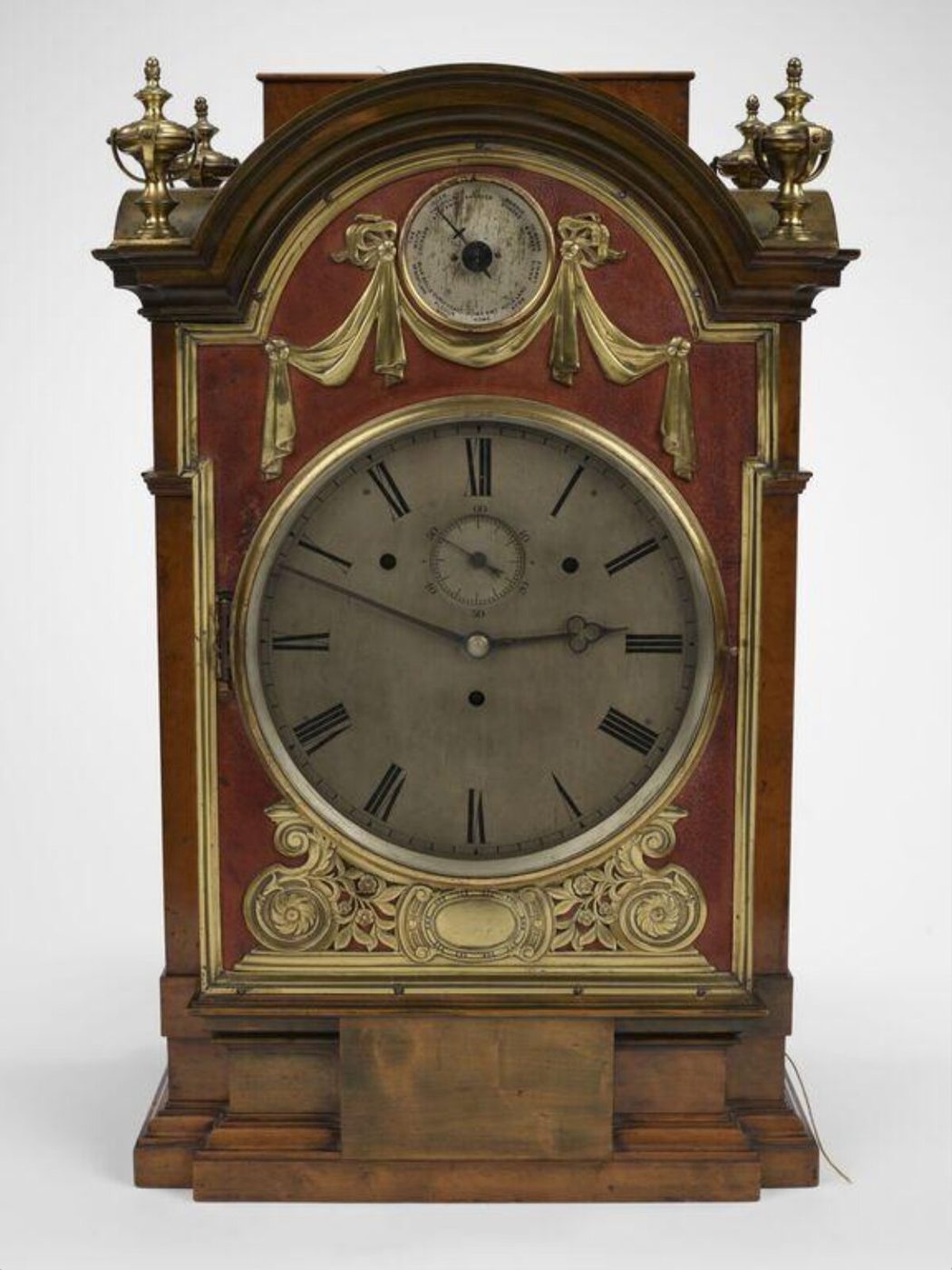
Clock by Richard Norman Shaw, ca. 1890
- Maker / attribution
- Richard Norman Shaw (designer); Robert Christie (maker)
- Date
- ca. 1890
- Historical period
- Industrial Revolution (1850 – 1900)
- Country of origin
- Unrecorded in source
- Object type
- Clock
- Materials / technique
- wood, leather, brass
- Dimensions
- Height: 64.5 cm (whole); Width: 41 cm (whole); Depth: 29 cm (whole)
- Holding institution
- Victoria and Albert Museum, London
- Accession / object no.
- W.11-2021
- Credit line
- Accepted in lieu of Inheritance Tax by H M Government from the estate of Beatrix Cooper and allocated to the V&A, 2021
Record summary
Held and catalogued by Victoria and Albert Museum, London (object number W.11-2021), this is a clock by Richard Norman Shaw, dated ca. 1890. The Atlas places it in the Industrial Revolution period (1850 – 1900) of its Clocks collection. Materials and techniques recorded by the source: wood, leather, brass. Recorded dimensions: Height: 64.5 cm (whole); Width: 41 cm (whole); Depth: 29 cm (whole). The record is illustrated with 4 photographs.
Assembled from the source record's structured fields. Dates and attributions are given as the source states them; where a field is missing the Atlas leaves it blank rather than estimating.
Catalogue description
V&A — Object history
Designed by Richard Norman Shaw for his own use. On an undated page (copy in RF 1997/690) entitled 'Notes by R Norman Shaw RA', and inscribed on a page with a printed letterhead, he described it thus: A very excellent Musical clock all perfectly made and in very good condition, plays 10 tunes on 13 good bells and strikes the hours on a gong. It is believed to have been made by Bryson of Edinburgh, but here is no evience to prove this, Silvered dialo, Common place [sic] hands, Cost £27 - Christie made a green & red case for this clock [cost £] 15- Shirley made the brass repoussé work on dial [cost £] 9- The two circular pierced panels [cost £] 2.? The four small vases [cost £] 3.? So this is a pretty costly Clock!! Provenance: Christie's sale of Shaw's collection of clocks, watches etc., 10 April 1913, lot 43, sold to Webster for 21 guineas.
V&A gallery label
Designed by Richard Norman Shaw (1831-1912) Movement probably made by Alexander Bryson, Edinburgh Case made by Robert Christie Green stained wood, red leather and brass ornaments Anonymous loan Shaw was an energetic clock collector, filling the house the he designed for himself in Hampstead with his collection. This clock appears in photographs of the interiors. The movement, which plays ten tunes, was bought second hand by Shaw for £27. The case cost £30.2.0. to make and Shaw wrote that 'this is a pretty costly clock'. The design of the case is a subtle reworking of Georgian neo-classical forms derived from clock cases and architecture.
Historical context
Industrial Revolution (1850 – 1900)
American interchangeable-parts manufacture; railroad time standards; Swiss and German factory systems.
Factory production transformed the clock into an everyday object. American makers (Seth Thomas, Ansonia, Waterbury) and German factories (Junghans, Gustav Becker, Lenzkirch) sold millions of shelf, wall and alarm clocks worldwide; France produced standardised Paris movements and carriage clocks; electric time distribution began.
Read the period in the timelineMore clocks from this periodEarlier: Precision & Scientific Horology
Atlas type guide
Domestic clocks
A clock combines four systems: a source of power (falling weight, coiled spring, or later electricity), a gear train that divides time, an escapement and oscillator that regulate it (foliot, pendulum or balance), and an indicating system of dial and hands or a bell. Its history runs from the large iron weight-driven clocks of the late thirteenth century to Renaissance spring-driven table clocks, the pendulum revolution of 1656, the factory clocks of the nineteenth century and electric and quartz clocks of the twentieth.
Domestic clocks also reflect regional furniture and decorative traditions — English longcase and bracket clocks, French pendules, Viennese regulators, Black Forest and American shelf clocks — and therefore record changing tastes as much as technical progress.
What to look for
- How the clock is powered: weights, spring barrel, fusee, electric coil.
- The oscillator: foliot, short pendulum, long seconds pendulum or balance.
- Whether it strikes: hour only (count wheel) or hours and quarters (rack striking).
- The maker or retailer's name on dial and movement, and any factory trademarks.
- Signs of alteration — replaced dials, converted escapements, 'married' cases.
Dating clues
- Before 1656 clocks used foliots or balances; after, most domestic clocks have pendulums.
- Anchor escapements spread after c. 1670; minute hands became common at the same time.
- Factory production in America and Germany transformed prices after c. 1840.
General guidance written by the Atlas editors about this kind of object. It is not a statement about this particular piece; for that, rely on the source record above and on physical examination.
Related records
Clocks · 1801-1900
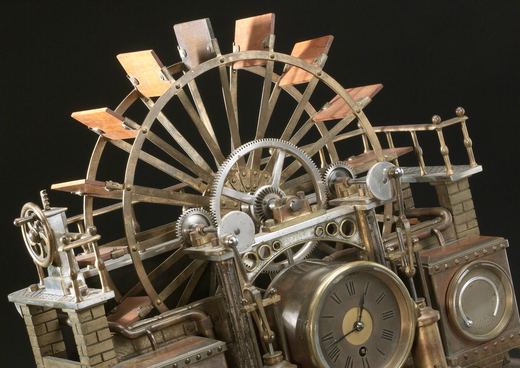
Clock (French) symbolising motive power, gilt bronze finish, with two keys, 1801-1900
Science Museum Group, London
Clocks · 1801-1900
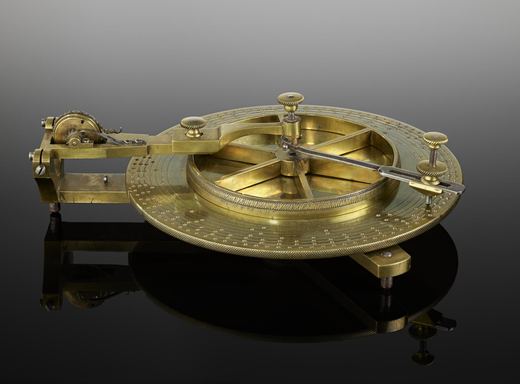
Instrument for ruling clock dials, 1800s.
Science Museum Group, London
Clocks · 1830-1870
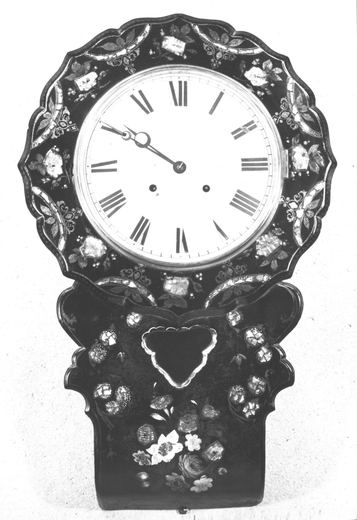
Wall clock in a papier mâché case with painted decoration. English, mid 19th century.
Victoria and Albert Museum, London
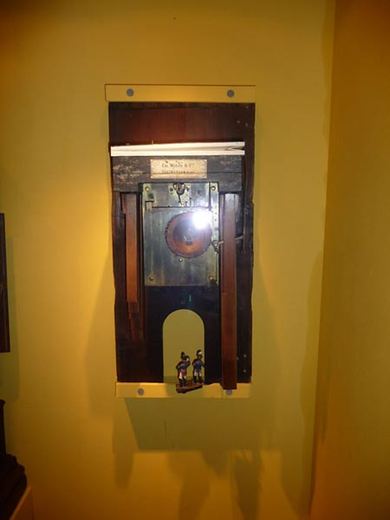
Clocks · 1832–1896
Clock by Emilian Wehrle, Germany, 1832–1896
Badisches Landesmuseum Karlsruhe
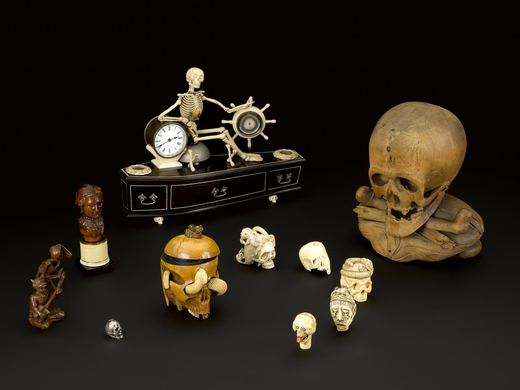
Clocks · 1840-1900
Alarm clock, mounted on model of coffin with skeleton, probably English, 1840-1900
Science Museum Group, London
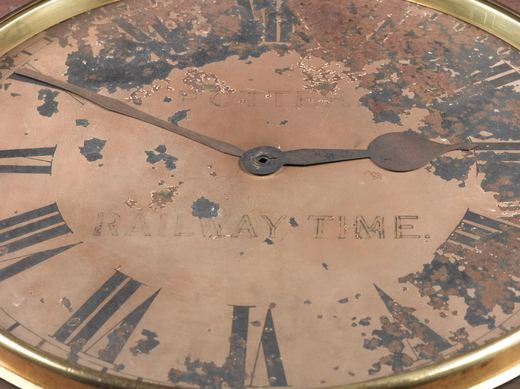
Clocks · 1840-1880
Clock dial marked "Potter, Railway Time" with two hands, unknown maker, British, 1840-1880
Science Museum Group, London
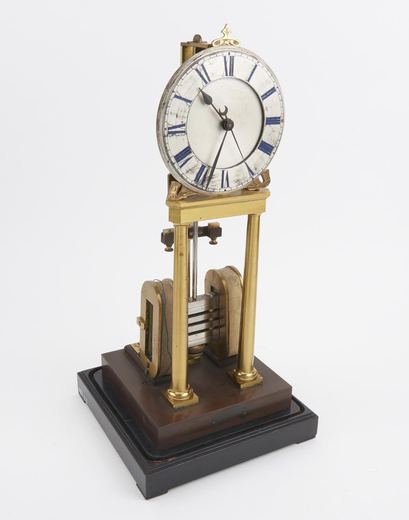
Clocks · 1840-1877
Electric clock of the Bain type
Science Museum Group, London
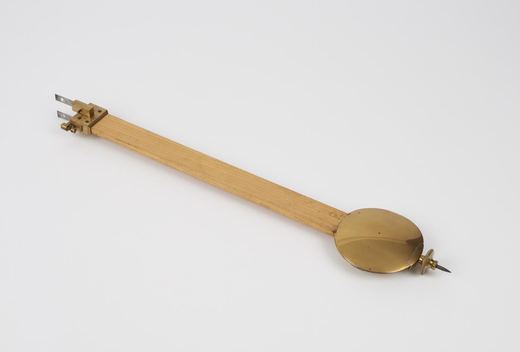
Clocks · 1840-1910
Electrically driven pendulum by Froment, 1840-1910.
Science Museum Group, London