Pocket Watches · Pendant watch
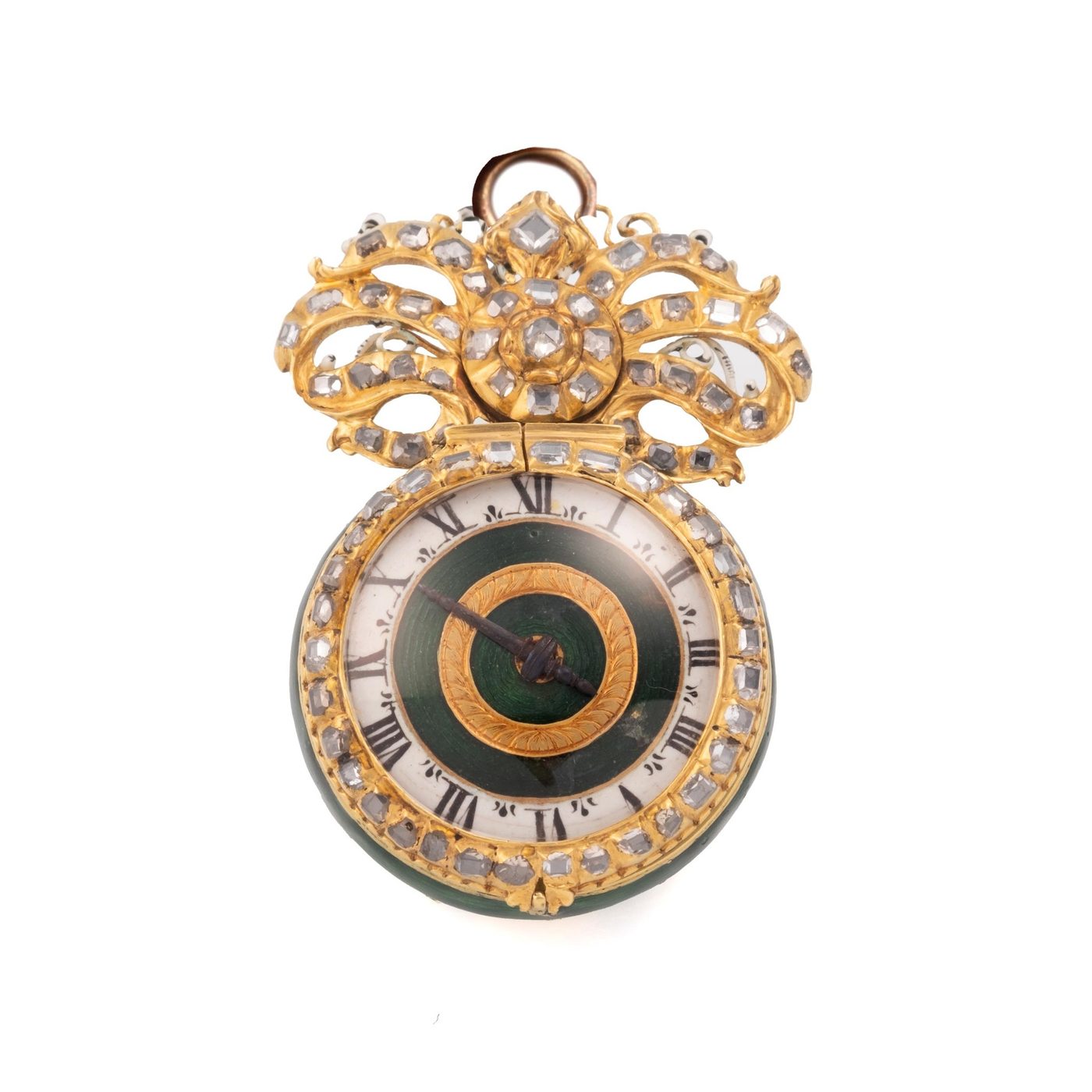
Abram Dufours (Geneve) pendant watch, circa 1640
- Maker / attribution
- Abram Dufours (Geneve) (brand / maker)
- Date
- circa 1640
- Historical period
- Early Modern Horology (1600 – 1750)
- Country of origin
- Switzerland
- Object type
- Pendant watch
- Dimensions
- 33 mm.
- Auction house
- Antiquorum auction archive, Geneva
- Lot
- Lot 381-161
- Credit line
- Auction lot record: LOT 161
- Catalogue title (original)
- ABRAM DUFOURS (GENEVE), SWITZERLAND, PRE-BALANCE SPRING, GOLD, ENAMEL AND DIAMOND SET LADY'S PENDANT WATCH WITH SINGLE HAND AND INTEGRAL RIBBON JEWEL, GOLD
Record summary
Catalogued by Antiquorum auction archive, Geneva (lot Lot 381-161), this is a pendant watch by Abram Dufours (Geneve), made in Switzerland, dated circa 1640. The Atlas places it in the Early Modern Horology period (1600 – 1750) of its Pocket Watches collection. Recorded dimensions: 33 mm. The record is illustrated with 3 photographs.
Assembled from the source record's structured fields. Dates and attributions are given as the source states them; where a field is missing the Atlas leaves it blank rather than estimating.
Catalogue description
Antiquorum catalogue description
An exceptionally fine and equally rare, 20k gold and enamel, manual wind open-face, key-winding pendant watch. The case overlaid with deep green basse taille enamel and a band of chased and engraved gold flowers and leaves in relief, the center with a chased and engraved flower rosette, light blue counter enamel, cut hinged bezel set with 32 irregular cut diamonds in rub-over settings, ribbon form pendant mount set with 42 irregular cut diamonds in rub-over settings, the reverse enameled to match the case and with white and black pendant loop and small additional ribbons enamelled Ronde bosse. Gold dial with white enamel annular chapter ring with small radial Roman numerals and half-hour markers, the center with concentric rings of basse taille enamel to match the case, intersected by a chased and engraved gold ring with stiff-leaf decoration. Steel single hand.
Lot specifications (Antiquorum)
Caliber: 28 mm., gilt brass full-plate, early-type divided Egyptian pillars, fusee with gut line, short four wheel train, steel two-arm balance without spring, small foliate pierced cock secured by a screw, worm and wheel regulator with blued steel foliate brackets and silver regulation dial.; Movement: Notes; Signature: Movement
Historical context
Early Modern Horology (1600 – 1750)
Huygens' pendulum and balance spring transform accuracy; English makers develop the anchor and deadbeat escapements.
The balance spring (c. 1675) improved watches dramatically and introduced the minute hand. English pair-cased verge watches with pierced balance cocks and French oignons were typical; enamel painting at Blois and Geneva, and the repeating watch (1680s), made watches objects of great refinement.
Read the period in the timelineMore pocket watches from this periodEarlier: Renaissance Horology
Atlas type guide
Early spring-driven watches
Portable spring-driven timepieces appeared in southern Germany, France and Italy in the early sixteenth century; Peter Henlein of Nuremberg is traditionally credited, although the historical record is complex. These early watches were worn as pendants or carried, had iron or brass movements with a verge escapement and a foliot or small balance, and used a stackfreed or fusee to equalise spring force. They indicated hours only and were notoriously inaccurate.
From the later sixteenth century watches were made in Blois, Paris, Geneva, London and Augsburg in oval, octagonal, cruciform, skull and other 'form' cases of rock crystal, gilt brass, silver and enamel. They were jewellery and status objects as much as timekeepers.
What to look for
- A single hour hand and often a touch-pin hour ring for feeling the time.
- Stackfreed (a cam and spring) instead of a fusee on German watches.
- Pierced and engraved cocks over the balance, fine gut fusee lines.
- Rock-crystal, enamelled or engraved form cases.
Dating clues
- Drum-shaped German watches: c. 1530–1580.
- Oval and form watches: c. 1580–1650.
- Before c. 1675 there is no balance spring; watches can vary by many minutes a day.
General guidance written by the Atlas editors about this kind of object. It is not a statement about this particular piece; for that, rely on the source record above and on physical examination.
Related records
Pocket Watches · 1615-1640
Watch by Jean-Henry Ester, Switzerland, 1615-1640
Victoria and Albert Museum, London
Pocket Watches · 1630
Pocket watch by Senebier, A., Switzerland, 1630
Science Museum Group, London
Pocket Watches · 1635-50
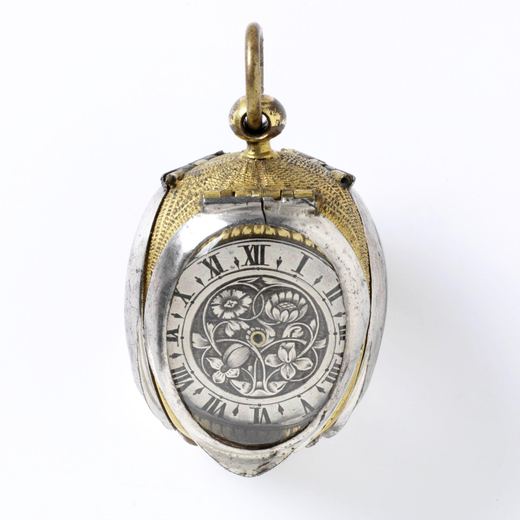
Silver, gilt brass and rock crystal watch in the form of a tulip, movement signed 'Senebier', Geneva, Switzerland, 1635-50
Victoria and Albert Museum, London
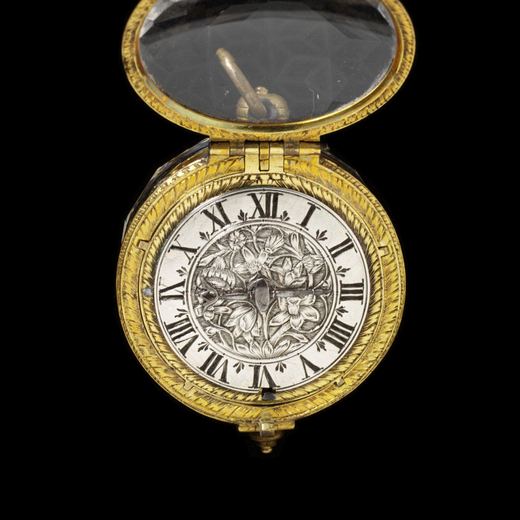
Pocket Watches · 1640-50
Gilt brass and crystal watch with an engraved silver dial, movement signed 'Charles Bobinet', Switzerland (Geneva), 1640-50
Victoria and Albert Museum, London
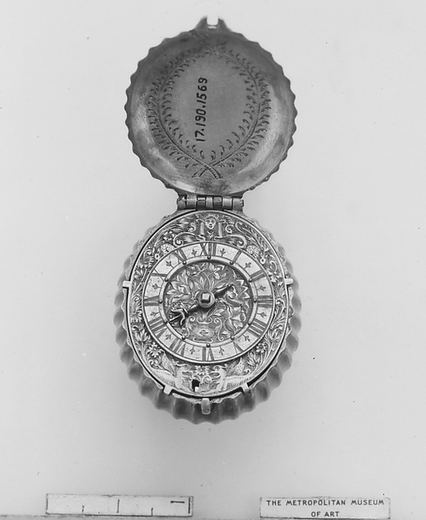
Pocket Watches · ca. 1650
Watch by Denis Bordier, Switzerland, ca. 1650
The Metropolitan Museum of Art, New York
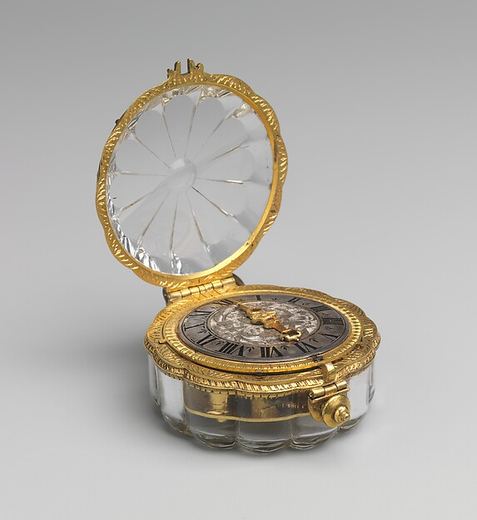
Pocket Watches · ca. 1650–60
Watch by probably Jean Rousseau the Younger, Switzerland, ca. 1650–60
The Metropolitan Museum of Art, New York
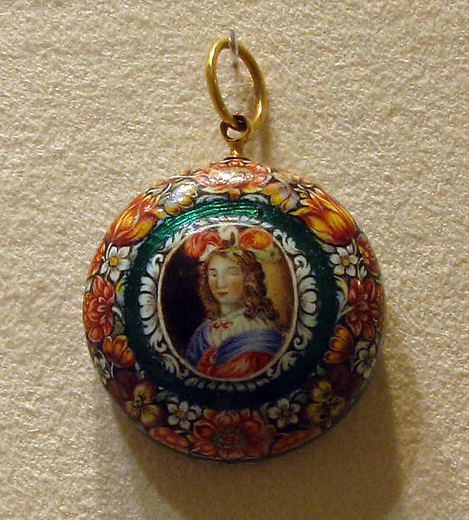
Pocket Watches · ca. 1660–80
Watch by Pierre Duhamel, Switzerland, ca. 1660–80
The Metropolitan Museum of Art, New York
Pocket Watches · 1660-1670
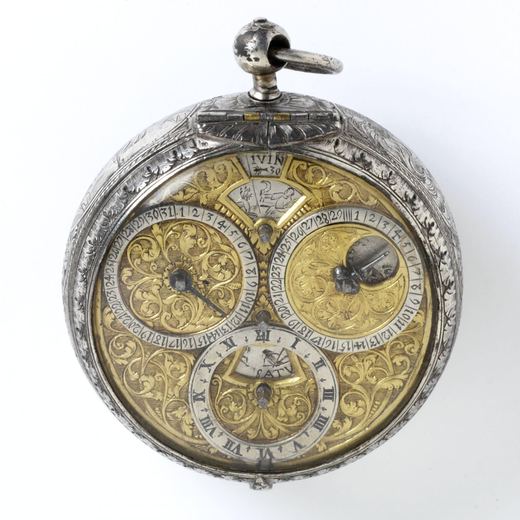
Engraved silver watch with a gilt brass dial, signed 'Jean Rousseau', Switzerland (Geneva), 1660-70
Victoria and Albert Museum, London