Clocks · Wall clock
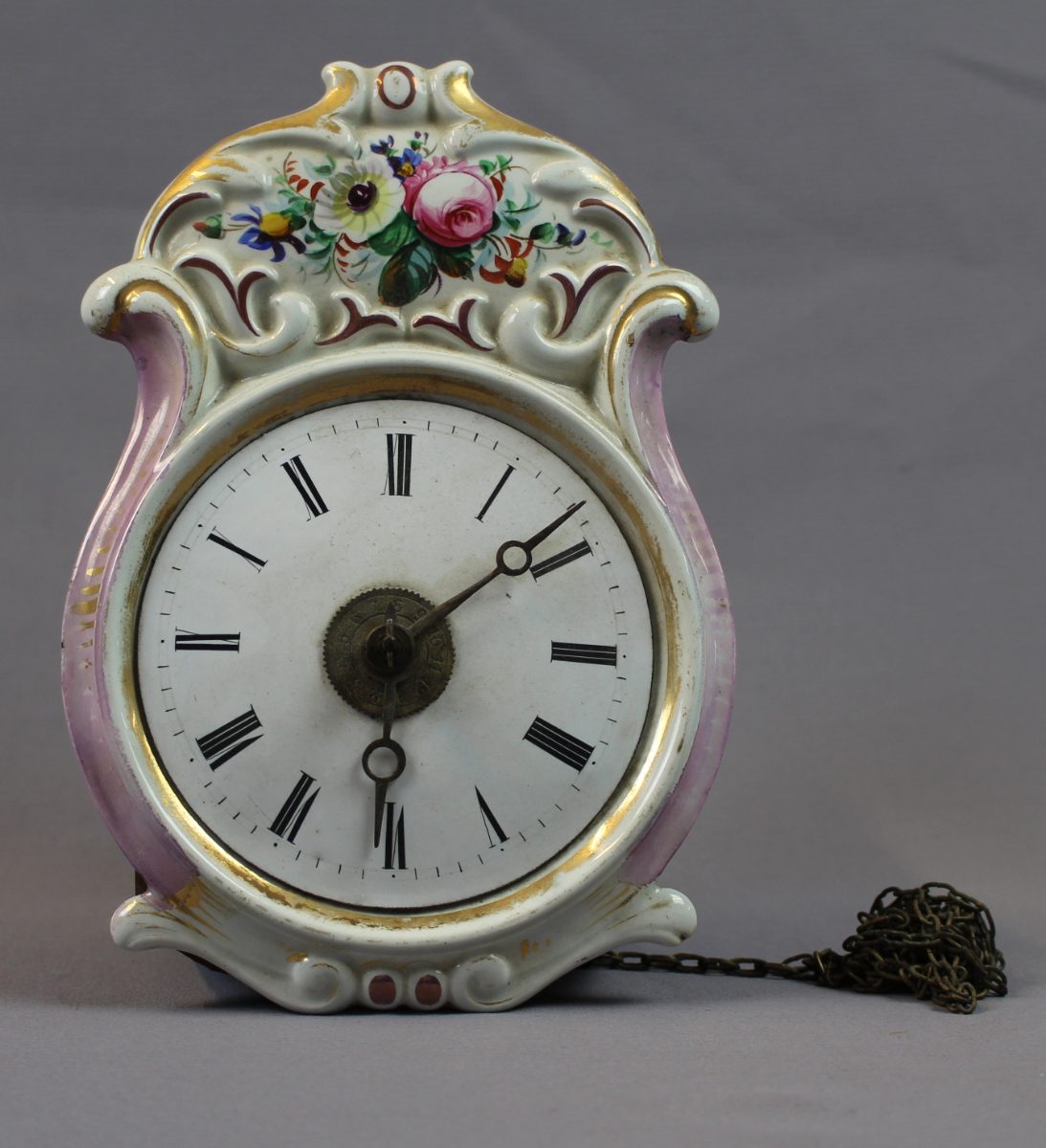
Wall clock, Sweden, 1919–1930
- Maker / attribution
- Unrecorded in source
- Date
- 1919–1930
- Historical period
- Golden Age of Mechanical Watchmaking (1900 – 1945)
- Country of origin
- Sweden
- Place
- Sweden
- Object type
- Wall clock
- Holding institution
- Sörmland Museum
- Accession / object no.
- SLM_item_290109
- Catalogue title (original)
- Väggur från Tunabergs ålderdomshem (Swedish)
Record summary
Held and catalogued by Sörmland Museum (object number SLM_item_290109), this is a wall clock, made in Sweden, dated 1919–1930. The Atlas places it in the Golden Age of Mechanical Watchmaking period (1900 – 1945) of its Clocks collection. The record is illustrated with 1 photograph.
Assembled from the source record's structured fields. Dates and attributions are given as the source states them; where a field is missing the Atlas leaves it blank rather than estimating.
Catalogue description
Catalogue description from Sörmland Museum (Swedish)
Väggur med porslinstavla med förgyllning och blommor. Klockan kan öppnas med 2 dörrar på sidorna. På insidan av ena dörren finns en stämpel märkt Carl Svensson Coquettas. Kedja finns på undersidan till att fästa loden i, dessa saknas dock. Kommer från Erik Gustaf Karlsson, ålderdomshemsföreståndare vid Tunaberg mellan 1919 och 1930.
Shown in the original language of the source catalogue. An editor-reviewed English translation has not yet been published; we do not publish machine translations as authoritative text.
Historical context
Golden Age of Mechanical Watchmaking (1900 – 1945)
The wristwatch displaces the pocket watch; waterproof cases, self-winding and grand complications.
Between 1900 and 1945 clocks were electrified: master-clock systems ran factories and offices, synchronous mains clocks entered homes, and the Shortt free-pendulum clock set new standards of accuracy before the first quartz clocks (1927). Art Deco design reshaped mantel and table clocks.
Read the period in the timelineMore clocks from this periodEarlier: Industrial Revolution
Atlas type guide
Regulators, wall and Vienna clocks
A regulator is a precision pendulum clock used as a time standard in observatories, workshops and railway offices. Typical features are a deadbeat or Graham escapement, a temperature-compensated pendulum (mercury jar, gridiron or later invar), maintaining power and a regulator dial that separates hours, minutes and seconds. George Graham's deadbeat escapement (c. 1715) and his mercury pendulum, together with Harrison's gridiron, set the pattern for two centuries.
Wall clocks span a much wider range: the elegant Viennese Laterndluhr and Dachluhr of the Biedermeier period, the Dutch stoelklok and staartklok, English 'dial' clocks used in schools, offices and railway stations, and mass-produced spring and weight wall clocks from Germany (Gustav Becker, Junghans, Kienzle) and America.
What to look for
- Deadbeat escapement and compensated pendulum (gridiron rods, mercury jar or wood rod).
- A regulator dial with a large central minute hand and separate hour and seconds dials.
- Vienna regulators: glazed cases, slender pendulum, small weights, enamel two-piece dials.
- German factory trademarks stamped on the backplate (e.g. Gustav Becker anchor and crown, Junghans star).
Dating clues
- Graham-type deadbeat regulators: from c. 1720.
- Viennese Laterndluhr: c. 1800–1850.
- German factory 'Vienna-style' regulators: c. 1870–1930; Gustav Becker serial numbers allow close dating.
General guidance written by the Atlas editors about this kind of object. It is not a statement about this particular piece; for that, rely on the source record above and on physical examination.
Related records
Clocks · 1905
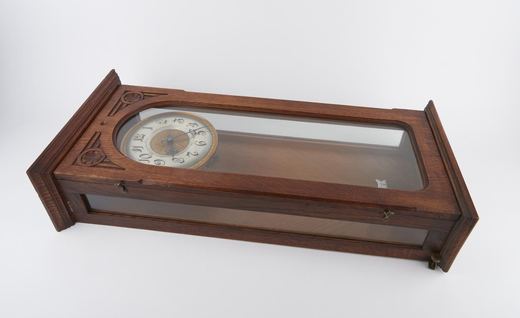
Self-winding electric clock by Svenska Elektriska Urfabriken, Stockholm, 1905
Science Museum Group, London
Clocks · 1890-1930
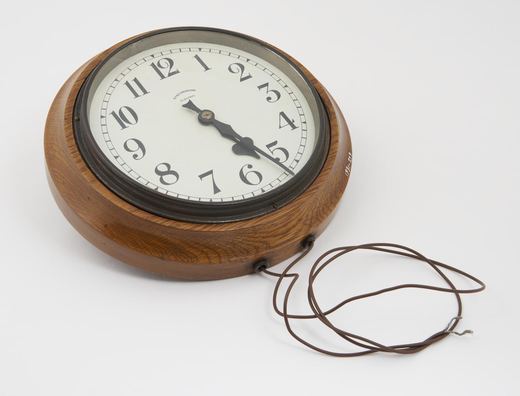
Clock with 8-inch impulse dial, by the Synchronome Company Limited, England, 1890-1930.
Science Museum Group, London
Clocks · c.1903-1904
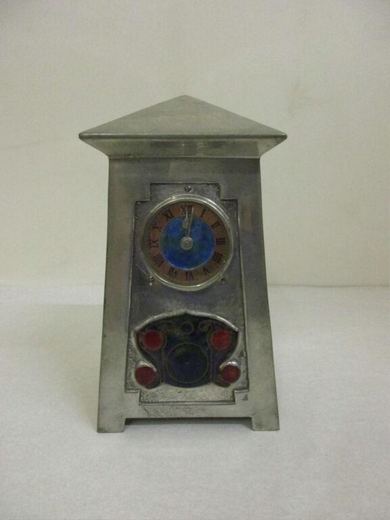
Clock, pewter, made for Liberty& Co., England. 1903-4.
Victoria and Albert Museum, London
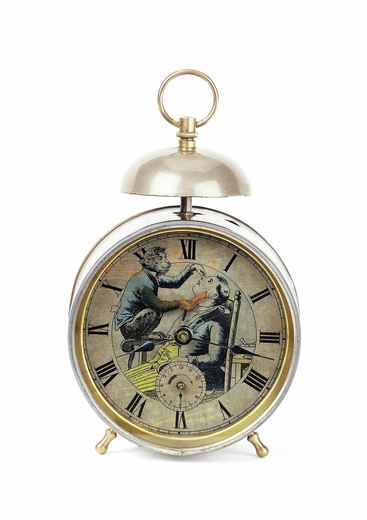
Clocks · 1900
Alarm clock by Union Clock Company, Germany, 1900
German Clock Museum
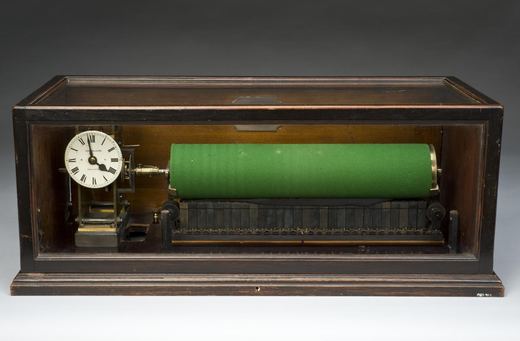
Clocks · 1900-1939
Clock by Cox-Walkers of Darlington, England, 1900-1939
Science Museum Group, London
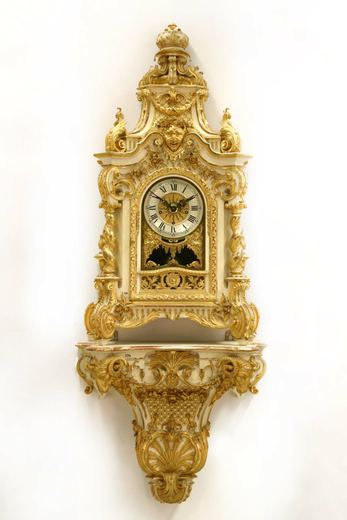
Clocks · 1900
Clock by Josef Münzer, Germany, 1900
German Clock Museum
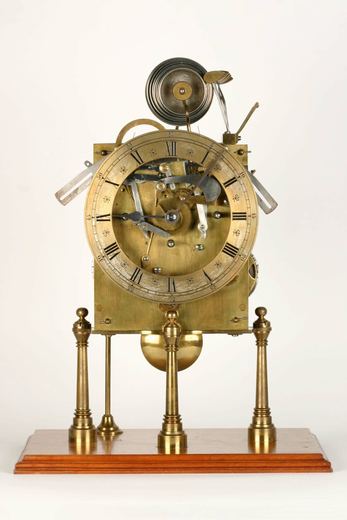
Clocks · 1900
Clock by Mathias Bäuerle, Germany, 1900
German Clock Museum
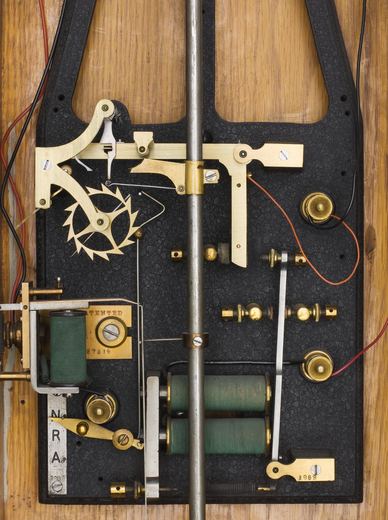
Clocks · 1900-1935
Clock by The Synchronome Company Limited, England, 1900-1935
Science Museum Group, London