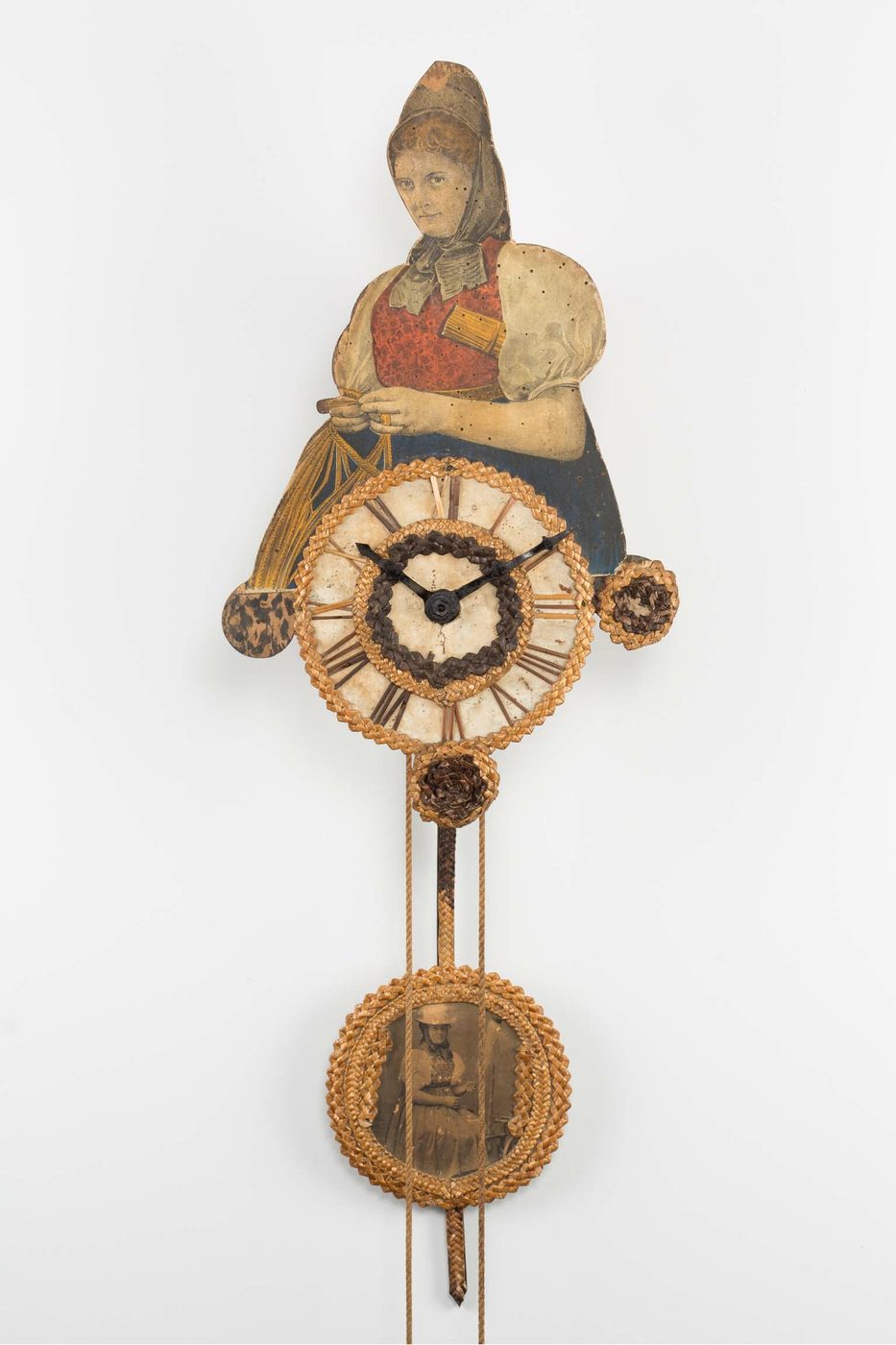
Clocks · Wall clock
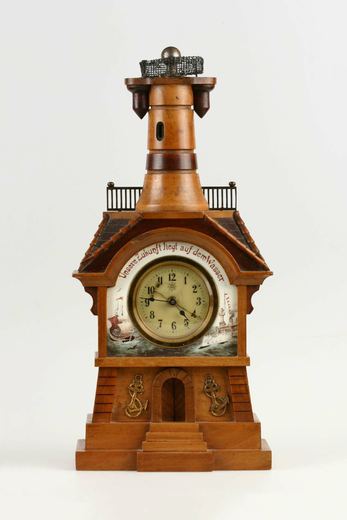
Wall clock, Germany, 1900
- Maker / attribution
- Unrecorded in source
- Date
- 1900
- Historical period
- Golden Age of Mechanical Watchmaking (1900 – 1945)
- Country of origin
- Germany
- Place
- Black Forest
- Object type
- Wall clock
- Holding institution
- German Clock Museum
- Accession / object no.
- Museu_ProvidedCHO_museum_digital_57153__technical_number_
- Catalogue title (original)
- Wanduhr mit Schild mit Strohgeflecht-Dekor, Schwarzwald um 1900 (German)
Record summary
Held and catalogued by German Clock Museum (object number Museu_ProvidedCHO_museum_digital_57153__technical_number_), this is a wall clock, made in Black Forest, Germany, dated 1900. The Atlas places it in the Golden Age of Mechanical Watchmaking period (1900 – 1945) of its Clocks collection. The record is illustrated with 1 photograph.
Assembled from the source record's structured fields. Dates and attributions are given as the source states them; where a field is missing the Atlas leaves it blank rather than estimating.
Catalogue description
Catalogue description from German Clock Museum (German)
Eine Uhr, dekoriert mit Strohbändern und dem Bild einer Strohflechterin, die in ihrer Sonntagstracht arbeitet schon um 1900 war das ein nostalgisches Erinnerungsstück an die gute alte Zeit. Im früheren Schwarzwälder Uhrmachergebiet hatte die Strohflechterei als Nebengewerbe vor allem zwischen 1810 und 1880 größere Bedeutung. Hütekinder verbrachten ihre Zeit auf der Weide mit Strohflechten. Und mehrere hundert Heimarbeiterinnen belieferten kleine Handeltreibende und später auch große Unternehmen mit Geflechten, Hüten, Taschen und allerlei sonstigen Gegenständen. Für viele Menschen bedeutete das Gewerbe Lohn und Brot. Doch Kammern voll Gold erwirtschafteten sie damit nicht. Denn für den Gegenwert eines einzigen Brotes mussten in schlechten Zeiten mehr als 30 Meter Strohband geflochten werden. (Deutsches Uhrenmuseum Furtwangen)
Shown in the original language of the source catalogue. An editor-reviewed English translation has not yet been published; we do not publish machine translations as authoritative text.
Historical context
Golden Age of Mechanical Watchmaking (1900 – 1945)
The wristwatch displaces the pocket watch; waterproof cases, self-winding and grand complications.
Between 1900 and 1945 clocks were electrified: master-clock systems ran factories and offices, synchronous mains clocks entered homes, and the Shortt free-pendulum clock set new standards of accuracy before the first quartz clocks (1927). Art Deco design reshaped mantel and table clocks.
Read the period in the timelineMore clocks from this periodEarlier: Industrial Revolution
Atlas type guide
Regulators, wall and Vienna clocks
A regulator is a precision pendulum clock used as a time standard in observatories, workshops and railway offices. Typical features are a deadbeat or Graham escapement, a temperature-compensated pendulum (mercury jar, gridiron or later invar), maintaining power and a regulator dial that separates hours, minutes and seconds. George Graham's deadbeat escapement (c. 1715) and his mercury pendulum, together with Harrison's gridiron, set the pattern for two centuries.
Wall clocks span a much wider range: the elegant Viennese Laterndluhr and Dachluhr of the Biedermeier period, the Dutch stoelklok and staartklok, English 'dial' clocks used in schools, offices and railway stations, and mass-produced spring and weight wall clocks from Germany (Gustav Becker, Junghans, Kienzle) and America.
What to look for
- Deadbeat escapement and compensated pendulum (gridiron rods, mercury jar or wood rod).
- A regulator dial with a large central minute hand and separate hour and seconds dials.
- Vienna regulators: glazed cases, slender pendulum, small weights, enamel two-piece dials.
- German factory trademarks stamped on the backplate (e.g. Gustav Becker anchor and crown, Junghans star).
Dating clues
- Graham-type deadbeat regulators: from c. 1720.
- Viennese Laterndluhr: c. 1800–1850.
- German factory 'Vienna-style' regulators: c. 1870–1930; Gustav Becker serial numbers allow close dating.
General guidance written by the Atlas editors about this kind of object. It is not a statement about this particular piece; for that, rely on the source record above and on physical examination.
Related records
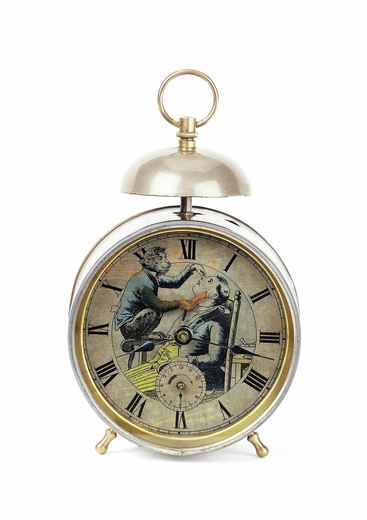
Clocks · 1900
Alarm clock by Union Clock Company, Germany, 1900
German Clock Museum
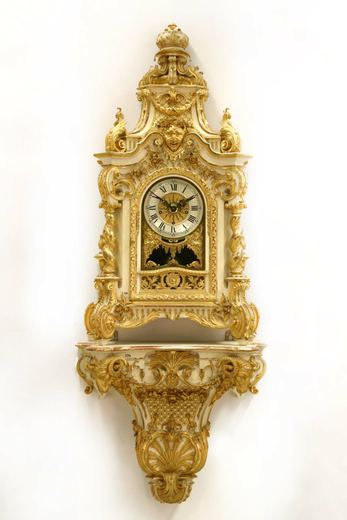
Clocks · 1900
Clock by Josef Münzer, Germany, 1900
German Clock Museum
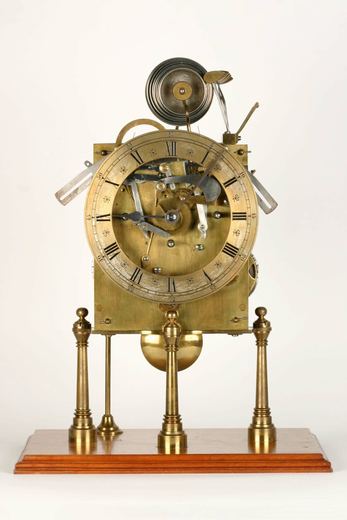
Clocks · 1900
Clock by Mathias Bäuerle, Germany, 1900
German Clock Museum
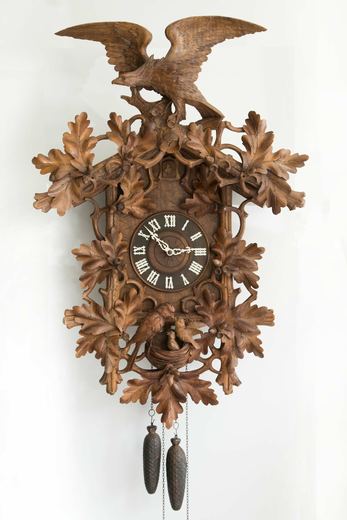
Clocks · 1900
Cuckoo / black forest clock by Gebr. Lehnis, Germany, 1900
German Clock Museum
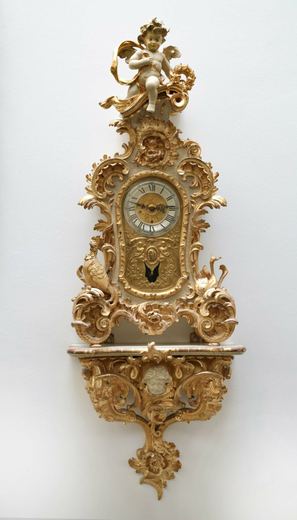
Clocks · 1900
Mantel clock by A. G. für Uhrenfabrikation Lenzkirch, Germany, 1900
German Clock Museum
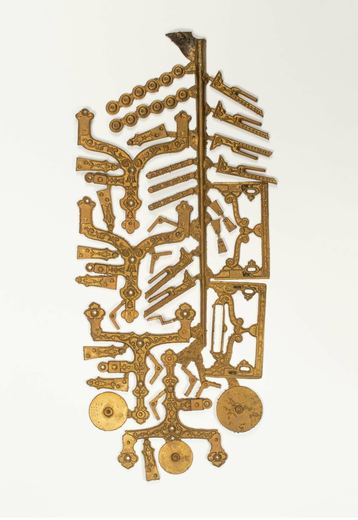
Clocks · 1900
Regulator clock, Germany, 1900
German Clock Museum
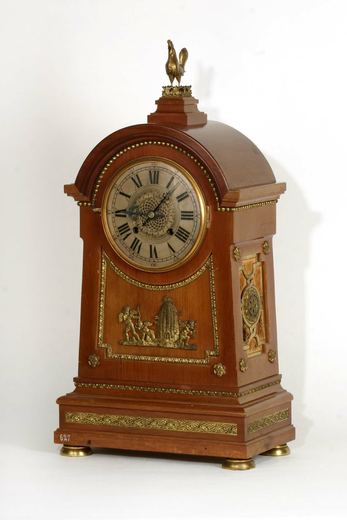
Clocks · 1900
Table clock by Emilian Wehrle & Co., Germany, 1900
German Clock Museum
Clocks · 1900
Table clock, Germany, 1900
German Clock Museum