Clocks · Wall clock
Wall clock, 1325–1335
- Maker / attribution
- Unrecorded in source
- Date
- 1325–1335
- Historical period
- Medieval Period (500 – 1400)
- Country of origin
- Unrecorded in source
- Object type
- Wall clock
- Holding institution
- Treasury of Zwettl Abbey
- Accession / object no.
- SZ25_416_1326_
- Catalogue title (original)
- Wall clock (English)
Record summary
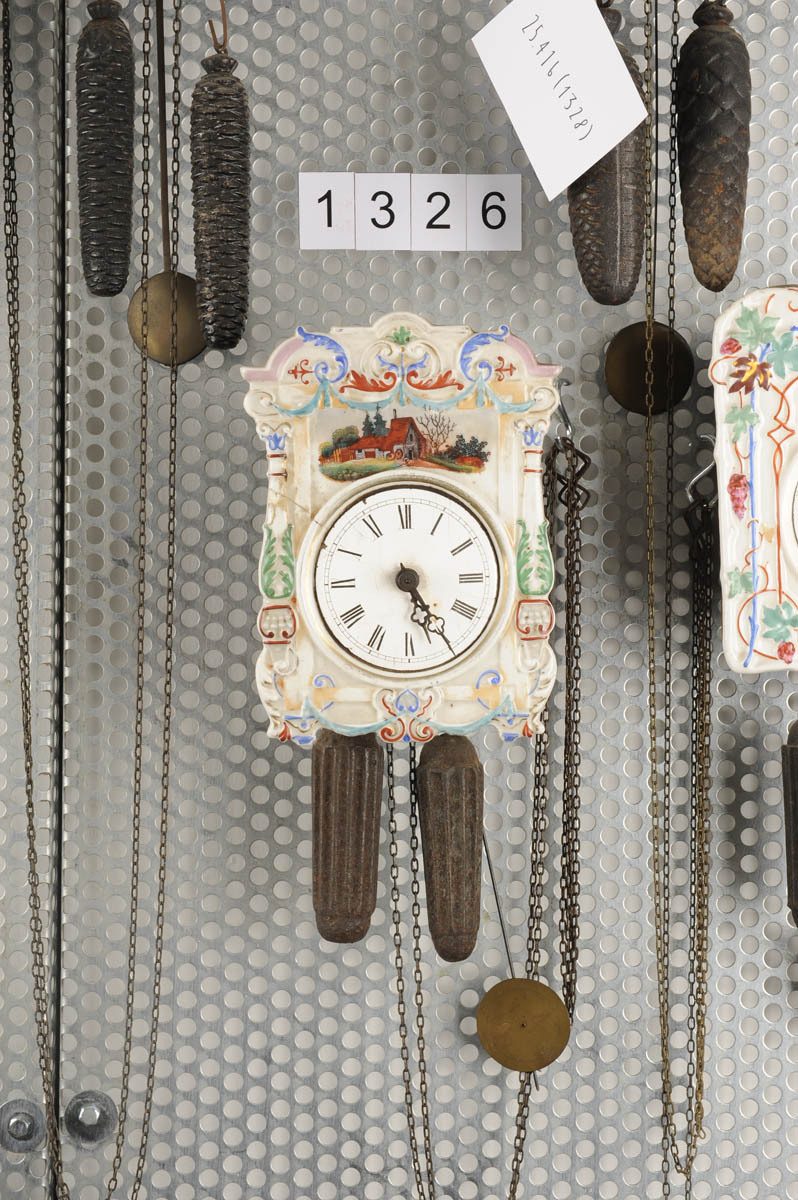
Held and catalogued by Treasury of Zwettl Abbey (object number SZ25_416_1326_), this is a wall clock, dated 1325–1335. The Atlas places it in the Medieval Period period (500 – 1400) of its Clocks collection. The record is illustrated with 1 photograph.
Assembled from the source record's structured fields. Dates and attributions are given as the source states them; where a field is missing the Atlas leaves it blank rather than estimating.
Catalogue description
Catalogue description from Treasury of Zwettl Abbey (English)
Imprint for full and probably half hour, Konvolut: 1325.1326.1328-1330.1332.1335
Historical context
Medieval Period (500 – 1400)
Su Song's astronomical tower in Song China, al-Jazari's automata, and the first European weight-driven verge clocks.
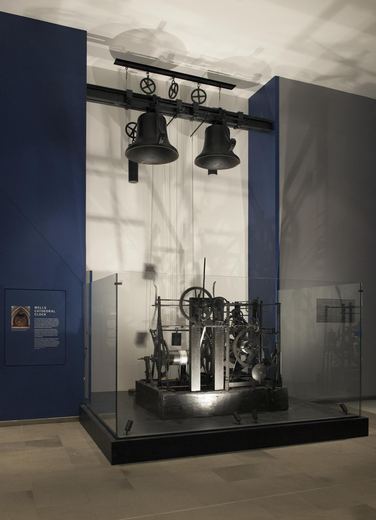
The weight-driven mechanical clock with a verge escapement appeared in Europe in the late thirteenth century. The first clocks were large iron striking clocks in monasteries, cathedrals and town towers; astronomical clocks by Richard of Wallingford and Giovanni de' Dondi showed the heavens. In China, Su Song's water-powered clock tower (1090s) used an escapement-like mechanism.
Read the period in the timelineMore clocks from this periodEarlier: Classical Antiquity
Atlas type guide
Regulators, wall and Vienna clocks
A regulator is a precision pendulum clock used as a time standard in observatories, workshops and railway offices. Typical features are a deadbeat or Graham escapement, a temperature-compensated pendulum (mercury jar, gridiron or later invar), maintaining power and a regulator dial that separates hours, minutes and seconds. George Graham's deadbeat escapement (c. 1715) and his mercury pendulum, together with Harrison's gridiron, set the pattern for two centuries.
Wall clocks span a much wider range: the elegant Viennese Laterndluhr and Dachluhr of the Biedermeier period, the Dutch stoelklok and staartklok, English 'dial' clocks used in schools, offices and railway stations, and mass-produced spring and weight wall clocks from Germany (Gustav Becker, Junghans, Kienzle) and America.
What to look for
- Deadbeat escapement and compensated pendulum (gridiron rods, mercury jar or wood rod).
- A regulator dial with a large central minute hand and separate hour and seconds dials.
- Vienna regulators: glazed cases, slender pendulum, small weights, enamel two-piece dials.
- German factory trademarks stamped on the backplate (e.g. Gustav Becker anchor and crown, Junghans star).
Dating clues
- Graham-type deadbeat regulators: from c. 1720.
- Viennese Laterndluhr: c. 1800–1850.
- German factory 'Vienna-style' regulators: c. 1870–1930; Gustav Becker serial numbers allow close dating.
General guidance written by the Atlas editors about this kind of object. It is not a statement about this particular piece; for that, rely on the source record above and on physical examination.